

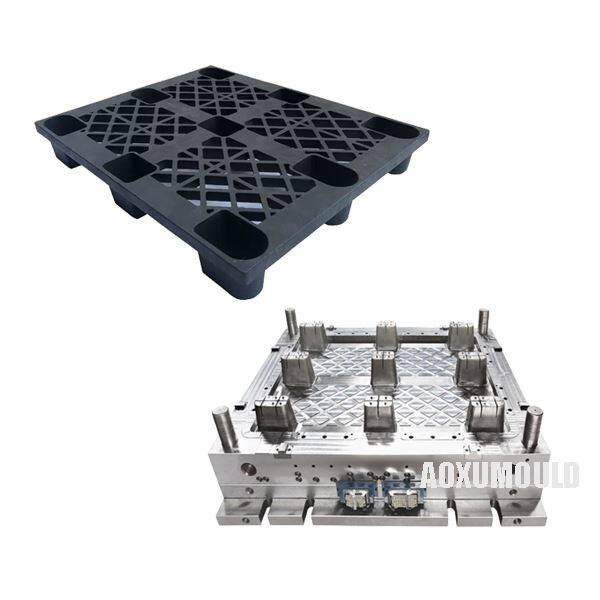
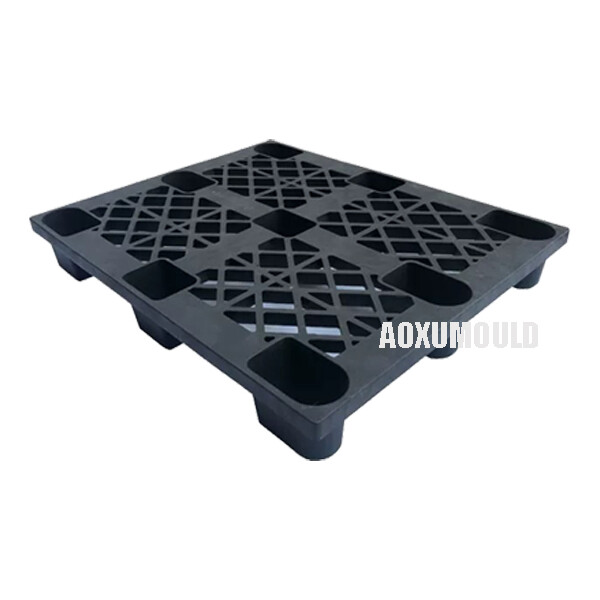
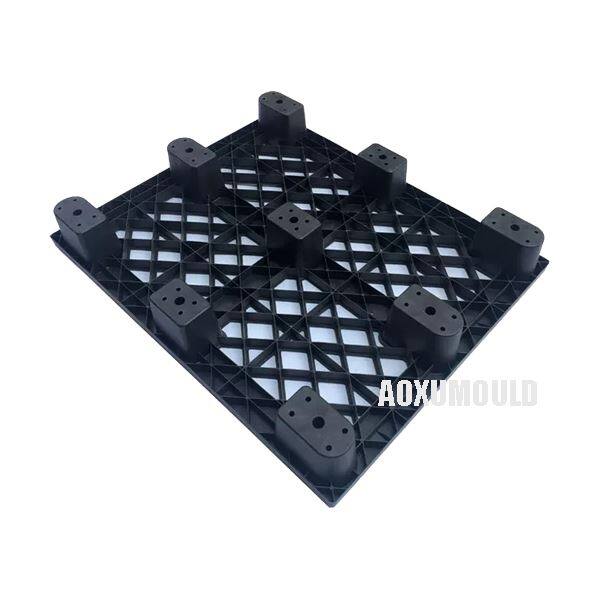
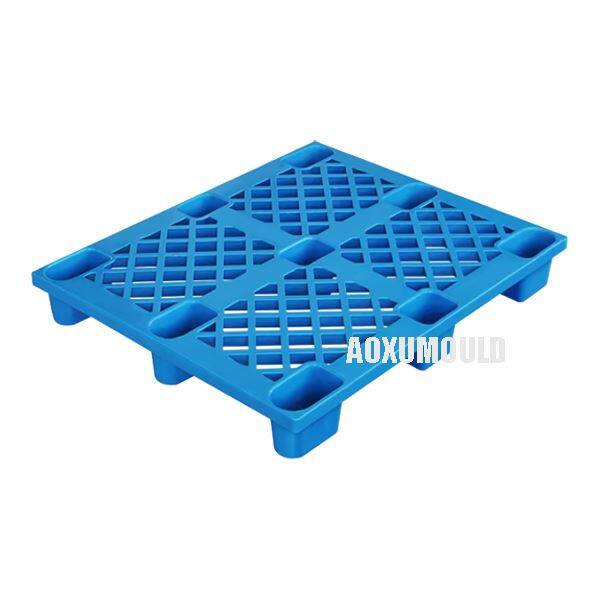
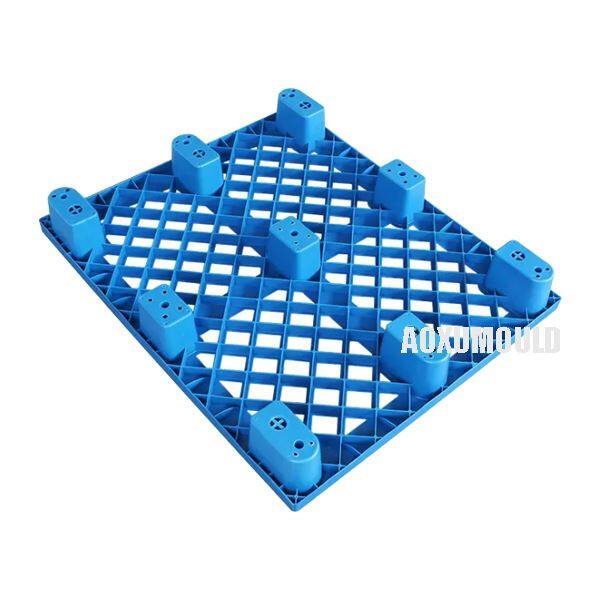
Mould Specifications
|
Mould name |
Dynamic Pallet Mould |
|
Product material |
HDPE, plastic |
|
Product Size |
1200X1100X140mm |
| Product weight |
10.5 kgs |
|
Mould material for cavity &. Core |
P20 |
|
Mould base |
C45 |
|
Injection system |
Hot runner |
|
Suitable injection machine |
2850T |
|
Mould size |
1980X1860X900mm |
|
Mould lifetime |
more than 500,000pcs |
Key Features of Dynamic Pallet Moulds
1.Complex Design–These moulds create pallets with movable parts (e.g., rotating sections, collapsible legs, or adjustable heights) for better storage and transport efficiency.
A. Moving Mechanisms (Sliders, Hinges, Lifters)
>Undercut Handling–Use side sliders, lifters, or hydraulic cores for folding/collapsible features.
>Smooth Motion–Ensure proper draft angles (1–3°) to prevent sticking.
>Wear Resistance–Hardened steel inserts (H13/S136) in high-friction areas.
B. Wall Thickness Optimization
>Uniform Thickness (3–5mm)–Prevents warping/sink marks.
>Rib Reinforcement–Adds strength without excess material.
2.High Precision–Ensures smooth movement of dynamic components (hinges, sliders, or interlocking mechanisms).
3.Durable Construction–Made from hardened steel (e.g., P20, H13, or S136) to withstand high-pressure injection cycles.
4.Multi-Cavity or Family Mould Options–Allows mass production of pallets or multiple components in a single cycle.
5.Advanced Ejection Systems–Uses hydraulic, pneumatic, or mechanical ejectors to release complex parts without damage.
>Stripper Plates or Ejector Pins – For complex geometries.
>Delayed Ejection – For multi-stage moving parts.
Manufacturing Process Of Dynamic Pallet Mould

- Design &. Engineering
Step 1: Product & Mould Design
>3D Modeling (CAD) – Engineers create a detailed design of the dynamic pallet (including moving parts like hinges, collapsible legs, or rollers).
>Mould Flow Analysis – Simulation software (e.g., Moldflow) checks for potential defects (warping, air traps, or uneven cooling).
>Structural Analysis – Ensures the mould can withstand high injection pressures.
Step 2: Mould Layout &. Core/Cavity Planning
>Parting Line Determination – Decides where the mould splits into core & cavity.
>Slider &. Lifter Placement – For undercuts (e.g., folding mechanisms).
>Ejection System Design – Ensures smooth demolding of complex parts.
- Material Selection & Steel Machining
Step 3: Choosing Mould Steel
>Common grades for pallet moulds:
>P20 – Good balance of cost and durability (~300,000 shots).
>H13 (Hot Work Steel) – For high-wear areas (~1M+ shots).
>S136 (Stainless Steel) – Corrosion-resistant for food-grade pallets.
Step 4: CNC Machining
>Rough Machining – Blocks of steel are cut into basic shapes.
>Precision CNC Milling/Turning – Creates core & cavity with tight tolerances (±0.02mm).
>EDM (Electrical Discharge Machining) – For intricate details (e.g., textured surfaces).
>Grinding &. Polishing – Ensures smooth mould surfaces for defect-free pallets.
- Assembly &. Fitting
Step 5: Mould Base Assembly
>Guide Pins & Bushings – Ensure proper alignment.
>Ejector Pins – For part removal.
>Sliders &. Lifters – For movable pallet components.
Step 6: Hot Runner System Integration (If Applicable)
>Manifold Installation – Distributes molten plastic.
>Nozzle & Heater Setup – Maintains consistent melt flow.
- Testing &. Adjustments
Step 7: T1 Sample Trial
>First-Shot Inspection – Checks for defects (sink marks, flash, or warping).
>Dimensional Verification – Ensures pallet meets specifications.
>Functional Testing – Verifies moving parts (folding, nesting, etc.).
Step 8: Fine-Tuning
>Adjusting Cooling Channels – Optimizes cycle time.
>Balancing Flow – Prevents uneven filling.
Mass Production &. Quality Control
>Step 9: Production Run
>Injection Molding Machine Setup – Clamping force (500–4000+ tons).
>Process Monitoring – Temperature, pressure, and cycle time control.
Step 10: Quality Checks
>DPI (Dimensional Product Inspection) – Verifies tolerances.
>Load Testing – Ensures pallet meets weight capacity.
>Durability Testing – Repeated folding/unfolding cycles.
Designs For Product &. Mould

Hot Runner Technology

1. What is a Hot Runner System?
A hot runner system is an advanced injection moulding component that keeps molten plastic in a liquid state as it travels from the machine nozzle to the mould cavities. Unlike cold runner systems (which solidify and are discarded as waste), hot runners eliminate material waste and improve cycle times.
Key Components:
Manifold–Distributes molten plastic evenly to multiple cavities.
Heaters–Maintains plastic at optimal temperature.
Nozzles–Controls flow into each mould cavity.
Temperature Controllers–Ensures precise heat regulation.
2. Why Use Hot Runner Systems for Dynamic Pallet Moulds?
Advantages:
>No Material Waste–Unlike cold runners, no sprue or runners are discarded (reduces costs for large pallets).
>Faster Cycle Times–Plastic stays molten, reducing cooling and ejection time.
>Better Part Quality–Consistent flow reduces defects like sink marks or warping.
>Multi-Cavity Efficiency–Ideal for high-volume pallet production.
>Energy Savings–Less reprocessing of wasted plastic.
Disadvantages:
>Higher Initial Cost–More complex than cold runner systems.
>Maintenance Required–Nozzles and heaters need periodic checks.
>Not Ideal for All Materials–Some thermally sensitive plastics (e.g., PVC) may degrade.
3. Types of Hot Runner Systems
|
Type |
Description |
Best For |
|
Open Gate |
Simple nozzle design, no valve control. |
Thick-walled pallets, HDPE/PP. |
|
Valve Gate |
Uses a mechanical valve to control flow. |
High-precision dynamic pallets (prevents drool). |
|
Thermal Gate |
Heat-controlled shutoff. |
Small to medium pallet moulds. |

4. Hot Runner vs. Cold Runner for Pallet Moulding
|
Feature |
Hot Runner |
Cold Runner |
|
Material Waste |
None |
15–30% waste (sprue & runners) |
|
Cycle Time |
Faster (no runner cooling) |
Slower (must cool runners) |
|
Mould Cost |
Higher initial cost |
Lower initial cost |
|
Best For |
High-volume pallet production |
Low-volume or prototype pallets |
5. Maintenance Tips for Hot Runner Moulds
Regular Cleaning–Prevents plastic degradation clogging nozzles.
Temperature Monitoring–Prevents overheating or freezing.
Nozzle Inspections–Check for wear or leaks.
Package &. Delivery

Mould Components
Mould Steel

Hot Runner System

Standard Parts

How To Matainence Dynamic Pallet Moulds?
1. Clean the mould regularly: It is crucial to clean the mould after each use to remove any debris, dust, or residue that may have accumulated. Use a soft brush or cloth to gently clean the mould and avoid using harsh chemicals that may damage the surface. 2. Inspect for wear and tear: Regularly inspect the mould for any signs of wear and tear, such as cracks, chips, or scratches. If any damage is found, it is important to repair or replace the affected parts to prevent further deterioration. 3. Lubricate moving parts: To ensure smooth operation, lubricate the moving parts of the mould regularly with a suitable lubricant. This will help reduce friction and prevent the parts from wearing out prematurely. 4. Check for alignment: Proper alignment of the mould is essential for producing high-quality pallets. Regularly check the alignment of the mould components and make any necessary adjustments to ensure accurate and consistent moulding. 5. Store the mould properly: When not in use, store the mould in a dry and clean environment to prevent corrosion and damage. Avoid storing the mould in direct sunlight or extreme temperatures that may affect its integrity. 6. Follow manufacturer's guidelines: Lastly, follow the manufacturer's maintenance guidelines for the specific dynamic pallet moulds you are using. These guidelines will provide valuable information on how to properly care for and maintain the mould to ensure optimal performance and longevity.
|
FAQ
>1. What types of plastic dynamic pallet moulds do you manufacture?
We specialize in manufacturing a wide range of plastic dynamic pallet moulds, including stackable pallet moulds, reversible pallet moulds, export pallet moulds, and custom-designed pallet moulds to meet our customers' specific needs.
>2. Can you customize a plastic dynamic pallet mould according to our requirements?
Yes, we have a team of experienced engineers and designers who can work with you to create a customized plastic dynamic pallet mould that meets your unique specifications and requirements.
>3. What materials do you use to manufacture your dynamic pallet moulds?
We use high-quality and durable materials such as PP, PE, HDPE, and PET to manufacture our plastic dynamic pallets, ensuring that they are strong, long-lasting, and resistant to wear and tear.
>4. How long does it take to manufacture a dynamic pallet mould?
The manufacturing time for a plastic dynamic pallet mould can vary depending on the complexity of the design and the specific requirements of the customer. Generally it will take about 55-65days.
>5. Can you assist us with the maintenance and repair of our plastic dynamic pallet mould?
Yes, we offer maintenance and repair services for our plastic dynamic pallet molds to ensure that they remain in optimal working condition for a long time. Our team of technicians is available to provide assistance whenever needed.
>6. What's Your Pricing Structure?
Cost depends on: Mould complexity (number of cavities, slides, etc.), Material & Steel Grade and Production volume. Pleasecontact us for a tailored quote!
>7. What sets your company apart from other dynamic pallet mould manufacturers?
Our company stands out for its commitment to quality, efficiency, and customer satisfaction. We use the latest technology and manufacturing processes to produce high-quality dynamic pallet moulds that meet the highest industry standards. Additionally, we prioritize customer service and strive to build long-lasting relationships with our clients.
Customers' Feedback


