

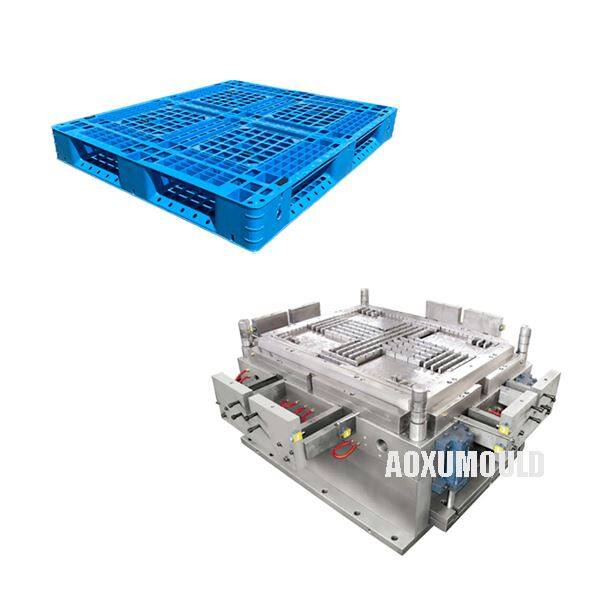
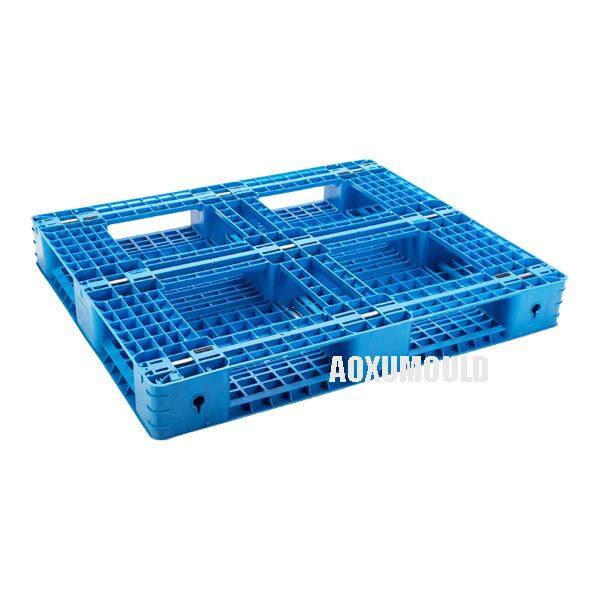
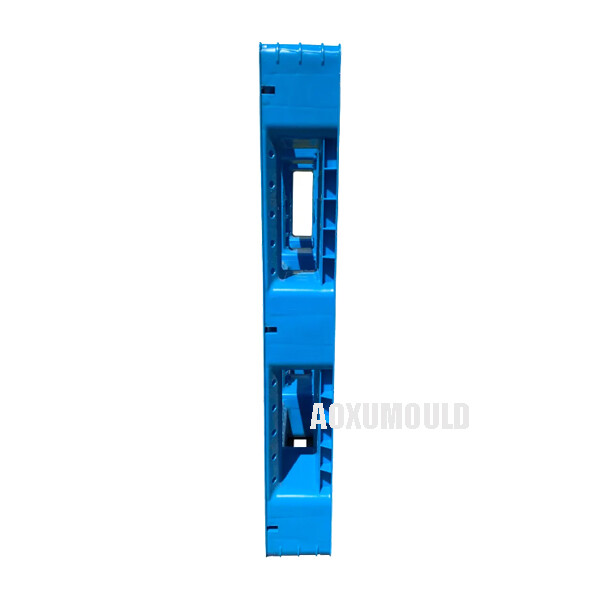
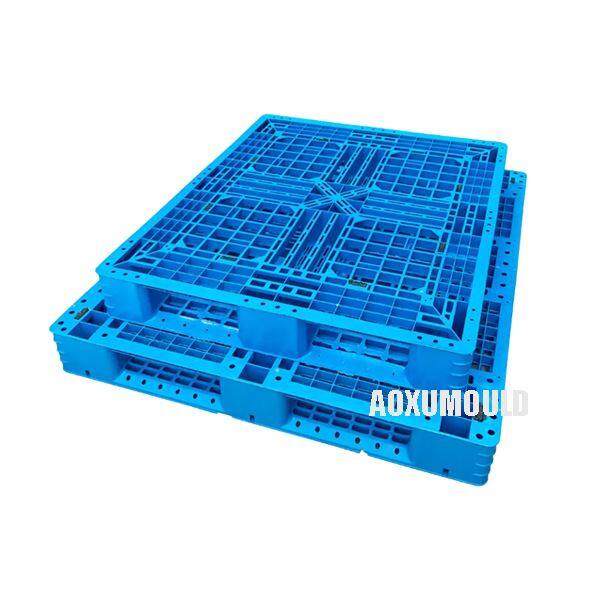
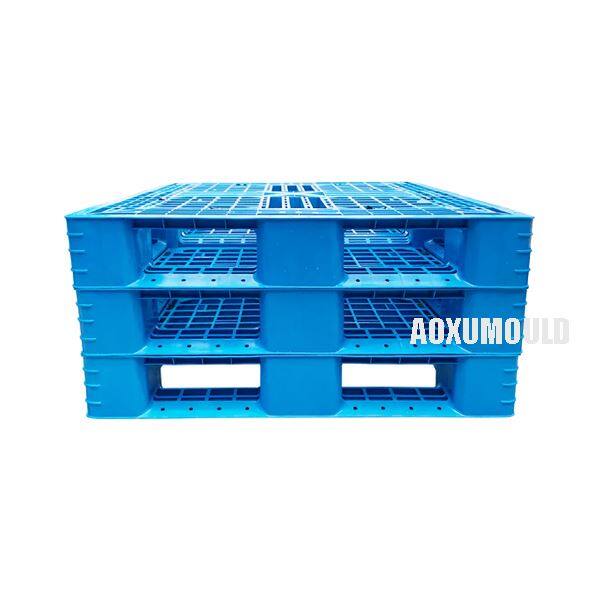
Mould Specifications
|
Mould name |
Static Load Pallet Mould |
|
Product material |
HDPE, plastic |
|
Product Size |
710X570X1000mm |
| Product weight |
8.575kg |
|
Mould material for cavity &. Core |
P20 |
|
Mould base |
C45 |
|
Injection system |
Hot runner |
|
Suitable injection machine |
1350T |
|
Mould size |
1080X950X1350mm |
|
Mould lifetime |
more than 300,000pcs |
What Is The Difference Between A Static And Dynamic Pallet?

The difference between a static pallet and a dynamic pallet comes down to their intended use, structural strength, and load-bearing capabilities.
1. Purpose & Usage
-Static Pallets are designed for stationary storage, meaning they hold goods in place (e.g., in warehouses or on shelves) without frequent movement. They are not built to withstand the stresses of forklifts, racking systems, or transport.
-Dynamic Pallets are engineered for active handling, such as forklift lifting, conveyor systems, and repeated loading/unloading. They endure constant movement, impacts, and mechanical stress.
2. Load Capacity & Strength
-Static Pallets support vertical (compressive) loads only-like stacked boxes or bulk goods. Their weight capacity is lower (typically 1,000–5,000 kg) because they don't need to resist bending or impacts.
-Dynamic Pallets handle both vertical and dynamic forces, including forklift pressure, racking systems, and sudden shocks. They have much higher load ratings (often 5,000–20,000+ kg) and reinforced structures to prevent cracking or deformation.
3. Design & Durability
-Static Pallets are lighter and simpler, often made with hollow sections or thinner walls to save material. They're commonly made from HDPE plastic or lightweight wood.
-Dynamic Pallets are heavier and sturdier, featuring reinforced ribs, thicker decks, or embedded steel frames. They're made from high-impact plastics (like reinforced PP), metal, or composite materials for long-term durability.
4. Common Applications
-Static Pallets are used for:
Long-term warehouse storage
Retail displays
Light-duty export packaging (if not moved often)
-Dynamic Pallets are used for:
Shipping and logistics
Manufacturing assembly lines
Heavy industrial environments (e.g., automotive, chemicals)
5. Cost & Lifespan
-Static Pallets are cheaper but have a shorter lifespan if misused for dynamic applications.
-Dynamic Pallets are more expensive due to robust materials but last longer under harsh conditions.
Popular Steel Grades for Static Pallet Moulds
1. P20 (1.2311 / 1.2738) – Pre-Hardened Tool Steel
Hardness: ~30-35 HRC (pre-hardened)
Key Features:
Good machinability & polishability
Moderate wear resistance
Cost-effective for medium production runs
Best For:
Small to medium-sized static pallet moulds
Prototyping or low-to-mid volume production
2. 718 / 718H (1.2738 / 1.2343) – High-Quality P20 Variant
Hardness: ~32-38 HRC (pre-hardened)
Key Features:
Better toughness & polishability than standard P20
Improved resistance to cracking
Best For:
Larger pallet moulds requiring higher durability
Moulds needing a fine surface finish
3. H13 (1.2344) – Hot-Work Tool Steel
Hardness: ~48-52 HRC (after heat treatment)
Key Features:
High wear & thermal resistance
Suitable for high-pressure injection moulding
Best For:
High-volume static pallet production
Moulds exposed to prolonged heat (e.g., fast-cycle machines)
S136 – Corrosion-Resistant Steel
Hardness: ~48-52 HRC (after hardening)
Key Features:
Superior corrosion resistance (ideal for humid conditions)
Good polishability
Best For:
Moulds for food-grade or chemically sensitive pallets
Long-life moulds in humid environments
Design For Product &. Mould
|
|

Common Pallet Defects in Injection Molding
1. Sink Marks: Sink marks are depressions or concavities on the surface of the pallet caused by shrinkage of the material as it cools. To avoid sink marks, make sure to properly design the pallet with uniform wall thickness and adequate cooling time during the molding process.
2. Warpage: Warpage occurs when the pallet undergoes uneven cooling, causing it to bend or deform. To prevent warpage, ensure that the pallet design is symmetrical and has proper material flow during molding. It's also important to maintain consistent cooling conditions throughout the process.
3. Flash: Flash is excess material that extrudes from the mould cavity during injection molding, leaving unwanted pieces on the pallet's surface. To prevent flash, use proper mold design and maintenance, as well as ensure that the mould is completely closed during the injection process.
4. Bubbles: Bubbles are trapped air pockets within the pallet that can weaken its structure. To avoid bubbles, make sure that the material is properly dried before molding and adjust injection pressure and temperature settings as needed.
5. Misalignment: Misalignment can occur when the mould halves are not properly aligned, causing inconsistencies in the pallet's shape. To prevent misalignment, regularly inspect and maintain the mould to ensure proper alignment during the injection process.
Package &. Delivery

Mould Components
Mould Steel

Hot Runner System

Standard Parts

Benefits of Hot Runner Systems in Pallet Production
|

Customers' Feedback


