

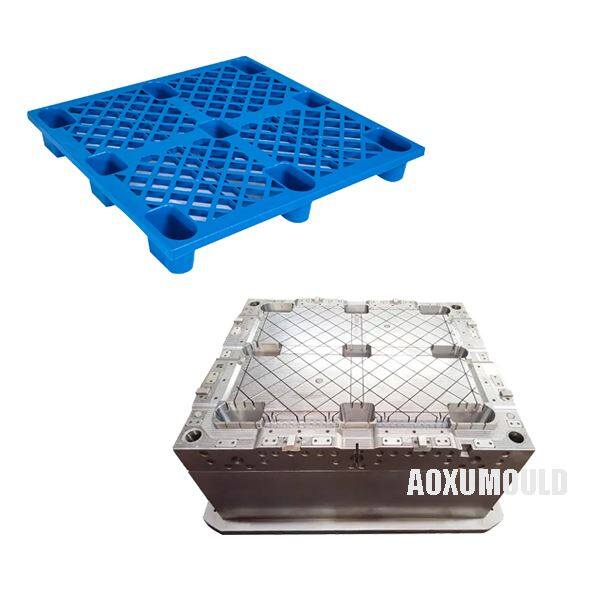
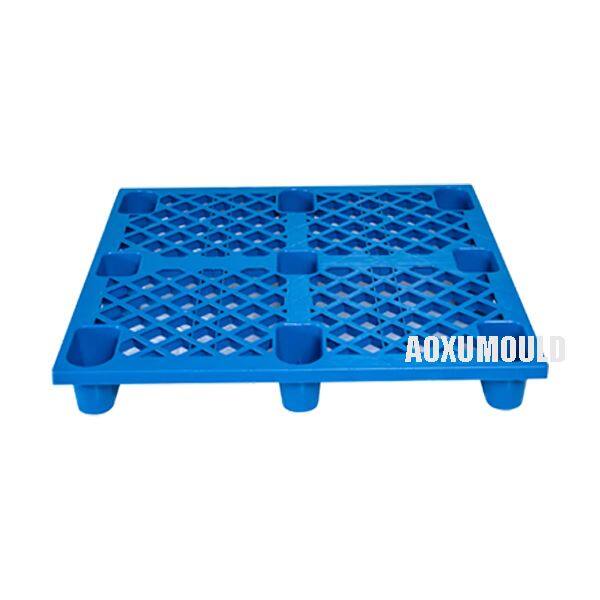
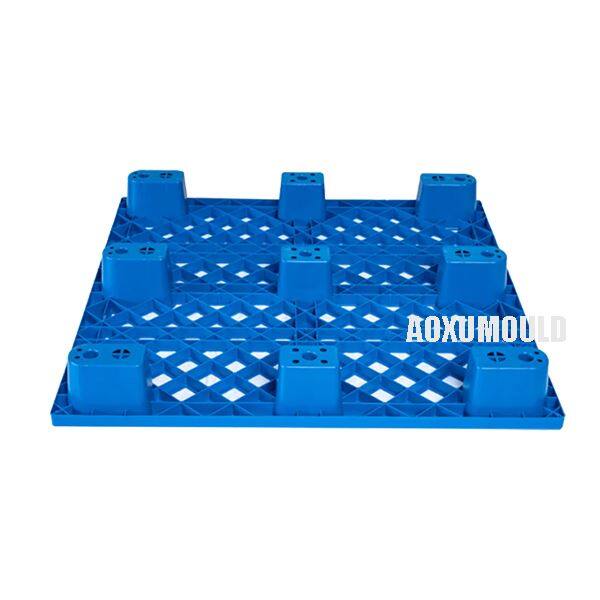
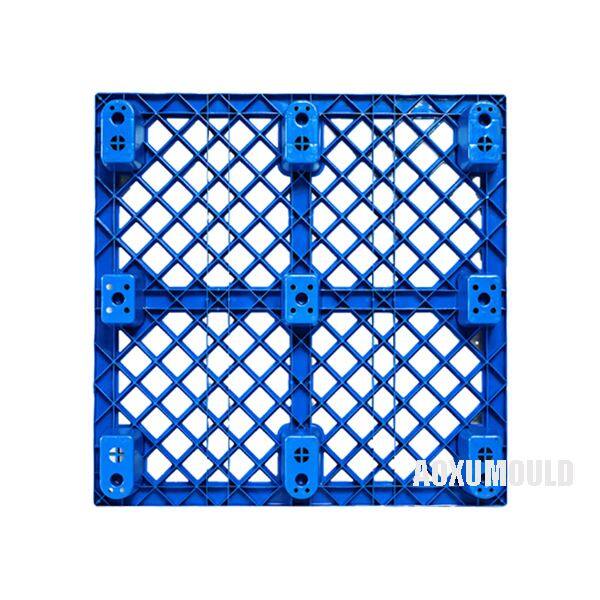
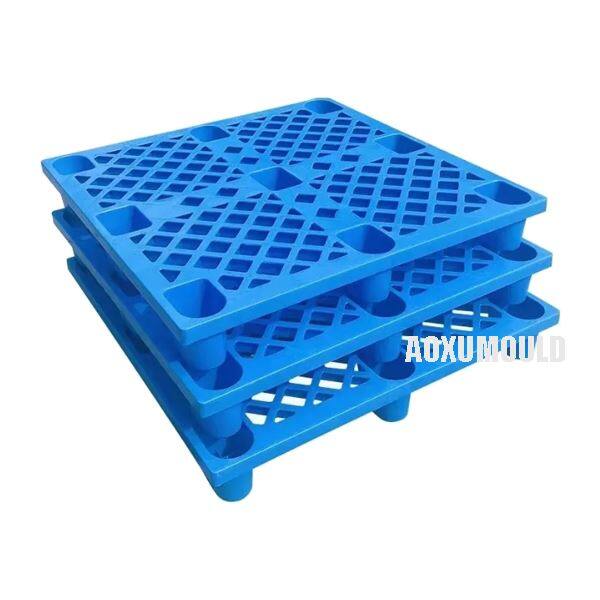
Mould Specifications
|
Mould name |
Single-deck Pallet Mould |
|
Product material |
HDPE, plastic |
|
Product Size |
800X800X140mm |
| Product weight |
12kg |
|
Mould material for cavity &. Core |
P20 |
|
Mould base |
C45 |
|
Injection system |
Hot runner |
|
Suitable injection machine |
2700T |
|
Mould size |
1350X1350X850mm |
|
Mould lifetime |
more than 300,000pcs |
Advantages of Single-deck Plastic Pallets
1. Lightweight & Easy to Handle
Plastic pallets are significantly lighter than wood or metal, reducing transportation costs and worker fatigue.
Easier to move manually or with material handling equipment.
2. Durability & Long Lifespan
Resistant to cracks, splintering, and corrosion (unlike wood or metal).
Can withstand harsh environments (moisture, chemicals, extreme temperatures).
No nails or screws to loosen over time.
3. Hygienic & Easy to Clean
Non-porous surface prevents bacterial growth, making them ideal for:
-Food & beverage industry (FDA/USDA compliance).
-Pharmaceuticals & healthcare (sanitary requirements).
Can be washed, steam-cleaned, or sanitized easily.
4. Customizable Design
Can be molded in different:
-Colors (for branding or categorization).
-Sizes & load capacities (light-duty to heavy-duty).
-Features (anti-slip surfaces, reinforced ribs, RFID tags).
10. Space-Saving & Stackable
Some designs allow nesting (pallets stack inside each other when empty, saving storage space).
Uniform shape optimizes warehouse space.
Manufacturing Process of A Quality Single-deck Pallet Injection Mould

1. Design: The first step in the manufacturing process is designing the single-deck pallet injection mould. This involves creating a detailed blueprint that outlines the shape, size, and specifications of the mould.
2. Material selection: High-quality materials are crucial for the production of a durable and long-lasting injection mould. Typically, materials such as steel is used for their strength and resistance to wear and tear. Generally made from high-strength steel (e.g., P20, H13, or S136) for durability.
3. Mould machining: Once the design and material selection are finalized, the next step is machining the mould. This involves cutting, milling, and shaping the material according to the design specifications.
4. Heat treatment: To improve the hardness and durability of the mould, heat treatment is often performed. This process involves heating the mould to a specific temperature and then cooling it rapidly to increase its strength.
5. Mold Testing & Trial Shots: The mould try-out (also called T1 testing) is a critical phase in injection mould manufacturing where the mould is tested under production-like conditions to verify functionality, part quality, and process stability before mass production.
6. Injection moulding: The final step in the manufacturing process is injection moulding, where molten plastic is injected into the mould cavity under high pressure. This process results in the creation of the single-deck pallet according to the design specifications.
Common Plastic Materials For Single-deck Pallets
|
1. High-Density Polyethylene (HDPE) Key Properties: Excellent impact resistance (good for heavy loads). Moisture and chemical resistant (ideal for food, chemicals, and pharmaceuticals). UV-stabilized options available for outdoor use. Advantages: Lightweight yet strong. Recyclable and eco-friendly. Resists warping and cracking. Common Uses: Food and beverage storage. Export packaging (no fumigation needed). 2. Polypropylene (PP) Key Properties: High stiffness and fatigue resistance. Good chemical resistance (acids, alkalis). Lighter than HDPE but slightly less impact-resistant. Advantages: Cost-effective for medium-duty applications. Can be reinforced with glass fibers for extra strength. Common Uses: Warehouse logistics. Automotive parts handling. 3. Reinforced Polypropylene (Glass-Filled PP) Key Properties: Contains glass fibers (10%-30%) for enhanced rigidity. Higher load capacity than standard PP. Better dimensional stability (less warping). Advantages: Stronger than pure PP, suitable for heavy-duty pallets. Maintains good chemical resistance. Common Uses: Heavy industrial applications. Automated storage systems (due to high rigidity).
|
Design For Product &. Mould

Design Considerations:
Rib Reinforcements: For structural strength.
Anti-Slip Features: Textured or raised patterns on the surface.
Fork Pocket Design: Allows forklift access.
Nesting or Stackability: Some designs allow pallets to nest for storage efficiency.
How To Molding A Single-deck Pallet?
Package &. Delivery

Mould Components
Mould Steel

Hot Runner System

Standard Parts

FAQ
|
Customers' Feedback


