

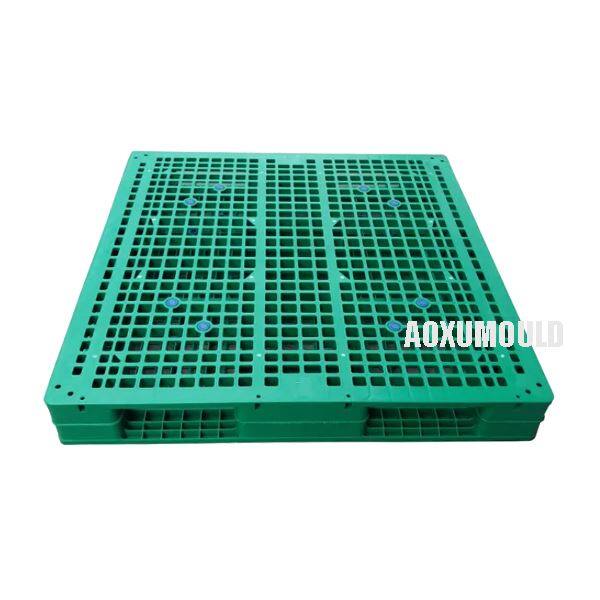
Mould Specifications
|
Mould name |
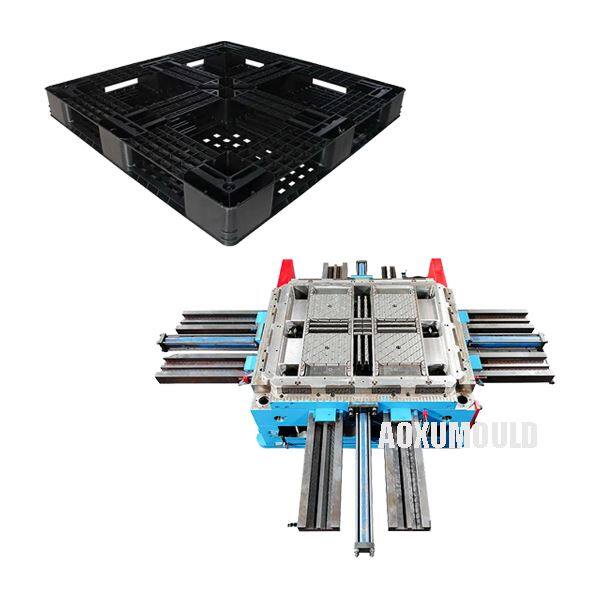
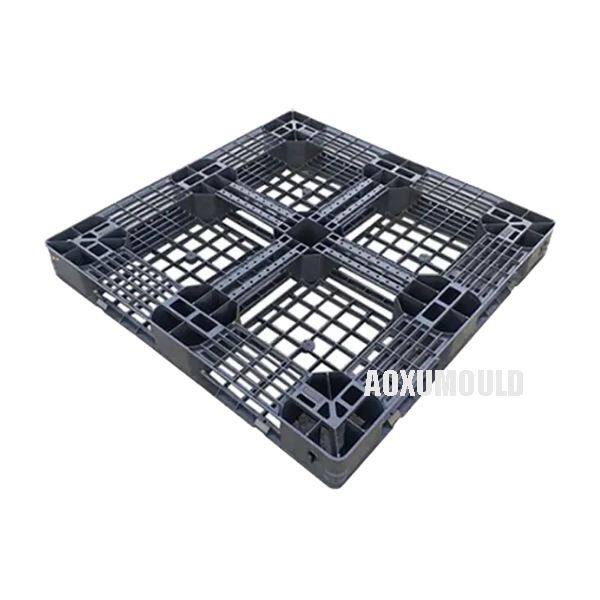
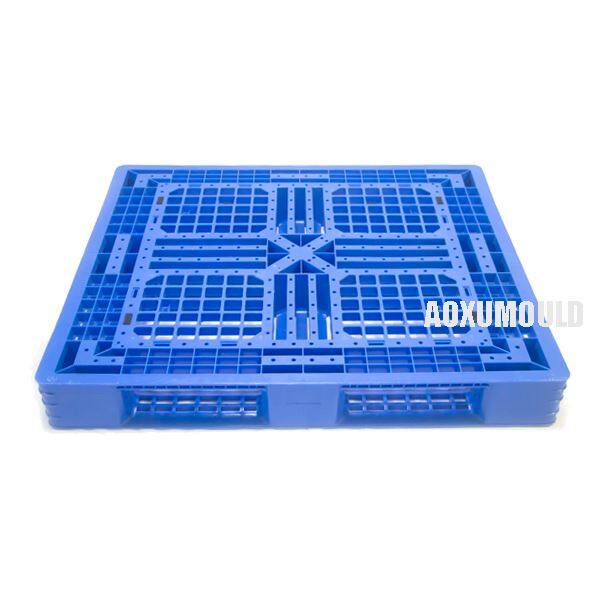
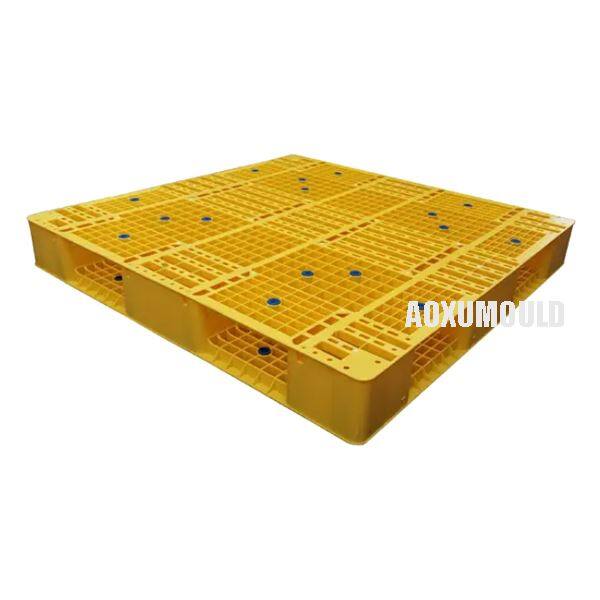
Double-side Pallet Mould |
|
Product material |
HDPE, plastic |
|
Product Size |
1200X1000X125mm |
| Product weight | 20kg |
|
Mould material for cavity &. Core |
P20 |
|
Mould base |
C45 |
|
Injection system |
Hot runner |
|
Suitable injection machine |
2700T |
|
Mould size |
1600X1450X850mm |
|
Mould lifetime |
more than 500,000pcs |
How To Choose A Double-side or Single-side Pallet?

The front and back structures of double-sided plastic pallet are the same, the surface has mesh and plate, both sides can be used;
Single-side pallet can only use one side, there are two kinds of mesh and flat plate, the bottom of the Sichuan, field and nine character square foot cushion, according to the different carrying capacity of light series, standard series and overload series three standards;
1.Consider Your Pallet Usage:
Choose Double-Side Pallet Mould If:
Reversible Use Needed – Pallets must be flipped for even wear and longer lifespan.
Heavy-Duty Applications – For racking, forklift handling, or multi-directional loading.
High Durability Required – Industries like automotive, chemicals, or heavy logistics.
Hygienic Needs – Food/pharma sectors where both sides must be clean and load-bearing.
Choose Single-Side Pallet Mould If:
One-Way/Disposable Use – Export, lightweight, or short-term shipments.
Cost Sensitivity – Lower mould and production costs.
Simpler Storage – Flat-bottom pallets for static stacking.
Basic Logistics – No need for reversible or rackable features.
2. Industry-Specific Needs
Double-Side Preferred For:
Warehousing & rack systems.
Automated logistics (robotic handling).
Cold chain/food-grade pallets (easy cleaning).
Single-Side Preferred For:
Export packaging (one-time use).
Retail/light manufacturing.
Selection Of Pallet Mould Steel
Key Factors in Steel Selection:
-Mould Lifespan – How many cycles must it endure?
-Production Volume – High-volume needs hardened steel.
-Pallet Material – Abrasive plastics (e.g., fiber-reinforced) require tougher steel.
-Budget – Balance cost vs. performance.
1. Pre-Hardened Steel (Mid-Range Cost, Moderate Durability)
Grades: P20 (1.2311/1.2312), 718 (1.2738)
Pros:
Good machinability & polishability.
Pre-hardened (HRC 28-36), ready for use.
Cost-effective for medium production (100k-500k cycles).
Cons:
Less wear-resistant than hardened steels.
Best For:
Single-side pallets or low/medium-volume double-side moulds.
2. Hardened Tool Steel (High Durability, Expensive)
Grades: H13 (1.2344), S7, NAK80 (1.2738 modified)
Pros:
High wear resistance (HRC 45-55).
Long lifespan (1M+ cycles).
Resists deformation under high pressure.
Cons:
Higher cost & longer lead time (heat treatment needed).
Best For:
High-volume double-side pallets or abrasive plastics (e.g., recycled PP/GF).
Manufacturing Process Of A Dould-side Pallet Mould
Making a high-quality double-sided pallet injection mould requires careful planning, precision in designing, and superior craftsmanship. Here are the steps to create a quality mould:
Design: Start by creating a detailed design of the double-sided pallet injection mould. Consider factors such as the size and shape of the pallet, the number of cavities needed, and the material to be used. Make sure the design is optimized for efficiency and durability.
Ejection System Design
Hydraulic cylinders (HPS series) for synchronized ejection.
Stripper plates + ejector pins for smooth release.
Cooling System Optimization
Conformal cooling channels for even temperature distribution.
Beryllium copper inserts in high-heat areas.
2. Material Selection: Choose the right material for the mould based on the requirements of the project. The material should be durable, heat-resistant, and capable of withstanding the pressures of the injection moulding process.
3. CNC Machining: Use high-quality CNC machines to carefully craft the mould according to the design specifications. Precision is key in ensuring that the mould will produce consistent and accurate results.
4. Surface Treatment: Treat the surfaces of the mould to enhance durability and improve the release of the finished pallets. Options for surface treatments include polishing, nitriding, and coatings.
5. Testing: Before using the mould for production, conduct thorough testing to ensure that it meets the required standards. Test for factors such as dimensional accuracy, durability, and ease of use.
6. Maintenance: Regular maintenance of the mould is essential to prolong its lifespan and ensure consistent quality of the pallets produced. Clean the mould after each use and inspect for any signs of wear or damage.
Design For Product &. Mould

Package &. Delivery

Mould Components
Mould Steel

Hot Runner System

Standard Parts

Ejection system Of Double-side Pallet Mould
|
Hydraulic cylinders are critical for ensuring smooth, high-force ejection in double-side pallet moulds, where balanced ejection from both sides is essential. HPS (High-Precision Series) hydraulic cylinders are a popular choice due to their durability, precision, and ability to handle heavy loads. 1. Why Use HPS Hydraulic Cylinders in Double-Side Pallet Moulds? Double-side pallet moulds require synchronized, high-force ejection to prevent warping or sticking. HPS hydraulic cylinders provide: High Ejection Force – Handles heavy pallets (e.g., rackable/nestable designs). Precision Control – Ensures balanced ejection from both mould halves. Durability – Resists wear in high-cycle production environments. Smooth Operation – Reduces jerky movements that could damage the pallet. 2. How HPS Hydraulic Cylinders Work in Double-Side Moulds Ejection Process: Mould Opens – Core and cavity separate. Hydraulic Activation – HPS cylinders on both sides extend simultaneously. Balanced Ejection – Pushes the pallet evenly from top and bottom. Retraction – Cylinders reset for the next cycle. Integration Types: Core-Side Ejection – Used when the pallet sticks more to the core. Cavity-Side Ejection – Helps release textured or ribbed surfaces. Dual-Side Ejection – Best for complex double-side pallets (requires synchronization). 3. Installation & Maintenance Tips Installation: Use synchronized valves to ensure equal force on both sides. Maintenance: Regularly check seals & hydraulic fluid for leaks. |

|
FAQ
|
Customers' Feedback


