

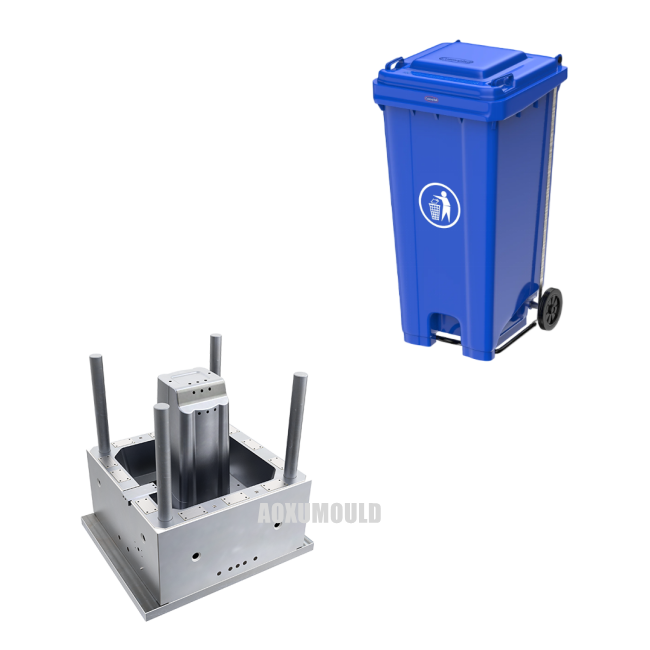
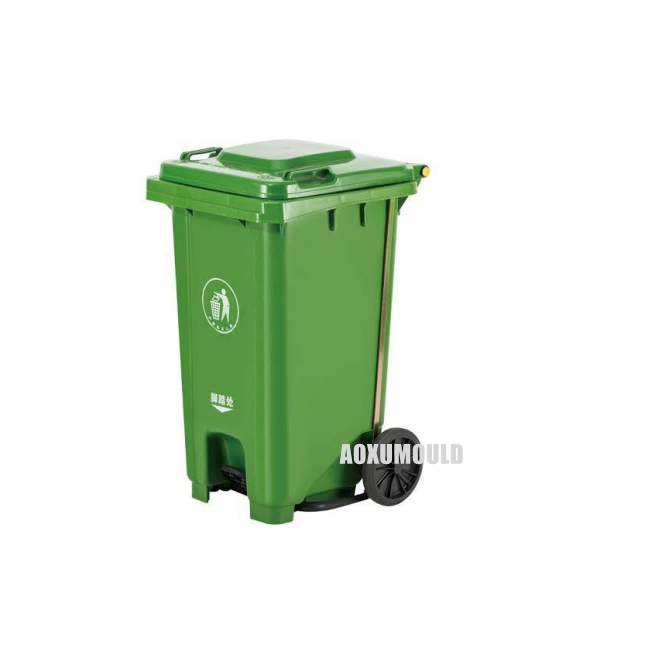
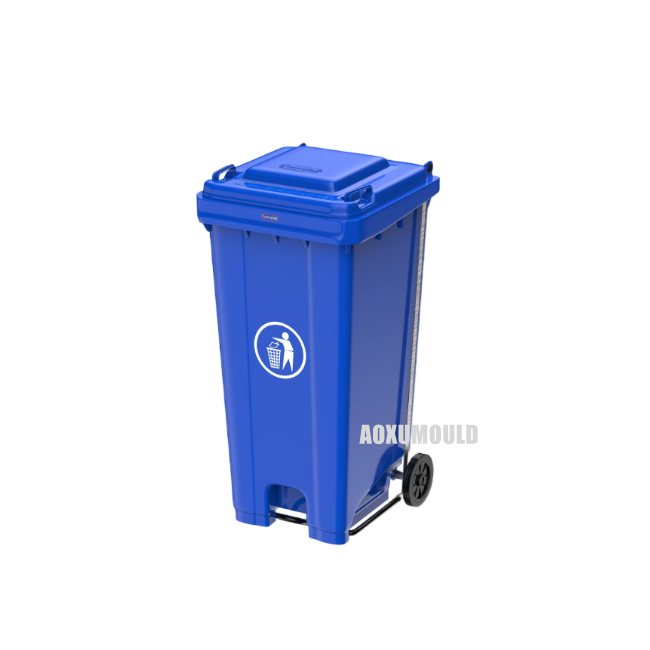
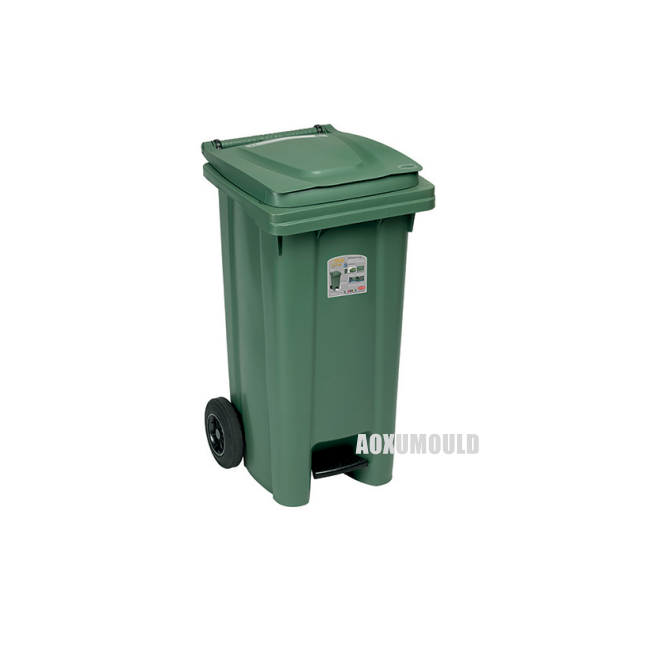
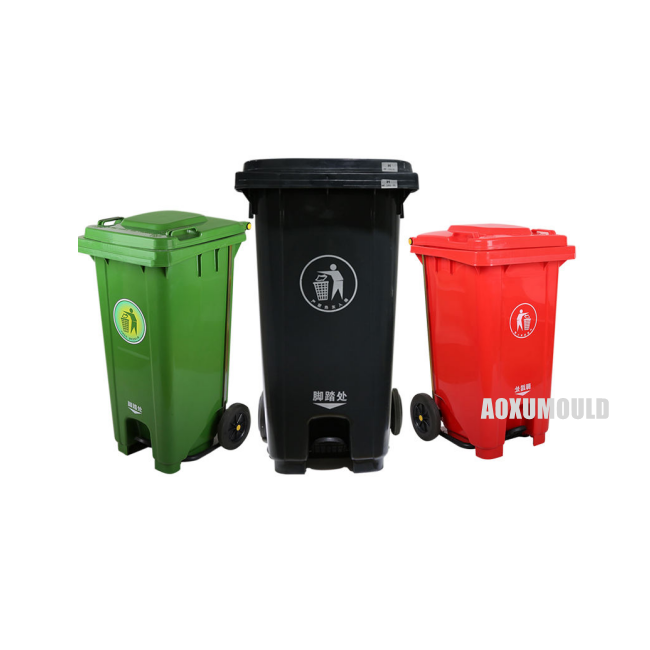
Mould Specifications
|
Mould name |
360L Waste bin injection mould |
|
Product material |
HDPE, plastic |
|
Product Size |
878x596x1098mm |
|
Product capacity |
360 liters |
|
Mould material for cavity &. Core |
P20 |
|
NOs of cavity |
1 cavity |
|
Injection system |
YUDO hot runner |
|
Suitable injection machine |
3300T |
|
Mould size |
1580X1250X1500mm |
| Mould weight |
23500T |
|
Mould lifetime |
more than 500,000pcs |
|
T1 Time |
After design is finalized, 55 days |
The size information of 360L plastic Waste bins

Most 360L plastic bins share these common measurements (length × width × height):
Typical Range:
Length: 700–850 mm
Width: 659–850 mm
Height: 1,100–1,125 mm
Common Combinations:
710 × 850 × 1,120 mm
850 × 700 × 1,100 mm
700 × 850 × 1,100 mm
715 × 853 × 1,125 mm
How To Design A 360L Waste Bin Injection Mould?
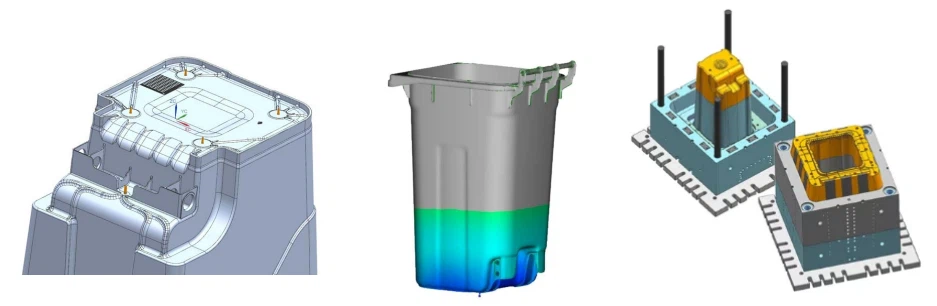
1.Structural Design:
Multi-cavity molds with optimized gating systems to ensure uniform wall thickness and minimize defects.
Sliding block mechanisms for undercuts (angle ≤30°) to simplify demolding.
2.Cooling System:
Internal circulating water channels to reduce cooling time by 20–30% and boost production efficiency.
Software: Moldflow analysis for simulating flow balance and detecting potential flaws.
3.Key Equipment:
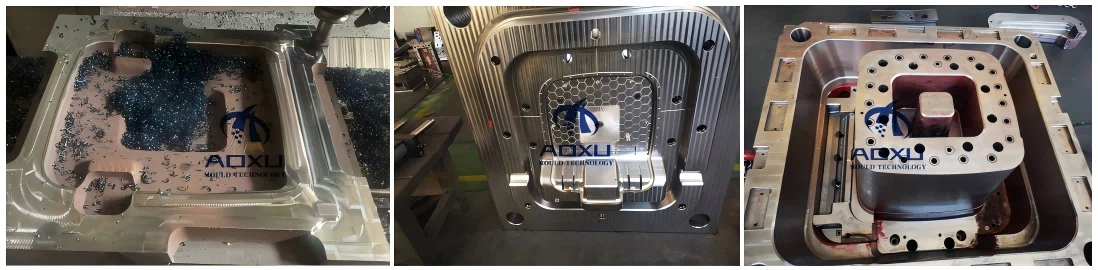
CNC milling (precision: ±0.1 mm), EDM (±0.1 mm), wire cutting, and surface grinding .
4.Tolerance Control:
Critical dimensions maintained within ±0.1 mm via high-speed milling and precision grinding.
5.Surface Treatment:
Anti-rust coatings and tempering to enhance hardness.
Mould Manufacturing Technical Specifications
|
Aspect |
Details |
|
Steel Material |
P20/45# steel : Balances cost, longevity, and surface finish. Alternatives: 718/NAK80 for high-gloss bins, S136 for corrosion resistance. |
|
Mold Design |
- Cooling: Circulating water channels to reduce cooling time by 30% . |
|
Production |
- Cycle: 6–7 days for designing; 60 days for full delivery. |
Daily Maintenance Checklist: 360L Plastic Waste Bin Mould
Warranty: 1-year free repair or >1 million-shot lifespan.
Maintenance Tips:
Daily: Lubricate ejector pins, clean mould surfaces.
Periodic: Clear exhaust slots, repair worn parts.
Storage: Apply rust-proofing, seal cavities.
1. Post-Production Cleaning (Every Cycle/Shift):
- Purge all resin residues from cavities, cores, and runners immediately after production.
- Use approved mold cleaners (non-abrasive, non-corrosive) and soft brass/copper brushes.
- Never use steel tools – avoid surface scratches!
2. Ejector System Care:
- Lubricate ejector pins, guide pins, and sleeves daily with high-temperature mold grease.
- Check for smooth movement; binding indicates misalignment or contamination.
3. Cooling Lines Check:
- Inspect water lines/connectors for leaks or blockages.
- Ensure consistent coolant flow – uneven cooling causes warping.
4. Surface Protection:
- Apply a thin layer of rust preventive spray (e.g., silicone-based) on polished surfaces after cleaning.
- Wipe mold faces with a dry, lint-free cloth before storage.
5. Vent & Gas Channel Inspection:
- Clear vents of debris/clogged plastic using a vent cleaner or compressed air (<80 psi).
- Blocked vents cause burns/short shots.
6. Damage Survey:
- Examine cavities, cores, and parting lines for chips, dents, or wear.
- Report defects immediately to avoid costly repairs.
7. Storage Protocol:
- Close and clamp the mould securely when not in use.
- Store in a dry, temperature-controlled area (humidity <50%).
- Cover with breathable fabric to prevent dust accumulation.


