

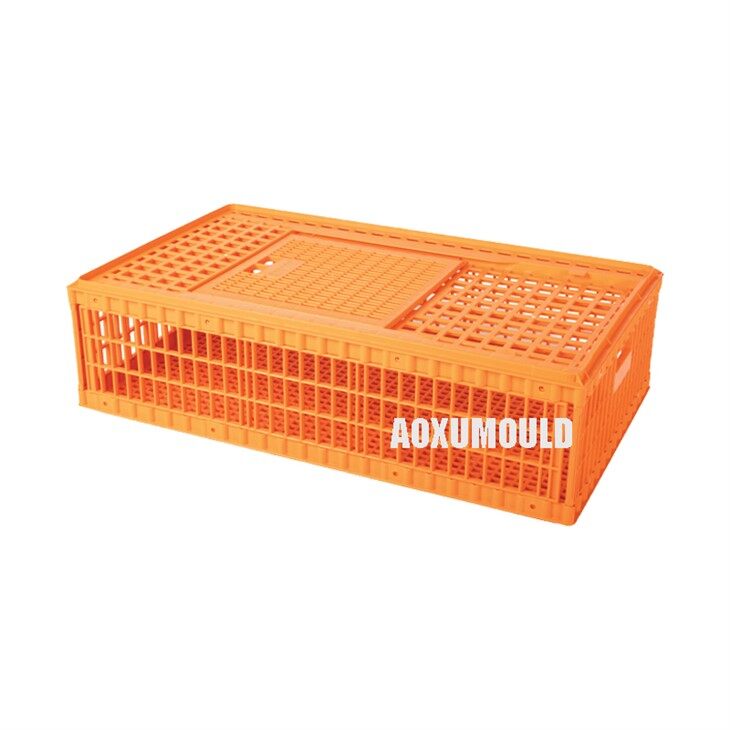
Mould Specifications
|
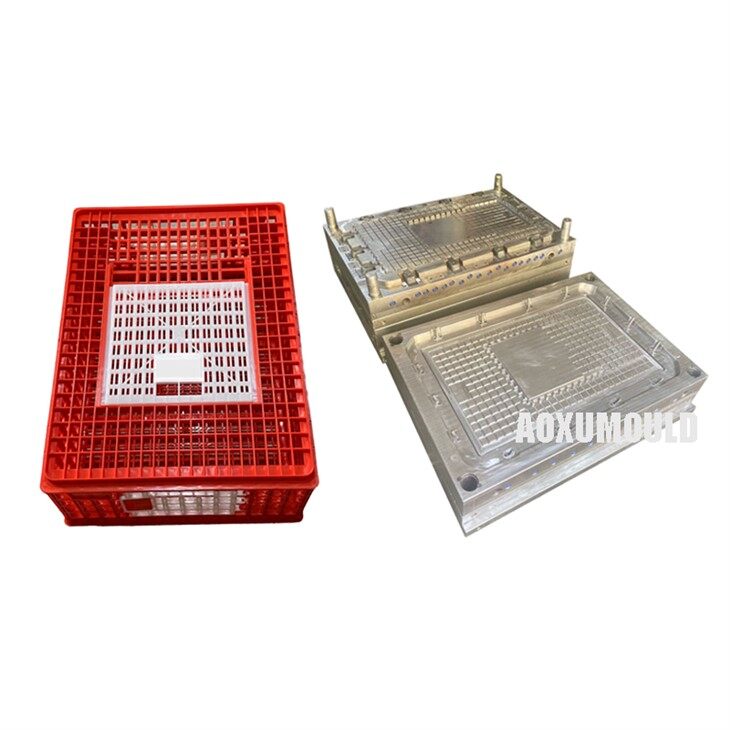
Mould name |
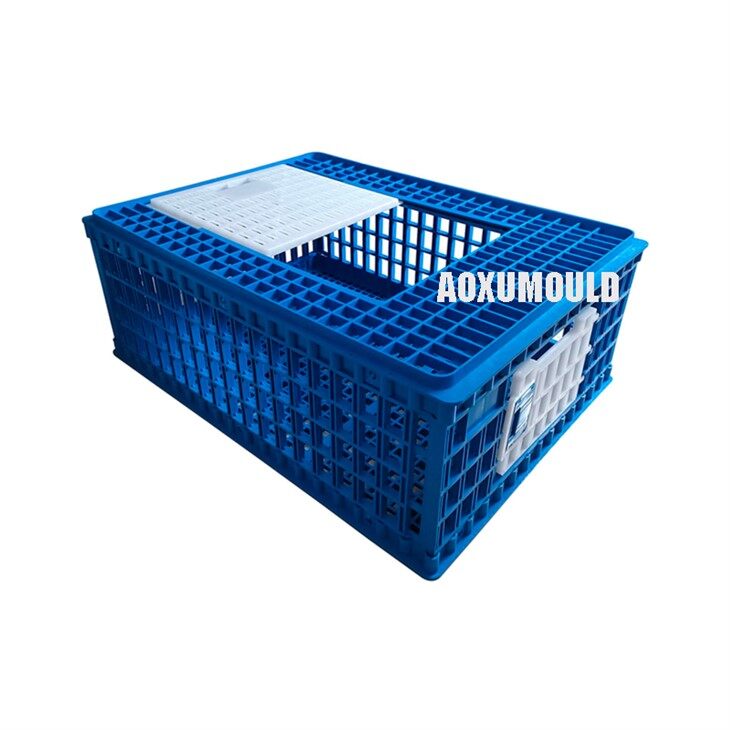
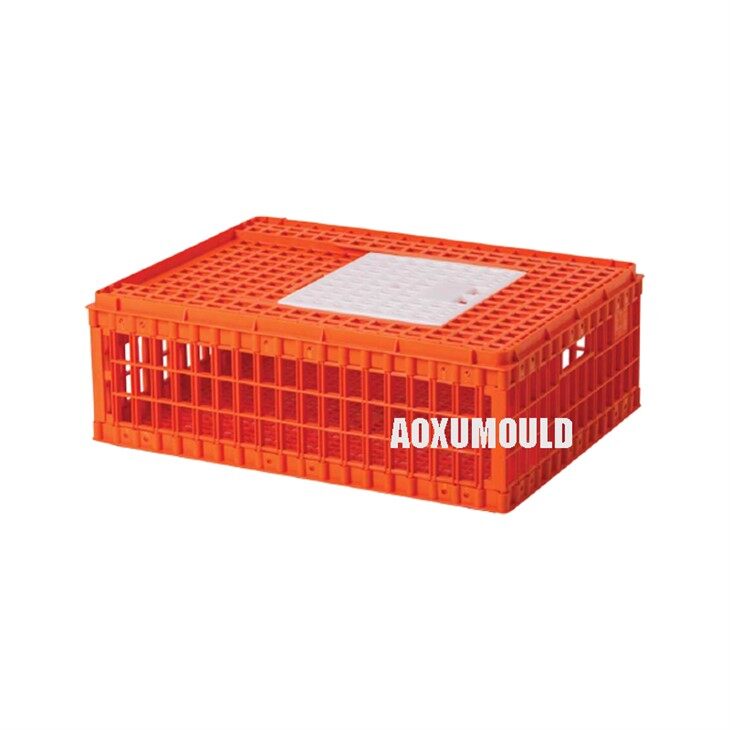
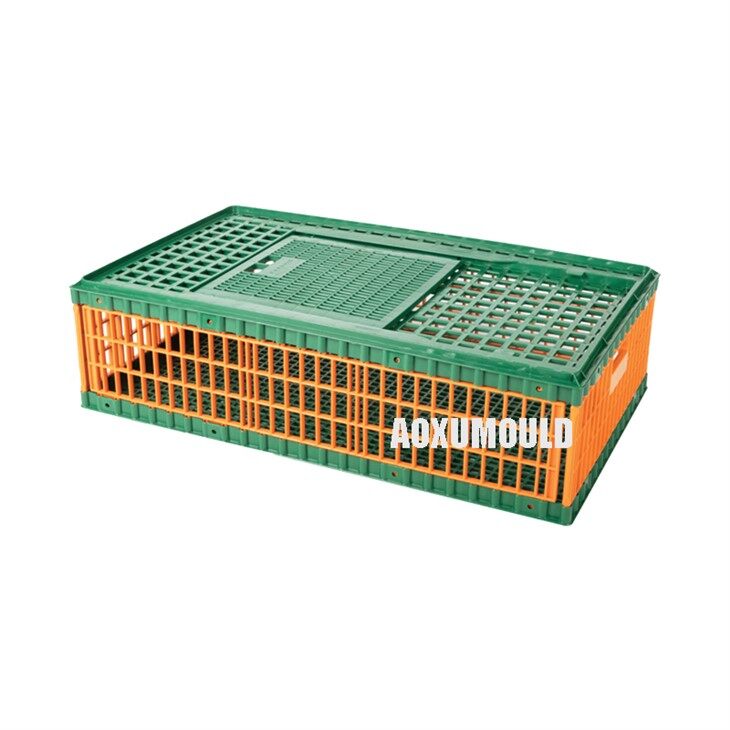
Chicken Plastic Crate Mould |
|
Product material |
HDPE/PP, plastic |
|
Product Size |
900X600X270mm |
|
Product weight |
7.7KG |
|
Mould material for cavity &. Core |
P20, 718 |
|
Mould base |
C45 |
|
Injection system |
Hot runner open gates |
|
Suitable injection machine |
1000T |
|
Mould size |
1100X830X500mm |
|
Mould lifetime |
More than 500,000pcs |
Dimension and Parts of A Chicken Crate

Features of Plastic Folding Chicken Crates
1. Foldable Design (Space-Saving)
Collapsible when empty (reduces storage & transport costs by up to 70%).
Locking mechanisms keep crates stable when stacked.
Easy to assemble/disassemble without tools.
2. Durable & Lightweight Material
Made from high-quality HDPE or PP plastic (impact-resistant, long-lasting).
UV-stabilized (for outdoor use without cracking).
Lightweight (easy to handle, yet strong enough for stacking).
3. Optimal Ventilation
Large ventilation holes (prevents overheating and suffocation).
Uniform airflow (keeps poultry healthy during transport).
4. Stackable & Secure
Interlocking design prevents shifting during transport.
Load-bearing capacity (can hold 4-6 stacked layers).
5. Easy to Clean & Hygienic
Smooth surfaces (prevents waste buildup).
Drainage holes (for quick cleaning and drying).
Chemical-resistant (can be sanitized with disinfectants).
6. Animal Safety & Comfort
Rounded edges (prevents injuries).
Non-slip flooring (reduces leg stress).
Proper spacing (prevents overcrowding).
7. Customizable Options
Different sizes (for chicks, broilers, or mature poultry).
Color choices (for farm or brand identification).
Logo/Text embossing (for branding).
Designs For Product &. Mould
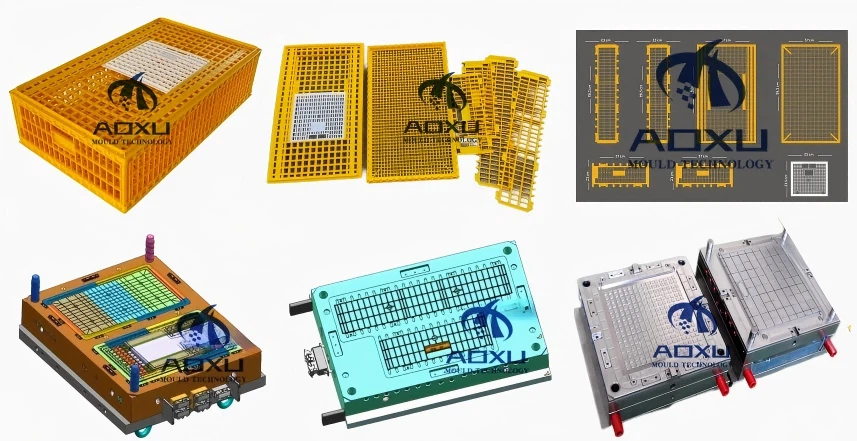
Key Ponits for Design A Chicken Plastic Crate Mould
1. Material Selection
-Mould Steel:
Use hardened steel (e.g., P20, 718, H13) for long-lasting performance.
Corrosion-resistant coatings (e.g., chrome plating) for hygiene and easy maintenance.
-Plastic for Crates:
HDPE (High-Density Polyethylene) – Durable, lightweight, and chemical-resistant.
PP (Polypropylene) – Good impact resistance, suitable for repeated use.
2. Crate Design Considerations
A. Ventilation & Airflow
Adequate ventilation holes (usually 20-30mm diameter) to prevent suffocation.
Optimized hole placement for uniform airflow while maintaining structural strength.
B. Structural Strength & Stackability
Reinforced corners and edges to prevent cracking under load.
Interlocking design for secure stacking during transport.
Weight distribution to avoid deformation when stacked (usually 4-6 layers high).
C. Bird Safety & Comfort
Smooth, rounded edges to prevent injuries.
Non-slip flooring (textured surface) to minimize leg injuries.
Proper spacing to avoid overcrowding (varies by poultry size).
D. Easy Cleaning & Hygiene
Drainage holes at the bottom for quick cleaning.
Smooth internal surfaces to prevent waste buildup.
How to Manufacture A Quality Chicken Crate Mould?
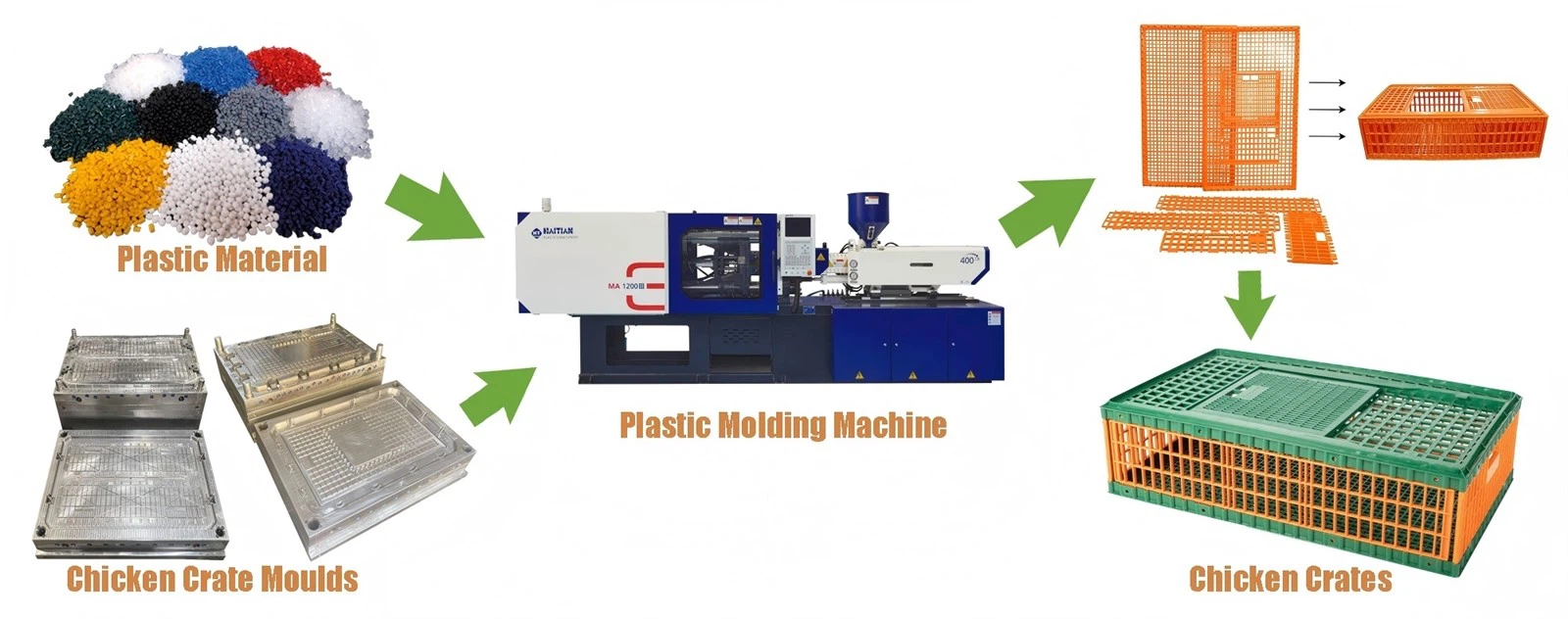
Manufacturing a high-quality chicken crate mold requires precision engineering, durable materials, and strict quality control. Below is a step-by-step guide to ensure optimal performance, longevity, and efficiency in production.
1. Design: The first step in manufacturing a quality chicken crate injection mould is to design it thoroughly. Consider the dimensions of the chicken crate, the material it will be made from, and any specific features or requirements. Using computer-aided design (CAD) software can help you create a detailed and accurate blueprint for the mould.
2. Material Selection: Choose a high-quality material for the mould that can withstand the rigors of injection moulding and produce durable, long-lasting crates. Common materials used for injection moulds include hardened steel and beryllium copper.
A. Mold Core & Cavity Steel
Hardened Steel (H13, P20, 718H) – Best for long production runs.
Stainless Steel (S136) – For corrosion resistance (important for hygiene).
B. Plastic Material for Crates
HDPE (High-Density Polyethylene) – Most common (durable, lightweight).
PP (Polypropylene) – Good for impact resistance.
3. Precision Machining: The mould should be machined with precision to ensure that the dimensions are accurate and the surface finish is smooth. CNC machining is often used to achieve the tight tolerances required for a quality chicken crate injection mould.
4. Cooling System: A well-designed cooling system is essential for maintaining consistent temperatures during the injection moulding process. Proper cooling helps prevent warping and ensures that the finished chicken crates meet the required specifications.
5. Testing and Quality Control: Before mass production, the chicken crate injection mould should undergo thorough testing to ensure that it functions properly and produces high-quality crates. Perform test runs with different materials and parameters to identify any potential issues and make necessary adjustments.
6. Maintenance: Regular maintenance and cleaning of the injection mould will help prolong its lifespan and ensure consistent performance. Inspect the mould regularly for signs of wear or damage and address any issues promptly to prevent production delays.


