

Office Chair Mould
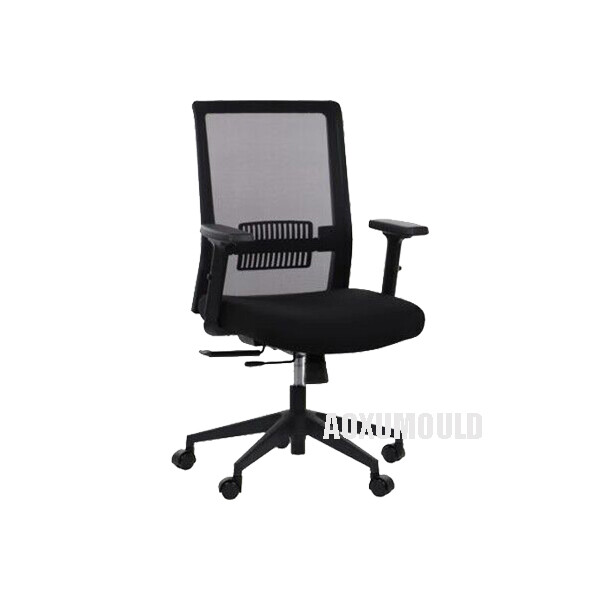
Office chair mold is the mould used in the production of office chairs. The size of office chair mould can be dramatic different. The large one like seat base is thick and firm, which needs extra consideration of shrinkage, special design of cooling system and compatible eject system to make product perfect ejecting. The small one may be a tiny clip or a lever, the adoption and quality of steel material is the key to make mould accurate and delicate. The quality of the design and production of office chair mould thus has a significant impact on the quality, comfort and durability of office chairs.
Benefits of Office Chair Mould
Precision and Consistency
Office chair molds also provide excellent precision and consistency in the final product. The molds used in the process are designed to precise specifications, ensuring that each office chair is of consistent size and quality. This level of precision is essential to ensure that all products meet the required standards and specifications.
Design Flexibility
Another benefit of office chair molds is their design flexibility. The process allows for complex shapes and intricate details to be easily incorporated into the final product. This design flexibility is particularly beneficial for producing office chairs with unique features or ergonomics. Manufacturers can easily customize molds to create office chairs that meet specific requirements and preferences.
Cost Savings
Office chair molds can also provide cost savings for manufacturers producing plastic chairs. The process is efficient, with minimal material waste and lower labor costs compared to other manufacturing methods. This reduces production costs, making molds a cost-effective solution for producing plastic furniture.
Sustainable
Office chair molds are a sustainable process for producing plastic office chairs. The molds used in the process are typically made of durable materials such as steel or aluminum and can be reused many times. This reduces the need to make new molds for each production run, minimizing waste and environmental impact.

Why Choose Us
Expertise And Experience
We have more than 13 years of experience in creating quality moulds. Our team of experts has the skills and know-how to create your moulds accurately and efficiently.
Cooperate With Us Now
To be winner in the market and satisfy the demands of customers, we conform to the following concepts science:" Quality to be core, good service and reasonable price."
Cutting-Edge Technology
We use the latest in technology and equipment to ensure that your moulds are created to the highest standard. Our state-of-the-art machinery allows us to produce intricate and complex designs with ease.
Customization
We understand that every project is unique, which is why we offer customized mould solutions to fit your specific needs. Our team will work closely with you to ensure that your moulds are tailored to your exact specifications.
The process of making plastic parts for office chairs usually involves a method called injection molding. This is a manufacturing technique that creates parts from thermoplastics and other materials that can be heated and remolded. The following is an overview of the process.
The process begins when the plastic pellets are heated to molten. The molten plastic is then injected into the mold under high pressure and begins to cool and harden into the shape of the mold. Once the plastic is completely cooled and solidified, the mold halves are separated and the finished part is ejected. An ejector pin built into the mold pushes the part out.
After ejection, the part may have excess plastic from the injection point, called a gate or runner, which needs to be trimmed off. The part can also be assembled with additional finishing steps such as painting, polishing, or with other parts.
Throughout the process, precision and control are critical. Accuracy control is achieved during the design and processing of the mold, and the parameters of the injection molding machine are carefully set to ensure that the finished product has the correct dimensions, strength, and surface finish.
What Parts Molds Does Office Chair Mould have?
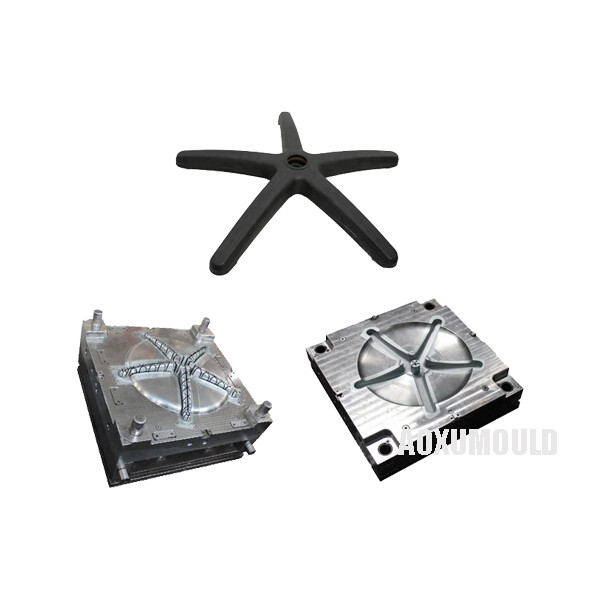
Plastic office chair leg mold
Plastic office chair leg is an important part of plastic office chair. So its mold is quite important for office chair.
Office chair armrest mold
Office chair armrest has left and right edition design. But the top design, the left and right are the same. 3 d parts design according to customer samples. Choose plastic armrests for office chairs. Because armrest wall thickness is very thick, its material needs to add additive so, wait like glass fiber, calcium carbonate.
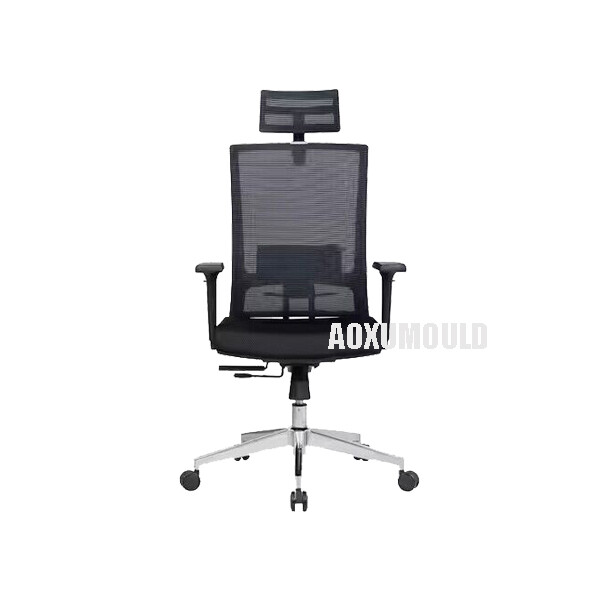
Office chair headrest mold
The head rest of the office chair consists of two parts. A partial framework, we can call it a body part. The second part is the fixed part. The headrest needs to be fitted to the sofa. The headrest body has grooves and space to accommodate the sofa. The outside is covered with leather. So the second part is used to secure the sofa and leather to the plastic headrest.
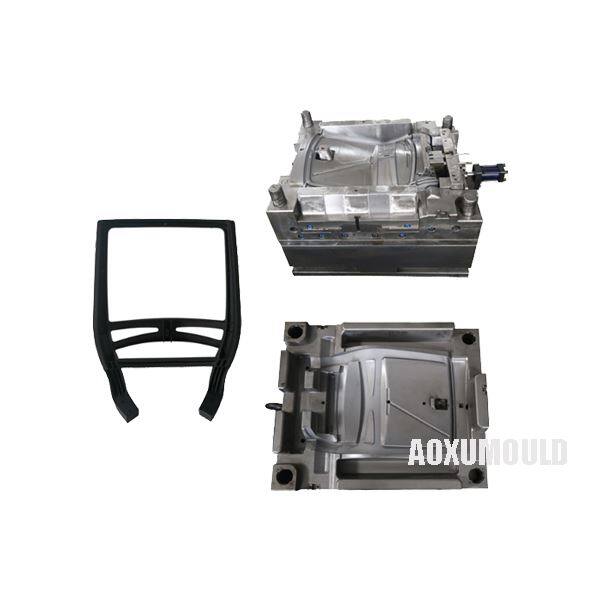
Mold for the back of office chair
The back of this office chair has two parts. The design makes it easy to clip soft materials and fabrics firmly to the office chair. The mold includes a core, a cavity and a mold base. Mold base has standardization. There are 36 different types of mold base. Choosing the right mold holder is the most important work in mold design.
The Key Points of Designing a Office Chair Mould
Designing an office chair mold is a complex process that requires an in-depth understanding of the injection molding process, ergonomics and material selection to ensure that the product meets the comfort and aesthetic requirements of the workspace. The following are key points that should be considered:
Ergonomics
Ergonomics is a crucial factor when designing office chair molds, the angle and curvature of the backrest should support the natural curve of the spine. The mold design uses features such as height adjustment, lumbar support and armrests. Back pain, fatigue and other problems can be relieved by adjusting the seat height and backrest angle.
Material Selection
The plastic material used depends on the specific component. For example, structural components like bases or armrests may be made of durable materials like polypropylene or ABS, while softer components like cushion supports may be made of more resilient materials. Plastics are usually in the form of small particles.
Manufacturing process
The manufacturing process chosen needs to be compatible with the design and material of the office chair. For example, if the design includes complex geometry, or if the material is a heat-resistant plastic, injection molding may be the preferred method. However, if you are manufacturing metal parts, then die casting may be more appropriate.
Analysis on the Key Quality Points of Office Chair Mould
Judge the cycle period of the chair mould
If the cooling water temperature is between 8-12℃ and the seat weight is between 1700g to 2400g, then the cycle period should be between 35s to 50s. If the plastic melting and injection are performed under the function of an accumulator, please check the waterway to ensure whether the waterway is straight-through or not, and whether the direction of the waterway is consistent with the shape of the chair mould.
Ensure the lifespan of the chair mould
If you cut the flash by hand, you can produce 10 million molds with this mold. Therefore, you need to check the hardness of the steel material and whether this mold has welded parts. Under normal circumstances, the hardness of steel should be HRC33.
Whether the wall thickness of the chair mould is uniform
Manual work on the parting line is one of the reasons for uneven wall thickness. Of course, most of the causes are due to the poor 3D design of the office chair and the poor polishing of the cavity and core. Therefore, when we start designing a set of office chair moulds, the thickness should be considered. Sometimes, we need to thicken some parts to ensure the strength of the chair. But at the same time, we also need to carefully consider this issue. Because uneven wall thickness will cause uneven injection molding and cooling. This will slow down the injection molding speed and cause shrinkage.
Ensure that the chair mould is light and sturdy enough
When designing injection molded office chairs, we need to consider their weight and strength. You can increase more reinforcing ribs to make the bottom of the chair strong enough. In order to solve this issue, you need to analyze the force in each part. To make a lightweight chair with good strength, you need to select a PP material with a low melt index.
Design the exhaust system on the back of the chair mould
Some office chair back designs are very complicated because there are many plastic welding points, which may cause poor exhaust when the material is filled and flow. Therefore, you need to analyze whether some areas of the mold need to be exhausted through mold flow analysis.
Ensure the durability of the chair mould polishing
To prevent the plastic from corroding the cavity and core of the mold, you need to ensure that the steel is chrome-plated and that the hardness exceeds 33. If you use some recycled materials for production, the chair mold must be chrome-plated. Otherwise, the mold will need to be polished frequently.
Causes of Flash, Splash and Burr on Office Chair Mould
Mold Wear Issues: The most common issue that causes flashing is a worn or old office chair mold that no longer fits tightly together, allow the plastic to leak out. This is addressed via office chair mold repair or redesign.
Pressure and Flow Issues: Flash can be an indicator of pressure or temperature issues in the office chair mold. Redesigning the office chair mold with better gates or hot runners can assist in dealing with the issue.
Mold Design Issues: A office chair mold may also just be poorly designed, either with gaps that cause flashing or pressure issues due to multiple parts or overly complex geometries that cause poor fits. The office chair mold may have to be redesigned or retooled.
Mold Clamping: Lastly, the issue could be that the plates are not clamped with sufficient force to avoid resin forcing its way between plates. Increasing the plate clamping force or moving the office chair mold to a machine with higher clamping force can solve this issue.
Cleaning: Regularly clean the surface and interior of the office chair mold to remove dust, oil and other impurities. You can use a clean soft cloth or a small cotton swab to clean it.
Lubrication: Regularly lubricate the moving parts in the office chair mold, such as ejectors, slides, guide pins, guide sleeves, etc., to ensure smooth operation.
Rust prevention: When the office chair mold is out of use, it should be treated with rust prevention. Common rust prevention methods include using rust prevention oil or rust prevention grease, which is applied to the mold surface to prevent rust4.
Appearance maintenance: For the outside of the office chair mold, a layer of paint can be applied to prevent rust. The mold should be kept tightly closed during storage to prevent dust from entering the cavity.
Regular inspection and replacement: Regularly check the exhaust groove of the office chair mold to prevent trapped air from burning black due to poor exhaust. Timely correct the damaged and worn parts in the mold to restore its normal function.
Storage environment: The office chair mold should be stored in a well-ventilated environment with a relative humidity below 70% to avoid rust caused by excessive humidity. If the office chair mold is exposed to sunlight for a long time, it may cause oxidation or fading of its surface, so try to avoid direct sunlight.
FAQ
As one of the most professional office chair mould manufacturers and suppliers in China, we're featured by quality products and good price. Please rest assured to buy office chair mould for sale here from our factory. Contact us for customized service.
office chair mould, plastic office chair mould, desk chair mould