

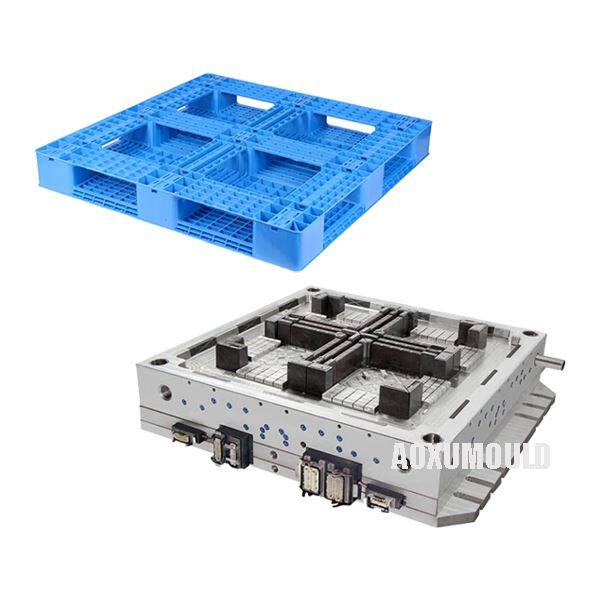
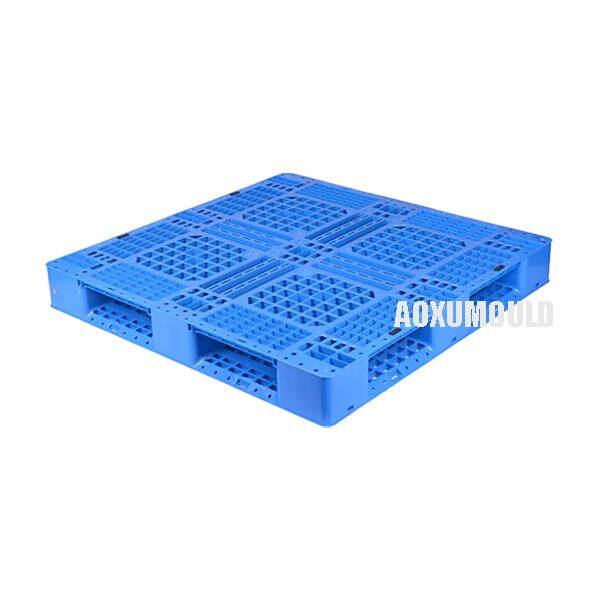
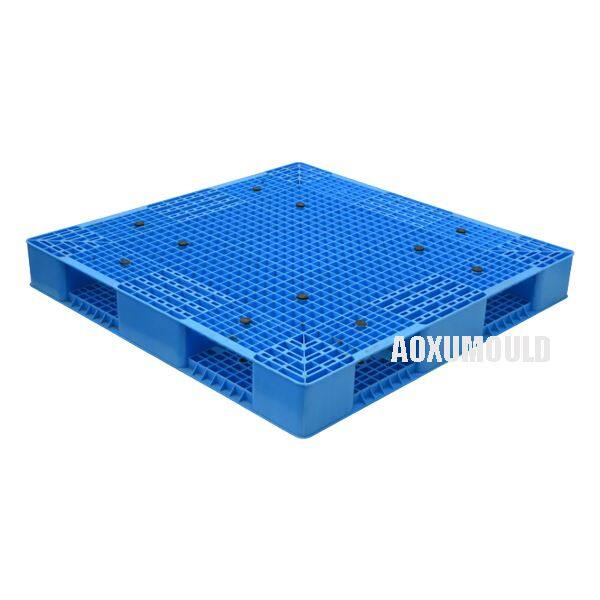
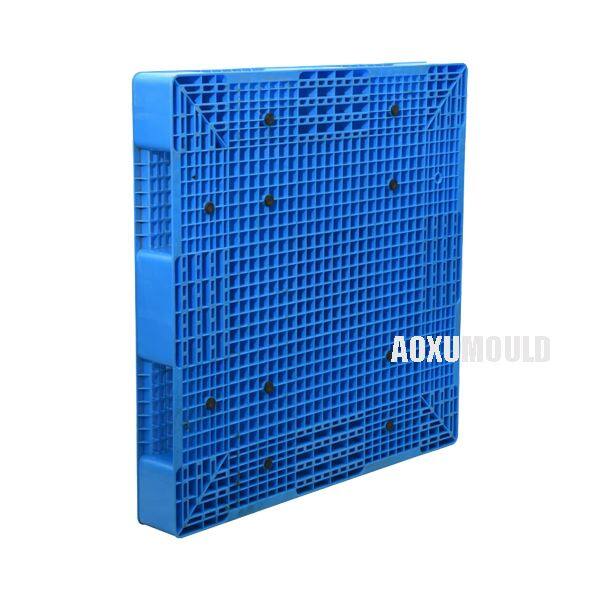
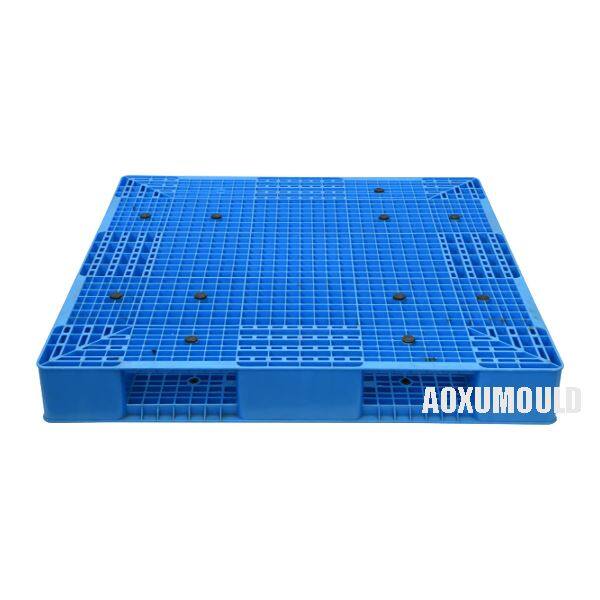
Mould Specifications
|
Mould name |
Double-deck Pallet Mould |
|
Product material |
HDPE, plastic |
|
Product Size |
1200X800X150mm |
| Product weight | 30kg |
|
Mould material for cavity &. Core |
P20 |
|
Mould base |
C45 |
|
Injection system |
Yudo needle-valve hot runner |
|
Suitable injection machine |
2800T |
|
Mould size |
1585X1325X825mm |
|
Mould lifetime |
more than 500,000pcs |
Common Applications For Double-deck Pallet

Warehousing & Logistics–For automated storage and retrieval systems (AS/RS).
Export Packaging–Lightweight yet strong for international shipping.
Food & Beverage Industry–Compliant with hygiene standards.
Automotive & Manufacturing - Heavy-duty use for part transportation.
Why Choose HDPE Material To Produce Double-deck Pallet?

1. High Strength-to-Weight Ratio
Lightweight yet strong – HDPE pallets are 30-50% lighter than wood or metal, reducing shipping costs while maintaining high load capacity (up to 2,000–4,000 kg dynamic load).
Impact-resistant – Withstands drops, rough handling, and heavy loads without cracking.
2. Long Lifespan & Durability
Weatherproof – Resists moisture, UV rays, and temperature extremes (-40°C to +60°C), making it ideal for outdoor and cold storage use.
No rotting, splintering, or corrosion – Unlike wood or metal, HDPE won't degrade from water, chemicals, or pests.
10+ years of service life – Far outlasts wood (2–5 years) with minimal maintenance.
3. Cost-Effective Over Time
Lower total cost of ownership – Fewer replacements and repairs vs. wood/metal.
Recyclable – Scrap HDPE can be reprocessed, reducing waste and material costs.
4. Hygiene & Safety Compliance
Easy to clean & non-porous – Meets FDA, USDA, and EU food safety standards (ideal for pharmaceuticals, food, and beverages).
No nails or splinters – Safer for workers and products.
5. Design Flexibility
Easily molded into complex shapes – Double-deck pallets can be optimized for:
Nestable/stackable designs (saving storage space).
Anti-slip surfaces, reinforced ribs, and custom logos.
Forklift & racking compatibility.
6. Chemical & Moisture Resistance
Resists oils, acids, and solvents – Perfect for automotive, chemical, and industrial use.
Waterproof – Won't absorb liquids (unlike wood), preventing mold and bacterial growth.
7. Sustainability Benefits
Made from recyclable materials – Many HDPE pallets use 30–100% recycled content.
Reduces deforestation – Replaces wooden pallets, lowering environmental impact.
How To Make A Quality Plastic Double-deck Pallet Mould?
1. Design: Start by creating a detailed design for the double-deck pallet mould. This design should include the dimensions, shape, and features of the pallet. Consider the weight capacity, handling requirements, and any special features required for the specific application.
2. Material Selection: Choose high-quality, durable materials for the mould. Opt for materials that can withstand the pressures and temperatures required for plastic injection moulding. Quality materials will ensure the longevity and performance of the mould.
|
Component |
Recommended Steel |
Hardness (HRC) |
Why? |
|
Cavity & Core |
P20, 718, H13 |
28–32 HRC |
Good polishability, wear resistance |
|
Ejector Pins |
SKD61 |
50–54 HRC |
High durability for frequent use |
|
Sliders & Guides |
S136 (Stainless) |
48–52 HRC |
Corrosion-resistant |
Precision Machining:
CNC Milling & EDM
High-speed CNC machining – Ensures tight tolerances (±0.02mm).
EDM (Electrical Discharge Machining) – For intricate details & sharp corners.
Polishing & Surface Finish
Mirror polish (Ra ≤ 0.05µm) for smooth pallet surfaces.
Texture etching (for anti-slip patterns).
Cooling System Design
Conformal cooling channels – Follows mould contours for faster, uniform cooling.
Baffles & bubblers – Improve heat dissipation in thick sections.4. Cooling System: Incorporate an efficient cooling system into the mould design to ensure proper heat dissipation during the moulding process. A well-designed cooling system will help prevent warping, shrinkage, and other issues that can affect the quality of the pallet.
5. Venting System: Include a venting system in the mould design to allow for the escape of air and gases during the injection moulding process. Proper venting will help prevent trapped air pockets and ensure the quality of the final product.
6. Testing: Before production begins, thoroughly test the mould to ensure it meets all specifications and requirements. Conduct trial runs to identify any issues or defects that need to be addressed before full-scale production.
7. Maintenance: Proper maintenance of the mould is essential to ensure its longevity and performance. Regular inspections, cleaning, and upkeep will help prevent wear and tear and ensure consistent, high-quality production.
Design For Product &. Mould

Key Features of Double-Deck Pallet Moulds
1.Two-Level Design
Produces pallets with an upper and lower deck, connected by reinforced ribs or support structures.
Enhances load-bearing capacity while maintaining lightweight properties.
2.High-Pressure Injection Molding
Typically made for large-tonnage injection molding machines (e.g., 1000T–4000T clamping force).
Uses engineering plastics like HDPE (High-Density Polyethylene) or PP (Polypropylene) for strength and impact resistance.
3.Modular & Customizable
Moulds can be designed for nestable, stackable, or rackable pallets.
Options for anti-slip surfaces, forklift pockets, and reinforced corners.
4.Hot Runner or Cold Runner Systems
Hot runner systems reduce material waste and cycle time.
Cold runner systems are cost-effective but may require more post-processing.
5.Durable Construction
Made from hardened steel (e.g., P20, 718, H13) for long service life.
Precision CNC machining ensures consistent pallet dimensions.
Package &. Delivery

1.Before the bin mould is shipped, we will check whether the opening and closing of the mould is smooth, the water cooling system,the hydraulic oil system and the hot runner system.
2. The cavity and core are cleaned without iron filings and impurities.
3. Blow the waterway clean to prevent long-term sea transportation from rusting.
4. We spray anti-rust agent on the inside of the mold, spray paint on the outside of the mould, and apply anti -rust oil on the thimble.
5. We will put a nameplate on the mold, it shows the mould name, the year of production and mould information, mould weight and size.
6: Mould parts are provided free of charge (convenient for customers to replace).
Mould Components
Mould Steel

Hot Runner System

Standard Parts

Cold Runner System vs. Hot Runner System
|
1. Regular Cleaning & Inspection After Each Production Run: Remove residual plastic (e.g., HDPE/PP) from the mould using brass or copper scrapers (avoid steel to prevent scratches). Blow out debris from ejector pins, slides, and cooling channels with compressed air. Check for wear/damage on critical components (cavities, cores, guide pins). 2. Lubrication of Moving Parts Apply high-temperature mould grease to: Ejector pins & sleeves, Guide rails & sliders, Sprue bushings Avoid over-lubrication (excess grease attracts dust). 3. Cooling System Maintenance Flush cooling channels every 3–6 months to prevent scale buildup (use descaling agents if needed). Check for leaks or blockages that can cause uneven cooling and warped pallets. 4. Corrosion Prevention Apply a thin layer of rust inhibitor (e.g., silicone spray) before storage. Store moulds in a dry, temperature-controlled environment with humidity <50%. 5. Monitor & Optimize Molding Parameters Avoid excessive injection pressure/clamping force (causes mould stress). Ensure proper melt temperature (HDPE: 180–230°C; PP: 200–250°C) to prevent material degradation.
|
How To Do Good Work For Our Plastic Double-deck Pallet Mould Maintenance?
|
1. Product Requirements: Dimensions (Height, Diameter, Wall Thickness) Design & Complexity (2D/3D drawings, CAD file – STEP/IGS preferred) Material (e.g., HDPE, PP, ABS – affects cooling and shrinkage) Expected Production Volume (e.g., 10,000 pieces/year – affects mould lifespan & steel type) 2. Mould Specifications: Cavity Number (Single or multi-cavity mould) Mould Steel Type (P20, 718H, S136 for corrosion resistance, etc.) Surface Finish (Texture, polishing, etching – e.g., glossy, matte) Ejection System (Ejector pins, stripper plate, air ejection) Runner System (Hot runner vs. cold runner – affects cost & efficiency) 3. Production & Machine Details: Injection Moulding Machine Tonnage (Based on dustbin size) Cycle Time Estimation (Affects production efficiency) 4. Additional Considerations: Lifespan Expectation (50,000 shots vs. 500,000 shots) Secondary Operations (Assembly, labeling, stacking features) Packaging Requirements (If included in the quote) 5. Logistics & Terms: Delivery Time (Standard lead time vs. expedited) Shipping & Payment Terms (FOB, CIF, etc.)
FAQ
|

Customers' Feedback


