

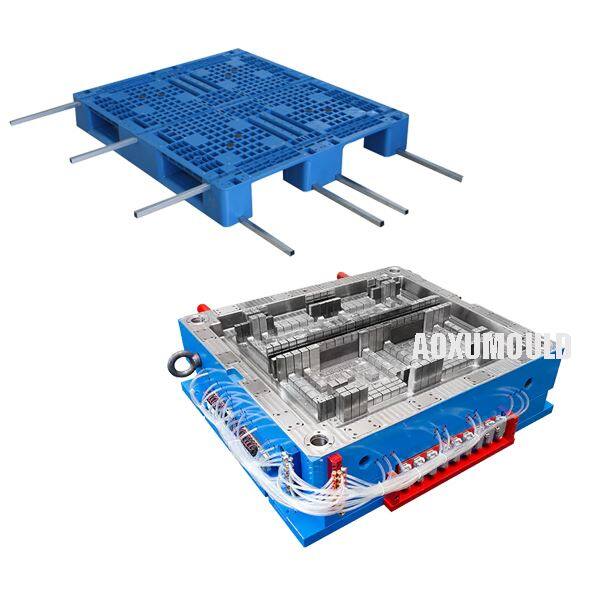
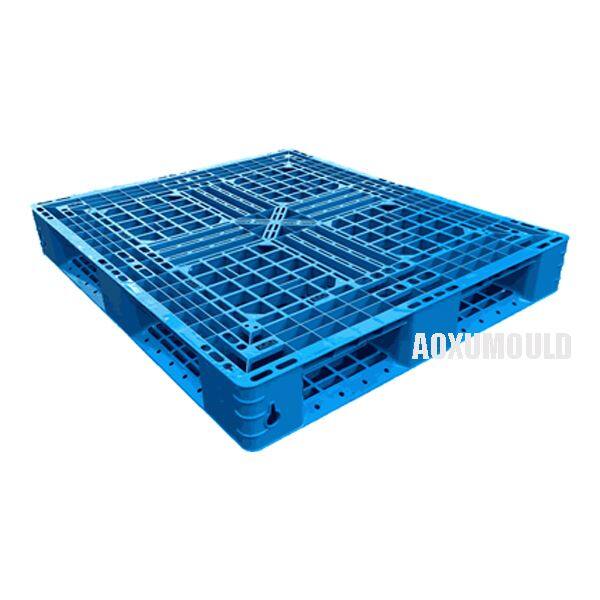
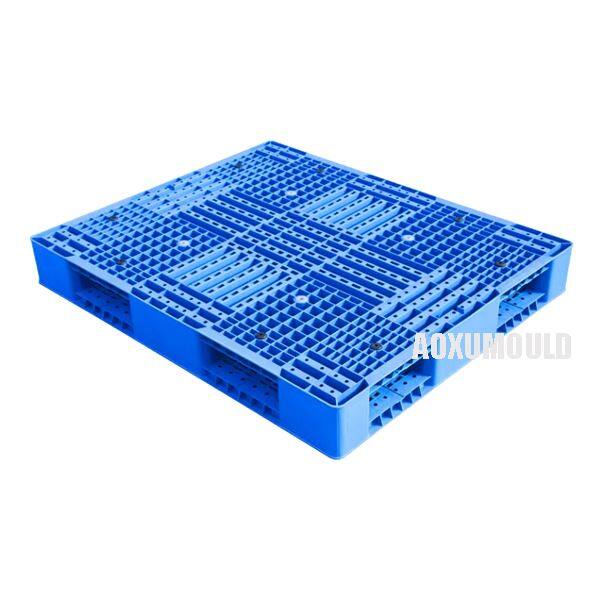
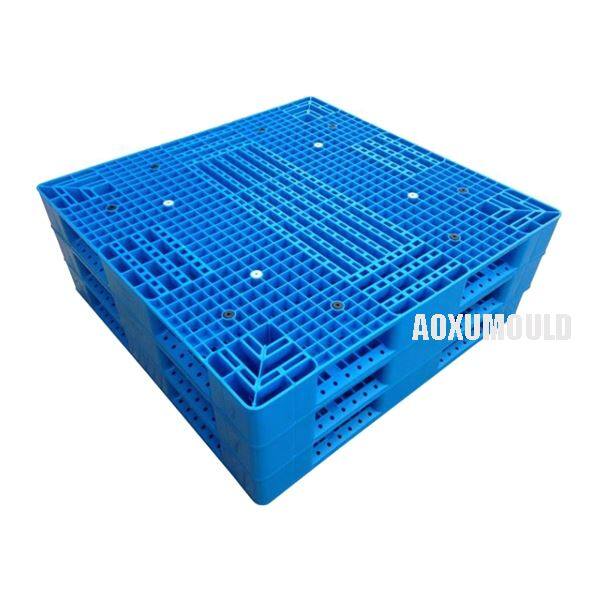
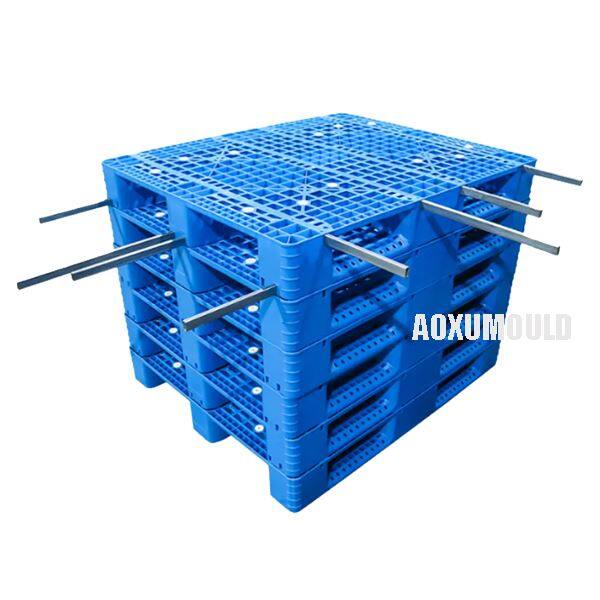
Mould Specifications
|
Mould name |
Heavy-duty Pallet Mould |
|
Product material |
HDPE, plastic |
|
Product Size |
1085X1085X145mm |
| Product weight |
25.6kg |
|
Mould material for cavity &. Core |
P20 |
|
Mould base |
C45 |
|
Injection system |
Hot runner |
|
Suitable injection machine |
3000T |
|
Mould size |
1550X1550X880mm |
|
Mould lifetime |
more than 300,000pcs |
Materials and Production Process of Heavy-duty Pallet Moulds

Materials Used in Heavy-Duty Pallet Moulds
Heavy-duty pallet moulds must withstand high pressure, abrasion, and repeated use, so they are typically made from high-quality tool steels with special treatments:
1. Core Mould Materials
P20 Steel – A common pre-hardened steel (HRC 28-32) for medium-duty moulds.
718H Steel (Modified P20) – Higher hardness (HRC 32-36) and better polishability for long production runs.
H13 Steel (Hot Work Tool Steel) – Excellent heat resistance (HRC 48-52), used for high-volume production.
S136 / Stainless Steel – For corrosion-resistant moulds (e.g., food-grade pallets).
2. Surface Treatments (Enhancing Durability)
Nitriding – Increases surface hardness and wear resistance.
Hard Chrome Plating – Reduces friction and prevents corrosion.
Titanium Nitride (TiN) Coating – Extends mould life in abrasive conditions.

Production Process of Heavy-Duty Pallet Moulds
1. Design & Engineering
3D CAD Modeling – Ensures precise dimensions for pallet strength and functionality.
CAE Analysis – Simulates injection flow, cooling, and stress distribution.
2. CNC Machining
Rough Machining – Milling the basic shape from steel blocks.
Precision CNC Machining – High-accuracy cutting of cavities, cores, and ejector systems.
EDM (Electrical Discharge Machining) – For intricate details and sharp edges.
3. Heat Treatment & Hardening
Quenching & Tempering – Enhances steel hardness (e.g., H13 steel up to HRC 50).
Stress Relieving – Prevents warping during long-term use.
4. Surface Finishing & Polishing
Manual/CNC Polishing – Ensures smooth pallet surfaces (prevents sticking).
Texture Application – Adds anti-slip patterns if required.
5. Assembly & Testing
Mould Assembly – Fitting ejector pins, sliders, and cooling channels.
Trial Injection – Tests mould performance and pallet quality.
Design For Product &. Mould

Key Design Considerations
|
A. Load-Bearing Structure Thick ribs & reinforced legs for high static/dynamic loads. Optimized wall thickness (typically 3–5mm) to balance strength & weight. B. Draft Angles & Part Release 1–3° draft angles on vertical walls for easy ejection. Smooth transitions to avoid stress concentrations. C. Anti-Warping Design Balanced cooling channels to prevent uneven shrinkage. Symmetrical rib patterns for uniform strength. D. Customization Options Nestable/stackable designs for space-saving storage. Forklift entry points (4-way or 2-way access). Drainage holes (for outdoor/cleanroom use).
|
Package &. Delivery

Mould Components
Mould Steel

Hot Runner System

Standard Parts

Advantages of Adding Reinforced Steel to Heavy-Duty Pallets
|

Customers' Feedback


