

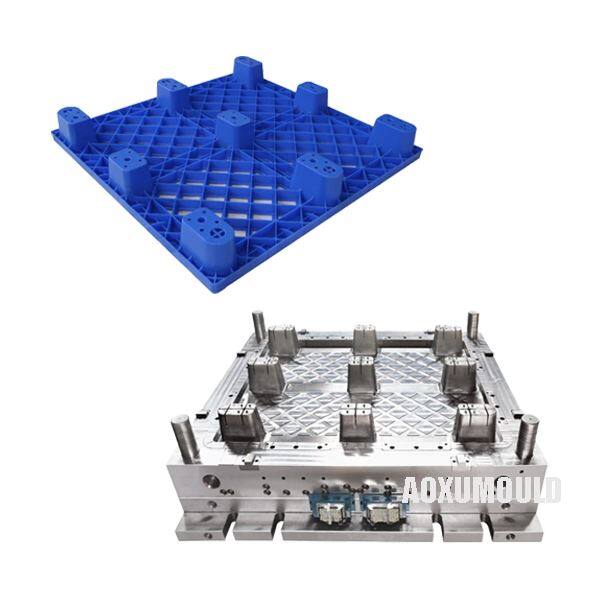
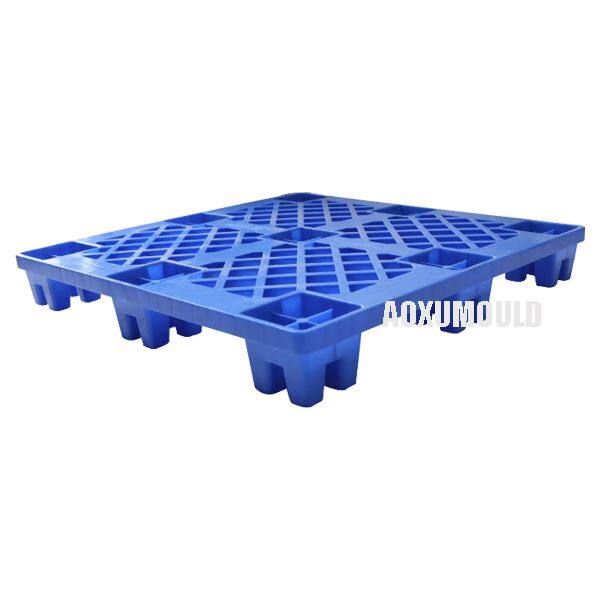
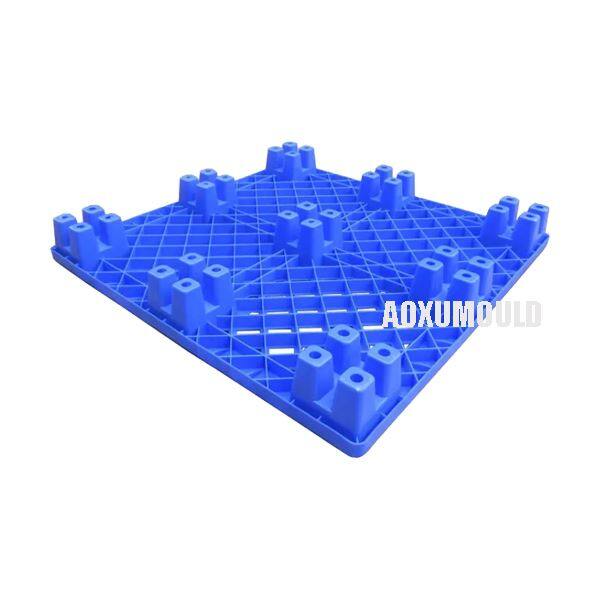
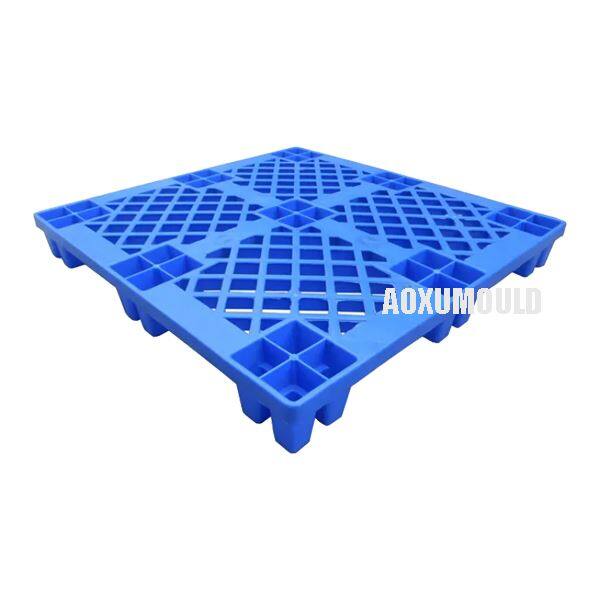
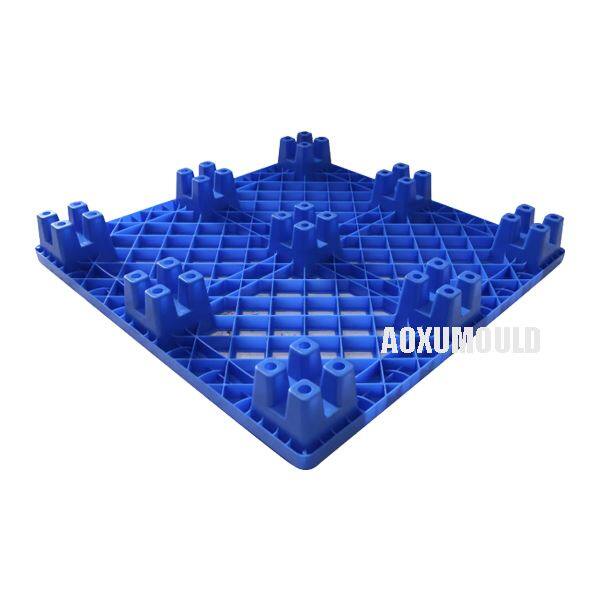
Mould Specifications
|
Mould name |
Single-side Pallet Mould |
|
Product material |
HDPE, plastic |
|
Product Size |
1200X800X150mm |
| Product weight |
16.52±0.5 kgs |
|
Mould material for cavity &. Core |
P20 |
|
Mould base |
C45 |
|
Injection system |
Hot runner |
|
Suitable injection machine |
2500T |
|
Mould size |
1850X1400X880mm |
|
Mould lifetime |
more than 300,000pcs |
What Industries Commonly Use Single-side Pallets?
Single-side plastic pallets are widely adopted across various industries due to their durability, hygiene, lightweight design, and cost-efficiency. Below are the key industries that benefit from these pallets:
1. Logistics & Warehousing
Storage and transportation of goods in distribution centers.
Automated warehouse systems (due to uniform dimensions).
2. Food & Beverage Industry
Raw material handling (meat, dairy, vegetables).
Beverage storage (bottles, cans).
Cold storage (freezer-friendly).
3. Pharmaceutical & Healthcare
Transporting medical supplies and drugs.
Cleanroom environments (hospitals, labs).
4. Retail & Supermarkets
Display and storage of products.
Nestable designs for space-saving storage.
5. Beverage & Brewing Industry
Beer kegs, bottled drinks.
Wet environment storage.
How To Manufacture A Quality Single-side Pallet Mould?

Manufacturing a quality single-side pallet injection mould requires attention to detail, precision, and high-quality materials. Here are the steps to follow in order to create a top-notch mould:
1. Design the mould: Begin by creating a detailed design of the single-side pallet injection mould. Use advanced software (e.g., SolidWorks, AutoCAD) to design the mould. This design should take into consideration the dimensions and specifications of the pallet and ensure that it will be able to withstand the pressures and stresses of the injection moulding process.
2. Select high-quality materials:
Mold Base Steel
P20 / 718H (general use, cost-effective)
H13 / S136 (for high-wear areas, longer lifespan)
Core & Cavity Inserts
Hardened steel (e.g., NAK80, S7) for durability.
Plastic Material
HDPE / PP (most common for pallets).
3. CNC machining: Use a computer numerical control (CNC) machine to accurately cut and shape the mould according to the design. CNC machining ensures precision and consistency in the production of the mould.
4. Heat treatment: After the mould has been machined, it should undergo a heat treatment process to strengthen the material and improve its wear resistance. This step is crucial for ensuring the longevity and durability of the mould.
5. Assembly and testing: Once the mould components have been machined and treated, they should be assembled and tested to ensure that they fit together properly and will produce high-quality pallets. Testing may involve running sample injection moulding cycles to check for any defects or issues.
6. Fine-tuning: After testing, the mould may need to be fine-tuned to optimize its performance. This may involve making adjustments to the design or materials used in order to achieve the desired results.
7. Quality control: Before putting the mould into production, it should undergo a thorough quality control inspection to check for any defects or weaknesses. This will help to ensure that the mould will produce consistent and high-quality pallets.
|
|
Design For Product &. Mould

Package &. Delivery

Mould Components
Mould Steel

Hot Runner System

Standard Parts

Application of (Becu) Beryllium Copper In Pallet Mould
|

Application of (Becu) Beryllium Copper In Pallet Mould
|
>1. What is a single-side pallet injection mould? A single-side pallet mould is an injection mold designed to produce plastic pallets from one side only. It is cost-effective for standard pallet designs and is used in industries like logistics, warehousing, and manufacturing. >2. What materials can be used in single-side pallet moulds? Common materials include: HDPE (High-Density Polyethylene)–Durable and impact-resistant. PP (Polypropylene)–Lightweight and chemical-resistant. Recycled Plastics–Eco-friendly and cost-efficient. >3. Can you customize single-side pallet molds for specific needs? Yes! Customizations include: Different sizes & load capacities (e.g., 1200x800mm, 1200x1000mm). Special features (anti-slip surfaces, RFID tag slots, reinforced legs). Material-specific designs (optimized gates for recycled plastics). >4. Do you provide mold trial services before mass production? Yes! We offer: Test runs to ensure quality and functionality and adjustments (if needed) before final delivery. >5. How can I get a sample to check your quality? Samples can be sent by DHL/TNT/FEDEX, by air or add to your sea containers. >6. How long does your delivery time? After mould design receiving approval from customer, 75 days for mould T1. >7. Whats' your payment terms? Generally speaking, T/T is a common way. TT, 40% deposit, 30% to be paid before sending sample, 30% balance before mould delivery. We also accept L/C or others according to specific situation.
|
Customers' Feedback


