

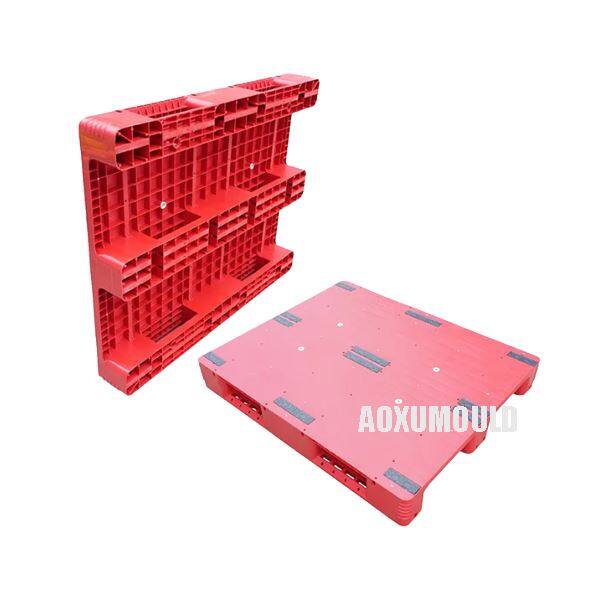
Mould Specifications
|
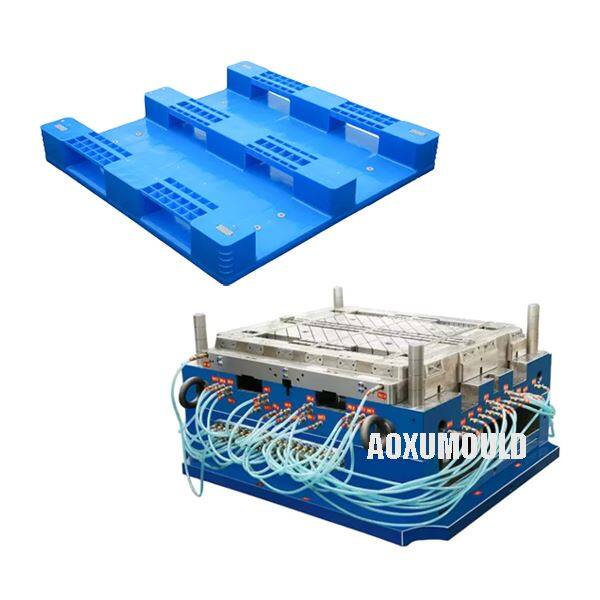
Mould name |
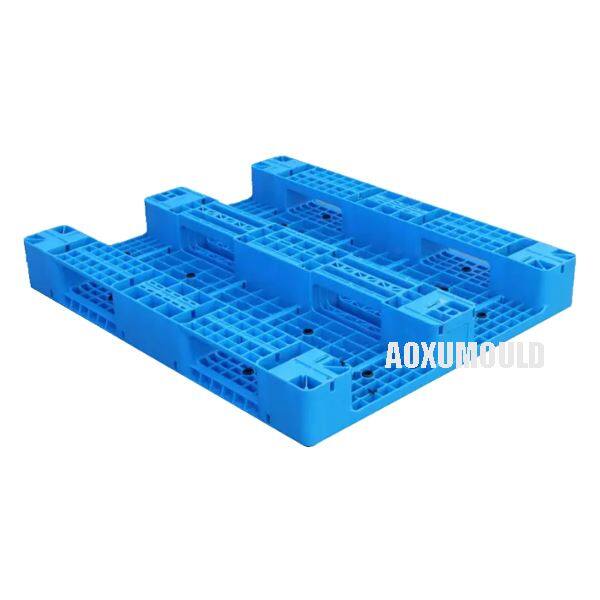
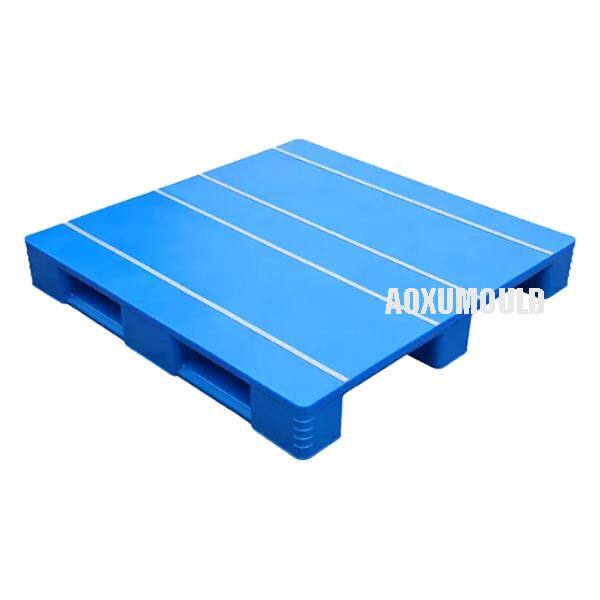
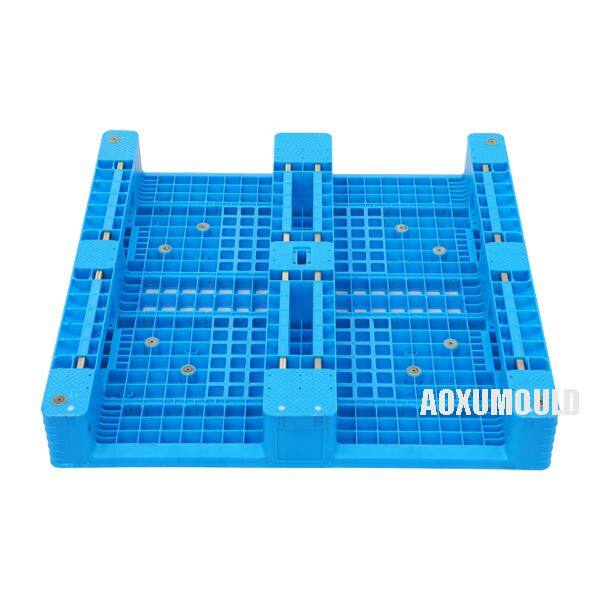
Double-face Pallet Mould |
|
Product material |
HDPE, plastic |
|
Product Size |
1200X1000X150mm |
| Product weight | 25kg |
|
Mould material for cavity &. Core |
P20 |
|
Mould base |
C45 |
|
Injection system |
Hot runner |
|
Suitable injection machine |
3000T |
|
Mould size |
1650X1450X880mm |
|
Mould lifetime |
more than 500,000pcs |
Various Types of Double-Face Pallet Designs

I. By Entry/Forklift Access
1. 2-Way Entry Pallets
Forklift access from two opposite sides only
Heavy-duty longitudinal stringers
Best for: Assembly lines, long/heavy loads (e.g., steel bars)
2. 4-Way Entry Pallets
Access from all four sides via notched legs or block-style bases
Ideal for: Warehouses with mixed forklift/pallet jack use
3. 6-Way Entry Pallets (Rare)
Four-side access + top/bottom stacking interfaces
Used in: Automated storage systems (AS/RS)
II. By Structural Design
1. Block Pallets
9-leg or 12-leg support blocks
Highest load capacity (up to 5,000kg dynamic)
2. Stringer Pallets
Longitudinal beams with deck boards
Common in 2-way designs for heavy loads
3. Perimeter-Base Pallets
Solid frame edges with open centers
Prevents load shifting during transport
4. Winged Pallets
Overhanging decks for rack compatibility
Supports cantilevered loads
III. By Special Features
1. Nestable Pallets
Tapered legs for 75% space savings when empty
2. Collapsible Pallets
Hinged design folds to 20% thickness
3. Hygienic Pallets
Smooth, crevice-free surfaces for FDA compliance
4. Anti-Slip Pallets
Textured decks or rubber inserts
5. Smart Pallets
Embedded RFID/GPS for tracking
How To Make A Quality Doule-face Pallet Mould?

Demand communication: First, we will confirm the application scenario of the pallet with the customer, and confirm the requirements of the pallet's dimensions, thickness, weight, etc.
Preliminary design: Our designers will hold internal meetings and integrate the best design solutions based on previous pallet manufacturing experience, including the structure of the pallet, runner design, cooling system and exhaust design.
Modeling: After the preliminary design, we will use CAD software (such as AutoCAD, SolidWorks, UG, etc.) to perform three-dimensional modeling of the mould and product. Detailed modeling of the shape, runner, cooling channel, etc. of the pallet.
Analysis: After designing the 3D drawings, we will use CAE software to simulate the injection moulding process and analyze the flow path, temperature distribution, pressure change, etc. of the molten plastic. Preliminary elimination of mould problems.
Mould processing: According to the customer's customized pallet requirements, select the appropriate mould steel (such as P20, H13, etc.), and process the mould parts according to the design drawings. Including machining, heat treatment, polishing and other processes.
Assembly: After all parts are processed, we will assemble the mould. Before assembly, the dimensions of each component of the mould will be strictly measured before assembly.
Mould trial: Install the mould on the injection molding machine for mould trial and check the moulding effect. According to the mould trial results, adjust and optimize the mould, including modifications to the flow channel, cooling system, exhaust design, etc.
Delivery: After several rounds of mould trials and adjustments, the mould meets the design requirements and undergoes final inspection and confirmation. Delivery is carried out after confirmation.
Design For Product &. Mould

Key Points Of Designing A Double-face Pallet Mould
|
1. Core Structural Design Considerations Cavity & Core Design Double-sided moulding: Requires precise alignment of top & bottom cavities Parting line: Must minimize flash while allowing proper ejection Draft angles: Typically 1–3° to facilitate demolding Rib & Deck Reinforcement Rib thickness: 50–70% of main wall thickness to prevent sink marks Honeycomb structures: Improve strength-to-weight ratio Boss design: Reinforced with gussets at load points Wall Thickness Optimization Uniform thickness: 3–5mm (prevents warping & reduces cycle time) Variable thickness zones: Thicker at stress points (e.g., leg bases) 2. Mould Functionality Features Ejection System Ejector pins: Strategically placed under high-stress areas (legs, ribs) Stripper plates: For large surface-area ejection Air vents: Prevent gas traps in deep ribs Cooling Channels Conformal cooling: Follows pallet contours for 30% faster cycles Zone-based cooling: Prioritizes thick sections Slide & Lifter Mechanisms Undercut handling: For complex features like snap-fits or logos Retractable cores: Used in collapsible pallet designs |
Package &. Delivery

Mould Components
Mould Steel

Hot Runner System

Standard Parts

|
What Maintenance Does The Pallet Mould Require?
|
Customers' Feedback


