

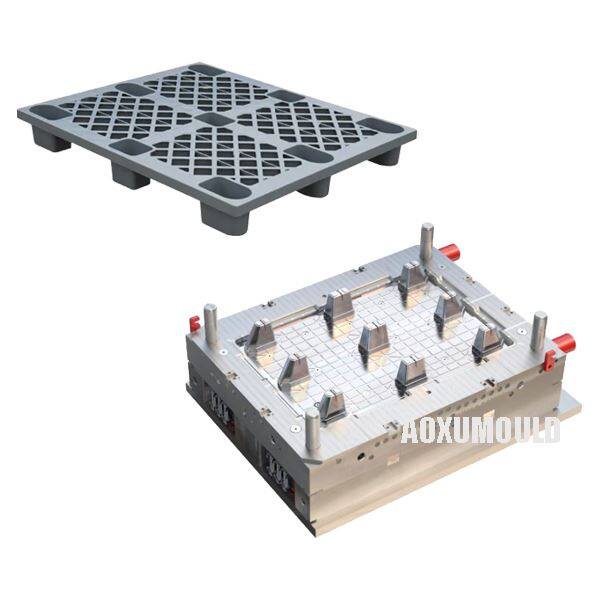
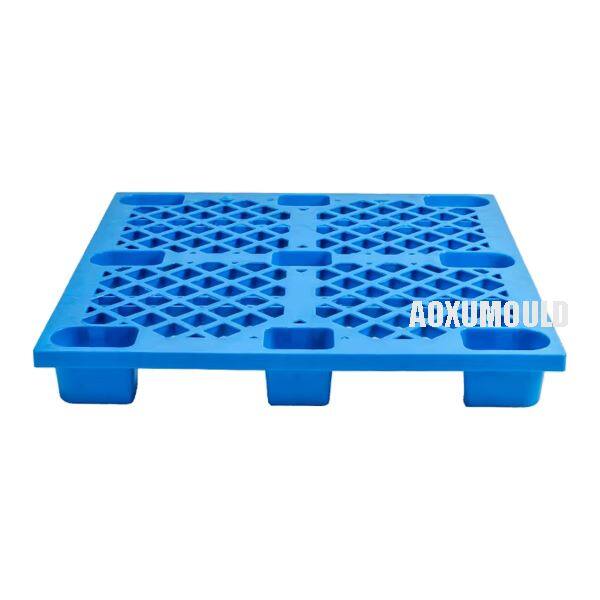
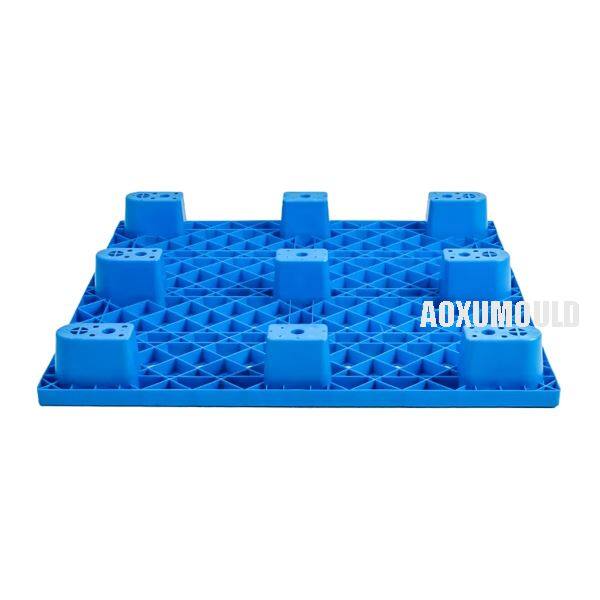
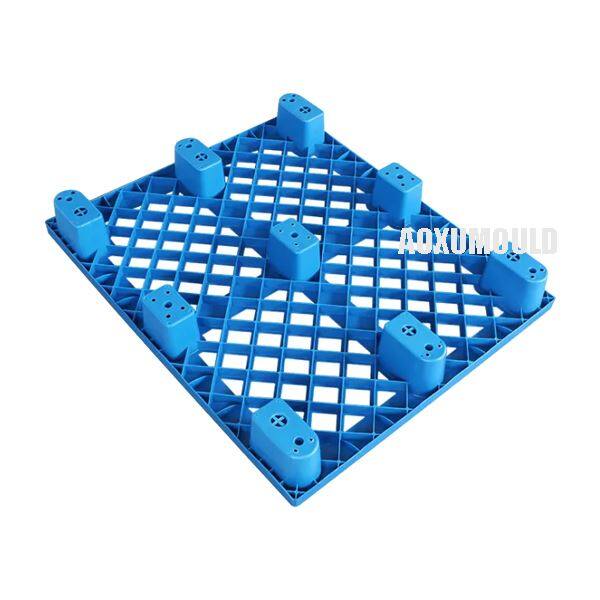
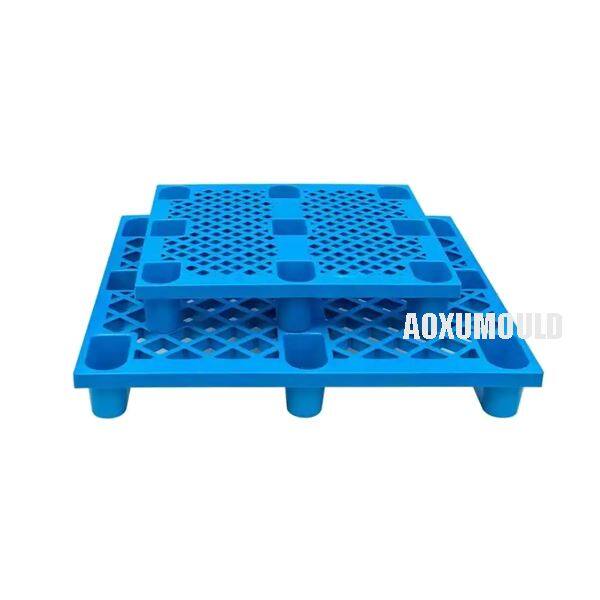
Mould Specifications
|
Mould name |
Nine-leg Pallet Mould |
|
Product material |
HDPE, plastic |
|
Product Size |
1100X900X140mm |
| Product weight |
12 kgs |
|
Mould material for cavity &. Core |
P20 |
|
Mould base |
C45 |
|
Injection system |
Hot runner |
|
Suitable injection machine |
2700T |
|
Mould size |
1960X1750X850mm |
|
Mould lifetime |
more than 300,000pcs |
Common Sizes of Nine-leg Plastic Pallets
1. Standard Dimensions (L × W × H)
|
Size (mm) |
Size (inches) |
Common Use Case |
Load Capacity (kg)* |
|
1200 × 1000 × 150 |
47.2 × 39.4 × 5.9 |
European logistics (EUR-pallet style) |
1,000–1,500 (dynamic) |
|
1100 × 1100 × 150 |
43.3 × 43.3 × 5.9 |
Asian/Australian markets |
1,200–1,800 (dynamic) |
|
1200 × 800 × 150 |
47.2 × 31.5 × 5.9 |
Lightweight transport, retail |
800–1,200 (dynamic) |
|
1067 × 1067 × 150 |
42 × 42 × 5.9 |
North American compatibility |
1,000–1,500 (dynamic) |
*(Dynamic load = when moving; Static load = when stationary, usually 2–3× higher.)*
2. Leg Height & Spacing
Leg height: Typically 120–150mm (for forklift/pallet jack access).
Leg spacing:
Evenly distributed for balance (usually 3×3 grid).
Reinforced corners (higher stress areas).
Which Plastic Material Should Be Chosen For Nine-leg Pallet?

1. HDPE (High-Density Polyethylene)
>Best for: General-purpose, cost-effective, lightweight pallets.
>Pros:
High impact resistance (good for heavy loads).
Moisture & chemical resistant (suitable for food, chemicals).
Recyclable & UV-stabilized options available.
>Cons: Less rigid than PP, may deform under extreme heat (>60°C).
2. PP (Polypropylene)
>Best for: Rigid, high-stress applications (e.g., heavy-duty logistics).
>Pros:
Higher rigidity & fatigue resistance than HDPE.
Excellent chemical resistance (acids, alkalis).
Lightweight but strong.
>Cons: Brittle in very cold temperatures (< -10°C).
3. Reinforced Plastics (GF-PP or GF-HDPE)
>Best for: Extra strength, long-term durability.
>Pros:
Glass fiber (GF) reinforcement increases stiffness & load capacity.
Reduced warping & better dimensional stability.
>Cons:
Higher cost.
Heavier than standard plastics.
4. Recycled Plastics (rHDPE/rPP)
>Best for: Eco-friendly, budget-conscious buyers.
>Pros:
Lower cost & sustainable.
Retains ~80-90% of virgin plastic strength.
>Cons:
Slightly lower impact resistance.
Color consistency may vary.
How To Make A Nine-leg Pallet Injection Mould?
1. Design the mould: The first step is using CAD software (SolidWorks, UG/NX, or AutoCAD) to design the pallet and mould. And simulate plastic flow, cooling, and warpage using Moldflow or Moldex3D.
2. Choose the right materials: Once you have a design for the mould, you will need to choose the right materials for the job. The materials you choose will depend on the type of pallet you are making and the requirements of the injection moulding process.
3. Build the mould: With your design and materials in hand, it's time to build the mould. This will involve using precision machinery and tools to create the mould according to your specifications.
4. Test the mould: Before using the mould for production, it's important to test it to ensure that it works properly. This may involve making sample pallets to test the mould's performance.
5. Make adjustments: If there are any issues with the mould during testing, you may need to make adjustments to ensure that it functions correctly. This could involve tweaking the design or materials used in the mould.
6. Start production: Once the mould has been tested and adjusted, it's time to start production. Using the injection moulding process, you can now create nine-leg pallets with ease and efficiency.
Design For Product &. Mould

Key Points Of Designing A Plastic Nine-leg Pallet
1. Structural Design Considerations
A. Leg Configuration & Reinforcement
>Nine-leg layout must evenly distribute weight to prevent bending or cracking.
>Reinforced ribs inside legs and deck for added strength.
>Tapered legs for easy nesting/stacking (if required).
>Anti-slip foot pads (optional for stability on smooth surfaces).
B. Deck Design
>Open grid vs. solid top:
Grid design → Saves material, reduces weight, allows drainage.
Solid top → Better for small items, hygienic applications (food/pharma).
>Ribs & gussets under the deck to enhance stiffness.
C. Load Capacity & Deflection
>Static load (when stationary) vs. dynamic load (when moving).
>Finite Element Analysis (FEA) recommended to simulate stress points.
>Typical capacities:
Standard HDPE/PP: 1,000–1,500 kg.
GF-reinforced: 2,000+ kg.
2. Injection Molding Considerations
A. Draft Angles & Ejection
1–3° draft angles on legs & walls for easy demolding.
Ejector pin placement to avoid deformation.
B. Cooling System Design
Conformal cooling channels for uniform cooling & faster cycles.
Avoids warping & sink marks.
C. Gate Location & Flow
Hot runner system preferred for large pallets (reduces waste).
Balanced flow to prevent weak spots.
3. Functional Features
>Forklift entry (2-way or 4-way access).
>Stacking/nesting design to save space in storage.
>Anti-slip surface (textured or rubber-coated).
>Fire-retardant additives (if required for certain industries).
Package &. Delivery

Mould Components
Mould Steel

Hot Runner System

Standard Parts

How To Maintain Nine-leg Pallet Mould?
|

FAQ
|
>1. Can your factory customize pallet moulds according to specific requirements? Yes, we offer custom mold design services to meet the unique needs of our clients. >2. What materials do your factory use in the manufacturing of pallet moulds? We use high-quality steel such as P20, 718H, S136, H13, etc,. in the production of pallet moulds to ensure durability and longevity. >3. What plastic materials can be used with your moulds? Our moulds are compatible with: HDPE (High-Density Polyethylene)–Most common, cost-effective. PP (Polypropylene)–Good chemical resistance. >4. Can you provide technical support after the purchase of a pallet mould? Yes, our factory offer excellent technical support and assistance to our customers after the purchase of a pallet mould. >5. What is the lead time for the production of pallet moulds at Ning-leg Pallet Mould Factory? The lead time for the production of pallet moulds may vary depending on the complexity of the design and the quantity ordered. Our sales team will provide you with an estimated lead time when you request a quote. >6. Do you offer shipping services for pallet moulds? Yes, we can arrange shipping services for pallet moulds to ensure convenient delivery to our customers. >7. How can I get in touch with you for further inquiries? You can contact us through our website, email, or phone to inquire about our products and services. Our team will be happy to assist you with any questions you may have. And we will provide you with a competitive quote based on your requirements. >8. What's your MOQ (Minimum Order Quantity)? Moulds: 1 set (custom-made per order).
|
Customers' Feedback


