

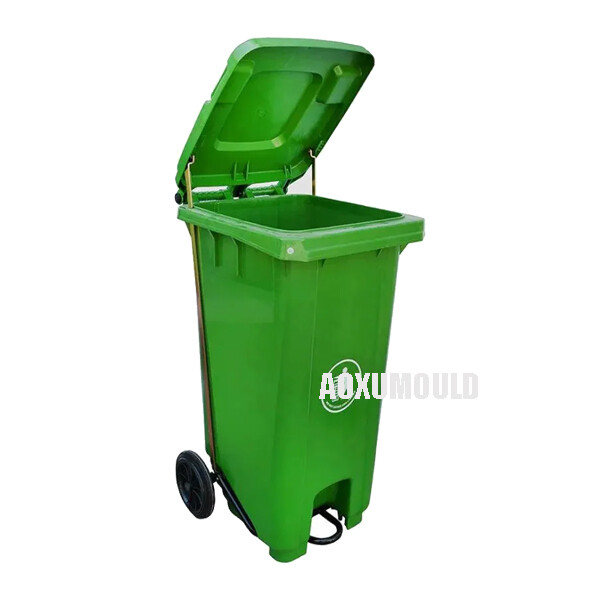
Mould Specifications
|
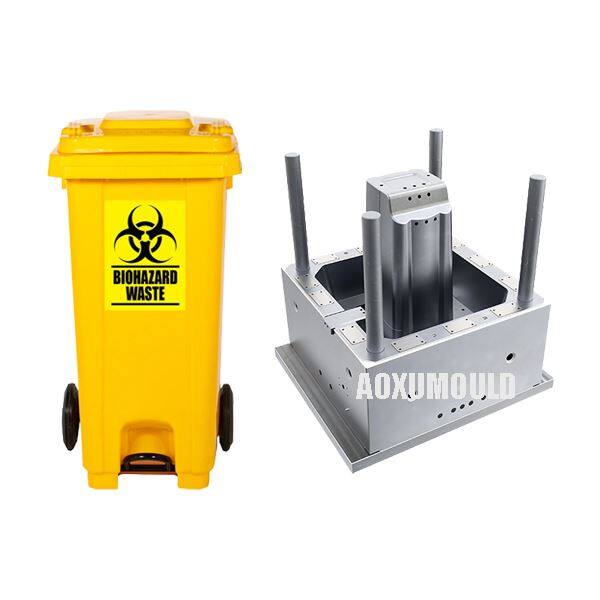
Mould name |
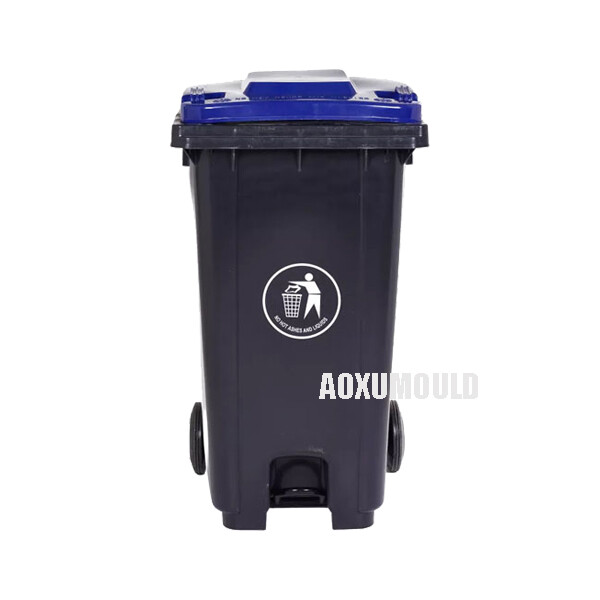
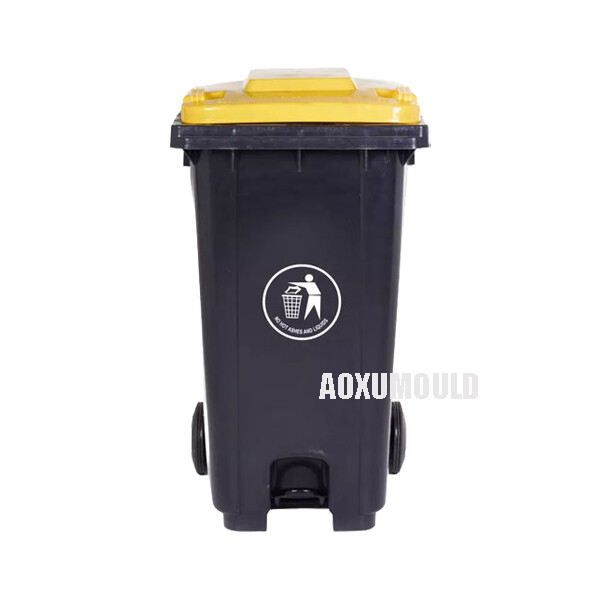
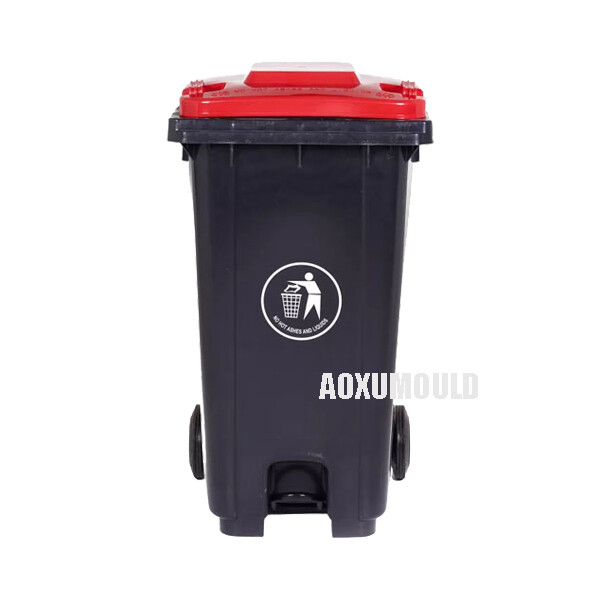
Customized Plastic Bin Mold |
|
Product material |
HDPE, plastic |
|
Product Size |
580X720X1060mm |
| Product weight | 13kg |
|
Mould material for cavity &. Core |
P20, 718, 2738 |
|
NOs of cavity |
1 cavity |
|
Injection system |
Cold runner/HOT RUNNER |
|
Suitable injection machine |
1800T |
|
Mould size |
800X940X1320mm |
|
Mould lifetime |
more than 500,000pcs |
|
T1 Time |
After design is finalized, 55 days |
Which Aspects Can Be Customized?

1. Size & Dimensions
Length, width, height (e.g., small organizer bins or large industrial containers).
Wall thickness (for durability or weight reduction).
Capacity (liters/gallons or specific load requirements).
2. Shape & Structure
Rectangular, square, round, or irregular shapes.
Stackable/nestable designs (to save space during storage/transport).
Collapsible/foldable bins (for compact storage when empty).
Reinforcement ribs (for added strength without extra weight).
3. Functional Features
Handles (molded-in, swing handles, or cutouts).
Lids & closures (snap-fit, hinged, or removable covers).
Dividers/compartments (for organization).
Ventilation holes (for produce or chemical storage).
Wheel attachments (for heavy-duty mobile bins).
4. Material Selection
Plastic type: PP (lightweight), HDPE (impact-resistant), ABS (rigid), PVC (flexible), or FDA-approved food-grade materials.
Color: Pre-colored pellets or post-molding painting.
Recycled materials: Eco-friendly options (e.g., rPET or rHDPE).
5. Surface Finish & Branding
Textures: Anti-slip, matte, glossy, or leather-grain finishes.
Logos/text: Embossed, engraved, or printed labels.
Transparency: Clear bins (using materials like PET or polycarbonate).
6. Mold Configuration
Number of cavities (single for prototypes, multi-cavity for mass production).
Mold material: Steel (long lifespan), such as P20, 718H, S136, etc.,.
Ejection system: Auto-eject pins, air-assisted, or manual.
7. Specialized Add-Ons
RFID/QR code tags (for inventory tracking).
Anti-static properties (for electronic components).
UV stabilization (for outdoor use).
Designs For Product &. Mold

Design Considerations for Custom Plastic Bin Mold
1. Bin Design Considerations
(1) Wall Thickness
Optimal Range: 2–4mm (ensures strength without excessive material use).
Consistency: Avoid uneven thickness to prevent sink marks and warping.
(2) Draft Angles
Minimum 1–3° per side (helps easy ejection from the mold).
Textured surfaces may need more (up to 5° to prevent sticking).
(3) Ribs & Reinforcements
Rib thickness = 50–60% of wall thickness (prevents sink marks).
Add ribs for structural strength without increasing overall weight.
(4) Undercuts & Complex Features
Avoid undercuts (or use side actions/sliders for complex shapes).
Living hinges (for foldable bins) require thin, flexible sections.
2. Mold Design Essentials
(5) Mold Material Selection
Steel (P20, H13, S136): Long-lasting (500,000+ cycles for mass production).
(6) Gate Type & Location
Edge gate (simple, cost-effective).
Submarine/tunnel gate (auto-detaches, no trimming needed).
Hot runner system (best for high-volume, reduces waste).
Place gates in thick sections to ensure proper filling.
(7) Cooling System Design
Uniform cooling channels prevent warping & reduce cycle time.
Baffles/bubblers for deep sections to improve cooling efficiency.
(8) Ejection Mechanism
Ejector pins (standard for flat surfaces).
Sleeves/stripper plates (for deep bins).
Air ejection (for lightweight bins).
Try-out Video of Customized Plastic Bin Mold
Why Plastic Bin Molds Need Try-out?

The mold try-out (also called T1 trial) is a critical phase in injection molding where the first samples from a new mold are tested before full production. For custom plastic bin molds, this step ensures the mold works correctly and produces high-quality parts. Below are the key reasons why mold try-out is essential:
1. Verifies Mold Functionality
Checks if the mold opens, closes, and ejects parts smoothly.
Ensures cooling channels, ejector pins, and sliders work as designed.
Detects mechanical issues (misalignment, sticking, or flash).
2. Validates Part Quality
Confirms dimensional accuracy (matches CAD specifications).
Inspects for defects like:
Sink marks (from uneven cooling/thick walls).
Warping (due to stress or poor cooling).
Short shots (incomplete filling).
Flash (excess plastic leaking from mold gaps).
3. Optimizes Production Efficiency
Tests cycle time and identifies ways to speed up production.
Adjusts injection pressure, temperature, and cooling time for best results.
Reduces material waste by fine-tuning the molding process.
4. Saves Cost & Prevents Delays
Catches design flaws before mass production, avoiding costly mold rework.
Ensures the mold meets industry standards (e.g., FDA for food bins).
Prevents downtime due to unexpected failures in full-scale production.
5. Ensures Long-Term Mold Performance
Identifies wear and tear risks (e.g., premature ejector pin failure).
Helps plan maintenance schedules to extend mold life.
Mould Components
Mould Steel

Hot Runner System

Standard Parts

Package &. Delivery

Customers' Feedback

What Is The Process for Ordering A Customized Plastic Bin Mold?
- Step 1: Define Your Requirements
Bin specifications: Size, capacity, wall thickness, features (lids, handles, stacking ability).
Material: PP, HDPE, ABS, etc. (based on durability, flexibility, or food-grade needs).
Quantity: Estimated production volume (prototype, low-volume, or mass production).
Surface finish: Texture, gloss/matte, logos, or branding.
-Tip: Provide sketches, CAD files, or reference images if available.
- Step 2: Consult with the Mold Manufacturer
Submit your requirements for a free design review and DFM (Design for Manufacturing) analysis.
The engineer may suggest optimizations (e.g., reducing undercuts for easier demolding).
-Discuss:
Mold material (steel for longevity, aluminum for cost-saving).
Cavities (single vs. multi-cavity for faster production).
Lead time & pricing.
- Step 3: Receive a Quote & Approve Design
-The manufacturer provides a detailed quote covering:
Mold cost (based on complexity and material).
Per-unit part cost (for mass production).
Lead time (typically 55-65 days for production molds).
-Sign a purchase agreement after finalizing design and terms.
- Step 4: Mold Manufacturing & T1 Sampling
Mold fabrication: CNC machining, EDM, polishing, and assembly.
T1 sample testing: Initial parts are produced and inspected.
Feedback & adjustments: Modify the mold if needed (e.g., fit, finish, or dimensional tweaks).
- Step 5: Mass Production & Delivery
-Once samples are approved:
High-volume production begins.
Parts undergo quality checks (dimensions, weight, stress tests).
-Options:
Ship finished bins directly to you.
Provide the mold for your in-house production.
FAQ
>1. What types of plastic bins can you produce with custom molds?
We manufacture molds for various plastic bins, including:
Storage bins (stackable, collapsible, compartmentalized)
Industrial containers (heavy-duty, pallet bins)
Retail & household organizers
Food-grade & medical storage containers
Specialty bins (with handles, lids, or custom branding)
>2. What materials can be used for plastic bin molds?
Common materials include:
Polypropylene (PP) – Durable, chemical-resistant
High-Density Polyethylene (HDPE) – Impact-resistant, food-safe
ABS – Rigid, glossy finish
PVC – Flexible, weather-resistant
We help select the best material based on your needs.
>3. How long does it take for a customized plastic bin mold to be completed?
The time frame for completing a customized plastic bin mold can vary depending on the complexity of the design and the size of the order. Typically it will take around 55-65days.
>4. Can I provide my own design for a customized plastic bin mold?
Yes, we welcome customers to provide their own designs for customized plastic bin molds. Our team of skilled designers and engineers will work closely with you to bring your vision to life.
>5. Can I request a sample before placing a bulk order for customized plastic bin molds?
Yes, we offer the option to provide samples before placing a bulk order for customized plastic bin molds. This allows customers to assess the design and quality of the product before making a larger purchase.
>6. What is the process for ordering customized plastic bin molds from your company?
The process for ordering customized plastic bin molds from our company involves discussing the design requirements, getting a quote, approving the design, and finalizing the order. Our team will guide you through each step of the process to ensure a seamless experience.
>7. How can I contact your company to discuss my requirements for customized plastic bin molds?
You can contact our company through email, phone, or the contact form on our website to discuss your requirements for customized plastic bin molds. Our team will be happy to assist you with any inquiries or requests you may have.


