

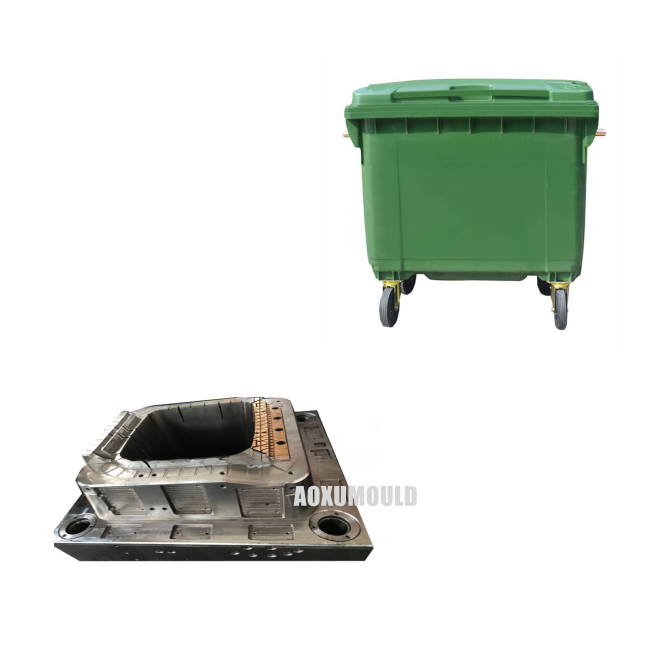
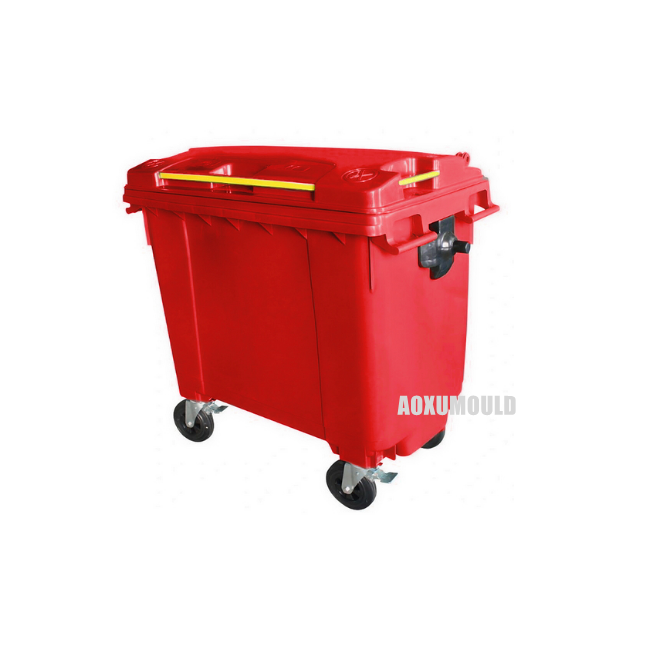
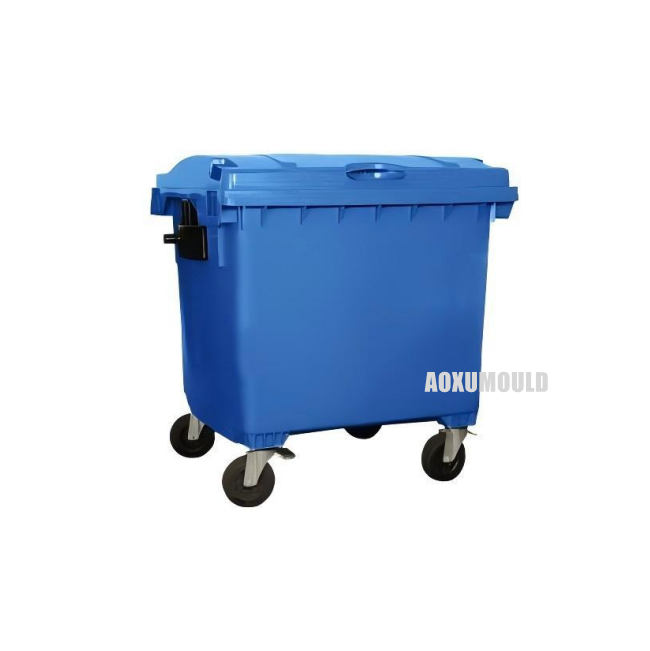
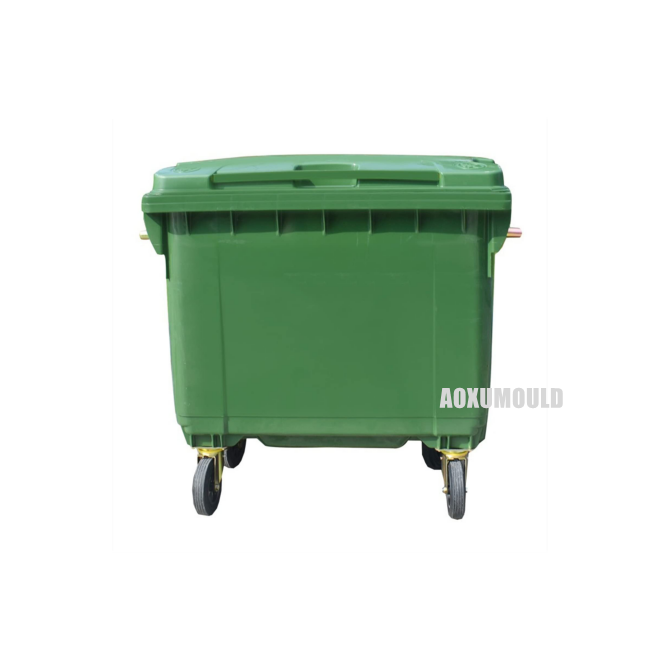
Mould Specifications
|
Mould name |
660L Plastic Bin Mould |
|
Product material |
HDPE, plastic |
|
Product Size |
1235x760x1100mm |
|
Product capacity |
660 litres |
| Product Weight | 24KG |
|
Mould material for cavity &. Core |
P20, 718, 2738 |
|
NOs of cavity |
1 cavity |
|
Injection system |
Hot runner open gates |
|
Suitable injection machine |
4500T |
|
Mould size |
1950X1250X1500mm |
| Mould weight |
25000T |
|
Mould lifetime |
more than 300,000pcs |
|
T1 Time |
After design is finalized, 65 days |
What's The Dimensions of 660L Plastic Bins?
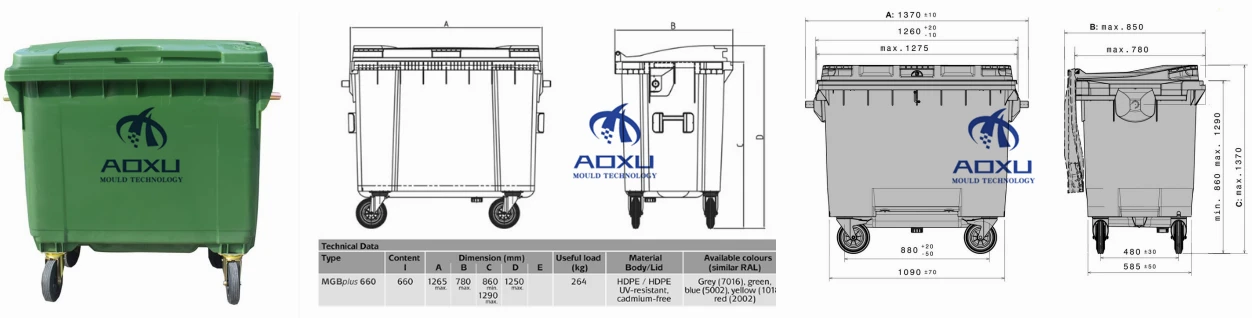
Designed for high-traffic public areas, industrial sites, and municipal waste collection, the 660L plastic bin combines massive capacity with rugged durability.
|
Parameter |
Measurement |
|
Capacity |
660 Liters |
|
Height (with lid & wheels) |
Approx. 1050–1100 mm (41.3–43.3 in) |
|
Width / Length |
Approx. 580–620 mm (22.8–24.4 in) |
|
Depth |
Approx. 740–780 mm (29.1–30.7 in) |
|
Wheel Diameter |
Ø 200–250 mm (7.9–9.8 in) |
|
Lid Type |
Swing Lid / Lockable Lid (Optional) |
What Kind of Plastic Raw Material To Produce Plastic 660L Bins?

660L plastic bins are primarily made of High-Density Polyethylene (HDPE). This material offers high impact resistance, corrosion resistance, and temperature adaptability (-30℃ to 80℃), ensuring durability and suitability for outdoor use.
1.Premium Material
Made of 100% virgin high-density polyethylene (HDPE) with UV stabilizers and flame-retardant additives.
Resists corrosion, impacts, and extreme temperatures (-40℃ to 80℃), ensuring 6+ years outdoor service life4610.
Reinforced Structure
Honeycomb-reinforced rim and thickened walls (≥5mm) for max load capacity up to 660kg.
Leak-proof design with seamless injection molding.
Mobility & Safety
Four wheels: Front wheels with brakes + rear swivel casters (rubber tires, Ø≥200mm). Non-slip grip on handles and anti-tip base design.
How To Manufacture a 660L Plastic Bin Mould?

Manufacture robust, high-capacity commercial &. industrial trash bins consistently and efficiently. Our moulds feature:
Optimized for Large Capacity: Precision-engineered cavity for flawless 660L (175-gallon) bin production.
Superior Durability: High-grade tool steel construction (e.g., P20, H13, or specify) for extended service life and high cycle counts.
High-Efficiency Design: Advanced cooling channels & optimized ejection systems minimize cycle times and boost output.
Flawless Surface Finish: Guarantees smooth bin surfaces, easy cleaning, and professional aesthetics.
Built for Performance: Robust guide pillars/bushes, durable sliders/lifters (if applicable) ensure reliable, maintenance-friendly operation.
Customization Ready: Tailored for your specific resin (HDPE/PP), bin design features (wheels, lids, logos), and production requirements.
Streamlined Production: Designed for compatibility with large-tonnage injection molding machines.
What Size of Injection Molding Machine For Plastic 660L Bin Mould?

The production of a high-volume, 660-liter (660L) plastic trash bin necessitates the use of a robust 3300-ton (3300T) clamping force injection molding machine and a correspondingly large, complex mould. This substantial machine requirement is dictated by the bin's significant size, projected surface area, and the material flow dynamics inherent in molding such a large, thin-walled container
Machine Requirement: A 3300-ton clamping force injection molding machine is specified for processing the mould designed for the 660L capacity plastic trash bin.
To produce the 660L plastic bin using its dedicated mould, an injection molding machine with a minimum clamping force of 3300 tons is essential.
Try-out of 660L Bin Mould
Mould Components
Mould Steel

Hot Runner System

Standard Parts

Package &. Delivery

Comprehensive Maintenance Guide For 660L Large Bin Moulds
Consistent and meticulous maintenance is crucial for maximizing the lifespan, performance, and part quality of your 660L large bin injection mould. Follow these key procedures:
1. Daily/Per Shift Maintenance:
Thorough Cleaning: After each run or shift, meticulously clean all mould surfaces (cavities, cores, slides, lifters, parting line) using approved, non-abrasive plastic mould cleaners and soft brass/copper scrapers or nylon brushes. Avoid steel tools! Remove all plastic residue, dust, and contaminants.
Lubrication: Apply high-temperature, silicone-free mold lubricant sparingly to all moving components (guide pins/bushes, ejector pins, slides, lifters, sprue bushing) according to the manufacturer's schedule. Wipe off excess lubricant to prevent buildup and part defects.
Visual Inspection: Check for visible damage (nicks, dents, scratches), signs of wear (especially on ejector pins and sliding surfaces), corrosion (rust), and any loose components (bolts, inserts). Ensure cooling lines are connected and leak-free.
Vent Clearing: Carefully clear any blocked vents using appropriate tools to prevent gas traps and burns.
2. Periodic Maintenance (Weekly/Monthly based on usage):
Deep Cleaning: Perform a more intensive cleaning, potentially disassembling key moving sections (slides, lifters, ejector system) if residue buildup is evident. Ultrasonic cleaning of small components may be beneficial.
Detailed Component Inspection: Remove the ejector plate assembly. Inspect ejector pins, blades, sleeves, and return pins for wear, binding, or breakage. Replace worn components immediately. Inspect alignment of slides and lifters.
Corrosion Protection: Apply a thin, even coat of long-term corrosion inhibitor (specifically designed for mould steel) to all polished surfaces and critical areas before extended storage.
Cooling System Maintenance: Flush cooling lines periodically to remove scale and mineral deposits. Check water line fittings and manifolds for leaks or blockages. Ensure consistent coolant flow and temperature.
3. Long-Term/Storage Maintenance:
Complete Preparation: Before extended downtime (>1 week), perform a full deep clean and inspection.
Robust Protection: Apply a heavy-duty rust preventative to all critical steel surfaces. Use protective plugs for water line ports.
Secure Storage: Store the mould horizontally on a sturdy, level support stand in a dry, temperature-controlled, and low-humidity environment. Avoid stacking. Cover it with breathable protective sheeting.
Documentation: Maintain detailed logs of all maintenance performed, issues found, parts replaced, and production cycles. This aids in scheduling and troubleshooting.
Critical Considerations for Large Molds:
Handling Safety: Always use certified overhead lifting equipment and spreader bars designed for the mould's weight and center of gravity. Follow strict lockout/tagout procedures.
Temperature Management: Ensure even heating/cooling during startups and shutdowns to minimize thermal stress. Monitor mold temperature sensors closely.
Alignment: Pay special attention to the alignment of large cores and cavities during installation and clamping to prevent damage to parting lines.
Mould Release Agents: If used, apply minimally and ensure compatibility with the plastic resin and mould materials; excess buildup requires immediate cleaning.
Adhering strictly to this disciplined maintenance protocol prevents costly downtime, premature wear, part defects (sinks, burns, sticking, warpage), and ensures the mold produces high-quality 660L bins efficiently for its maximum potential lifespan.
Customers' Feedback


