

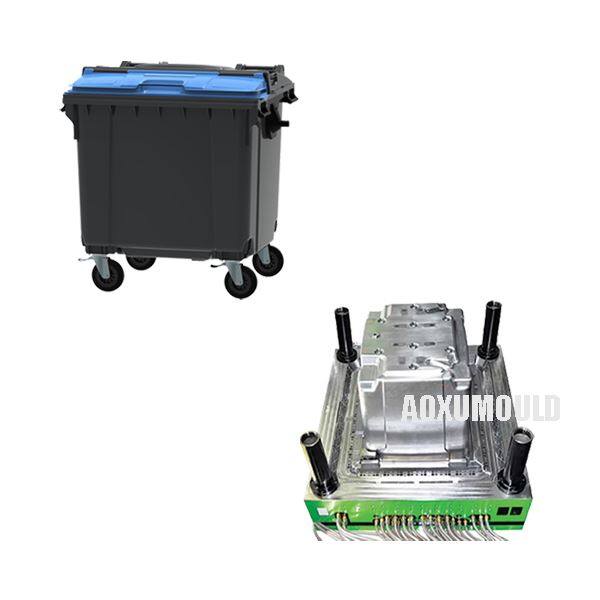
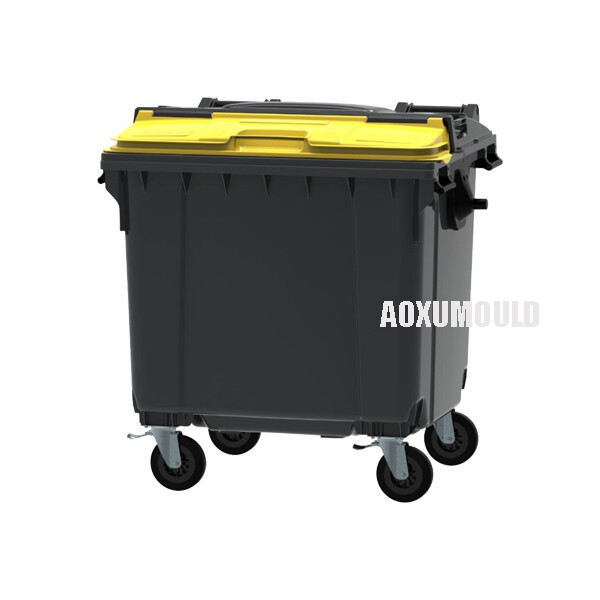
Mould Specifications
|
Mould name |
Plastic Bin Mold |
|
Product material |
HDPE, plastic |
|
Product Size |
1260X1057X1030mm |
| Product weight | 13kg |
|
Mould material for cavity &. Core |
P20, 718, 2738 |
|
NOs of cavity |
1 cavity |
|
Injection system |
Cold runner/HOT RUNNER |
|
Suitable injection machine |
3300T |
|
Mould size |
2000X1810X1435mm |
|
Mould lifetime |
more than 500,000pcs |
|
T1 Time |
After design is finalized, 55 days |
Plastic Bin Display

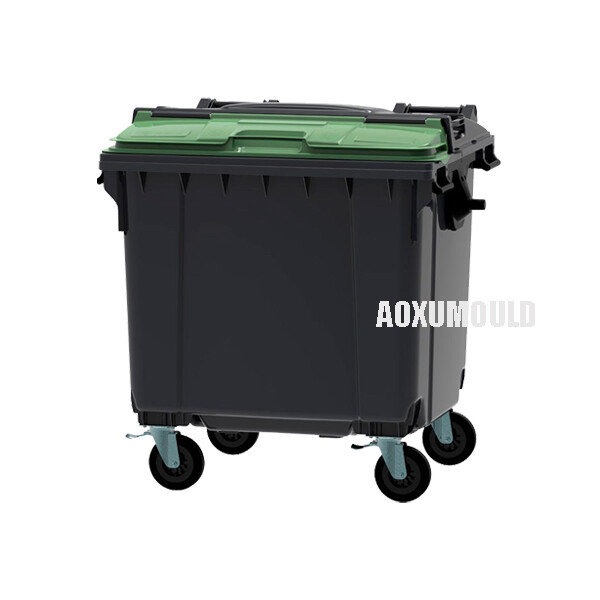
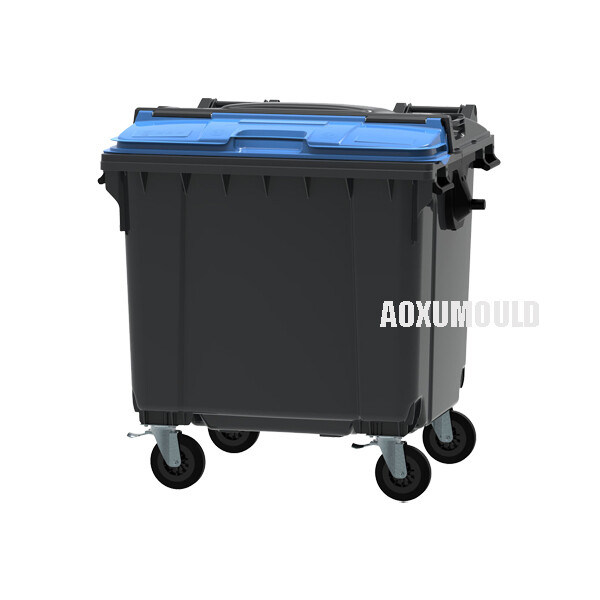
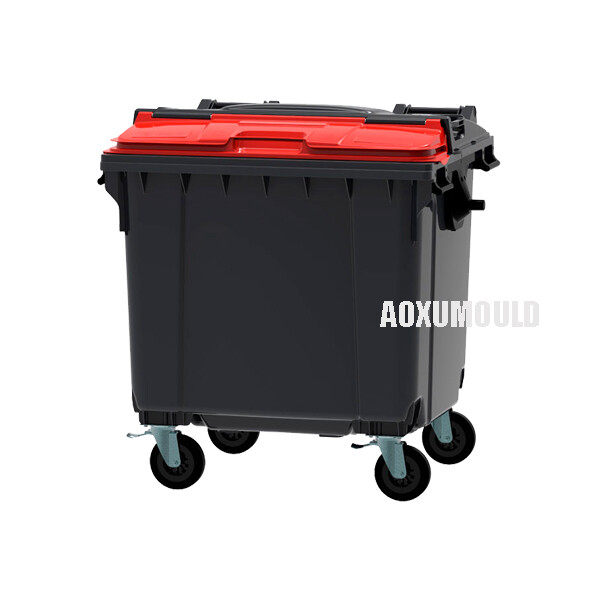
Dimensions of 1100L Split Lid Bin

-Technical data
-Volume (L): 1,100
-Curb weight approx. (kg): 50
-Permissible total weight max. (kg): 510
-Material: HDPE, UV-stabilized
-Wheels:
4 rubber wheels Ø 200 mm
2 with wheel stop
-Trunnions:
with steel reinforcement tubes
-Lid / Container:
Base lid with 2 lateral open hand grips;
Front lid with continuous lip handle and centrally positioned hand grip;
Front lid hinged at base lid
Clear opening 260 x 1110 mm
Design For Product &. Mold

Injection Molding Process for Plastic Bins
The injection molding process is the most common method for manufacturing plastic bins (e.g., trash cans, storage containers, recycling bins). Below is a step-by-step breakdown of how plastic bins are produced using this method:
1. Mold Design & Preparation
A custom steel or aluminum mold is created based on the bin's specifications (size, shape, thickness, features like handles or lids).
The mold is mounted onto an injection molding machine.
2. Plastic Material Selection
Common plastics used for bins:
-HDPE (High-Density Polyethylene) – Durable, chemical-resistant (most common for trash bins).
-PP (Polypropylene) – Lightweight, flexible, good for storage bins.
-ABS (Acrylonitrile Butadiene Styrene) – Sturdy, impact-resistant (for heavy-duty bins).
-Recycled Plastic – Eco-friendly option (increasingly popular).
Plastic pellets are fed into the machine's hopper.
Melting & Injection
The plastic pellets are heated to 200–300°C (depending on material) until molten.
A screw mechanism pushes the melted plastic into the mold cavity under high pressure (500–2,000 psi).
4. Cooling & Solidification
The mold is cooled (using water channels) to harden the plastic into the bin's shape.
Cooling time varies (typically 20–60 seconds) based on bin size and thickness.
5. Ejection & Finishing
Once solidified, the mold opens, and ejector pins push the bin out.
Excess plastic (flash) is trimmed, and the bin is inspected for defects.
6. Post-Processing (If Needed)
Decoration (printing logos, labels).
Assembly (attaching lids, wheels, or liners).
Quality Testing (checking durability, weight, dimensions).
>Advantages of Injection Molding for Plastic Bins
-High Efficiency – Mass production (1,000+ bins/day possible).
-Low Per-Unit Cost – Economical for large orders.
-Design Flexibility – Custom shapes, colors, and features.
-Durability – Produces strong, long-lasting bins.
Hot Runner Technology in Plastic Bin Injection Molding

Hot runner systems are an advanced injection molding technology used to improve efficiency, reduce waste, and enhance part quality in plastic bin production. Below is a detailed breakdown of how hot runners work, their benefits, and key considerations.
1. What is a Hot Runner System?
A hot runner is a heated manifold system that keeps molten plastic in a liquid state as it travels from the injection molding machine nozzle to the mold cavities. Unlike cold runners (which solidify and are discarded as waste), hot runners eliminate sprue and runner waste, making them ideal for high-volume production.
Key Components:
Manifold–Distributes molten plastic to multiple cavities.
Heaters–Maintain plastic at optimal temperature.
Nozzles–Deliver plastic directly into the mold.
Temperature Controllers–Ensure precise heat regulation.
2. Hot Runner vs. Cold Runner Systems
|
Feature |
Hot Runner |
Cold Runner |
|
Material Waste |
Minimal (no runners) |
High (runners must be discarded) |
|
Cycle Time |
Faster (no cooling of runners) |
Slower (must cool runners) |
|
Cost |
Higher initial cost |
Lower initial cost |
|
Maintenance |
More complex (heating elements) |
Simpler |
|
Best For |
High-volume production (e.g., bins) |
Low-volume or prototype runs |
3. Benefits of Hot Runners for Plastic Bin Molding
Reduced Material Waste – No runner scrap, saving up to 15–30% plastic.
Faster Cycle Times – No need to cool/solidify runners.
Improved Aesthetics – Fewer gate marks, better surface finish.
Multi-Cavity Efficiency – Consistent filling across all cavities.
Lower Energy Costs – Less reprocessing of wasted plastic.
4. Types of Hot Runner Systems
A. Open Gate (Standard) Hot Runner
Simple design, good for general-purpose bins.
Slight visible gate marks.
B. Valve Gate Hot Runner
Uses pneumatically/hydraulically controlled needles to seal gates.
Best for high-precision bins (cleaner gate finish, no drooling).
C. Thermal Gate Hot Runner
Uses heat to control flow (less common for large bins).
How to Get a Quote for Plastic Bin Molds from Our Company?
Getting a customized quote for your plastic bin mold is simple! Follow these steps to receive an accurate and competitive price estimate:
1. Provide Basic Project Details
To help us understand your needs, please share:
Product Type – E.g., trash bin, storage container, recycling bin, etc.
Bin Dimensions – Length × Width × Height (in mm or inches).
Plastic Material – HDPE, PP, ABS, or other (specify if recycled).
Annual Production Volume – Estimated quantity (e.g., 10,000 pcs/year).
2. Specify Mold Requirements
Mold Material Preference – Hardened steel (long lifespan) or aluminum (prototype/low volume).
Number of Cavities – Single-cavity or multi-cavity (for faster production).
Hot Runner vs. Cold Runner – Do you need reduced waste & faster cycles?
Surface Finish – Texture (e.g., matte, glossy) or special coatings.
Additional Features – Ejector pins, slides, lifters, or automation.
3. Share Design Files (If Available)
We accept:
3D Files – STEP, IGES, S_t, or CAD (SolidWorks, AutoCAD).
2D Drawings – PDF or DWG with critical dimensions.
Samples/Photos – If no design exists, we can help draft one!
(No design yet? Our engineers can assist with DFM optimization!)
FAQ
>1. What materials can be used for plastic bin molds?
Plastic bin molds can be made from a variety of steel type, including P20, 718H, S136, H13, etc.,. The choice of material will depend on factors such as production volume, budget, and desired product quality.
>2. How long does it take to manufacture a plastic bin mold?
The time to manufacture a plastic bin mold can vary depending on the complexity of the design and the capabilities of the mold manufacturer. However, a typical lead time for a plastic bin mold is usually around 55-65 days.
>3. Can I customize the design of a plastic bin mold?
Yes, most plastic bin mold manufacturers offer customization services to tailor the mold design to your specific needs. This can include modifications to the shape, size, material, and other features of the bin mold.
>4. What is the lifespan of a plastic bin mold?
The lifespan of a plastic bin mold can vary depending on factors such as usage, maintenance, and the quality of materials used in its construction. Generally, a well-maintained plastic bin mold can last for 500,000shots.
>5. Do plastic bin molds require regular maintenance?
Yes, regular maintenance is essential to ensure the longevity and performance of a plastic bin mold. This may include cleaning, lubrication, and inspection of the mold components to prevent wear and tear.
>6. Can a plastic bin mold be repaired if it gets damaged?
In most cases, plastic bin molds can be repaired if they become damaged or worn out. This may involve welding, machining, or replacing specific components of the mold to restore its functionality.
>7. What is the cost of manufacturing a plastic bin mold?
The cost of manufacturing a plastic bin mold can vary depending on factors such as the complexity of the design, the size of the mold, and the materials used. It is best to consult with a mold manufacturer to get an accurate quote for your specific requirements.
>8. Are there any safety precautions to be taken when using plastic bin molds?
Yes, safety precautions should be taken when using plastic bin molds to avoid accidents or injuries. This may include wearing appropriate protective gear, following proper operating procedures, and ensuring that the mold is properly maintained and inspected regularly.


