



Aoxu Mould is was established in 2010, and we are professional in manufacturing plastic injection moulds, which is located in Taizhou, China. Our company is near seaport(Ningbo &. Shanghai), it's convenient for us to ship moulds to customers. Also, we are not far from international airport (Ningbo, Wenzhou, Hangzhou, Shanghai) if any customer come to China have a visit. Convenient transportation facilitates our cooperation and provides better service.
Why Choose Us
Expertise And Experience
We have more than 13 years of experience in creating quality moulds. Our team of experts has the skills and know-how to create your moulds accurately and efficiently.
Cooperate With Us Now
To be winner in the market and satisfy the demands of customers, we conform to the following concepts science:" Quality to be core, good service and reasonable price."
Cutting-Edge Technology
We use the latest in technology and equipment to ensure that your moulds are created to the highest standard. Our state-of-the-art machinery allows us to produce intricate and complex designs with ease.
Customization
We understand that every project is unique, which is why we offer customized mould solutions to fit your specific needs. Our team will work closely with you to ensure that your moulds are tailored to your exact specifications.

Designed for maximum air circulation to enhance rapid reduction of egg temperatures in all coolers. No moving parts or bails that must be positioned. Interlocking design assures firm, secure stacking.

Durable plastic fish crates provide a protective and secure environment for fish during transportation, reducing stress and potential injury, please contact us for making quality different kinds of plastic fish crates moulds.

The type and size of the transport crate mould will depend on the purpose and nature of the goods being transported. It is important to understand the nature of the goods, the distance of transport and the potential hazards posed during the journey.
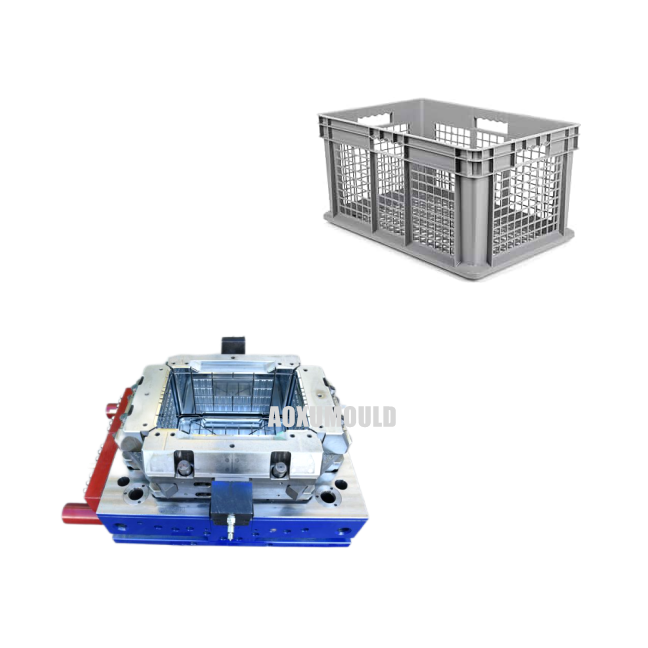
Stacking container mould are a must-have in various industries, ranging from food and beverage to automotive and logistics. These containers are designed to stack on top of one another, allowing for efficient storage and transport.
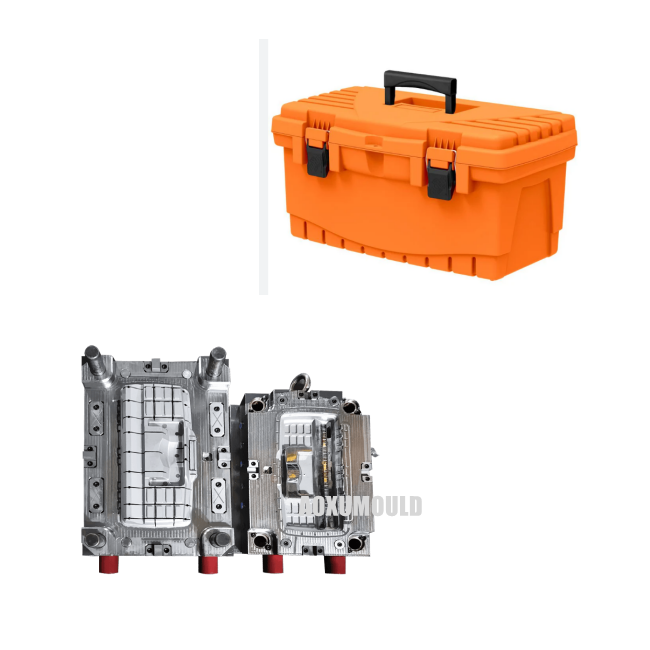
Tool boxe moulds are an essential item for many people, from professional mechanics to DIY enthusiasts. They provide a safe and secure way to store and transport tools, keeping them organised and within easy reach.

Plastic fruit crates are widely used in the agriculture industry to transport and store fruits and vegetables. The quality of the plastic fruit crate mould is crucial in ensuring that the crates are strong, durable, and of high quality.
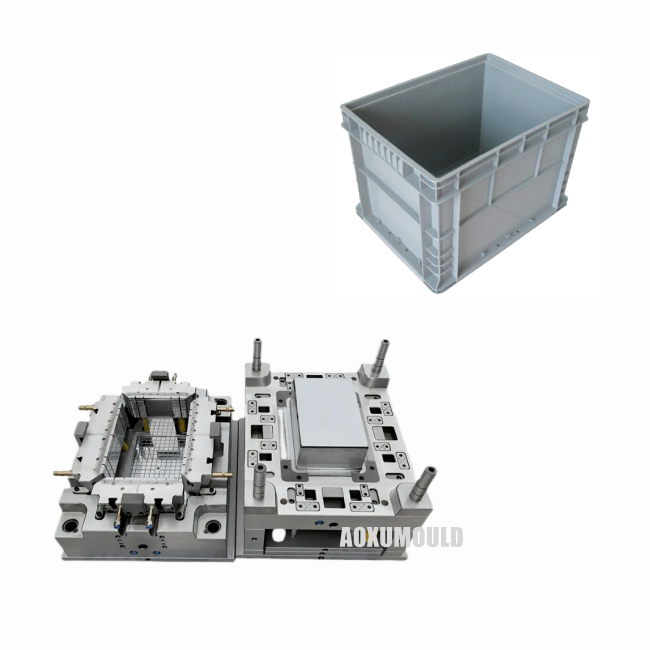
Industrial crate moulds are an essential tool in the manufacturing process, allowing for the efficient and safe transport and storage of goods. One important factor that affects the quality and durability of these moulds is the type of plastic used in their production.
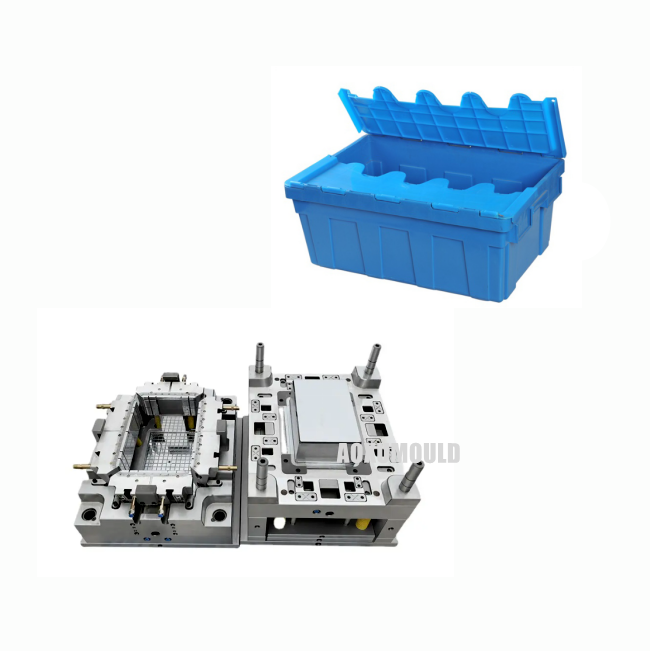
Logistic crates or boxes are essential components of most industries that require storage, transport, and safe delivery of products and goods. These boxes come in different sizes, shapes, and materials, and their design plays a crucial role in ensuring the efficiency and safety of logistics operations.

Logistics box mould are widely used because of their strength, adaptability, and environmental friendliness. They are frequently employed in the organizing, storage, and transportation of many product kinds.
What Is Vegetable Crate Mould
A vegetable crate mould is a reusable mould used to create plastic crates for transporting and storing vegetables. It consists of a frame with variously sized and shaped holes that correspond to the desired size and shape of the crate. By then, with plastic injection moulding, the molten plastic is flled into the mould so that the vegetable crate will have a good shape. They are used for the storage and transportation of various types of vegetables, ensuring their freshness and quality.
Reusability
A plastic vegetable crate mould enables the production of durable and reusable crates. Unlike traditional plastic crates that are primarily single-use, these moulds allow for the creation of long-lasting containers. The ability to reuse the crates reduces the demand for new production, minimizing the environmental impact.
Reduced Material Consumption
Plastic vegetable crate moulds optimize material consumption during the production process. By precisely shaping the mould, the amount of plastic required for each crate is minimized. This reduction in material consumption not only conserves resources but also reduces the overall cost of production.
Customization
The flexibility of plastic vegetable crate moulds allows for customization based on specific packaging requirements. Different sizes, shapes, and features can be easily incorporated into the design, ensuring the optimal packaging solution for various types of produce. This customization enhances efficiency during transportation and storage, reducing the risk of damage to the produce.
Recycling Potential
Plastic vegetable crate moulds open up possibilities for utilizing recycled plastic as a raw material. By incorporating recycled plastic into the mould, the environmental impact of production can be further minimized. This step towards a circular economy reduces the reliance on virgin plastic and promotes a sustainable approach to packaging.
What Materials are used in Vegetable Crate Mould to Make Vegetable Crates?
LDPE (high-pressure low-density polyethylene)
Its products have the advantages of low density, good transparency, and good insulation. They are mainly used in agricultural films (shed films, mulch films), repackaging films, shrink films, transparent films, and insulation. The production of materials and cable jackets can also be used in processing fields such as injection molding, extrusion, and foaming. Physicochemical properties of the product: Non-toxic, odorless, glossy white cylindrical particles with good extensibility, electrical insulation, crystallinity of 55-65%, and melting point of 108-126 ° C
HDPE (Low Pressure High Density Polyethylene)
Physical and chemical properties of the product: Non-toxic, odorless, odorless white particles, melting point is about 130 ℃, relative density is 0.941-0.965. Has good heat resistance and cold resistance. Good chemical stability, high rigidity and toughness, good mechanical strength, dielectric properties, and good resistance to environmental stress cracking.
LLDPE (Linear Low Density Polyethylene)
Physical and chemical properties of the product: Non-toxic, tasteless, odorless milky white particles, relative density 0.918-0.939. Compared with LDPE, it has the advantages of high strength, good toughness, strong rigidity, heat resistance, cold resistance, etc. It also has good resistance to environmental stress cracking, tear strength and other properties, and can resist acid, alkali, organic solvents, etc.
What Materials Are Vegetable Crate Mould Made Of?
The vegetable crate mould is made of steel and aluminum. It is tough and will last for many years with proper care. Steel also counterattacks corrosion, so the mould won't rust even if used in a wet environment. Proper maintenance will retain the mould in good condition and allow it to last for many years. The mould precision is also indispensable to create a good product.
What Sizes Of Vegetable Crate Can Be Made With Vegetable Crate Moulds?
Vegetable crate moulds can be designed to produce a wide range of crate sizes to meet various storage and transportation needs. Common sizes include small crates with dimensions around 300x200x150 mm, medium crates approximately 400x300x200 mm, and large crates measuring up to 600x400x300 mm. Custom moulds can be created to produce crates of specific dimensions as required by different agricultural and commercial applications, ensuring versatility and adaptability for various uses.
Designing the Perfect Vegetable Crate Mould


Material Selection
The choice of material for the vegetable crate mould is of utmost importance. It should be durable, resistant to wear and tear, and capable of withstanding varying environmental conditions. High-density polyethylene (HDPE) is commonly used due to its excellent mechanical properties, chemical resistance, and low production cost. It is crucial to select a material that meets the specific requirements of the vegetable crate, ensuring it can bear the weight of the vegetables without deformation.
Structural Design
The structural design of the vegetable crate mould should focus on strength, stability, and ease of use. The crate should be able to withstand the loads it will be subjected to during storage and transportation. Reinforcements such as ribs and corners can be incorporated into the design to enhance structural integrity. Additionally, ergonomic features such as handles and stackability should be considered to facilitate easy handling and efficient space utilization.
Ventilation
Ventilation is a critical aspect of vegetable crate design. Proper airflow is necessary to maintain the freshness and quality of the vegetables. The crate should have strategically placed vents that allow for adequate airflow while preventing the entry of dirt and contaminants. The size and location of the vents should be carefully determined to ensure optimal ventilation without compromising the structural integrity of the crate.
Mold Flow Analysis
Before proceeding with the production of the vegetable crate mould, conducting a mold flow analysis is highly recommended. This analysis simulates the flow of molten plastic during the injection molding process, allowing for the identification of potential design flaws and optimization of the mould design. It helps in minimizing defects such as sink marks, warpage, and air traps, ensuring the production of high-quality vegetable crates.
Tooling Considerations
The tooling for the vegetable crate mould should be designed with precision and accuracy. The use of advanced tooling techniques such as CNC machining and EDM (Electrical Discharge Machining) can help achieve the desired level of precision. Additionally, the use of high-quality mold steels and surface treatments can enhance the durability and longevity of the mould, minimizing the need for frequent repairs and replacements.
Design for Sustainability
In today's environmentally conscious world, designing for sustainability is crucial. The vegetable crate mould should be designed with recyclability in mind. It should have provisions for easy separation of different plastic components during recycling. Furthermore, the use of eco-friendly materials and processes should be prioritized to reduce the environmental impact of the production and disposal of the vegetable crates.
Material Factor
High content of volatiles in raw materials, contamination with foreign materials, or poor drying can affect the processing performance of materials. Uneven distribution of fiber fillers in molded materials can lead to fiber exposure on the surface. This affects the appearance of the molded parts. Poor crystallization properties of the resin can affect the transparency of molded parts, leading to uneven surface coloration. High-impact polystyrene and ABS materials may develop stress discoloration due to internal stresses after molding. Test the thermal stability of raw material resins; for materials with poor thermal stability, consider replacing them.
Quality control of colorants (color powders, masterbatches) Factors
The performance of colorants directly affects the color quality of molded parts. If the dispersibility, thermal stability, and particle morphology of the colorant do not meet process requirements, it is impossible to produce parts with good color. Some colorants in flake form can form directional arrangements when mixed into the melt during molding, causing uneven coloration on the surface of molded parts. When colorants are dry mixed with raw materials and adhere to the surface of the material particles, they may not disperse well after entering the barrel, leading to uneven coloration.
When selecting colorants, they should be screened based on process conditions and color requirements of the molded parts, especially important indicators such as heat resistance and dispersibility, which must meet process requirements. Before masterbatches enter the factory and before batch production, spot color testing should be performed, comparing both with the customer-provided color board and with masterbatches used in previous and current batches.
Equipment Factors
During production, color variations can occur due to damage to a heating ring or loss of control in the heating control section, causing severe temperature fluctuations in the barrel and resulting in color differences due to poor plasticization or material decomposition. Methods for determining color differences caused by these factors generally involve uneven plasticization when a heating ring is damaged and discolored, and severe discoloration or even charring when the heating control section is out of control. Regular inspection of the heating section is essential during production. Meantime, we should timely carry out replacement and repair if damage or loss of control occur to reduce these types of color variation issues. If there is charred molten material accumulated at the barrel or nozzle, the barrel and nozzle should be thoroughly cleaned.
Molding Process Factors
When adjusting injection molding process parameters for reasons other than color variation, try not to change the plasticizing temperature, back pressure, injection cycle, or the amount of color masterbatch added. If adjustments are needed, observe the impact of changes in process parameters on coloration, and if color variation is detected, promptly revert the changes. Avoid high injection speeds and back pressures in injection molding to prevent strong shear effects. These can cause thermal decomposition and color variation. Set reasonable temperatures for each heating section of the barrel, especially the nozzle and the section adjacent to the nozzle.
Mold factors
Mold release agents and the debris from pin and pinhole friction mixed into the melt can cause surface discoloration. We should keep the mold cavity clean before injection molding. Poor mold venting can be addressed by reducing clamping force, repositioning the gate, and placing vent holes at the last filling location.
Mold temperature has a significant impact on the crystallinity of the melt during cooling. Uniform cooling of the mold is essential, especially when molding crystalline plastics like polyamide. If the mold temperature is low, the melt crystallizes slowly, resulting in a transparent surface appearance; if the mold temperature is high, the melt crystallizes quickly, resulting in a semi-transparent or milky appearance. The surface coloration of molded parts can be controlled by adjusting the mold and melt temperatures.
How to Check the Mold Quality of Vegetable Crate Mould?
Appearance inspection: Check whether the surface of the mold is flat and smooth, and whether there are obvious damages, cracks or depressions.
Dimensional inspection: Use measuring tools to check whether the size of the mold meets the design requirements, especially whether the size, angle and structure of the vegetable crate are accurate.
Matching check: Check the matching of each part of the mold to ensure that there is no looseness or gap between the parts.
Material inspection: Confirm whether the materials used in the mold meet the requirements, such as whether the metal materials used are wear-resistant and corrosion-resistant, and whether they can meet the working environment and requirements of the mold.
Injection molding test: Test the mold on the injection molding machine to observe whether the opening and closing of the plastic crate mold is stable, whether the injection molding is smooth, and whether there are defects in the product.
Surface finish inspection: Check that the surface of the injection molded vegetable crate is smooth, with no obvious bubbles, marks or scratches.
Confirm the cooling system: Check whether the cooling system of the mold is designed properly and whether the cooling effect is good, so as to avoid deformation or defects during the molding process of the vegetable crate.
Accuracy inspection: Check the processing accuracy of the mold to ensure that the positioning and processing accuracy of the mold meet the requirements.
Load-bearing capacity test: Carry out a load test on the vegetable crate to check whether the load-bearing capacity of the vegetable crate meets the design requirements.
Stacking stability check: Stacking tests are carried out on vegetable crates to ensure that the vegetable crates are stable and not easy to dump when stacked.
Maintenance Tips for Vegetable Crate Mould
Using the right material
Every mold has preferred applications that produce the best results. Different plastic material types require specific temperatures, pressures and working conditions and therefore should be chosen carefully. To attain the maximum service life of your vegetable crate mold, use plastic material that will perform best within the molding permeameters. By matching the material's specifications to the mold's, your molding process will create the least amount of mold damage possible.
Mold cleaning and care
Planned, regular maintenance, as well as cleaning, is essential for the longevity of any piece of equipment. Always inspect, clean and grease molds that are used in production a minimum of once per shift and be sure to fix any damage right away. Even small issues can reduce productivity and take years off a vegetable crate mold's life span. To prevent outside sources from infiltrating the mold, excess and unwanted resins, grease, oil and other contaminants should be removed regularly.
Clamp speeds
While clamp speeds play a big role in cycle time, faster speeds are not always better because of their tendency to wear and damage tools. It is important to frequently monitor the closing and opening speeds of the vegetable crate mold close/fast speeds for signs of lunging. Over time, even minor transition issues can cause major misalignment and mold damage. Regularly testing the opening and closing of a mold ensures maximum productivity on all levels. Finding a clamp speed that is efficient but doesn't cause damage will do wonders within a molding process.
Applying protective coatings
The proper vegetable crate mold coating makes all the difference when running cycle after cycle. A protective coating can not only make tooling materials harder, but also shield against corrosion and rust. This in turn decreases the yield loss and downtime due to worn valve gates or other mold components. Rust preventives are one of the most common mold coatings. Because even the smallest contaminants can cause rust, these sprays protect molds and dies against numerous outside threats. By combating the solution at its origin, protective rust preventive coatings allow for your time and attention to be focused on other production areas.
Proper startup and shutdown methods
Taking the time to perform the proper steps when using a vegetable crate mold has outstanding effects on its performance over time. Molds can be temperamental and therefore need to be taken care of even after they're done producing parts. From proper testing and prepping to proper purging and storing, going the extra mile can dramatically extend the mold's life span.
Paying attention to temperature
High and uneven vegetable crate mold temperatures tend to have a negative effect on a mold's life. Therefore, it is important to monitor mold temperatures as much as possible during production. When in cycle, the temperature should never go higher than the mold specifications and should stay rather constant. For the best results, choose to use mold materials that can safely handle the desired temperature and balance the cooling process.
FAQ


