

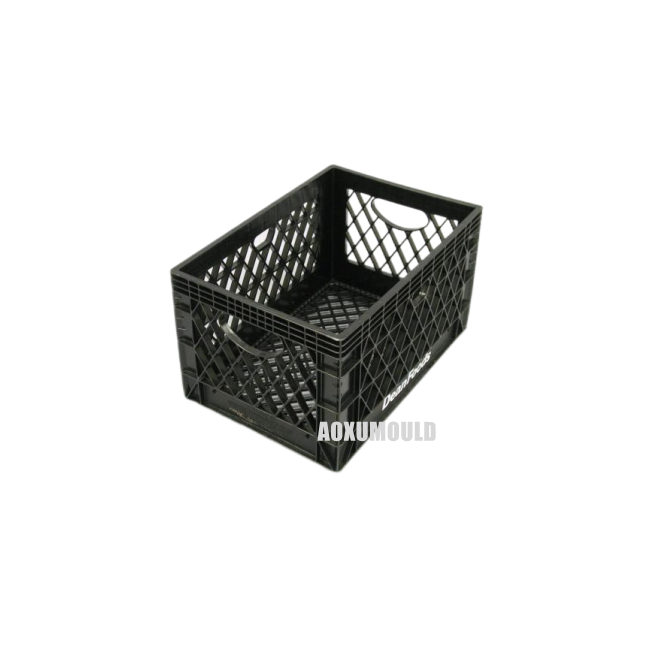
Mould Specifications
|
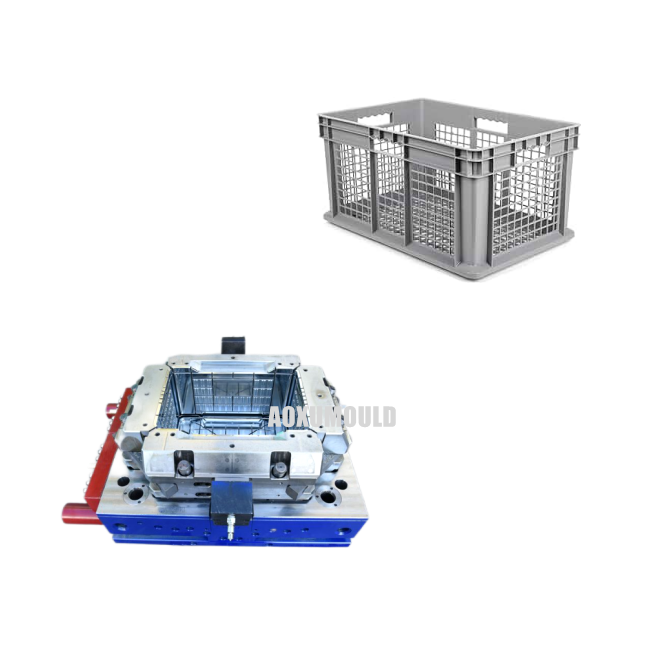
Mould name |
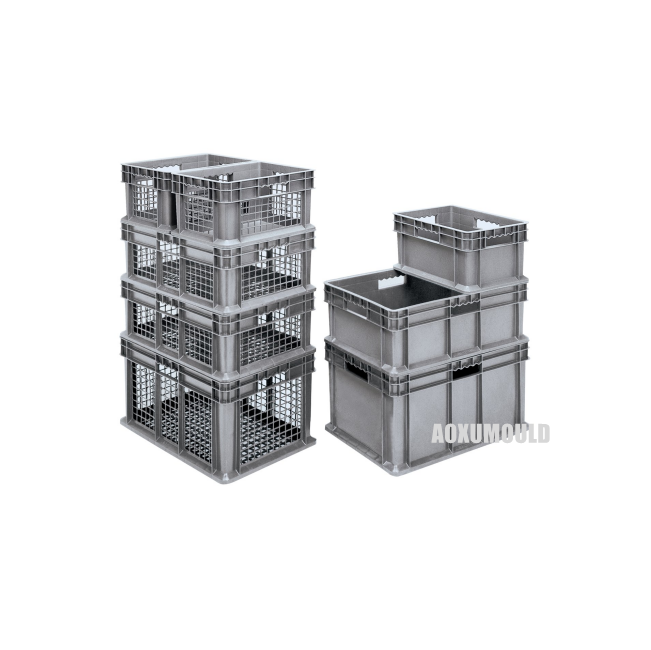
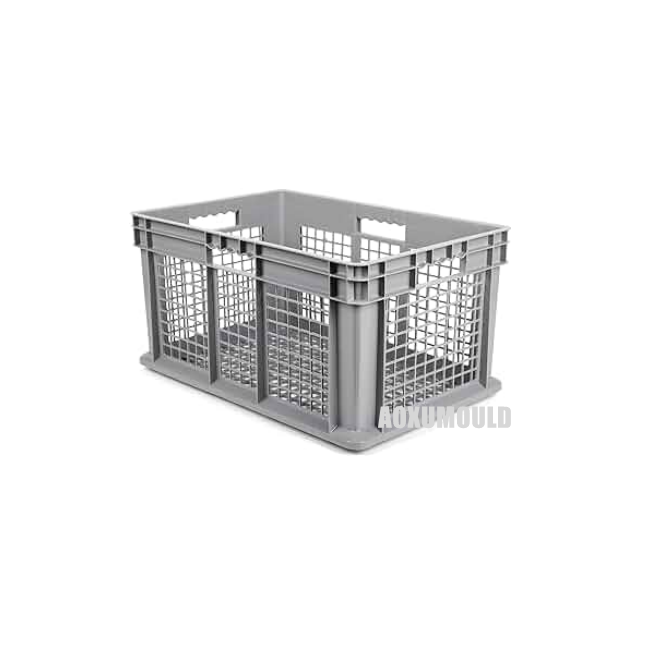
EURO Stacking Container Mould |
|
Product material |
HDPE, high density polypropylene |
|
Product Size |
L.600, W.400, H.200 mm |
|
Product Weight |
1.75KG |
|
Capacity |
40 Liters |
|
Mould material for cavity &. Core |
P20, 718, 2738, etc. |
|
Mould base |
C45 |
|
Injection system |
Hot runner feeding system |
|
Suitable injection machine |
470T |
|
Mould size |
950x900x680mm |
|
Mould weight |
2350KG |
|
Mould lifetime |
More than 500,000pcs |
|
Delivery Time |
50 days |
How To Customize Plastic Stacking Container Mould?
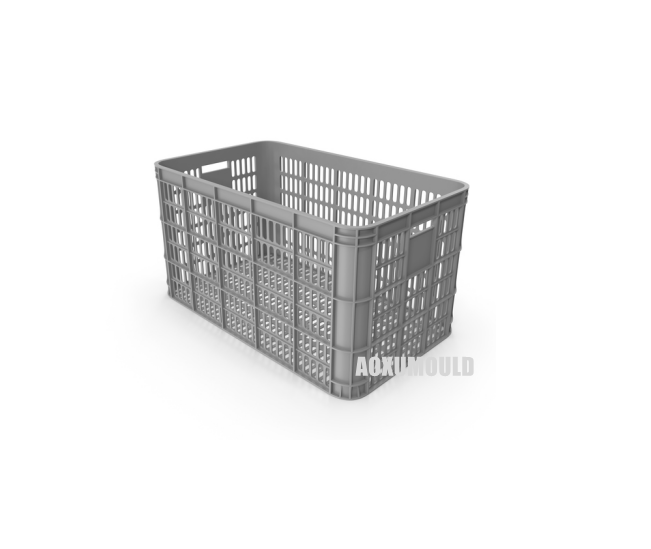
Plastic stacking containers are a must-have in various industries, ranging from food and beverage to automotive and logistics. These containers are designed to stack on top of one another, allowing for efficient storage and transport. If you need to customize plastic stacking container moulds for your business, here are some tips to help you get started.
1. Determine Your Needs
Firstly, you need to determine your needs for the plastic stacking container mould. Factors to consider include the size of the container, the material you want to use, the weight capacity, and any special features required. Once you have a clear idea of your requirements, you can communicate them to the manufacturer.
2. Choose A Reliable Manufacturer
Choosing the right manufacturer is critical when it comes to customizing plastic stacking container moulds. Look for a manufacturer with the experience and expertise to produce high-quality, accurate and functional moulds. You can check their online reviews and get feedback from other customers before making your final decision.
3. Provide Clear Specifications
Once you have chosen the right manufacturer, you need to provide them with clear specifications for the mould. This includes the design of the container, the required dimensions, the required draft angle, and any other features you may need. Make sure you communicate your requirements clearly and provide detailed drawings or sketches to avoid any misunderstandings.
4. Choose The Right Material
The material you choose for your plastic stacking container mould is critical to the product's success. There are several materials available, including polypropylene, polyethylene, and polystyrene. Each material has different properties, such as stiffness, durability, and thermal resistance. Choose the material that suits your needs and budget while still maintaining the quality of the product.
5. Prototype Testing
Before the actual production of the plastic stacking container, it is crucial to create a prototype for testing. Prototype testing can help ensure that the mould meets your specifications and can be adjusted accordingly. Testing can also help identify any potential issues before production and reduce errors and costs.
Customizing plastic stacking container moulds takes careful planning and attention to detail. With the help of a reliable and experienced manufacturer, you can ensure that your custom moulds meet your needs and produce high-quality products.
Design For Product &. Mould

Recommendations For Plastic Stacking Container Mould Steel Materials
For plastic stackable box or container moulds, the choice of steel material is a crucial factor in determining the mould's quality and performance. There are various options available, each with its own advantages and limitations. However, there are some common recommendations that can help in selecting the best steel material.
The first recommendation is to choose a high-quality steel material. This will ensure that the mould is durable, and can withstand the high pressures and temperatures involved in the injection moulding process. A good quality steel material will also reduce the need for maintenance and repairs, thereby increasing the mould's longevity and productivity.

Another recommendation is to choose a steel material that has good heat resistance. This is particularly important for plastic box/crate moulds, as the injection moulding process generates a lot of heat. Steel materials such as P20 and H13 are good options as they have excellent heat resistance properties and can endure prolonged exposure to high temperatures.
Furthermore, it is recommended to choose a steel material that has good surface finish properties. This can help in achieving a smooth and uniform finish on the plastic crates produced from the mould. A steel material such as 1.2738 or 1.2311 can offer good surface finish properties, leading to better quality products and reduced post-processing efforts.
Finally, it is important to choose a steel material that is compatible with the specific plastic material being used. This ensures that the mould can handle the plastic material's specific properties, such as viscosity, melting point, and flow rate, without compromising the mould's quality or performance.
In conclusion, selecting the right steel material for plastic stacking container moulds is crucial for achieving high-quality products and maximizing productivity. By following these recommendations, manufacturers can choose the best steel material for their specific needs and ensure their moulds' optimal performance.
Package &. Delivery

Mould Components
Mould Steel

Hot Runner System

Standard Parts

Customers' Feedback

How To Keep Our Mould Well?

Keeping your plastic stacking container mould in good condition is essential to ensure that it continues to produce high-quality results for many years. With proper maintenance and care, you can prevent damage to your mold, extend its lifespan, and even improve its performance. Follow these tips to keep your mould in pristine condition:
1. Regular cleaning: Clean your mould regularly using mild soap and water, and avoid using harsh chemicals or abrasive materials that can damage the mould surface. This helps prevent dirt and debris from building up on the mould surface and interfering with its molding ability.
2. Lubricate moving parts: Apply lubrication to any moving parts of the mold to prevent friction and reduce wear and tear. Use a high-quality lubricant that is specifically designed for molding equipment.
3. Check for signs of wear and tear: Inspect your mould regularly for signs of damage, such as cracks, chips, or scratches. If you notice any issues, have them addressed promptly to prevent further damage.
4. Store properly: Store your mould in a cool, dry place that is free from dust and debris. Avoid stacking moulds on top of each other or placing heavy objects on top of them. Use a protective cover to prevent dust and debris from settling on the mould surface.
By following these simple tips, you can ensure that your mould continues to perform at its best for many years to come. With proper care and maintenance, your mold will continue to deliver high-quality results, saving you time and money in the long run.


