

Introduction
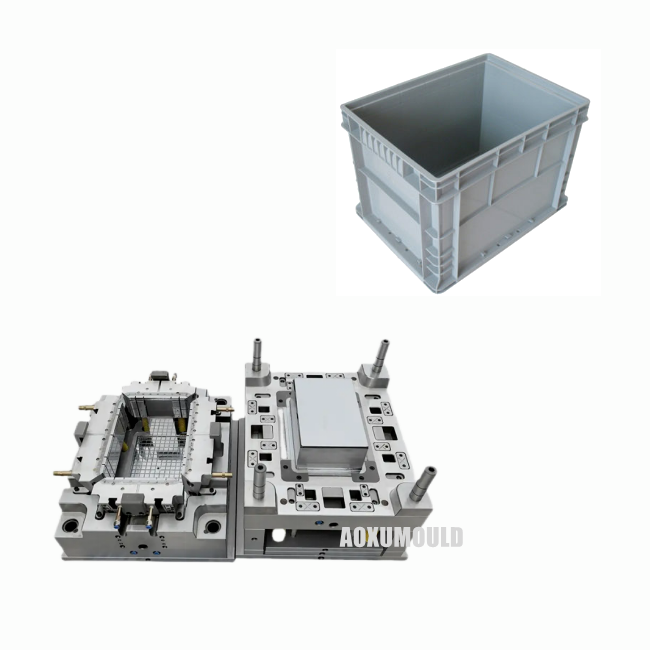
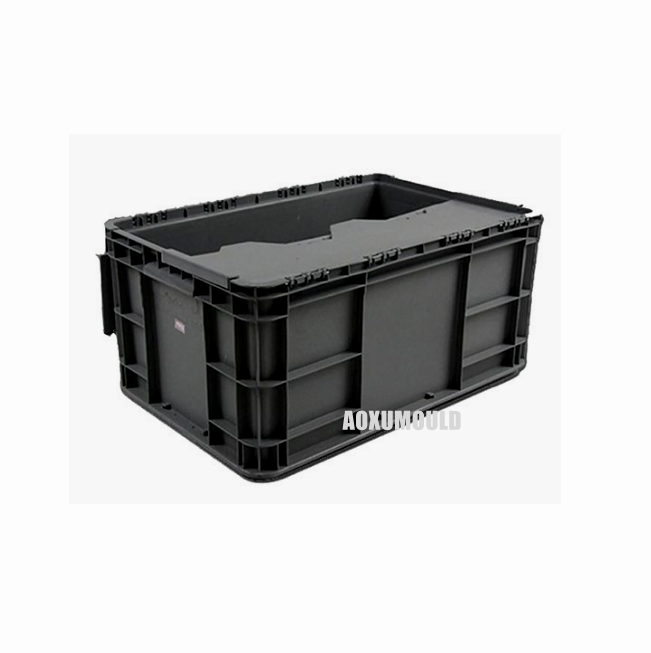
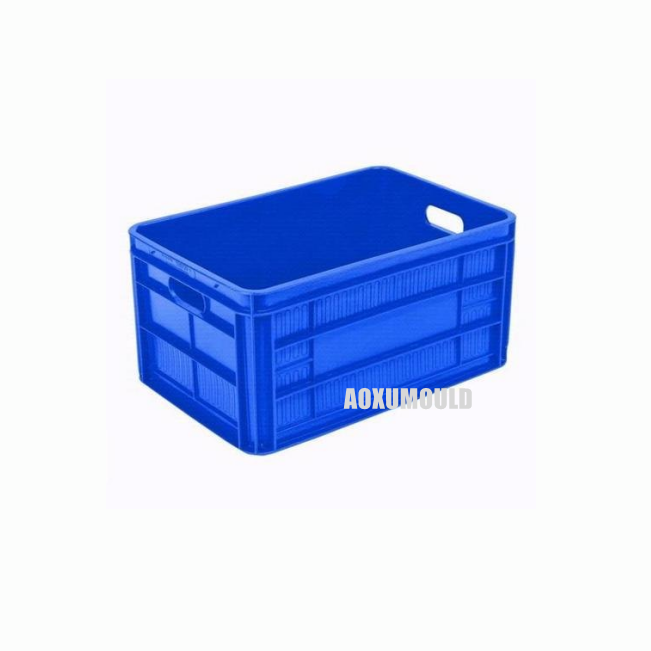
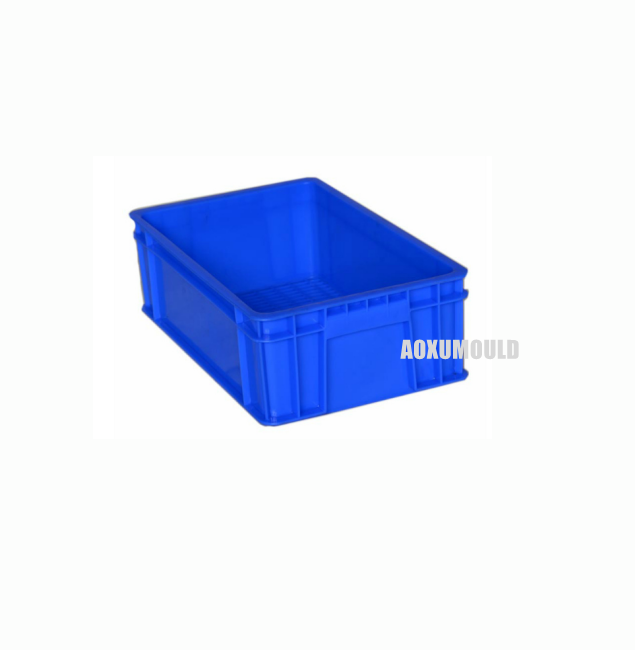
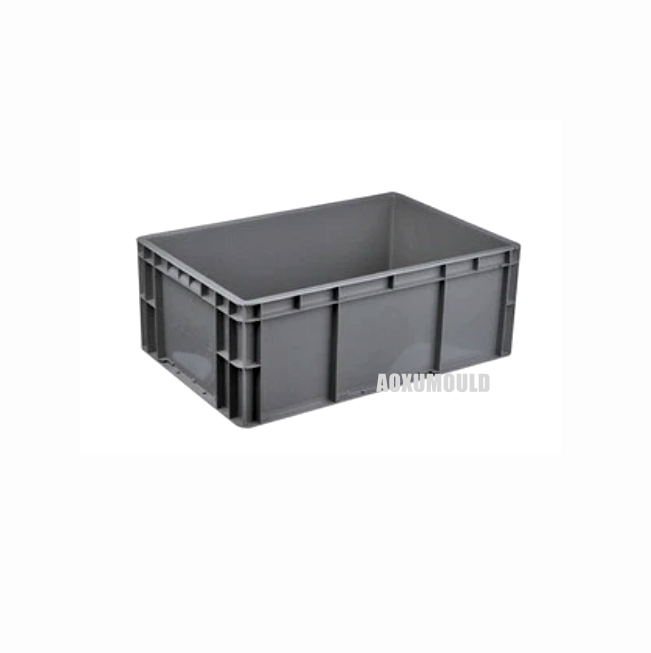
Industrial Crate Mould is a special mold used to produce industrial turnover boxes. It is made of high-strength steel (such as P20, 718 or 2738), combined with advanced injection molding technology and hot runner design, and is widely used in logistics, warehousing and manufacturing industries.
Manufacturing process
1. Mold design
Use CAD software to design the mold cavity and core structure to ensure that the shape, size and function of the turnover box meet the requirements. According to the injection characteristics of the hot runner tip gate, optimize the mold runner and cooling system to ensure uniform product wall thickness and molding efficiency.
2. Material processing
Use P20, 718 or 2738 high-strength steel, and select the appropriate steel according to the function of the mold components. C45 steel is used to manufacture the mold frame to ensure the overall strength and stability of the mold.
3. Precision machining
Use CNC milling machines to perform rough and fine machining on the mold, perform detailed machining on complex areas such as the tip gate part, ensure the precision of the hot runner system, grind and polish the mold surface, improve the surface quality of the product, and reduce demolding resistance.
4. Heat treatment
Quench and temper P20, 718, 2738 steels, release processing stress through annealing process, and avoid deformation of the mold during use.
5. Injection system manufacturing
The hot runner tip gate design is used to reduce material waste and welding marks, and the runner size is accurately set to ensure that the 500-ton injection molding machine can stably and efficiently inject HDPE materials.
6. Assembly and debugging
The cavity, core, mold frame and injection system are accurately installed, and the mold is tested on the 500-ton injection molding machine to check whether the product size, weight and surface quality meet the requirements.
How to maintain
1. Daily cleaning
Use soft cotton cloth or compressed air to remove residual plastic on the surface of the cavity and core, and regularly clean the tip gate of the hot runner system to prevent blockage and plastic decomposition residue.
2. Lubrication and maintenance
Apply professional mold lubricant to sliding parts such as guide pins, guide sleeves, and ejection mechanisms, and regularly check springs and push rods.
3. Temperature control
Regularly check the smoothness of the cooling water channel to prevent blockage by scale or rust, control the mold temperature within an appropriate range (according to the characteristics of HDPE materials), and prevent deformation or damage to the mold due to high temperature.
4. Mold surface maintenance
When the machine is shut down or not used for a long time, anti-rust oil should be applied to the mold surface. If scratches or slight damage are found on the surface of the cavity or core, polish and repair it in time.
Mould Specifications
|
Mould name |
Heavy Duty Industrial Crate Mould |
|
Product material |
HDPE, plastic |
|
Product Size |
600 x 400 x 340mm |
|
Product Capacity |
60Lt |
|
Product weight |
2.91kg |
|
Mould material for cavity &. Core |
P20, 718, 2738 |
|
Mould base |
C45 |
|
Injection system |
Hot runner tip gates |
|
Suitable injection machine |
500T |
|
Mould size |
925x735x655mm |
|
Mould lifetime |
More than 500,000pcs |


Try-out of Fruit Crate Mould
Package &. Delivery

Mould Components
Mould Steel

Hot Runner System

Standard Parts


Customers' Feedback

FAQ
Q: What materials are commonly used for making plastic industrial crate moulds?
Q: How long does it take to make a crate mould?
Q: Can I make my own plastic industrial crate mould or do I need to hire a professional?
Q: What should I look for in a professional mould maker?
Q: How do I maintain my mould?
Q: Can crates moulds be reused?
Q: How do I know if my mould needs repairs?
Q: Can I customize the design of mould?
Q: Are plastic moulds environmentally friendly?
Q: How can I ensure that my mould is safe to use?


