

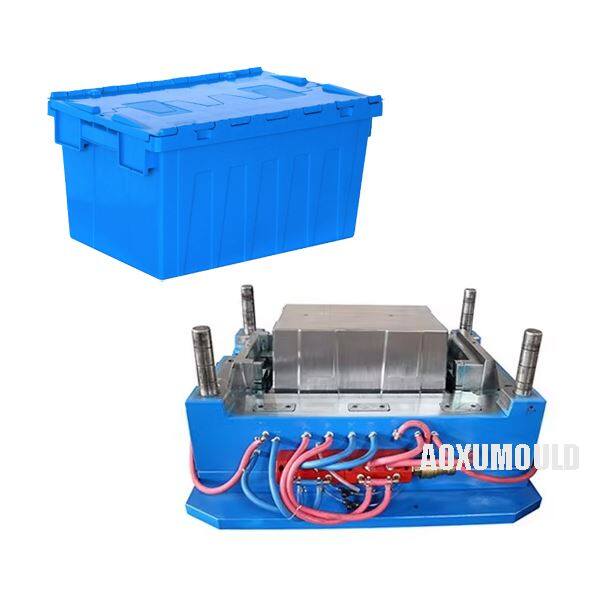
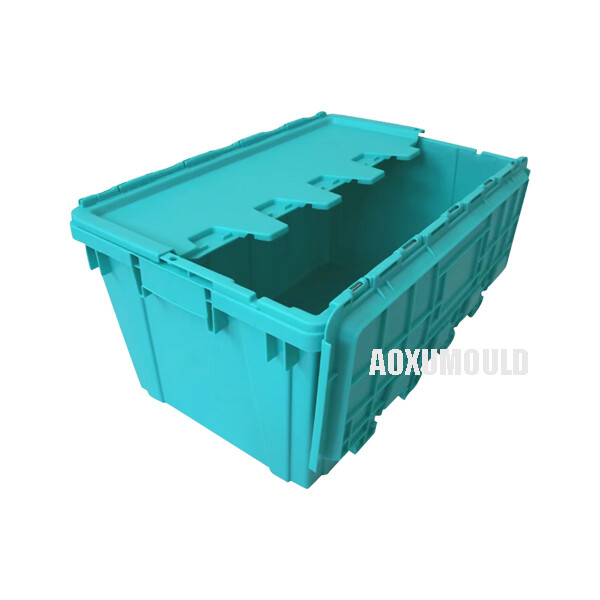
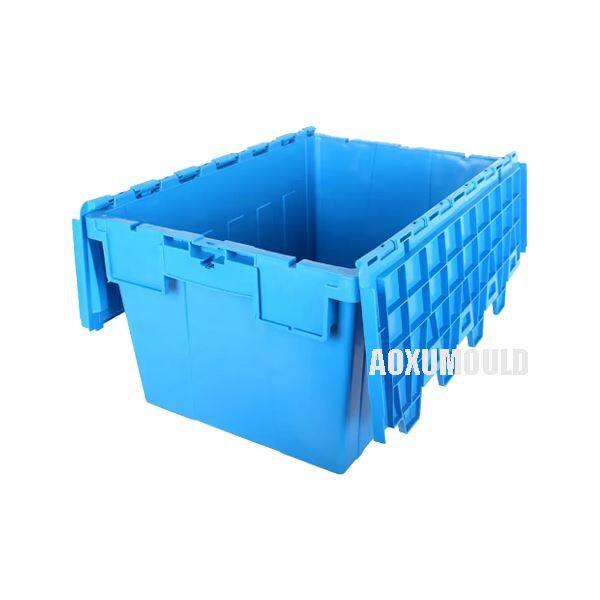
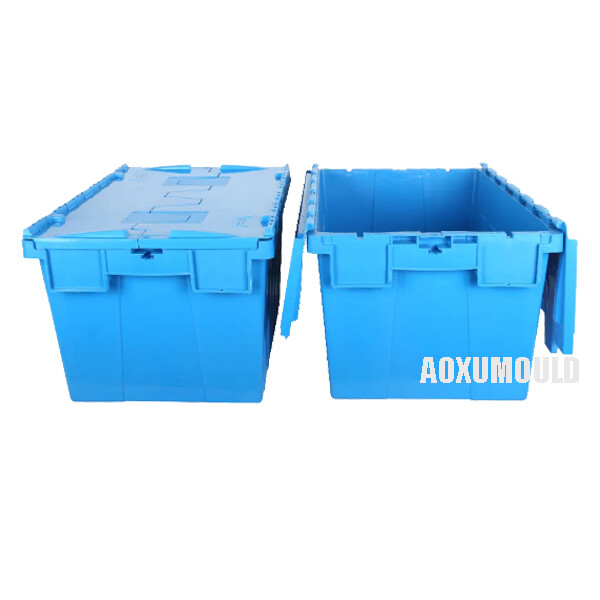
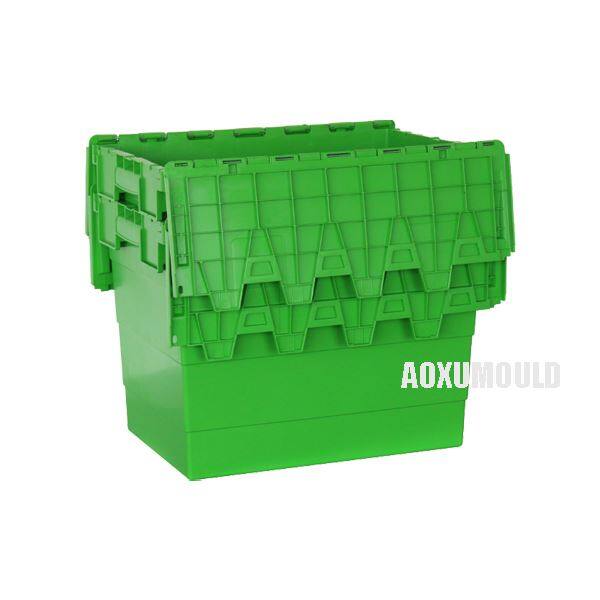
Mould Specifications
|
Mould name |
Nestable Crate Mould |
|
Product material |
PP, plastic |
|
Product Size |
600X400X450mm |
| Product Weight | 3.4KG |
|
Mould material for cavity &. Core |
P20, 718, 2738 |
|
NOs of cavity |
1 cavity |
|
Injection system |
Hot runner |
|
Suitable injection machine |
850T |
|
Mould size |
950X730X750mm |
|
Mould lifetime |
more than 500,000pcs |
Why Make Plastic Crates Nestable?

Making plastic crates nestable (able to stack inside one another when empty) offers significant advantages in logistics, storage, and cost efficiency. Here's why nestable crates are widely preferred:
1. Space Savings in Storage & Transportation
Empty crates take up 60-70% less space when nested, reducing the number of trips needed for return logistics.
More efficient use of warehouse and truck space, lowering transportation costs.
2. Lower Shipping & Handling Costs
Fewer vehicles are required to transport empty crates back to suppliers or distribution centers.
Reduces fuel consumption and carbon footprint in supply chains.
3. Improved Warehouse Efficiency
Nesting allows for compact storage when crates are not in use, freeing up valuable floor space.
Easier inventory management since empty crates occupy minimal space.
4. Enhanced Ergonomics & Handling
Lightweight and stackable design makes manual handling easier for workers.
Some nestable crates feature handles or grips for better maneuverability.
5. Durability & Reusability
Made from HDPE or PP, nestable crates are strong yet lightweight, ensuring long-term use.
Designed with reinforced walls and ribs to prevent deformation during nesting.
6. Versatility Across Industries
Retail & Supermarkets: Easy to store when not in use.
Agriculture: Efficient for transporting produce and stacking when empty.
Beverage & Dairy: Saves space in reverse logistics (returning empty crates).
Manufacturing & Warehousing: Optimizes storage for reusable packaging.
Key Characteristics of Nestable Crates

1. Tapered or Angled Walls
Allows crates to stack inside each other when empty, reducing storage space by 60-70%.
Ensures smooth nesting without jamming.
2. Lightweight Yet Durable Construction
Made from HDPE (High-Density Polyethylene) or PP (Polypropylene) for strength and impact resistance.
Reinforced ribs and corners prevent deformation during stacking.
3. Stacking & Interlocking Features
Stacking rims/lips for secure stacking when loaded.
Some designs include anti-slip feet for stability.
4. Customizable Design Options
Hinged or detachable lids for secure transport.
RFID/barcode tags for inventory tracking.
Color-coding options for easy categorization.
5. High Load-Bearing Capacity
Designed to support heavy loads without collapsing (some crates hold 50+ kg).
Reinforced base for stability when stacked.
Designs For Product &. Mould

Manufacturing Process Of A Quality Nestable Crate Mould
Injection molding is a popular manufacturing process used to create high-quality nestable crates. This process involves injecting molten material into a mold cavity, which then cools and hardens to form the desired shape. Here is an overview of the manufacturing process of a quality nestable crate injection mould:
1. Designing the mold: The first step in creating a nestable crate injection mould is designing the mold itself. This involves creating a detailed design that will produce the desired shape of the crate. The design will take into account factors such as the size, shape, and strength of the crate.
2. Selecting materials: The next step is selecting the materials that will be used to create the mould. Typically, molds for nestable crates are made from durable materials such as steel. This materials are chosen for their ability to withstand the high temperatures and pressures involved in the injection molding process.
3. Creating the mold: Once the design and materials are selected, the next step is to create the mould. This is done using a combination of machining and CNC techniques to accurately shape the mould according to the design specifications.
4. Injection molding: With the mold created, the next step is to actually produce the nestable crate using injection molding. This process involves injecting molten material into the mould cavity at high pressure. The material is then cooled and hardened to form the final shape of the crate.
5. Testing and quality control: After the crate is produced, it is important to test it for quality control purposes. This involves checking for any defects or imperfections in the crate and ensuring that it meets the necessary specifications for strength and durability.
Mould Components
Mould Steel

Hot Runner System

Standard Parts

Package &. Delivery

How Do You Ensure The Quality Of Your Crate Moulds?

1. High-Quality Materials & Tool Steel Selection
Premium-grade steel (P20, H13, S136, or 718H) for superior durability.
Hardened & tempered cores/cavities to resist wear and deformation.
Corrosion-resistant coatings (if required) for extended mould life.
2. Precision Engineering & Design Validation
3D CAD/CAM simulation to optimize mould flow and structural integrity.
DFM (Design for Manufacturability) analysis to prevent defects like warping or sink marks.
Prototype testing before mass production to verify functionality.
3. Advanced CNC Machining & EDM Processes
CNC milling, grinding, and EDM (Electrical Discharge Machining) for micron-level accuracy (±0.02mm tolerance).
Mirror polishing on critical surfaces to ensure smooth demoulding.
Proper venting & cooling channels to prevent defects like burns or voids.
4. Rigorous Testing & Inspection
Trial runs with actual production materials (HDPE/PP) to check:
-Nesting/stacking compatibility
-Ejection smoothness
-Dimensional accuracy
CMM (Coordinate Measuring Machine) checks for critical dimensions.
Load & fatigue testing to ensure long-term durability.
5. Strict Production Process Controls
Real-time monitoring of injection parameters (pressure, temperature, cycle time).
Regular maintenance of moulds to prevent wear and tear.
IQC (Incoming Quality Control) for raw materials and components.
6. After-Sales Support & Mould Maintenance
Lifetime technical support for troubleshooting.
Mould refurbishment & repair services to extend lifespan.
Spare parts availability for quick replacements.
FAQ
>1. What is a nestable crate injection mould?
A nestable crate injection mould is a specialized tool used to manufacture plastic crates that can be stacked inside each other when empty, saving storage and transportation space. These crates are widely used in logistics, agriculture, retail, and warehousing.
>2. What materials are used for nestable crates?
HDPE (High-Density Polyethylene)–Durable, chemical-resistant, and lightweight.
PP (Polypropylene)–Impact-resistant and suitable for food-grade applications.
>3. Can the mould be customized for different crate sizes?
Yes! We offer custom mould designs based on:
Dimensions (length, width, height)
Wall thickness & reinforcement ribs
Handle styles (grip holes, ergonomic designs)
Stacking/nesting features
>4. How long does it take to manufacture a Nestable Crate Injection Mould?
The manufacturing time for a Nestable Crate Injection Mould can vary depending on the complexity of the design and the size of the mould. Typically it takes around 45-55days to complete the manufacturing process.
>5. Can you provide technical support for maintenance and repairs?
Yes, we offer comprehensive technical support for maintenance and repairs of the Nestable Crate Injection Mould. Our team of experts is available to guide you through any issues you may encounter and provide assistance in keeping your mould in optimal condition.
>6. Why choose nestable crates over regular crates?
Space-saving: Up to 60-70% less storage space when empty.
Cost-effective: Lower transportation and warehousing costs.
Eco-friendly: Reusable and reduces plastic waste.
Efficient logistics: Easier handling and return transport.
Customers' Feedback


