

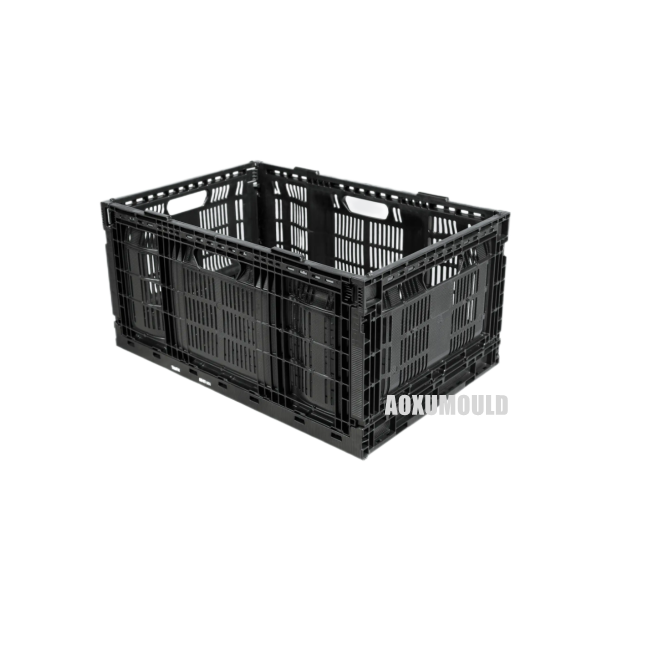
Mould Specifications
|
Mould name |
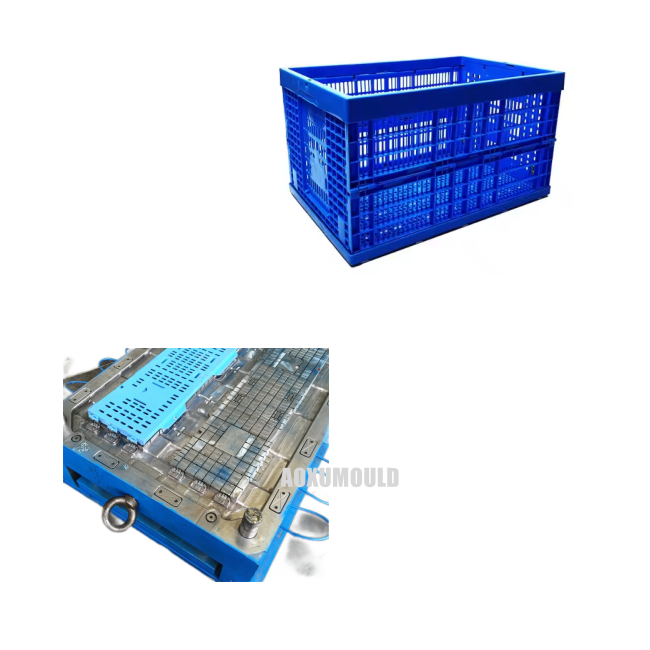
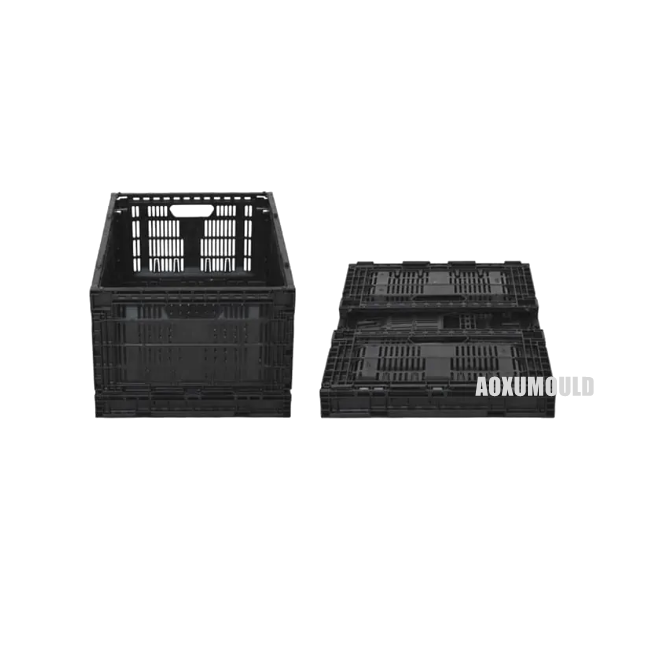
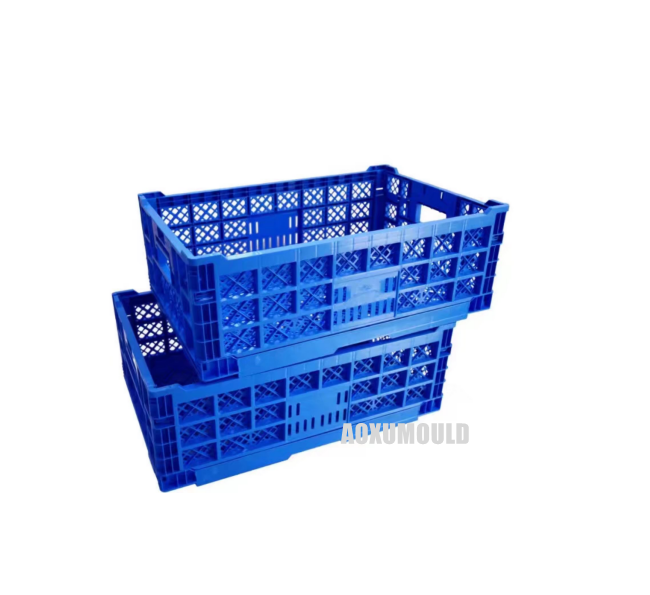
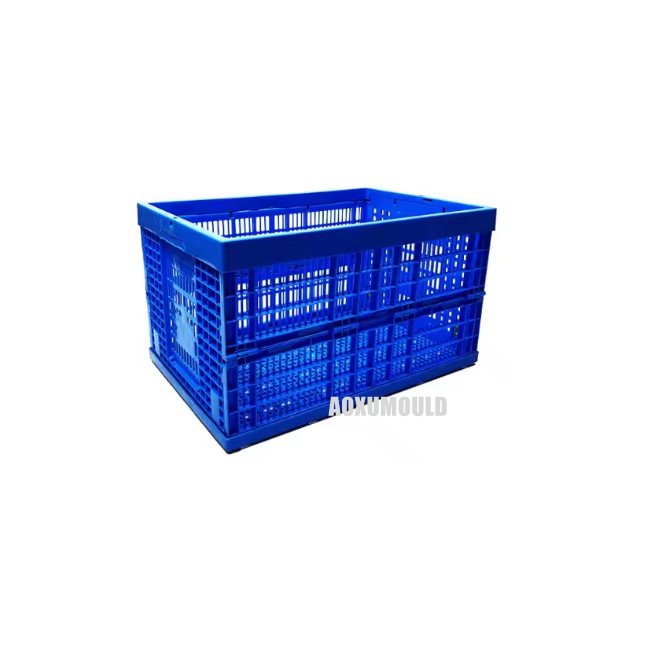
Plastic Packing crate mould |
|
Product material |
virgin PP |
|
Product Size |
600*400*340 mm |
|
Product weight |
2.34KG |
|
Mould material for cavity &. Core |
P20/718H/H13/2738 |
|
NOs of cavity |
1 cavity |
|
Injection system |
Hot runner |
|
Suitable injection machine |
650T |
|
Mould size |
850X580X900mm |
|
Mould weight |
3200KG |
|
Mould lifetime |
more than 500,000pcs |
|
Delivery Time |
55 days |

How To Design Plastic Packing Crates?
The following steps are involved in designing a plastic packing crate:
1.Product Requirement Analysis
Determine the Purpose: Consider the specific use of the crate, such as for storage, shopping, or travel.
Define the Capacity: Based on the intended use, decide on the appropriate size and capacity.
Assess the Load-bearing Capacity: Estimate the weight of the items the packing crate needs to hold.
2.Material Selection
Choose the Plastic Material: Opt for high-quality, durable plastics like polypropylene (PP) or polyethylene (PE).
Consider Additives: Additives can enhance properties like UV resistance, flame retardancy, and colorfastness.
3.Structural Design
Folding Mechanism: Design a simple and reliable folding mechanism. Hinges can be used to connect the sides of the packing crate.
Reinforcement Structures: Add ribs or other reinforcement features to improve the basket's strength.
Handle Design: Design a comfortable and sturdy handle that can withstand the weight of the loaded packing crate.
4.Appearance Design
Shape and Style: Consider the overall shape and style of the basket to make it visually appealing.
Color and Texture: Choose colors and textures that are both aesthetically pleasing and practical.
5.Manufacturing Process Design
Molding Method: Select an appropriate molding method, such as injection molding.
Assembly Process: Plan the assembly process, including how the various parts will be joined together.
6.Prototyping and Testing
Build a Prototype: Create a physical prototype of the packing crate to test its functionality and performance.
Conduct Tests: Test the basket's load-bearing capacity, folding and unfolding mechanism, and durability.
7.Optimization and Final Design
Analyze Test Results: Based on the test results, identify areas for improvement.
Make Adjustments: Make the necessary adjustments to the design.
Finalize the Design: Once satisfied with the performance of the packing crate, finalize the design.
Next Is Designing Packing Crate Moulds &. Moldflow Analysis

Designing a plastic foldable crate injection mould involves several key steps:
1. Mould Type Selection
A.Two - Plate or Three - Plate Mould
For a relatively simple foldable crate, a two - plate mould might be sufficient. It has a fixed half and a moving half, and the parting line is straightforward. However, if the crate has complex features like internal undercuts, a three - plate mould could be more appropriate. The three - plate mould allows for more complex gate designs and easier removal of the part.
B.Hot - Runner or Cold - Runner System
A hot - runner system is ideal for large - scale production as it reduces material waste by keeping the runner material molten. It also helps in achieving more uniform filling of the mould cavity. For small - scale production or when cost is a major factor, a cold - runner system can be used, although it generates runner waste that needs to be trimmed from the part.
2. Cavity Layout
Single or Multiple Cavities
If the production volume is high, multiple cavities can be designed in the mould. For example, a four - cavity or eight - cavity mould can increase the output per shot. However, the layout must ensure that each cavity is filled evenly. This may require careful balancing of the runner system.
When designing multiple cavities, consider the orientation of the foldable crates. They should be arranged in a way that minimizes the overall mould size while allowing for easy ejection.
3.Core and Cavity Design
A.Core Design
The core forms the internal shape of the crate. For a foldable crate, if it has hollow sections or internal features, the core must be designed to create these accurately. Use of slide cores or lifters may be necessary to create undercuts. For example, if the crate has a recessed area for stacking, a slide core can be used to form this feature.
B.Cavity Design
The cavity defines the outer shape of the crate. Pay attention to details such as the surface finish. A smooth surface finish will not only improve the appearance of the crate but also make it easier to clean. Texturing can also be added to the cavity surface if the crate requires a non - slip surface.
4. Ejection System
A.Ejector Pin Design
Ejector pins are commonly used to push the injected plastic part out of the mould. Place ejector pins in areas where they will not damage the part, such as on the thicker sections of the crate or near the handles. The diameter and number of ejector pins should be calculated based on the size and weight of the crate to ensure smooth ejection.
B.Ejection Plate Design
The ejection plate holds the ejector pins and transfers the force from the injection machine's ejector system. It should be designed to be rigid enough to distribute the force evenly.
5. Cooling System
A.Cooling Channel Layout
Design cooling channels in the core and cavity to ensure rapid and uniform cooling of the plastic. The channels should be placed close to the surfaces of the crate to extract heat efficiently. For example, in the walls of the crate, cooling channels can be spirally or serpentinely arranged.
B.Coolant Selection
Water is a commonly used coolant for plastic injection moulds. Ensure that the cooling system is designed to maintain a consistent coolant flow rate and temperature to prevent warping and reduce cycle times.
6.Mould Base Selection
A.Size and Strength
Select a mould base that is large enough to accommodate the core, cavity, and all the other components. Consider the clamping force of the injection machine when choosing the mould base size. The mould base should also be strong enough to withstand the high pressures during injection.
B.Standard or Custom Mould Base
Standard mould bases are cost - effective and readily available. However, if the foldable crate has unique requirements, a custom mould base may be necessary to ensure proper integration of all components.
8. Design for Manufacturability
Design the mould with machining in mind. Features such as draft angles on the core and cavity walls should be incorporated to facilitate easy removal of the machined parts. The draft angle typically ranges from 1 - 3 degrees depending on the plastic material and the complexity of the part.
What Is Moldflow Analysis?

Moldflow analysis is a computer-aided engineering (CAE) technology used in the injection molding process to simulate and analyze the flow behavior of molten plastic in the mould. Here is a detailed introduction:
1.Principle
It is based on the principles of fluid mechanics and heat transfer. By inputting parameters such as the geometry of the mold, the properties of the plastic material, and the process parameters, the software calculates and simulates the flow, filling, cooling, and packing processes of the molten plastic in the mold.
2.Functions
Filling Analysis: It predicts how the molten plastic fills the mould cavity, helping to identify potential problems such as short shots, weld lines, and air traps.
Cooling Analysis: It analyzes the cooling process of the plastic part in the mold, ensuring uniform cooling and minimizing warping and deformation.
Packing Analysis: It optimizes the packing process to improve the density and dimensional accuracy of the plastic part.
Warpage Analysis: It predicts the warpage of the plastic part after ejection, enabling designers to make adjustments to the mould design and process parameters.
4.Significance
Optimize Mould Design: It helps designers to optimize the gate location, runner system, and cooling channels in the mold design, improving the quality of the plastic parts.
Reduce Costs: By predicting and solving potential problems before actual production, it can reduce the number of muold trials and adjustments, saving time and costs.
Improve Production Efficiency: It optimizes the process parameters to shorten the cycle time and improve production efficiency.
Mould Materials(Steel)

Mould Components
Mould Steel

Hot Runner System

Standard Parts

Package &. Delivery

Customers' Feedback

Why Choose Us
1.Rich experience and professional team
Your company has extensive experience in packing crate injection mould manufacturing and a professional technical team. The technicians are proficient in every process of mold design and manufacturing, which can ensure the high quality and reliability of the moulds.
2.Strict quality control system
Your company has established a strict quality control system, which conducts strict inspections on each process of mold manufacturing to ensure that the quality of the moulds meets relevant standards and customer requirements.
3.Customized solutions
Your company can provide customized plastic packing crate mould solutions according to the specific needs of customers, including product design, mold structure optimization, and material selection, to help customers improve production efficiency and product quality.
4.Good after-sales service
Your company attaches great importance to after-sales service and has a professional after-sales service team. It can provide customers with timely technical support and maintenance services to ensure the normal operation of the moulds.


