

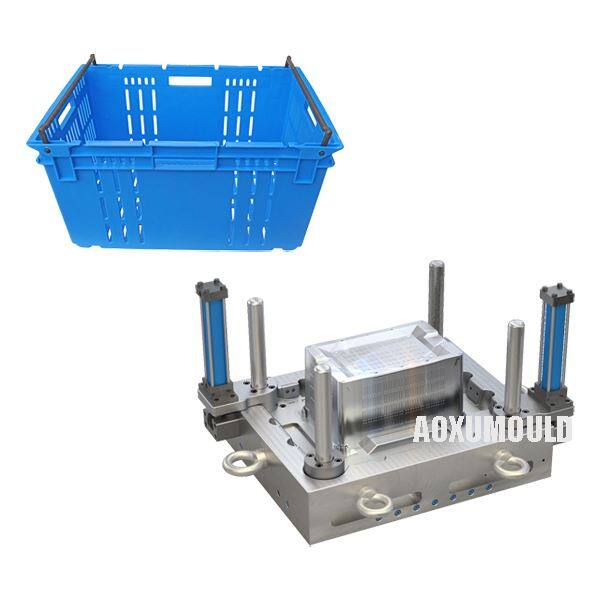
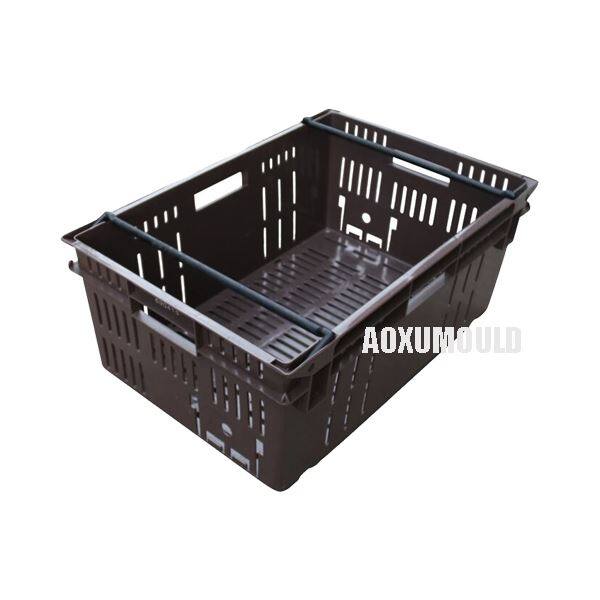
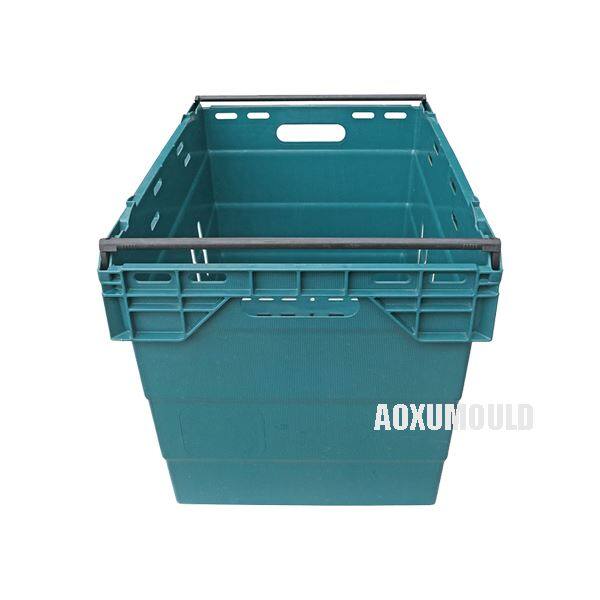
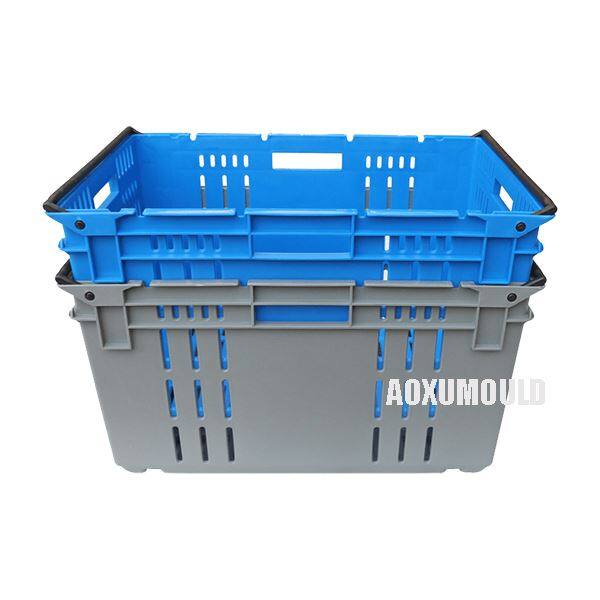
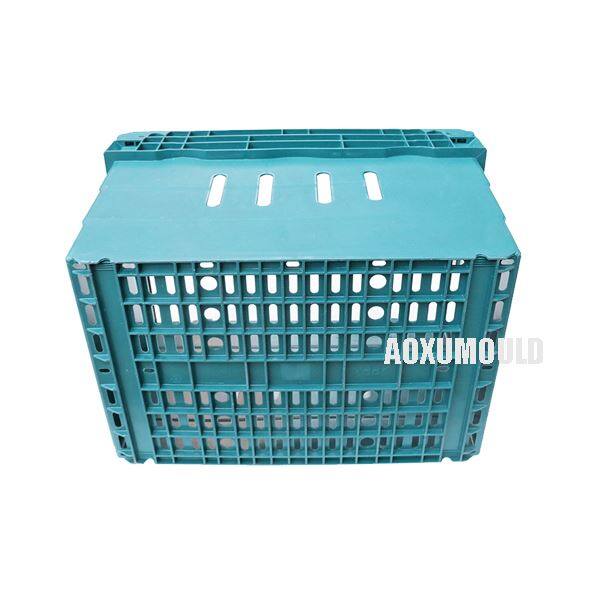
Mould Specifications
|
Mould name |
Agricultural Container Mould |
|
Product material |
PP, plastic |
|
Product Size |
600X400X310mm |
| Product Weight | 2.3KG |
|
Mould material for cavity &. Core |
P20, 718, 2738 |
|
NOs of cavity |
1 cavity |
|
Injection system |
Hot runner |
|
Suitable injection machine |
650T |
|
Mould size |
880X665X620mm |
|
Mould lifetime |
more than 500,000pcs |
About Agricultural Container Injection Moulds

Key Features of Agricultural Container Injection Moulds:
High-Strength & Durability
Made from hardened steel (e.g., P20, H13, or stainless steel) to withstand high-pressure injection cycles and abrasive plastic materials.
Produces crates that are impact-resistant, stackable, and load-bearing (capable of holding heavy produce like fruits, vegetables, or feed).
Material Compatibility
Optimized for agriculture-grade plastics like HDPE (High-Density Polyethylene), PP (Polypropylene), or recycled plastics-chosen for their UV resistance, chemical resistance, and toughness.
Customized Designs
Can include features like:
Ventilation holes (for airflow in produce storage).
Reinforced walls & ribs (for extra strength).
Nesting/stacking design (to save space when empty).
Ergonomic handles (for easy carrying).
High-Efficiency Production
Often multi-cavity moulds (producing multiple crates per cycle).
May include automated ejection systems for faster demolding.
Common Agricultural Containers Made with Injection Moulding:
Harvest Containers (for fruits, vegetables, eggs).
Livestock Feed Containers (durable, easy to clean).
Poultry & Dairy Containers (ventilated, stackable).
Seedling Trays & Propagation Containers (modular designs).
Heavy-Duty Transport Containers (for machinery parts or tools).
How Can An Agricultural Container Mould Be Manufactured With Quality?

1. Design: The first step in manufacturing a plastic agricultural container mould is to design it using computer-aided design (CAD) software. The design should take into account the specific requirements of the container, such as size, shape, and functionality.
2. Material selection: Choosing the right type of plastic material is crucial for the quality of the mould. The material should be durable, heat-resistant, and suitable for the intended use of the container. High-quality plastic resins should be used to ensure the longevity of the mould.
3. Precision machining:
CNC Machining–High-precision milling of mould cavities and cores.
EDM (Electrical Discharge Machining)–For intricate details and sharp corners.
Wire Cutting–Used for fine slits and complex geometries.
Grinding & Polishing–Smooth surface finish to prevent defects on plastic parts.
4. Testing: Once the mould is manufactured, it should be thoroughly tested to ensure that it meets the quality standards. This may include testing for dimensional accuracy, durability, and functionality.
5. Quality control: Quality control measures should be implemented throughout the manufacturing process to identify and rectify any defects or inconsistencies. Regular inspections and quality checks should be conducted to ensure that the mould meets the required standards.
Designs For Product &. Mould

Why Does Make Agricultural Containers Stackable?
1. Space Optimization
Empty Storage: Stacked containers take up 70-80% less space when empty, reducing storage footprint.
Transport Efficiency: More containers fit in trucks/trailers, cutting logistics costs by 30-50%.
2. Labor & Handling Efficiency
Faster Loading/Unloading: Workers can move multiple units at once using forklifts or pallet jacks.
Reduced Physical Strain: Ergonomic stacking designs minimize bending/lifting injuries.
3. Improved Crop Protection
Stable Stacking: Interlocking designs prevent toppling, protecting delicate produce (e.g., berries, eggs).
Ventilation: Many stackable crates include airflow gaps to prevent mold/spoilage during storage.
4. Cost Savings
Fewer Trips: Higher transport capacity reduces fuel and labor expenses.
Durability: Nestable designs minimize damage when empty, extending container lifespan.
5. Process Standardization
Compatible with Automation: Uniform stacks work seamlessly with:
Conveyor belt systems
Robotic palletizers
Warehouse racking
6. Versatility Across Agricultural Uses
Harvesting: Stackable bins for fruits/vegetables keep produce organized.
Livestock: Feed crates stack securely in barns.
Nurseries: Seedling trays compactly store when not in use.
Mould Components
Mould Steel

Hot Runner System

Standard Parts

Package &. Delivery

How to Request a Quote?
To ensure a fast and accurate quote, please provide the following details:
1. Product Specifications
Detailed drawings (CAD files, STEP/IGES formats preferred)
Photos or sketches (if no CAD file is available)
Dimensions (length, width, height, wall thickness)
Weight & volume of the final product
2. Mould Requirements
Cavity number (single or multi-cavity mould)
Material preference (steel type: P20, H13, stainless steel, etc.)
Special features (stackable, collapsible, handles, logos, etc.)
Estimated production volume (e.g., 100,000 units/year)
3. Plastic Material
Type of plastic (HDPE, PP, ABS, recycled, etc.)
Special requirements (UV-resistant, food-grade, flame-retardant, etc.)
4. Production Details
Injection machine specifications (clamping force, shot size)
Preferred lead time (standard or urgent)
Packaging requirements (if any)
5. Additional Services Needed
Mould testing & trial runs
Post-processing (assembly, labeling, etc.)
Ongoing maintenance & support
FAQ
>1. What is agricultural container injection moulding?
Agricultural container injection moulding is the process of creating plastic containers used for agricultural purposes, such as storing and transporting produce, seeds, or chemicals. This process involves injecting molten plastic into a mould to form the desired shape of the container.
>2. What types of agricultural containers can your moulds produce?
We manufacture moulds for a wide range of agricultural containers, including:
Produce crates (stackable, ventilated, heavy-duty)
Seedling trays & plant pots (biodegradable options available)
Pesticide & fertilizer containers (chemical-resistant)
Animal feed storage bins
Irrigation system components (drip fittings, connectors)
>3. What materials are best for agricultural container moulds?
HDPE (High-Density Polyethylene)–Durable, UV-resistant, and chemical-proof.
PP (Polypropylene)–Lightweight, heat-resistant, and food-safe.
Recycled plastics–Eco-friendly and cost-effective.
>4. Can you customize moulds for specific farming needs?
Yes! We offer:
Custom sizes, shapes, and thicknesses
Ventilation holes, handles, or stacking features
Multi-cavity designs for high-volume production
Logo/brand embossing for farm identification
>5. How long does the production process take for agricultural container injection moulding?
The production process for agricultural container injection moulding can vary depending on the complexity of the design and the quantity of containers being produced. Our team will work with you to determine a timeline that meets your project needs. Typically it will take about 45-55days.
>6. Do you ship globally?
Yes, we export worldwide with secure packaging and logistics support (DDP, FOB, or CIF terms available).
>7. What is the cost of agricultural container injection moulding services?
The cost of agricultural container injection moulding services can vary depending on the complexity of the design, the quantity of containers being produced, and other factors. Please contact us for a personalized quote based on your specific project needs.
>8. How can I place an order for agricultural container injection moulding services?
To place an order for agricultural container injection moulding services, please contact our sales team. We will work with you to understand your project requirements and provide a tailored solution to meet your needs.
Customers' Feedback


