

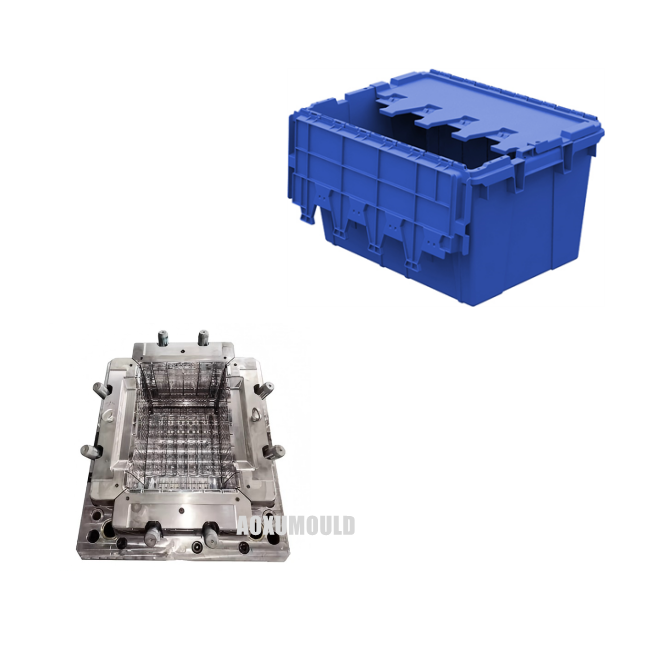
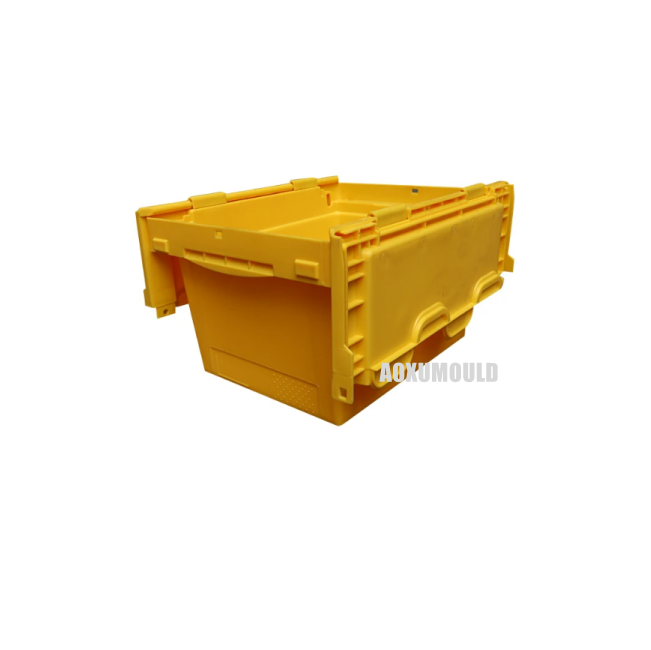
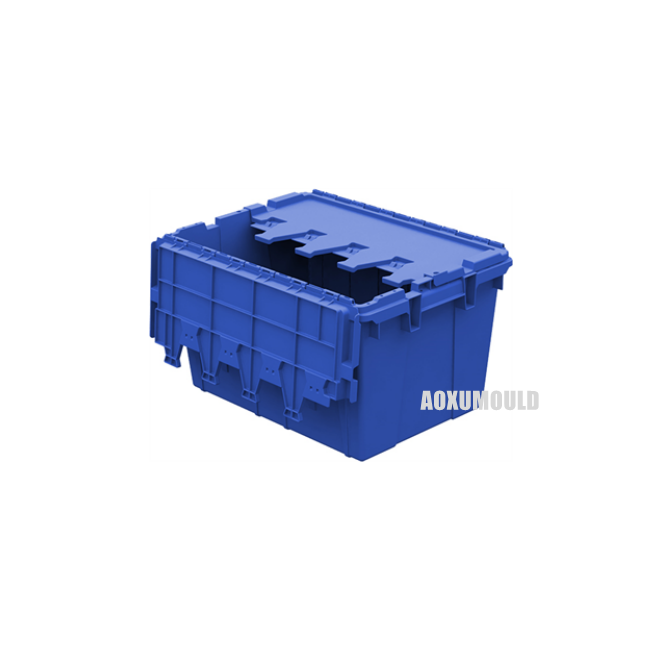
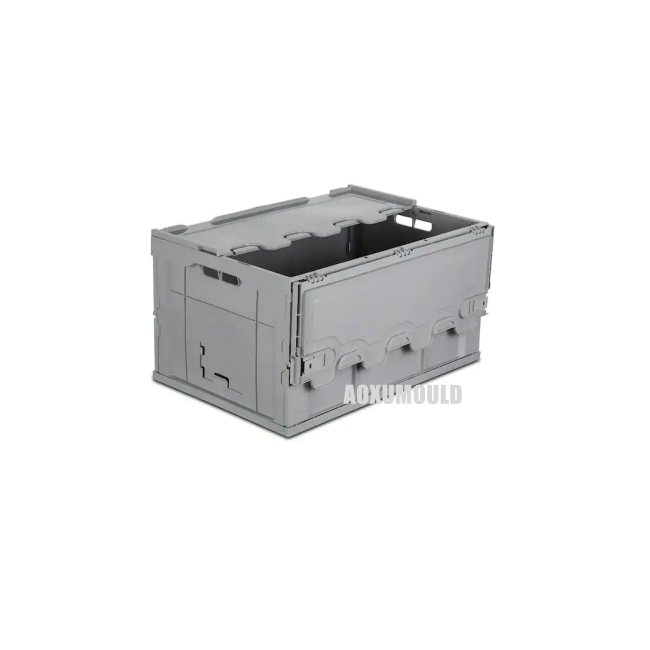
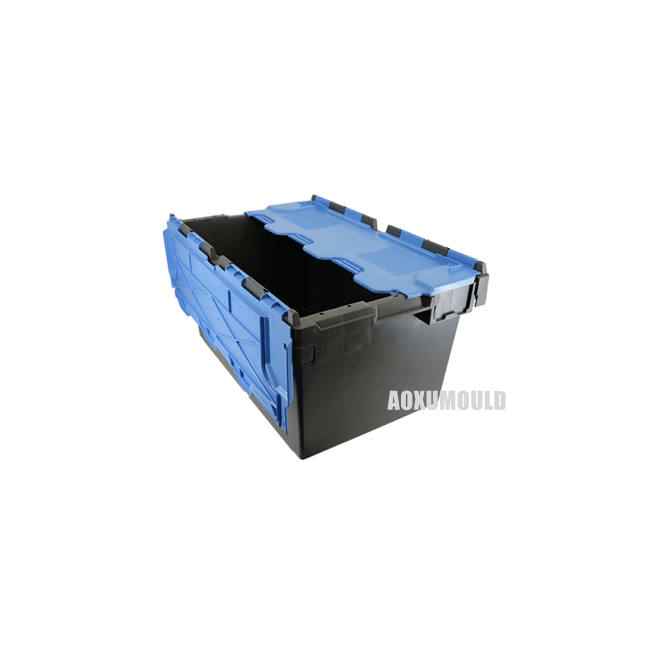
Mould Specifications
|
Mould name |
Plastic Logistics box mould |
|
Product material |
HDPE/PP |
|
Product Size |
600x400x280mm |
|
Product weight |
2.8KG |
|
Mould material for cavity &. Core |
P20/718H/H13 |
|
NOs of cavity |
1 cavity |
|
Injection system |
Hot runner |
|
Suitable injection machine |
650T |
|
Mould size |
850X580X900mm |
|
Mould weight |
3500KG |
|
Mould lifetime |
more than 500,000pcs |
|
Delivery Time |
55 days |
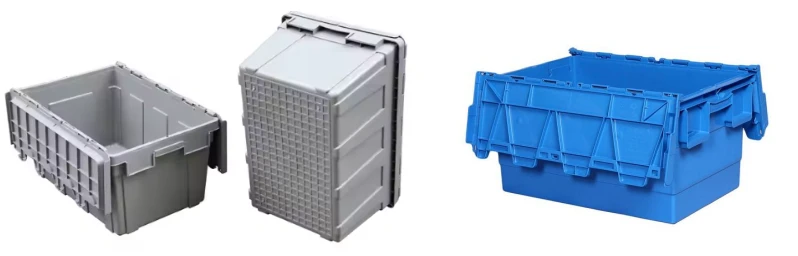
How To Design A Good Plastic Logistics Box?
1.Determine the Purpose and Requirements
Functionality: Consider what items the box will hold. For example, if it's for fragile goods, you may need to design internal dividers or cushioning features. If it's for heavy items, the box needs to have a high load - bearing capacity.
Size: Measure the typical dimensions of the objects to be stored or transported. Ensure the box provides enough space with some allowance for easy packing and unpacking. Also, take into account standard pallet or storage rack sizes to optimize space utilization.
Stackability: Design the box so that it can be stacked safely. This might involve features like recessed tops and bottoms that fit together precisely or strengthened corners to support the weight of stacked boxes.
Consider Material Properties
Plastic Type: Choose a suitable plastic material based on factors such as strength, flexibility, and cost. High - density polyethylene (HDPE) is a common choice due to its durability, impact resistance, and chemical resistance.
Wall Thickness: Determine the appropriate thickness of the box walls. Thicker walls provide more strength but also increase cost and weight. You can use engineering calculations or simulations to find the optimal thickness for the intended load - bearing requirements.
3.Design the Structure
Base and Sides: The base should be wide and stable to prevent tipping. The sides can be designed with ribs or corrugations to increase strength. For example, vertical ribs can enhance the box's resistance to lateral forces.
Handles and Openings: Incorporate handles that are easy to grip and strong enough to support the weight of a loaded box. Design the opening in a way that allows convenient access to the contents, such as a hinged lid or a large - enough removable top.
Design For Product &. Mould

How To Quality Make Plastic Logistics Box Mould?
1.Material selection
• Select suitable mould materials according to factors such as the expected production volume, plastic material used, and required precision. Commonly used materials include steel alloys such as P20 and H13. These materials have good hardness, wear - resistance and heat - treatment performance.
2.Machining
• Rough machining: Use machining methods such as milling and turning to remove most of the excess material from the mould blank to roughly form the shape of the mould.
• Finish machining: Use precision machining equipment such as CNC machining centers to achieve high - precision machining of the mould cavity, core and other key parts to ensure the surface roughness and dimensional accuracy meet the requirements. This process also includes the machining of details such as cooling channels.

3.Heat treatment
• Conduct heat - treatment processes such as quenching and tempering on the machined mould parts to improve the hardness and strength of the mould, and enhance its wear - resistance and service life.
4.Surface treatment
• Apply surface treatments such as polishing, coating, or texturing to the mould cavity surface. Polishing can improve the surface finish of the plastic parts produced, and coating can enhance the corrosion - resistance and release performance of the mould.
5.Assembly and debugging
• Assemble various components of the mould, including the cavity, core, ejection system, and gating system, and ensure that the assembly is accurate and the movement is smooth. Then, conduct trial - runs and debugging with a suitable injection - moulding machine, adjust parameters such as injection pressure, temperature, and cycle time to optimize the mould - filling and demoulding processes until qualified plastic logistics boxes can be produced stably.
This is a complex process that usually requires the participation of experienced mould - making technicians and advanced manufacturing equipment.
What's Type of Steel Good For Logistic Boxes Moulds?
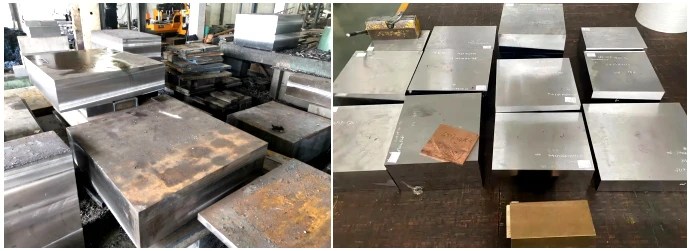
Several types of steel are suitable for plastic logistics box moulds:
1.P20 Steel
It is a pre - hardened steel. P20 steel has good machinability, which means it can be easily shaped and detailed during the mould - making process. It also offers a good balance of strength and toughness. The hardened surface can withstand the pressure and friction during the injection moulding of plastic logistics boxes and has a relatively long service life.
2.H13 Steel
H13 is a hot - work die steel. It has excellent heat - resistance, which is crucial because during the injection - moulding process, the mould is often subjected to high - temperature plastic melts. It can maintain its mechanical properties and dimensional stability under high - temperature conditions. It also has high strength and good wear - resistance, suitable for moulds with high - volume production requirements of plastic logistics boxes.
How To Maintain Our Logistic Box Mould?
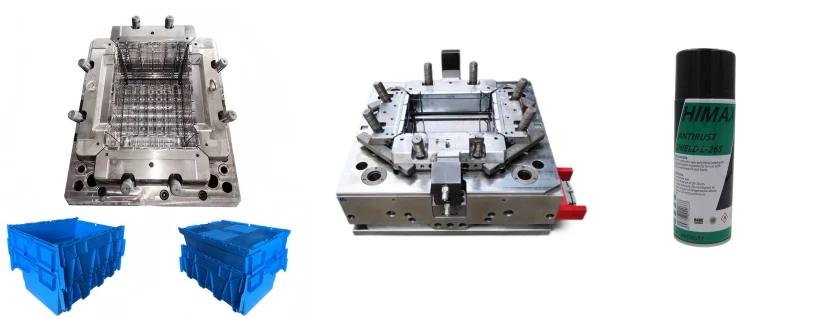
1.Regular cleaning
After each use, carefully clean the mould to remove residual plastics, debris and other impurities. You can use tools such as brass wire brushes to gently clean the cavity and core surfaces without scratching the mould surface.
Use appropriate solvents, such as specialized mould - cleaning agents, to dissolve and remove stubborn plastic residues. Make sure the solvent does not corrode the mould material.
2.Lubrication
Apply lubricants to the moving parts of the mould, such as the ejector pins and sliders. High - quality lubricants can reduce friction, prevent wear and ensure smooth movement of these parts during the demoulding process.
3.Inspection and repair
Regularly inspect the mould for signs of wear, cracks or other damages. Focus on areas such as the cavity surface, parting line, and ejector system. If any problems are found, repair them in a timely manner. Minor surface damages can be repaired through polishing and other methods, and more serious damages may require welding and re - machining.
4.Rust prevention
If the mould is not used for a long time, take rust - prevention measures. Coat the mould surface with anti - rust oil to form a protective film and prevent the mould from rusting due to moisture and other factors.
5.Proper storage
Store the mould in a dry, ventilated environment with a suitable temperature. Avoid storing it in a place with high humidity or a lot of dust. You can use mould storage racks to keep the mould in an upright position to prevent deformation.
Package &. Delivery

Mould Components
Mould Steel

Hot Runner System

Standard Parts

Customers' Feedback

FAQ
Q: How do I determine the best cavity layout for a multi - cavity mould?
A: Consider the size and shape of the logistics box, the available clamping force of the injection - moulding machine, and the required production volume. Try to balance the mould filling evenly among the cavities to ensure consistent part quality. For example, if the box is large, a single - cavity or double - cavity mould might be more suitable to avoid issues with insufficient clamping force.
Q: What design features are important for easy demoulding?
A: Adequate draft angles on the vertical surfaces of the box design are crucial. Typically, a draft angle of 1 - 3 degrees is recommended. Also, consider the location and design of the ejection system, such as ejector pins placed at non - visible or non - functional areas of the box to avoid marks on the finished product.
Q: Which steel grade is the most cost - effective for a medium - volume production mould?
A: P20 steel is often a good choice for medium - volume production. It has good machinability, can be pre - hardened, and provides a reasonable balance between cost and performance. It can withstand the pressures and wear associated with moulding plastic logistics boxes in the medium - run production scale.
Q: How do I choose a coating material for the mould surface?
A: For plastic logistics box moulds, a non - stick coating like a PTFE - based coating can be beneficial. It helps with the easy release of the plastic part and can also provide some corrosion - resistance. Consider the type of plastic being moulded and the expected number of cycles when choosing a coating.
Q: What is the acceptable tolerance range for the mould dimensions?
A: The tolerance depends on the size of the box and the required precision. Generally, for larger logistics boxes, a tolerance of ±0.1 - 0.3 mm for the overall dimensions of the mould cavity might be acceptable. However, for critical features such as mounting holes or mating surfaces, a tighter tolerance of around ±0.05 mm may be required.
Q: How can I ensure the machining accuracy of the cooling channels?
A: Use advanced CNC machining techniques and precise tooling. The cooling channels should be drilled or milled with high - precision equipment and then verified using inspection tools like borescopes. The channels should have a smooth finish to ensure efficient heat transfer and avoid hot spots in the mould.
Q: What are the key points to check during mould assembly?
A: Check for proper alignment of the cavity and core components. Ensure that the ejection system operates smoothly without any binding. Also, verify that the gating system is correctly installed and that there are no leaks or blockages. For example, the sprue bush should be firmly seated and aligned with the injection unit of the moulding machine.
Q: How do I troubleshoot problems during the mould - testing phase?
A: If there are issues like short shots (incomplete filling), first check the injection pressure, temperature, and speed settings. If there are cosmetic defects on the box, examine the surface finish of the mould cavity and the quality of the mould coating. For demoulding problems, review the draft angles and the operation of the ejection system.


