

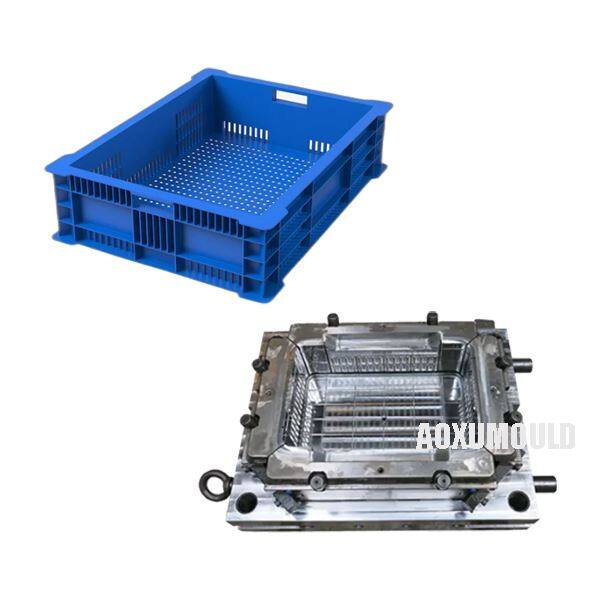
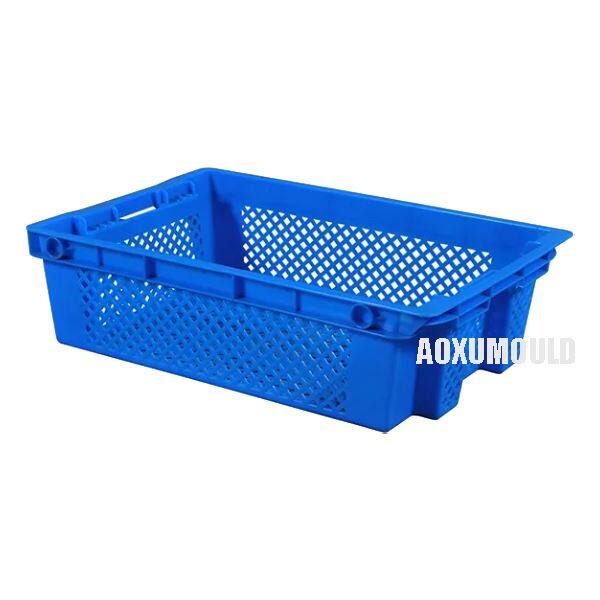
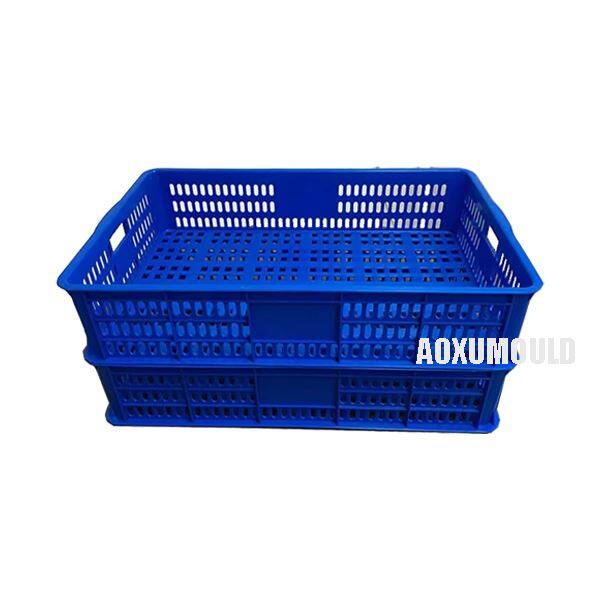
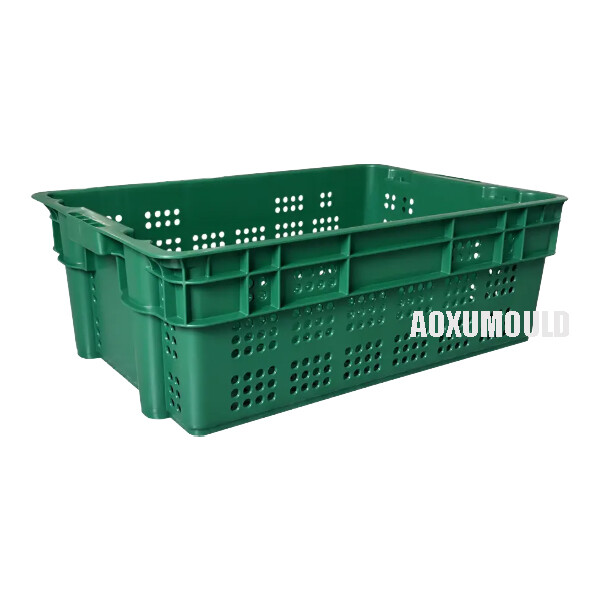
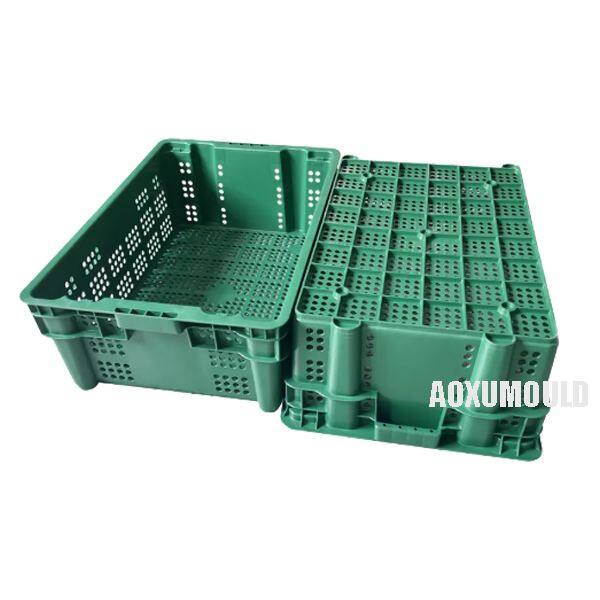
Mould Specifications
|
Mould name |
Fish Tray Mould |
|
Product material |
PP, plastic |
|
Product Size |
600X400X205mm |
| Product Weight | 3.4KG |
|
Mould material for cavity &. Core |
P20, 718, 2738 |
|
NOs of cavity |
1 cavity |
|
Injection system |
Hot runner |
|
Suitable injection machine |
680T |
|
Mould size |
850X680X600mm |
|
Mould lifetime |
more than 500,000pcs |
Design Considerations Of Plastic Fish Trays

1. Material Selection
Food-Grade Plastics: Must comply with FDA/EU food safety standards (e.g., PP, HDPE, PET).
Moisture & Odor Resistance: Prevents absorption of fish liquids and smells.
Freezer-Safe: Should withstand low temperatures (e.g., for ice storage).
Recyclability: Sustainable materials (like PP) are preferred over Styrofoam.
2. Structural Design
A. Drainage System
Perforations/Drainage Holes: Allow melted ice and fish juices to drain, preventing bacterial growth.
Sloped Base: Helps direct liquids toward drainage points.
B. Stackability & Nesting
Interlocking Rims: Ensures trays stack securely without sticking.
Reinforced Corners: Prevents deformation when stacked in bulk.
Nesting Feature (for empty trays): Saves storage space.
Strength & Durability
Ribbing/Reinforcements: Adds rigidity to prevent bending under load.
Wall Thickness: Typically 1.5–3mm (thicker for heavy fish, thinner for cost savings).
3. Ergonomics & Handling
Handholds/Grips: Easy lifting for workers.
Lightweight Design: Reduces fatigue during transport.
Anti-Slip Texture: Prevents fish from sliding inside the tray.
4. Hygiene & Cleaning
Smooth, Non-Porous Surface: Prevents bacteria buildup.
No Sharp Corners: Easier to clean.
5. Customization & Branding
Embossed/Engraved Logos: For brand identification.
Color Coding: Different colors for different fish types (e.g., salmon vs. cod).
Labeling Areas: Flat zones for stickers or RFID tags.
Advantages Of Bi-Color Fish Trays

A bi-color plastic fish tray is an injection-molded storage or packaging tray made from two different colored plastics (typically PP or HDPE). These trays are commonly used in the seafood industry for better branding, functionality, and visual differentiation.
Key Features:
Two-tone design (e.g., white base + blue rim) for branding & aesthetics
Food-safe materials (FDA/EU compliant)
Durable & leak-resistant (with drainage holes if needed)
Stackable & ergonomic for easy handling
Benefits of Bi-Color Fish Trays
Enhanced Branding – Custom colors boost product visibility in retail.
Improved Functionality – Different colors can indicate tray sections (e.g., drainage vs. storage).
Consumer Appeal – More attractive than plain plastic trays.
Durability – Same strength as single-color trays but with added aesthetic value.
Industries Using Bi-Color Fish Trays
Supermarkets & Seafood Retailers (for premium packaging)
Fishing & Aquaculture (durable storage for fresh catch)
Food Processing Plants (color-coding for different fish types)
Online Seafood Delivery (branded, leak-proof packaging)
4. Injection Molding Techniques
-Two-Shot Molding (Overmolding):
The first color is injected, then a second shot molds the contrasting part.
Best for complex designs (e.g., soft-grip handles).
-Co-Injection Molding:
Two materials injected simultaneously into the same mold.
More cost-effective for large production runs.
Designs For Product &. Mould

How To Manufacture A Fish Tray Mould?
1. Design: The first step in manufacturing a fish tray mould is to have a clear and detailed design of the mould. This design should include the dimensions, shape, and features of the fish tray mould.
2. Material selection: Choose a suitable material for your fish tray mould, such as plastic or metal. Consider the durability, cost, and ease of manufacturing of the material.
3. Fabrication: Once you have the design and material selected, the next step is to fabricate the fish tray mould. This involves cutting, shaping, and assembling the material according to the design specifications.
4. Moulding process: The moulding process involves using the fabricated mould to create the fish tray. This can be done through various methods such as injection moulding, compression moulding, or thermoforming.
5. Testing: After the fish tray mould has been manufactured, it is important to conduct thorough testing to ensure that it meets the quality standards. This may involve testing for strength, durability, and functionality.
6. Finishing touches: Once the fish tray mould has passed testing, you can add any finishing touches such as polishing or coating to enhance its appearance and durability.
Mould Components
Mould Steel

Hot Runner System

Standard Parts

Package &. Delivery

How To Choose A Suitable Injection Molding Machine For Fish Tray Mould?

1. Determine the Required Clamping Force (Ton)
The clamping force must be sufficient to keep the mould closed during injection.
Formula: Clamping Force (tons)=Projected Area (cm²)×Injection Pressure (ton/cm²)
Projected Area = Length × Width of the fish tray (including runner system).
Injection Pressure = Typically 2–5 tons/cm² for PP/HDPE.
2. Check Shot Size (Plastic Capacity)
The machine must have enough shot capacity to fill the mould.
Fish tray weight (including runners) = e.g., 300g
Machine shot size should be 30–70% of maximum capacity (optimal efficiency).
3. Mould Size & Platen Compatibility
Mould dimensions must fit the machine's platen size and tie-bar spacing.
Minimum mold thickness should match the machine's min/max mould height.
4. Injection Speed & Pressure
Fish trays (thin-walled designs) may need high injection speed (to prevent premature cooling).
PP/HDPE typically requires 700–1,500 bar injection pressure.
5. Energy Efficiency & Hydraulic vs. Electric
Hydraulic Machines: Cheaper but less energy-efficient.
Electric/Hybrid Machines: More precise, energy-saving (better for long production runs).
6. Additional Features for Fish Trays
Quick Mould Change (QMC) – Useful for multi-cavity molds.
Drying Hopper (for hygroscopic materials like PET).
Cooling System – Critical for fast cycle times.
FAQ
>1. What is a fish tray injection mould?
It's a custom mold used in plastic injection molding machines to produce durable, hygienic trays for storing, transporting, and displaying fish and seafood.
>2. What materials does Fish Tray Injection Mould Company typically use for injection molding trays?
We are capable of working with a variety of materials for injection molding trays, including but not limited to ABS, PC, PP, and HDPE. Our team will work with you to determine the best material for your specific needs.
>3. Can Fish Tray Injection Mould Company assist with design and prototyping services?
Yes, we offer design and prototyping services to help bring your ideas to life. Our experienced team can assist with product design, prototyping, and mold development to ensure the final product meets your specifications and requirements.
>4. What design features can be added?
Drainage holes/sloped bases, Stackable rims, Hand grips, Embossed logos/labels and Lids or snap-on covers, etc,.
>4. How long does it typically take for Fish Tray Injection Mould Company to complete a custom mould order?
The time it takes for us to complete a custom mold order can vary depending on the complexity of the design and the current workload. Generally, it usually takes around 45-55days.
>5. How do you ensure consistent quality?
We conduct mold flow analysis, T1 sample testing, and QC inspections during production.
>6. What affects the mould cost?
Factors include: Mould material (steel type), Number of cavities, Complexity (undercuts, moving parts) and Surface finish (polished, textured).
>6. What if the mould has issues after delivery?
We provide warranty support and troubleshooting assistance.
Customers' Feedback


