

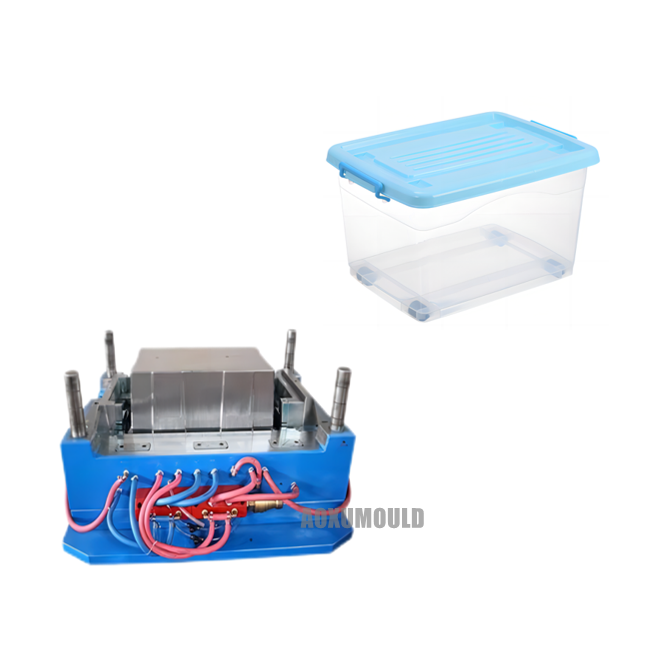
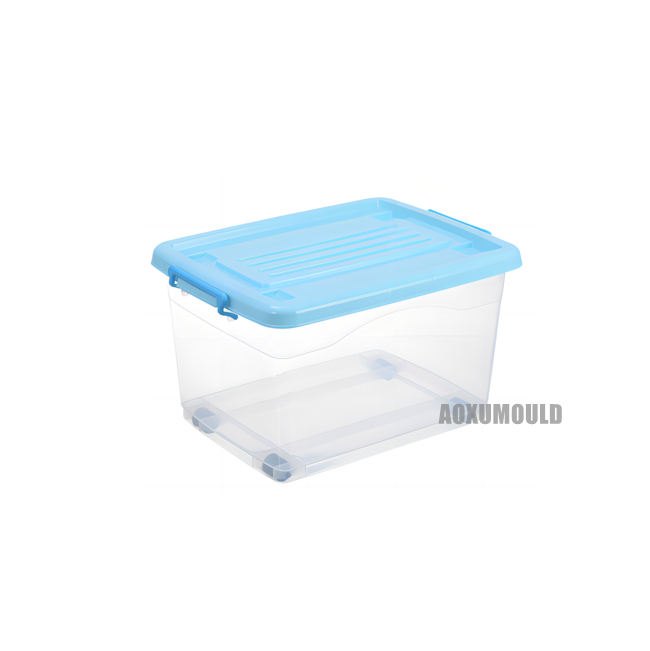
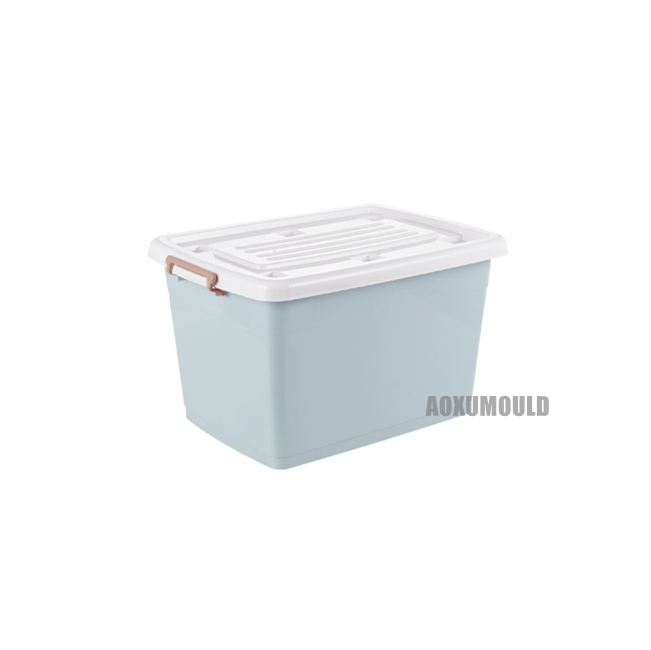
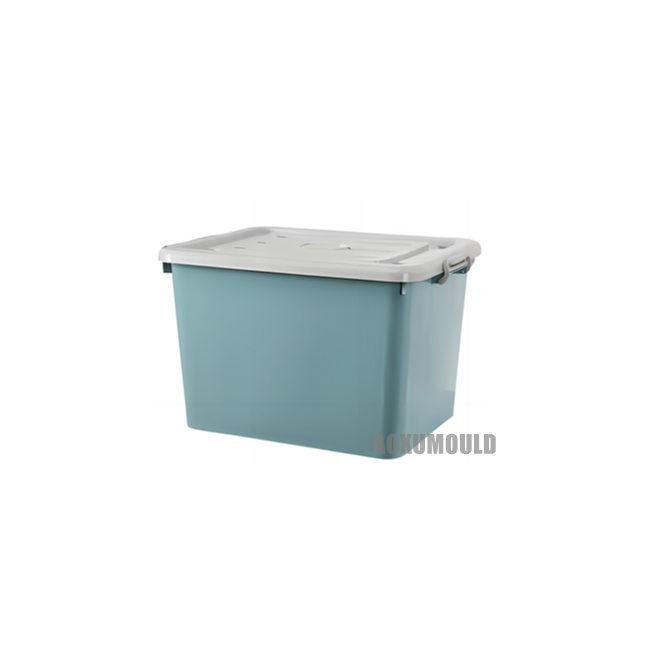
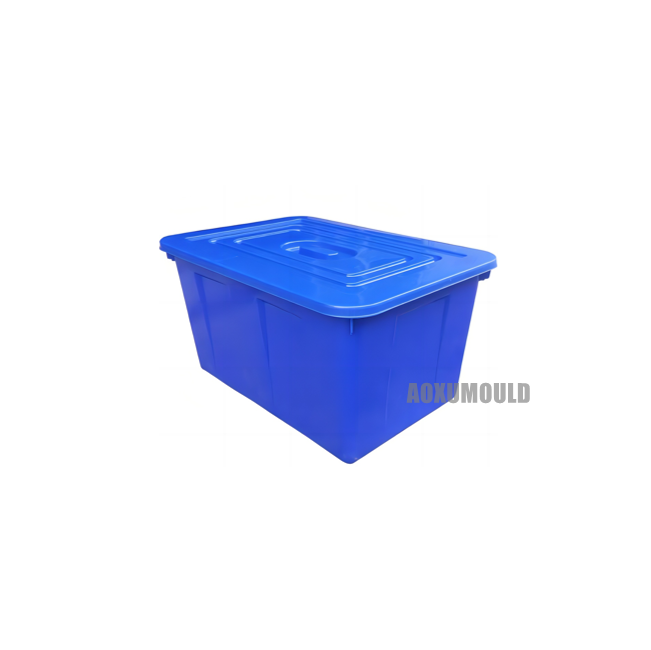
Mould Specifications
|
Mould name |
Household plastic box injection mould |
|
Crate material |
HDPE/PP, plastic |
|
Crate size |
290X425X165mm |
| Crate weight |
850g |
|
Mould material for cavity &. Core |
P20, 718, 2738 |
|
NOs of cavity |
1 cavity |
|
Injection system |
Cold/Hot runner |
|
Suitable injection machine |
350T |
|
Mould size |
760x880x340mm |
|
Mould lifetime |
more than 500,000pcs |
What Are The Characteristics of High-Quality Plastic Box?
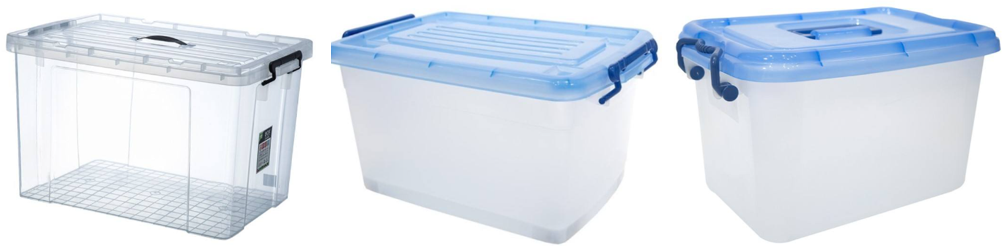
Material: High quality plastic materials, such as PP copolymer, are selected to ensure the durability of the product and its waterproof and moisture-proof properties.
Practicality: The interior space is spacious, making it easy to store various items. Categorized storage makes searching more convenient. The box cover is designed tightly, which can effectively prevent dust and moisture, and protect items from contamination. In addition, the plastic box also has compressive strength, so there is no need to worry about deformation even when heavy objects are placed inside.
Design: The exterior design is simple and stylish, with bright colors that can easily blend into various home styles. Whether placed in the bedroom, living room, or study, it can become a beautiful scenery.
Convenience: Equipped with movable handles, easy to move and carry. Some models are also equipped with pulleys, making transportation easier.
Safety: Made of environmentally friendly materials, non-toxic and odorless, suitable for storing food and other items that come into contact with the human body.
Brand reputation: Choose products from well-known brands such as LeKou LeKou, Alice, Space Master, etc. These brands usually have better quality and after-sales service
Designs For Product &. Mould

What Are The Structural Designs of Plastic Box Injection Mould?
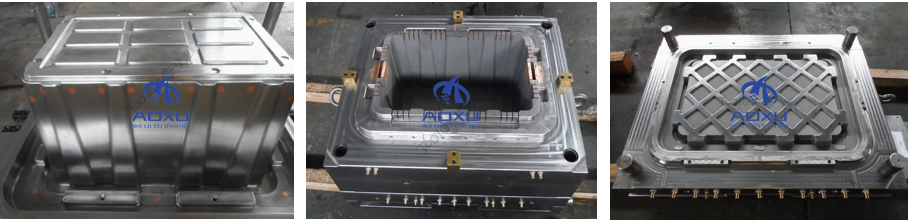
Mould structure: plastic box injection moulds are basically divided into static moulds and dynamic molds. One side of the static mould is equipped with a sprue sleeve, which is usually composed of a sprue sleeve, a backing plate, and a template. The movable mould part includes a movable template, a movable mould support plate, a demolding mechanism, as well as mould feet and installation fixing plates.
Gate design: gate design directly affects the appearance quality and molding efficiency of plastic parts. Good gate design can avoid product defects such as serpentine flow. For products with high-quality requirements, overflow and exhaust systems should also be designed.
Demoulding mechanism: the demoulding mechanism is an important component of the mould, which includes a release rod, a return rod, etc. Some moulds also need to add springs to achieve automatic demoulding and other functions.
Cooling water holes: reasonable arrangement of cooling water holes helps to evenly cool the mould, shorten the molding cycle, and ensure product quality.
Positioning and guidance: guiding components such as guide posts are usually installed in the mould to ensure precise alignment of the dynamic and static moulds during mould closing.
Special Structure: for specific products, moulds may require the design of special structures, such as slider core pulling mechanisms, to cope with the complex structure of plastic box molding.
Material selection: the selection of mold materials is crucial for the service life and product quality of the mould. Usually, materials that are corrosion-resistant, wear-resistant, and have good thermal conductivity are chosen.
Processing accuracy: the processing accuracy of the mould directly affects the dimensional accuracy and surface quality of the plastic box. Therefore, it is necessary to strictly control the machining accuracy during the mould manufacturing process
What Are The Benefits of Using Air Ejection In Plastic Box Mould?
Using air ejection in plastic box mould has many benefits. It can enhance production efficiency, reduce production costs, improve product quality, extend mould lifespan, and increase production safety, among other aspects.
First of all, using air ejection can significantly enhance production efficiency. Compared with manual operation, pneumatic ejection is driven by air pressure, which makes the operation more rapid and efficient. It can greatly shorten the mould replacement time, increase production efficiency, reduce labor costs, and make the production process more efficient and stable.
Secondly, air ejection can reduce production costs. By using pneumatic ejection, the time and labor intensity required for manual operations can be reduced, and the damage to the mould caused by human errors can also be minimized. This leads to lower maintenance and replacement costs, effectively lowering production costs and enhancing the competitiveness of the enterprise.
Thirdly, air ejection can enhance product quality. Air ejection enables precise control of the ejection force and speed, preventing damage to the mold and deformation of the product due to improper operation, thereby improving product consistency and quality stability, and ensuring product quality.
Fourth, air ejection can extend the service life of the mould. By using pneumatic ejection, the damage to the mold caused by manual operation can be reduced, thereby prolonging the mould's service life, decreasing the number of replacements, lowering maintenance costs, and improving the efficiency of mold usage.
Finally, air ejection can also enhance production safety. The air ejection operation is simple and safe, avoiding the injury risks brought by manual operation, improving the safety of production operations and protecting the safety of employees.
The use of air ejection in plastic box moulds has numerous benefits. It can enhance production efficiency, reduce production costs, improve product quality, extend mould lifespan, increase production safety, and is an extremely important and necessary auxiliary equipment in plastic box manufacturing.
What Are The Advantages of Using Five-Axis High-Speed Milling For Processing Plastic Mould?
Increased processing efficiency: five-axis high-speed milling can achieve a higher material removal rate, reducing processing time.
Improved processing accuracy: with high spindle speed, fast feed rate and high vibration frequency, high precision and low roughness processing can be achieved.
Reduced thermal deformation: less heat is generated during high-speed cutting, which helps reduce the thermal deformation of mould steel.
Improved mould quality: through high-speed hard milling, the deformation on the surface of mould steel can be reduced, improving the accuracy of processing and production.
Simplified processing technology: five-axis processing can complete all the processing of mould components in one setup, simplifying the processing process.
Cost reduction: by reducing the processes of manufacturing electrodes, electrical discharge machining and polishing, production costs are lowered.
How To Solve The Problem of Undercut In Plastic Mould Design?
In plastic mould design, undercut is a common issue, especially for some complex moulds. The existence of undercut will make it difficult for the product to be easily removed during demolding, thereby affecting production efficiency and product quality. Therefore, designers need to consider how to solve the problem of undercut when designing the mold to ensure that the product can be easily demolded.
Firstly, to prevent the occurrence of the "undercut" phenomenon, the designer needs to consider the structure and shape of the product when designing the mould. If the product surface has inclined planes or arc designs, it can reduce the possibility of reverse pinching. In addition, the designer can also solve the problem of reverse pinching by increasing the demolding slope or setting a demolding module. This can reduce the friction between the product and the mould, facilitating the smooth demolding of the product.
Secondly, when selecting the materials for the moulds, attention should also be paid. Choosing materials with good wear resistance can reduce friction and prevent the occurrence of the reverse-bending phenomenon. At the same time, designing a reasonable surface treatment can also reduce the possibility of reverse-bending. For example, through polishing or coating methods, the friction can be reduced.
Furthermore, in the structural design of the mould, the designer can consider increasing the demolding slope to make the product demoulding process smoother. Different demolding methods can also be designed, such as setting demolding nails, demolding springs, and other auxiliary demolding devices to solve the problem of inverted insertion. This can effectively improve the production efficiency and quality of the product.
To solve the problem of inverted insertion, the designer needs to fully consider the structure and shape of the product when designing the mould, select appropriate materials and appropriate surface treatment methods, and take some effective measures in the structural design of the mould, such as increasing the demolding slope and setting demolding devices. Only in this way can the product be smoothly demoulded, and the production efficiency and quality can be improved.
Mould Components
Mould Steel

Hot Runner System

Standard Parts

Package &. Delivery

Why We Ask Customers to Provide Samples or Drawings for Ventilated Milk Crate?
1. Clean the mould regularly: After each production cycle, it is important to clean the mold thoroughly to remove any residue or debris that may have accumulated. Use a soft brush or cloth to gently clean the mould and ensure that all surfaces are free of contaminants.
2. Inspect the mould for wear and tear: Regularly inspect the mold for any signs of wear and tear, such as cracks, scratches, or dents. Address any issues promptly to prevent further damage and ensure the quality of the molded products.
3. Lubricate moving parts: To prevent friction and wear, lubricate the moving parts of the mold regularly with a suitable lubricant. This will help increase the lifespan of the mould and ensure smooth operation during the molding process.
4. Store the mould properly: When not in use, store the mould in a clean and dry environment to prevent damage from moisture or dust. Storing the mold properly will help maintain its quality and prolong its lifespan.
5. Follow recommended maintenance schedule: Consult the manufacturer's guidelines for recommended maintenance practices and schedule regular maintenance checks to ensure the optimal performance of the mold.
By following these maintenance practices, you can ensure the longevity and efficiency of your plastic crate mold, ultimately leading to the production of high-quality plastic crates for a variety of applications. Proper maintenance is key to maximizing the lifespan of your mold and achieving consistent results in your production process.
FAQ
>1. What types of plastic crates can your moulds produce?
We manufacture moulds for:
Stackable/Nestable Crates (logistics, agriculture)
Heavy-Duty Industrial Crates (automotive, warehouses)
Ventilated Produce Crates (food-safe, USDA/FDA compliant)
Foldable/Collapsible Crates (space-saving storage)
Custom Crates (with logos, handles, or unique dimensions).
What materials are best for plastic crate moulds?
We recommend:
PP (Polypropylene) – Lightweight, durable, cost-effective.
HDPE (High-Density Polyethylene) – UV-resistant, heavy-duty.
ABS – High-end, impact-resistant crates.
>3. Can you customize plastic crate designs according to our specific requirements?
Yes, our team of experienced designers and engineers can work closely with you to create custom plastic crate designs that meet your unique specifications and requirements.
>4. How long does it typically take to complete a plastic crate injection mould project?
The timeline for completing a plastic crate mold project can vary depending on the complexity of the design and the quantity of crates needed. Typically it will take 45-55days.
>5. Can you provide samples of your plastic crate products?
Yes, we can provide samples of our plastic crate products for your review and approval before proceeding with full-scale production.
>6. How do you ensure the quality of your plastic crate products?
We have a rigorous quality control process in place to ensure that every plastic crate produced meets our high standards for quality and durability. This includes regular inspections and testing throughout the manufacturing process.
>7. What file formats do you accept for mold design?
We work with: .STEP, .IGES, .STP, .X_T, or even hand sketches.
Customers' Feedback


