

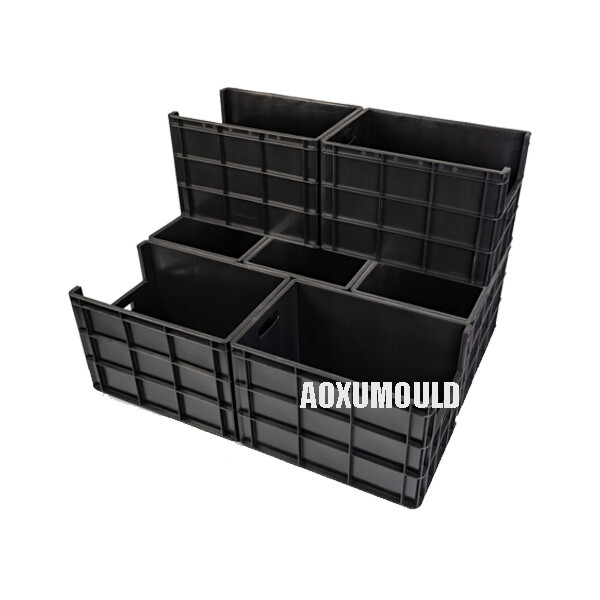
Mould Specifications
|
Mould name |
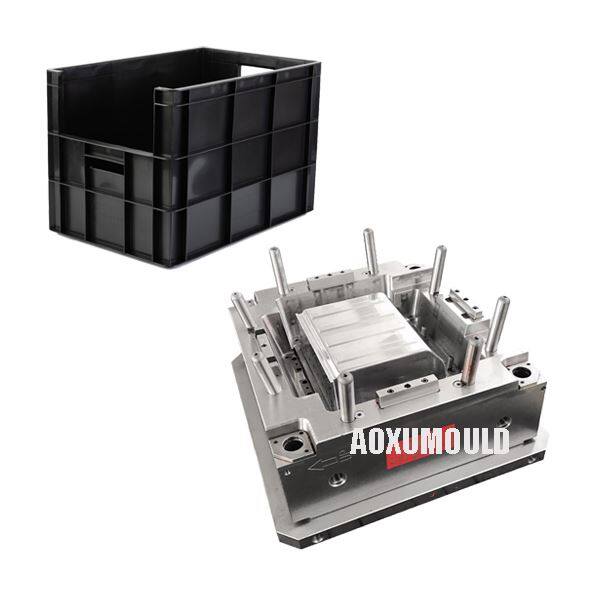
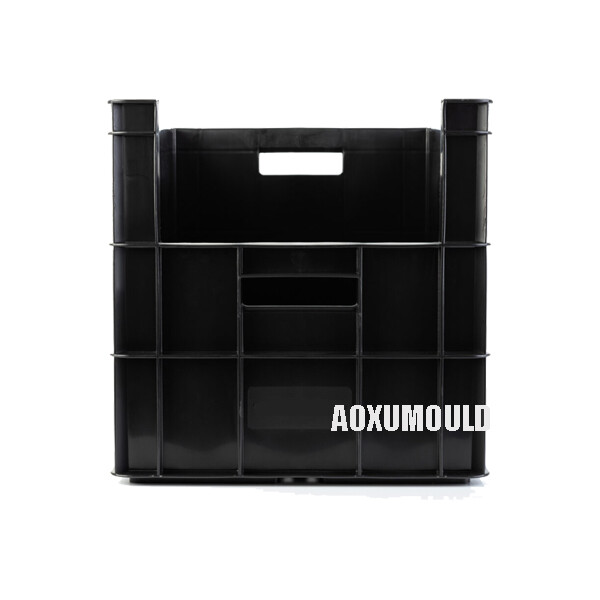
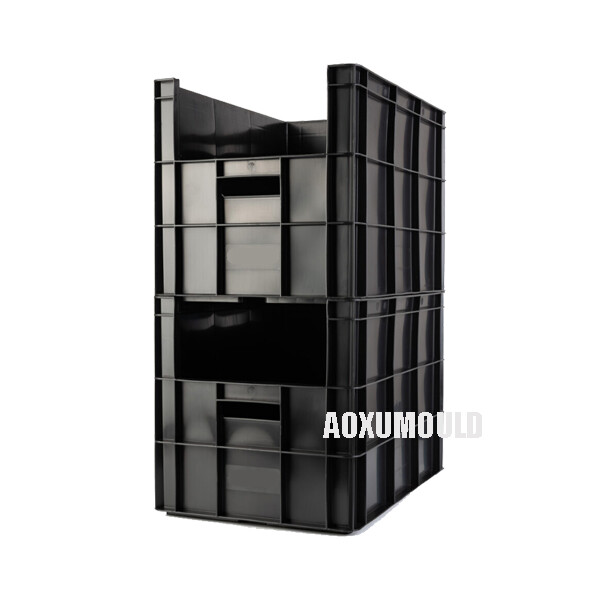
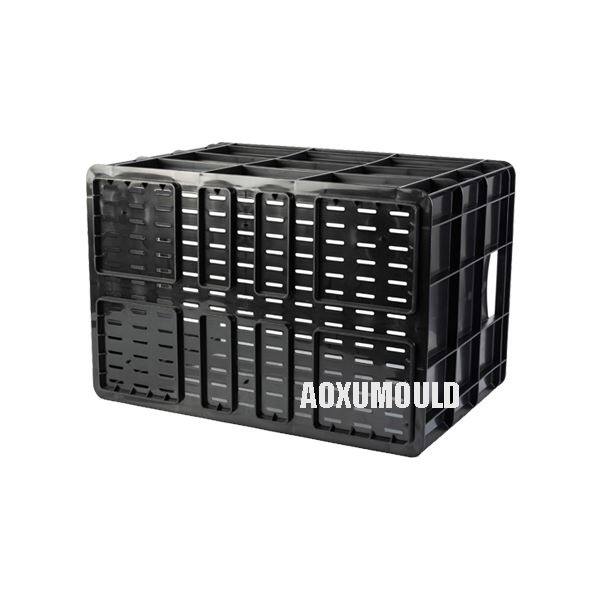
Picking Crate Mould |
|
Crate material |
HDPE/PP, plastic |
|
Crate size |
600X400X400mm |
| Crate weight |
3.3kg |
|
Mould material for cavity &. Core |
P20, 718, H13 |
|
NOs of cavity |
1 cavity |
|
Injection system |
Hot runner |
|
Suitable injection machine |
1000T |
|
Mould size |
880X680X700mm |
|
Mould lifetime |
more than 500,000pcs |
Applications of Picking Crates

1. Warehousing & Logistics
Order Picking & Sorting – Used to collect and organize items for shipment.
Inventory Management – Stackable design maximizes storage space.
Automated Warehouses – Compatible with conveyor systems and robotic handling.
Cross-Docking – Facilitates quick transfer of goods between trucks.
2. Retail & Supermarkets
Stock Replenishment – Helps in moving products from storage to shelves.
Fresh Produce Handling – Ventilated crates keep fruits/vegetables fresh.
Checkout & Backroom Organization – Used for bulk item transport.
3. Agriculture & Food Industry
Harvest Collection – Durable crates for picking fruits, vegetables, and seafood.
Cold Storage – Resistant to moisture and temperature changes.
Meat & Poultry Processing – Easy-to-clean, hygienic plastic crates.
4. Automotive & Manufacturing
Component Storage – Organizes small parts (bolts, screws, etc.).
Assembly Line Transport – Moves parts between workstations.
Just-in-Time (JIT) Delivery – Supports lean manufacturing processes.
5. Pharmaceutical & Healthcare
Medical Supply Transport – Sterilizable crates for safe handling.
Hospital Logistics – Used for linens, equipment, and waste management.
6. E-Commerce & Fulfillment Centers
Batch Picking – Workers collect multiple orders in one trip.
Returns Processing – Organizes returned items efficiently.
7. Recycling & Waste Management
Waste Sorting – Color-coded crates for different waste types.
Recycling Collection – Durable and easy to clean.
Why Choose HDPE or PP to Produce Picking Crates

1. Key Properties of HDPE & PP
|
Property |
HDPE (High-Density Polyethylene) |
PP (Polypropylene) |
|
Strength |
High impact resistance |
Stiffer, better for rigid designs |
|
Temperature Resistance |
-50°C to 80°C |
-20°C to 120°C (better for hot environments) |
|
Chemical Resistance |
Resistant to acids, alkalis, and solvents |
Resistant to most chemicals, but less than HDPE |
|
Moisture Resistance |
Excellent (no water absorption) |
Excellent |
|
UV Resistance |
Good (requires additives for long-term outdoor use) |
Moderate (needs UV stabilizers) |
|
Flexibility |
More flexible, less brittle |
More rigid, prone to cracking under stress |
|
Weight |
Slightly heavier |
Lighter |
|
Recyclability |
Highly recyclable |
Recyclable, but less common than HDPE |
|
Cost |
Slightly cheaper |
Comparable, but varies by region |
2. Why Choose HDPE for Picking Crates?
Best for heavy-duty applications – Superior impact resistance, ideal for rough handling.
Excellent moisture & chemical resistance – Perfect for food, agriculture, and chemical storage.
Good flexibility – Less likely to crack in cold environments.
More cost-effective in some markets.
Best for:
Heavy-load logistics crates
Cold storage & food handling
Outdoor use (with UV treatment)
Chemical storage bins
3. Why Choose PP for Picking Crates?
Higher rigidity – Better for stackable, nestable designs.
Better heat resistance – Suitable for sterilization (e.g., food & pharma).
Lighter weight – Reduces shipping costs.
Good fatigue resistance – Hinges (for foldable crates) last longer.
Best for:
Nestable/collapsible crates
High-temperature environments (e.g., automotive parts)
Medical & pharmaceutical storage
Retail & supermarket crates
How To Manufacture A Picking Crate Mould?

1. Design: The first step in manufacturing a picking crate mould is to create a detailed design of the mould. This design should include all the specifications and dimensions of the picking crate, as well as any special features or requirements. The design should be precise and accurate to ensure that the final product meets the desired specifications.
2. Material Selection: Once the design is complete, the next step is to select the appropriate material for the mould. The material should be durable, heat-resistant, and easy to work with. Common materials used for crate moulds include steel, aluminum, and plastic.
3. Mould Making: The chosen material is then used to create the mould. This process involves cutting, shaping, and machining the material to create the desired shape and size of the picking crate mould. Skilled craftsmen use advanced tools and machinery to accurately create the mould according to the design specifications.
4. Testing and Adjustment: After the mould is made, it is important to test it to ensure that it meets the requirements. Any necessary adjustments or modifications are made to the mould to ensure that it produces high-quality picking crates. This may involve fine-tuning the mould's design or making changes to the manufacturing process.
5. Production: Once the mould has been tested and approved, it is ready for production. The mould is used to create multiple picking crates, which are then assembled and finished according to the design specifications. Quality control measures are in place throughout the production process to ensure that the picking crates meet the desired standards.
Manufacturing a picking crate mould requires precision, attention to detail, and skilled craftsmanship. By following these steps and working with experienced professionals, you can successfully manufacture a high-quality picking crate mould for your specific needs.
Mould Components
Mould Steel

Hot Runner System

Standard Parts

Package &. Delivery

How To Maintenance Our Crate Moulds?

1. Regular cleaning: It is important to regularly clean your crate mould to prevent any buildup of dirt, residue, or contaminants. Use a mild detergent and water to clean the mould, making sure to remove any excess residue or debris that may have accumulated.
2. Lubrication: Keeping your mould properly lubricated is crucial for smooth operation and prolonged lifespan. Use a suitable lubricant to grease moving parts and ensure they function effectively. Be sure to follow the manufacturer's guidelines for lubrication to avoid any damage to the mould.
3. Inspections: Regularly inspecting your crate mould for any signs of wear, damage, or alignment issues is essential for preventing any potential problems. Look for any cracks, dents, or misalignments in the mould, and address them promptly to prevent further damage.
4. Storage: Proper storage of your crate mould is key to maintaining its quality and longevity. Store the mould in a clean, dry environment away from direct sunlight and extreme temperatures. Make sure to cover the mould when not in use to protect it from dust and debris.
5. Professional maintenance: If you notice any significant issues with your crate mould that you are unable to address yourself, it is important to seek out professional maintenance services. A mould specialist can help identify and resolve any issues to ensure the continued efficiency of your crate mould.
By following these maintenance tips, you can keep your crate mould in optimal condition and ensure the production of high-quality plastic crates for years to come. Remember that regular maintenance is key to prolonging the lifespan of your mould and avoiding costly repairs or replacements.
FAQ
>1. What types of picking crates can your moulds produce?
We manufacture moulds for various picking crates, including:
Stackable crates (for efficient storage)
Collapsible/Nestable crates (space-saving designs)
Euro crates (standard dimensions for logistics)
Heavy-duty crates (reinforced for high loads)
Custom designs (tailored to your specifications)
>2. What materials are used for picking crate moulds?
Our moulds are typically made from:
Hardened steel (for high durability & long production runs)
Pre-hardened steel (cost-effective for medium volumes)
>3. What plastic materials are suitable for picking crates?
Common materials include:
Polypropylene (PP) – Lightweight, chemical-resistant, durable
High-Density Polyethylene (HDPE) – Impact-resistant, UV-stable
Recycled plastics – Eco-friendly options available
>4. What is the lead time for a custom picking crate mould?
Typically 45-55days.
>5. Can you assist with design optimization?
Yes! We offer:
DFM (Design for Manufacturability) analysis
Structural reinforcement suggestions
Prototyping & 3D printing validation
>6. What are the payment terms?
TT, 40% deposit, 30% to be paid before sending sample, 30% balance before mold delivery.
(Flexible terms for long-term partners.)
>7. Do you offer after-sales support?
Yes, we provide:
Mould maintenance guidance
Troubleshooting assistance
Repair & refurbishment services
Customers' Feedback


