

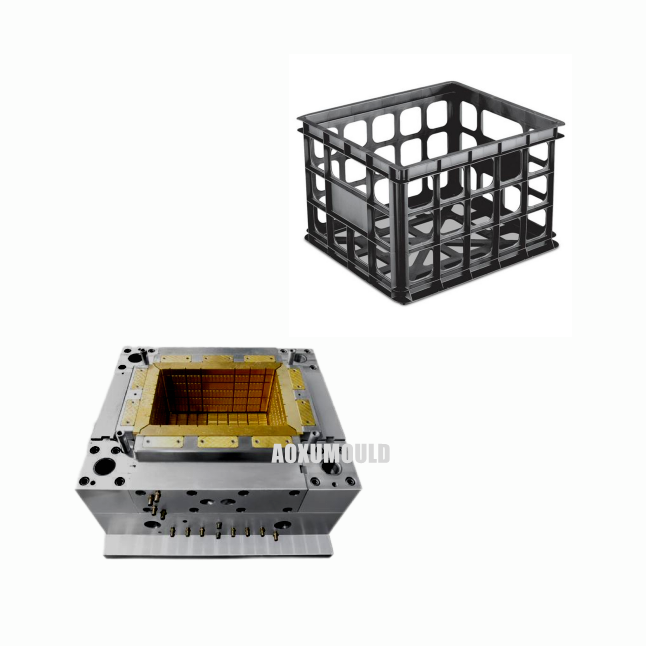
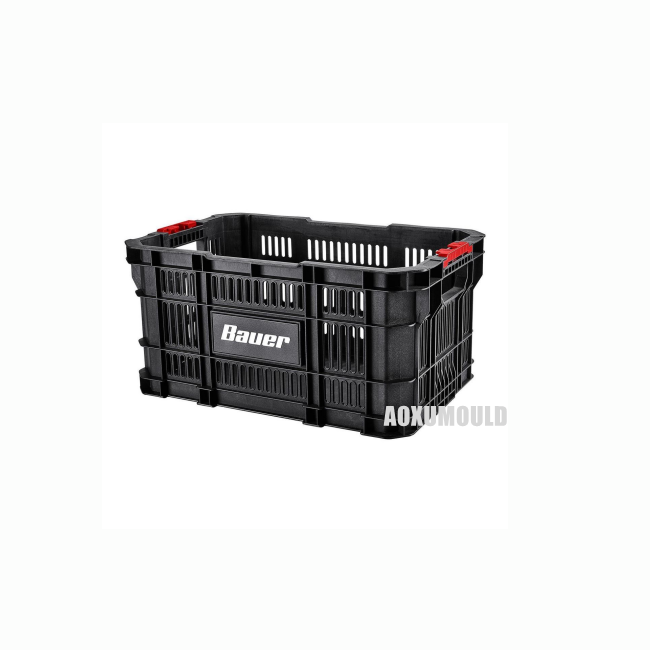
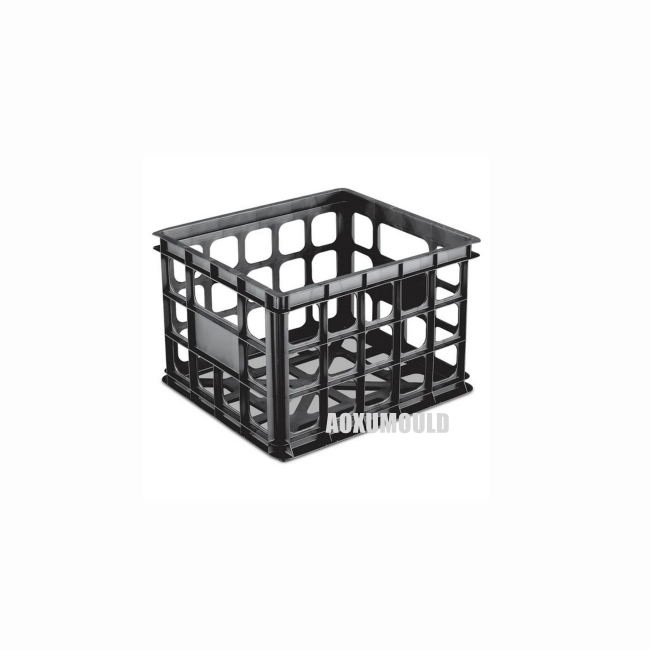
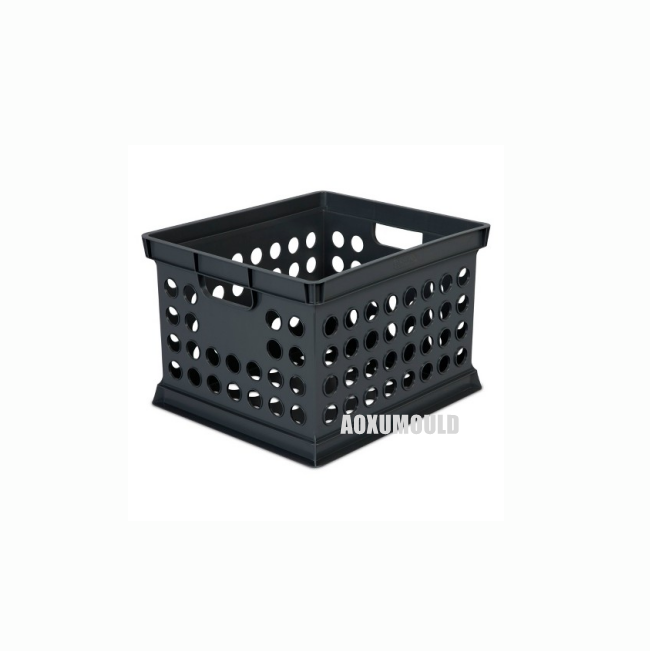
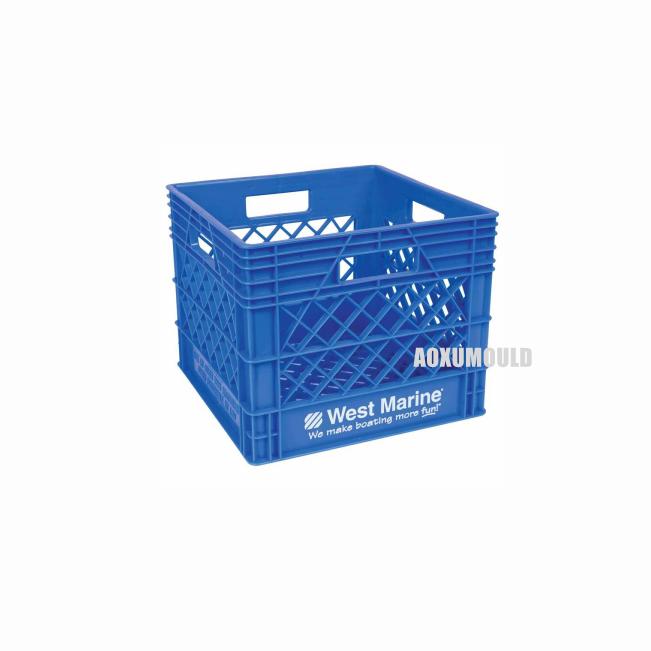
Mould Specifications
|
Mould name |
Plastic Storage Crate Mould |
|
Product material |
PP/HDPE, plastic |
|
Product Size |
15 5/8" x 13 3/4" x 10 5/8" |
|
Product weight |
51kg |
|
Mould material for cavity &. Core |
1.2738, 1.2312 |
|
Mould base |
C45 |
|
Injection system |
Hot runner 4 drop gates |
|
Cycle Time |
40 s' |
|
Suitable injection machine |
500T |
|
Mould size |
920x735x7255mm |
|
Mould lifetime |
More than 500,000pcs |
|
Delivery Time |
45 days |
Product Characteristics

1. Flexible option perfect for storage needs in the office, dorm, garage, or utility room.
2. Letter-sized hanging folders are supported for easy document storage.
3. This is a portable storage solution thanks to the integrated handles.
4. Multiple crates can stack on top of each other to use vertical space efficiently.
What Kind of Raw Plastic For Producing Plastic Storage Crates?
When it comes to producing plastic storage crates, there are different types of raw plastic that can be used to create these essential storage products. Essentially, the type of raw plastic used depends on the intended use of the crates. The most common types of plastic materials used for making plastic storage crates include:
1. Polyethylene (PE)

This is the most common type of plastic used in making plastic storage crates since it is lightweight, durable, and inexpensive. It is easy to mold into different shapes, has high strength, and can withstand high impact and temperature variations. Polyethylene is also resistant to chemicals, water, and moisture, making it ideal for storing a wide variety of products.
2. Polypropylene (PP)
This type of plastic is used to make high-performance plastic storage crates that are suitable for storing heavy equipment, chemicals, and other heavy-duty products. It is resistant to chemicals, oils, and low temperatures, making it ideal for storing products that require high protection. Polypropylene is also tough, lightweight, and can withstand wear and tear for prolonged periods.
The type of raw plastic used for producing plastic storage crates depends on the intended use. Nonetheless, all the raw materials used have one thing in common; they are all durable, lightweight, resistant to various environmental factors, and can withstand degradation for many years. As such, these materials are ideal for making high-quality plastic storage crates that are long-lasting and dependable for all your storage needs.
Design For Product &. Mould
Plastic storage crates have become an essential tool in home organization and storage systems, and for good reason! These crates are incredibly versatile and can be used to store a variety of items in almost any setting. The design of plastic storage crates ensures that they are lightweight, yet durable, easy to stack, and simple to transport.
To start, let's talk about the shape of these crates. The rectangular shape is ideal for maximizing storage space, whether it's under beds, in closets, or in storage units. The straight sides of the crate ensure that multiple crates can be easily stacked on top of each other, without any wasted space. This means you can store more items in a smaller area, which is especially valuable for those living in small apartments or dorm rooms.
The material of plastic storage crates is another important factor in their design. Plastic is lightweight, which makes it easy to move the crates around. The durable material ensures that the crates can withstand heavy loads without breaking or cracking. Additionally, plastic doesn't absorb moisture, so you won't have to worry about your items getting damp or moldy when stored for extended periods.
One of the best things about these crates is their versatility. Since they come in a range of sizes and colors, you can choose the perfect crate to suit your needs. They can be used to store clothes, shoes, books, toys, craft supplies, and more. You can even use them to organize your garage or workshop!
Finally, plastic storage crates are designed to be easy to use. Many of them come with snap-on lids to keep your items dust-free and secure. The handles on the sides make them easy to carry, even when loaded with heavy items.
In conclusion, the design of plastic storage crates makes them an excellent solution for anyone looking to organize their space. They're convenient, versatile, and easy to use, making them perfect for people with busy lifestyles. Plus, they're an affordable storage option that can save space while keeping your items safe and easily accessible.
How To Design Plastic Storage Crate Mould?

Designing a storage crate mould is an exciting process that can be both challenging and rewarding. It requires attention to detail, creativity, and a deep understanding of the materials and processes involved in injection moulding.
To start, it's essential to have a clear understanding of the specifications and requirements for the storage crate. This includes the dimensions, weight capacity, and shape of the crate, as well as any special features or requirements needed.
Once these specifications are known, the design process can begin. The first step is to create a 3D model of the storage crate using CAD software. This will allow designers to visualize the crate and make modifications as needed.
Next, the design must be optimized for injection moulding. This means that the design should take into account the constraints of the moulding process, including the ability to fill the mould, ejection of the part, and the cooling time required.
The size and shape of the gate (the point where the molten plastic enters the mould) must also be considered. The gate size and location will affect the filling pattern and, ultimately, the quality of the finished part.
To ensure the durability and strength of the storage crate, the wall thickness and rib design must be carefully considered. This will ensure that the crate can withstand the weight and pressure of stored items and remain structurally sound over time.
Finally, the mould design must be considered. This includes the placement of ejector pins, cooling channels, and other necessary components. The mould must be designed to ensure ease of manufacture and easy maintenance.
Designing a storage crate mould requires a careful and thoughtful approach. Attention to detail and a deep understanding of the materials and manufacturing process are necessary to create a high-quality product. With careful planning and execution, a successful storage crate mould can be created that will provide value and utility to its users.
How To Process/Machining Storage Crates Injection Moulds?

Storage crate moulds are necessary for the production of plastic storage crates, which are commonly used for storage and transportation purposes. To successfully process and machine these moulds, there are certain steps that need to be followed.
Firstly, it is important to select the right materials for the mould. This typically involves using high-quality steel or aluminum that is durable and resistant to wear and tear. The material chosen should also be able to withstand the injection molding process, which involves high temperatures and pressures.
Next, the mould needs to be designed and created using computer-aided design software and manufacturing processes. This involves creating a 3D model of the mould and then using computer numerical control (CNC) machines to shape and form the mould into its final design.
Once the mould has been created, it needs to be tested and refined to ensure it produces a high-quality plastic storage crate. This process typically involves making small adjustments to the mould design and testing it using injection molding machines. Once the desired outcome has been achieved, the mould can be used to mass-produce storage crates.
Overall, the process of processing and machining storage crate moulds requires careful planning, attention to detail, and the use of high-quality materials and equipment. However, with the right approach, it is possible to produce reliable and durable moulds that meet the needs of manufacturers and consumers alike.
Testing For Plastic Crates Moulds
Package &. Delivery

Mould Components
Mould Steel

Hot Runner System

Standard Parts

Customers' Feedback

FAQ


