

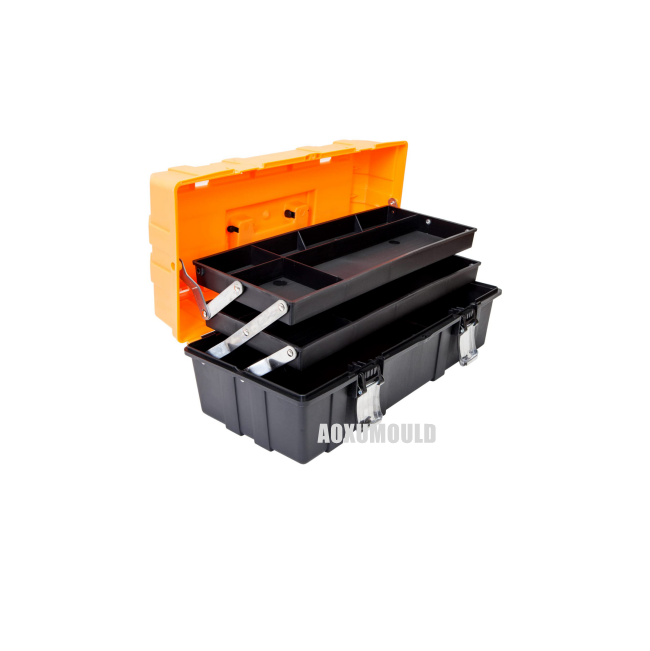
Mould Specifications
|
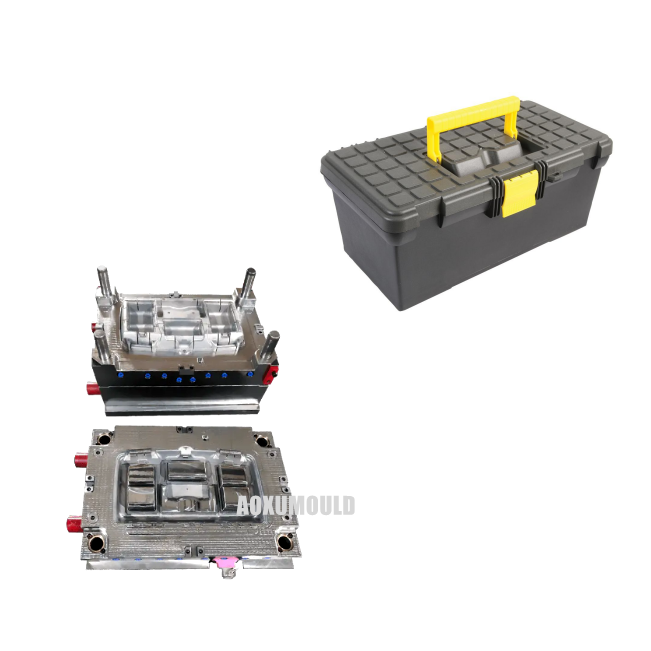
Mould name |
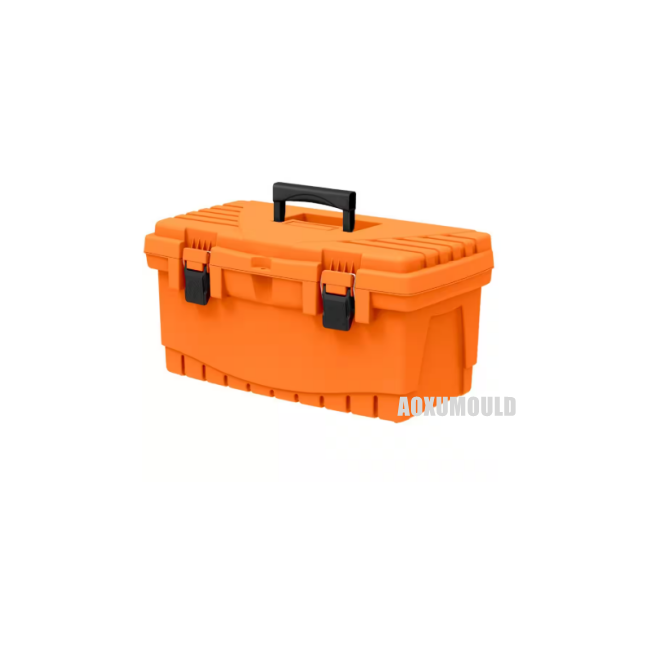
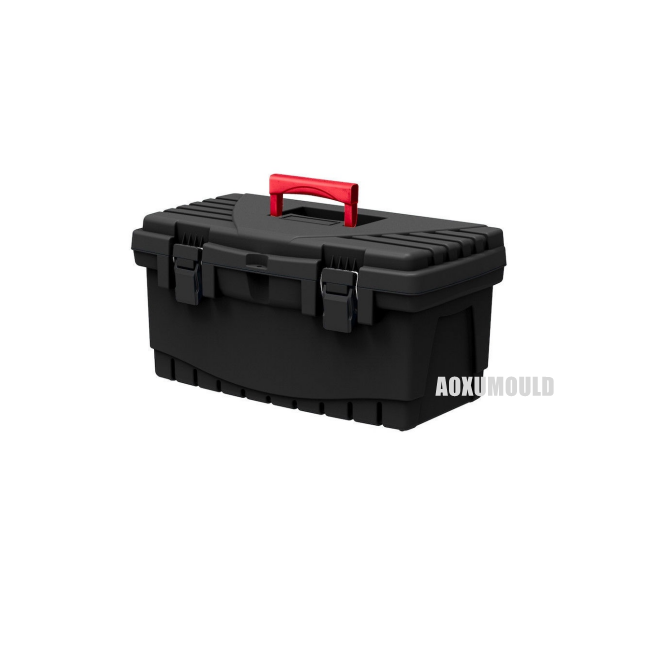
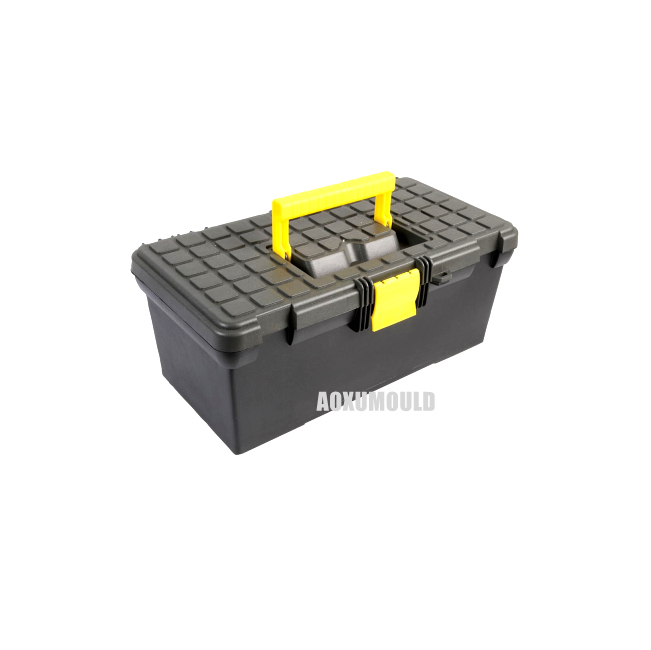
Plastic Tool box mould |
|
Product material |
HDPE |
|
Product Size |
395x223x165 mm |
|
Mould material for cavity &. Core |
P20/718H |
|
NOs of cavity |
1 cavity |
|
Injection system |
Hot runner |
|
Suitable injection machine |
380T |
|
Mould size |
650X480X500mm |
|
Mould weight |
1800KG |
|
Mould lifetime |
more than 500,000pcs |
|
Delivery Time |
45 days |
What's Function of Plastic Tool Boxes?

A plastic tool box serves several important functions, including:
1.Storage and organization
It provides a dedicated space to store various tools, keeping them organized and easily accessible. Different compartments and dividers can be designed inside the box to separate tools of different sizes and types, preventing them from being damaged or lost.
2.Protection
The plastic material offers protection to the tools from dust, moisture, and other environmental factors that could potentially cause rust or damage. It also cushions the tools during transportation or storage, reducing the risk of impact damage.
3.Portability
Plastic tool boxes are lightweight and often have handles or carrying straps, making them easy to carry around. They can be transported to different work sites or locations as needed.
4.Visibility
Some plastic tool boxes are transparent or have clear lids, allowing users to quickly identify the tools inside without having to open the box. This saves time and effort in finding the right tool.
5.Versatility
Plastic tool boxes come in various sizes and shapes to suit different needs. They can be used to store hand tools, power tools, gardening tools, and even small electronic components.
How Many Parts of A Plastic Tool Box
A plastic tool box typically consists of the following parts:
1.Box body
It is the main structure of the tool box, which provides space for storing tools. It is usually made of thick plastic material with certain strength and durability.
2.Lid
The lid is used to cover the box body to protect the tools inside from dust, moisture and other external factors. It is usually connected to the box body by hinges and can be opened and closed freely.
4.Handle
The handle is set on the top or side of the tool box for easy carrying and moving. Some tool boxes may have a single handle in the middle, and some may have two handles on both sides.
5.Compartments and dividers
In order to better classify and store tools, there are often compartments and dividers in the tool box. They can divide the internal space of the tool box into different areas to place tools of different sizes and types.
6.Latch
The latch is used to fix the lid and the box body to prevent the lid from opening accidentally during transportation or storage.
How Many Moulds For A Plastic Tool Box?

The number of moulds for a plastic tool box can vary based on multiple factors. Here are the details:
1.Structural Complexity
Simple tool boxes: Boxes with a basic structure, like a single-layer rectangular box with a flat lid, may require only two moulds - one for the box body and one for the lid.
Complex tool boxes: Boxes with internal compartments, dividers, and special features like built-in handles or integrated storage trays need more moulds. Each distinct component might need its own mould. For example, a tool box with three different-sized internal compartments and a lid could require at least five moulds - one for each compartment and one for the box body and lid.
2.Size and Shape
Large tool boxes: Larger tool boxes might need additional moulds due to manufacturing challenges. To ensure uniform thickness and quality, the moulds may need to be divided into sections. A very large tool box could require three or more moulds for the body alone.
Irregular shapes: Boxes with non-standard shapes, such as curved or angled sides, might need custom moulds for each unique part of the design. An oval-shaped tool box could need multiple moulds to create the curved surfaces accurately.
Material and Manufacturing Process

Different materials: Some plastic materials are more difficult to mould than others. For instance, high-strength engineering plastics might require more precise moulds and additional processing steps, potentially increasing the number of moulds needed.
Complex manufacturing processes: Processes like insert moulding, which involves adding metal or other components during the moulding process, require additional moulds for the inserts. Overmoulding, where one material is moulded over another, also demands separate moulds for each material layer.
4.Design Modifications
Custom designs: If the tool box has unique design elements, such as brand logos, textured surfaces, or specific colour patterns, additional moulds might be needed for these details. A tool box with a raised logo on the lid could require a separate mould for the logo.
Product updates: As the design of the tool box evolves over time, new moulds may be needed. Minor changes might only require modifications to existing moulds, but significant design updates could necessitate entirely new moulds.
Mould Components
Mould Steel

Hot Runner System

Standard Parts

How To Maintain Plastic Tool Box Mould?
Maintaining a plastic tool box injection mould is crucial to ensuring its longevity, performance, and consistent quality of the molded parts. Here are some key practices for proper mould maintenance:
1. Regular Cleaning
After Each Cycle: Clean the mould after every shift or production run to remove any residual plastic, grease, or contaminants. Use a brush, cloth, or compressed air to clear debris from the mould cavity.
Deep Cleaning: Perform deep cleaning every few weeks, especially for complex or high-precision molds. This may involve soaking the mold in a suitable solvent and using ultrasonic cleaning equipment if necessary.
2. Lubrication
Guide Pins & Rails: Lubricate moving parts such as guide pins, rails, and ejector pins with the appropriate oil or grease to ensure smooth movement and reduce wear.
Ejector Mechanism: Keep the ejector mechanism clean and lubricated to avoid malfunction.
3. Inspection and Monitoring
Visual Inspection: Routinely inspect for any signs of wear, cracks, or corrosion on the mould's surfaces. Look for any changes in the surface texture, especially in areas like the cavity and core.
Dimensional Check: Periodically check the mould's dimensions and alignment to ensure that they still conform to the original design specifications. Small shifts in alignment can cause defects in molded parts.
Cooling System: Clean and inspect the cooling channels for blockages or scaling. Maintain proper flow to ensure consistent cooling during the molding process.
4. Address Wear and Tear
Repair Small Imperfections: Address minor wear on mould cavities or cores through polishing or surface hardening treatments. Delaying these repairs can lead to more severe damage over time.
Replace Worn Parts: If any parts (such as ejector pins, slides, or inserts) are excessively worn or damaged, replace them promptly to avoid affecting mould performance.
5.Prevent Rust and Corrosion
Moisture Control: Mould cavities, cores, and parts should be dried properly to avoid rust. You can use dehumidifiers or desiccant bags inside the mould storage area.
Rust-Resistant Coating: Apply anti-rust coatings to parts that are prone to corrosion, especially when molds are stored for extended periods.

5. Proper Storage
When not in use, store molds in a clean, dry, and climate-controlled environment. Avoid exposing them to moisture or extreme temperatures.
Use mold-specific storage racks or cases to keep them protected from damage.
6. Record Keeping
Keep detailed records of mould inspections, maintenance activities, repairs, and performance. This documentation can help in tracking mould history and predicting future maintenance needs.
7. Training Operators
Ensure that operators are trained on proper handling and basic mould care to prevent mishandling that could result in damage. Proper handling of molds can significantly extend their life.
By following these steps regularly, you can significantly increase the lifespan and efficiency of plastic injection molds, ultimately improving the consistency and quality of your production.
Package &. Delivery

Customers' Feedback


