

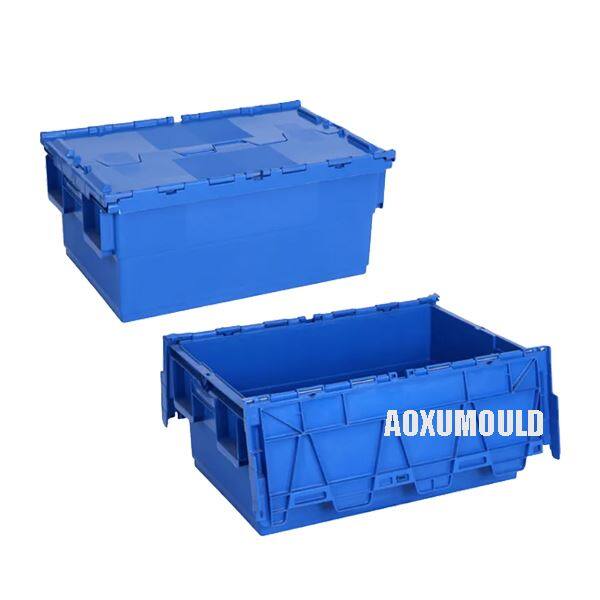
Mould Specifications
|
Mould name |
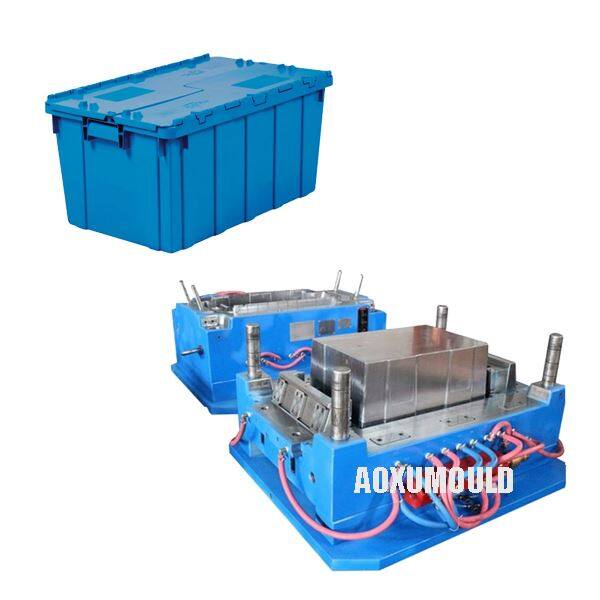
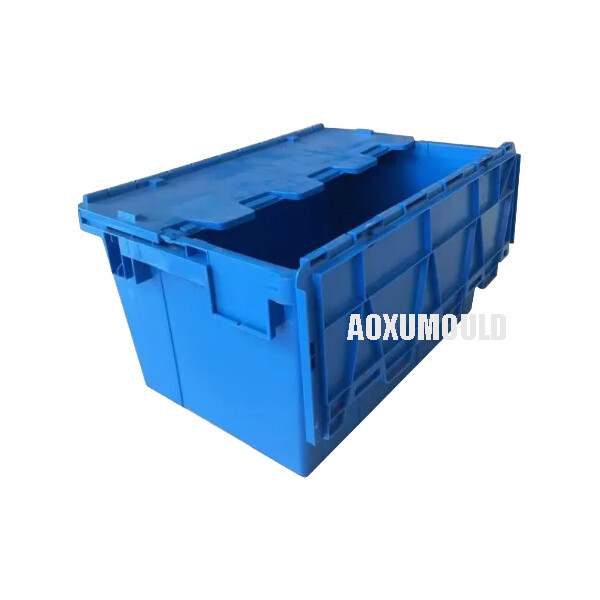
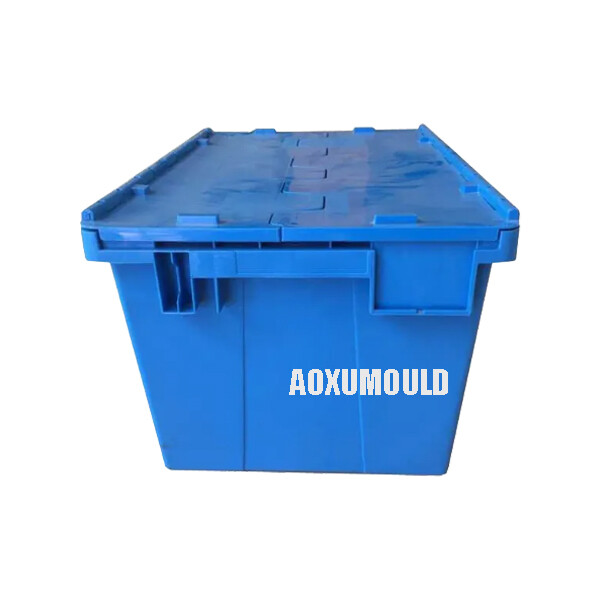
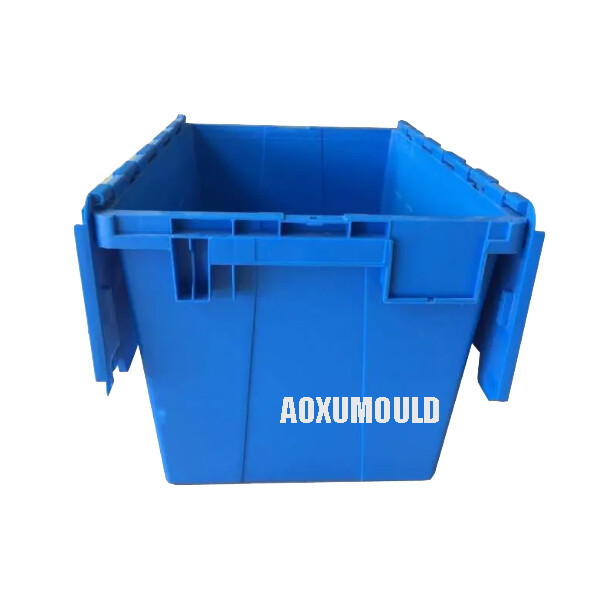
Heavy Duty Crate Mould |
|
Crate material |
HDPE/PP, plastic |
|
Crate size |
600X400X365mm |
| Crate weight | 3.1kg |
|
Mould material for cavity &. Core |
P20, 718, H13 |
|
NOs of cavity |
1 cavity |
|
Injection system |
Hot runner |
|
Suitable injection machine |
1000T |
|
Mould size |
885X660X630mm |
|
Mould lifetime |
more than 500,000pcs |
Key Features & Benefits of Heavy Duty Crates

1. Ultra-Durable Construction
Material: High-impact polypropylene (PP) or high-density polyethylene (HDPE) for maximum load-bearing capacity.
Reinforced Design: Thick walls, ribbed structures, and reinforced corners for enhanced strength.
Load Capacity: Supports 50–200 kg+ (varies by model).
2. Optimized for Industrial Use
Stackable & Nestable: Saves storage and transport space.
Interlocking Design: Secure stacking without shifting.
Ventilation Options: Perforated designs for agricultural and food storage.
3. Weather & Chemical Resistant
UV-Stabilized: Resists fading and brittleness in outdoor conditions.
Waterproof & Corrosion-Proof: Ideal for cold storage, seafood, and chemical transport.
4. Ergonomic & Safe Handling
Integrated Handles: For easy lifting and carrying.
Anti-Slip Surfaces: Textured bases for stability.
Smooth Edges: Prevents injury during handling.
5. Customizable Options
Branding: Embossed logos, QR codes, or RFID tags.
Color Variations: Standard (black, blue, red) or custom Pantone-matched.
Accessories: Dividers, lids, and wheels available.
Applications
Logistics & Warehousing – Pallet-compatible, ideal for automated systems.
Agriculture – Harvest collection, poultry, and dairy transport.
Automotive – Parts storage and assembly line use.
Retail & Distribution – Reusable retail crates for supermarkets.
Food & Beverage – Hygienic, washable designs for cold chain logistics.
Key Steps to Make a Quality Heavy-Duty Crate Mould
1.Precision Design
Use CAD & Moldflow analysis to optimize structure, cooling, and ejection.
Add reinforced ribs, proper draft angles (1–2°), and balanced wall thickness (2.5–4mm).
2.High-Grade Materials
Cavity/Core: H13 or S136 steel (HRC 48–52) for durability.
Ejector Pins: SKD61 steel (HRC 50–54) to prevent bending.
3.Advanced Machining
CNC milling & EDM for accurate shaping.
Polished surfaces (A1–A3 grade) for smooth demolding.
4.Efficient Cooling System
Conformal channels or baffles to prevent warping.
5.Rigorous Testing
Trial runs to check filling, ejection, and dimensional accuracy.
Adjust gates/vents if needed.
6.Proper Maintenance
Regular cleaning, lubrication, and annual professional servicing.
Why Plastic Raw Materials Need Drying Before Injection Molding?

1. Prevent Moisture-Related Defects in Final Products
Bubbles & Blisters–Trapped moisture turns to steam during heating, creating voids or bubbles inside the part.
Surface Defects (Splay Marks, Silver Streaks)–Evaporating moisture causes streaks or foggy patches on the surface.
Weak Spots & Cracking–Moisture weakens polymer bonds, reducing part strength.
2. Avoid Material Degradation (Hydrolysis & Thermal Breakdown)
Hydrolysis (Chemical Breakdown)–Some plastics (like Nylon/PA, PET, PC, PBT) react with water at high temperatures, breaking polymer chains and reducing strength.
Thermal Degradation–Excess moisture increases thermal instability, leading to burnt material or inconsistent melt flow.
3. Ensure Stable Processing & Consistent Quality
Unstable Melt Flow–Moisture changes viscosity, causing uneven filling, short shots, or inconsistent dimensions.
Mold & Machine Damage–Steam can corrode molds and contaminate the barrel over time.
Which Plastics Must Be Dried?
|
Plastic Type |
Drying Temp. (°C) |
Drying Time (Hours) |
Max. Moisture Content |
|
Nylon (PA6, PA66) |
80–100 |
4–6 |
<0.2% |
|
Polycarbonate (PC) |
120–130 |
3–4 |
<0.02% |
|
PET, PBT |
140–160 |
4–6 |
<0.005% |
|
ABS |
80–90 |
2–4 |
<0.1% |
|
PMMA (Acrylic) |
70–80 |
3–4 |
<0.05% |
(PP & PE usually don't require drying unless stored in humid conditions.)
Common Drying Methods
Hot Air Drying (Hopper Dryer)–Basic method for low-hygroscopic plastics.
Desiccant Dryer (Dehumidifying Dryer)–Uses dry air/molecular sieves for moisture-sensitive plastics (PA, PC, PET).
Vacuum Drying –Fast and efficient for high-end applications (medical, optical parts).
How to Check if Plastic Needs Drying?
Manual Test: Heat pellets on a hot plate - if they crackle or bubble, they contain moisture.
Moisture Analyzer: Measures exact water content (Karl Fischer method).
Mould Components
Mould Steel

Hot Runner System

Standard Parts

Package &. Delivery

Why Choose Us-Heavy Duty Crates Mould Manufacturer?

1. Industry-Leading Expertise
15+ years specializing in heavy-duty crate moulds for logistics, agriculture, and automotive sectors.
Engineers with deep knowledge of reinforced plastic crate design for maximum durability.
2. Premium Materials & Construction
High-grade steel moulds (H13, S136, DIN 1.2344) for 1,000,000+ shot lifespans.
Precision CNC machining + EDM for flawless cavity/core surfaces.
3. Optimized Mould Design
Moldflow-verified designs to prevent warping, short shots, and weak points.
Smart cooling systems (conformal channels) for faster cycle times.
4. Rigorous Quality Control
100% trial testing before delivery-no surprises.
CMM inspection for micron-level accuracy.
5. Custom Solutions
Tailored designs for stackable, nestable, or collapsible crates.
Options for branding, textures, RFID tags, and reinforced load points.
6. Fast, Reliable Service
Competitive lead times (4–8 weeks for standard moulds)
24/7 technical support + mould maintenance guidance.
FAQ
>1. What is a heavy duty plastic crate mould?
It's a precision steel mould used in injection moulding machines to produce standardized Eurobox plastic crates (e.g., 600×400 mm or 800×600 mm). These crates are stackable, durable, and widely used in logistics, agriculture, and retail.
>2. What materials are used for the mould?
Mould Steel: Hardened steel (P20, H13, 718H, or stainless steel) for longevity.
Plastic Material for Crates: Typically PP (Polypropylene) or HDPE (High-Density Polyethylene) for durability.
>3. What sizes and designs are available?
Standard sizes: 400×300 mm, 600×400 mm, 800×600 mm (compatible with EUR pallets).
Custom sizes, colors, logos, and features (e.g., ventilation holes, reinforced walls, foldable designs) can be accommodated.
>4. What machines are needed for production?
Injection moulding machine (clamping force: 500–2,000 tons, depending on crate size).
Robotic arms (for automated demoulding and stacking).
>5. Do you provide mould testing and sampling?
Trial samples before mass production.
Mould testing reports (cycle time, defect analysis).
>6. How do you ensure mould quality?
CNC machining & EDM for precision.
Hardening & tempering for wear resistance.
Quality checks: 3D scanning, trial runs, and T1 sample approval.
>7. What maintenance is required?
Regular cleaning, lubrication, and inspection.
Spare parts (ejector pins, sliders) should be replaced as needed.
>8. Do you offer after-sales support?
Technical assistance (mould setup, troubleshooting).
Warranty (typically 12 months).
Customers' Feedback


