

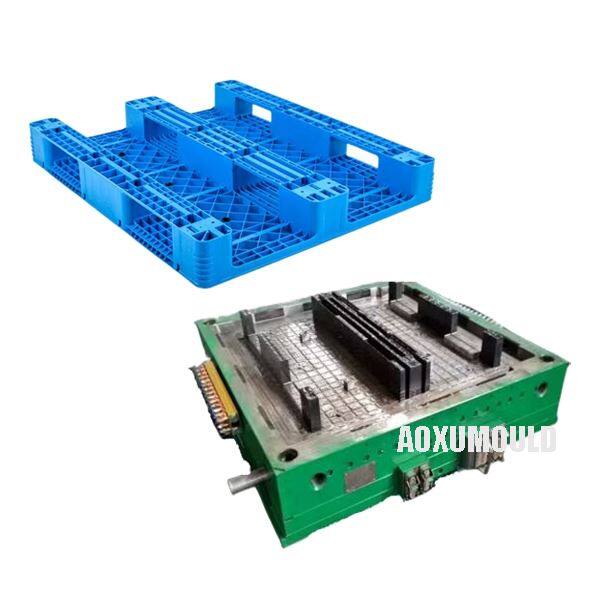
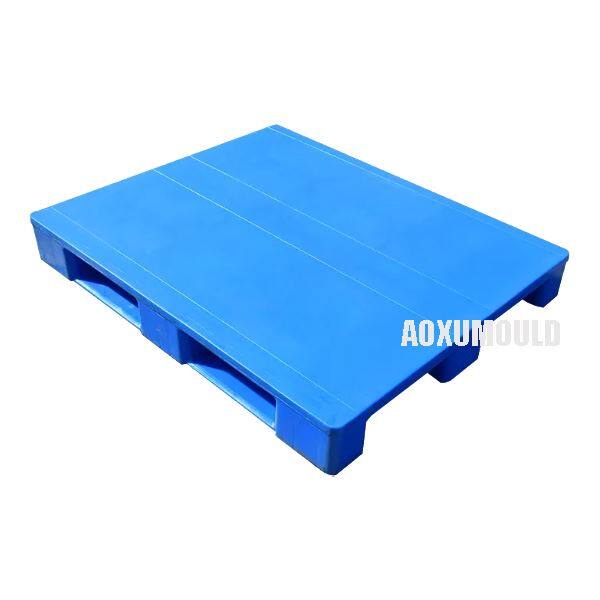
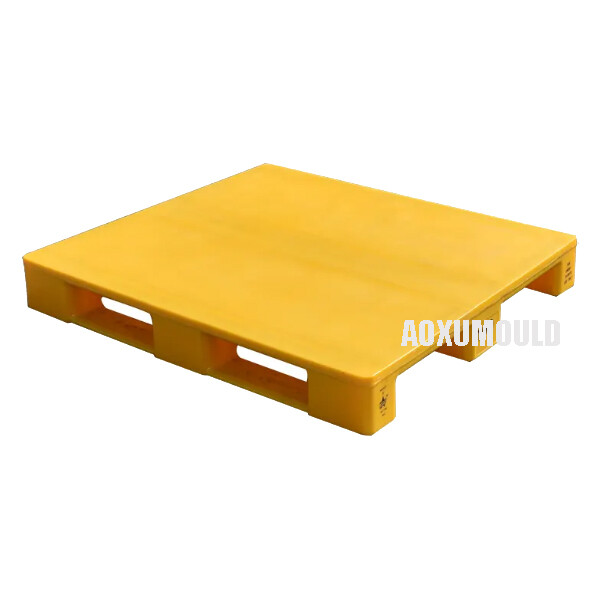
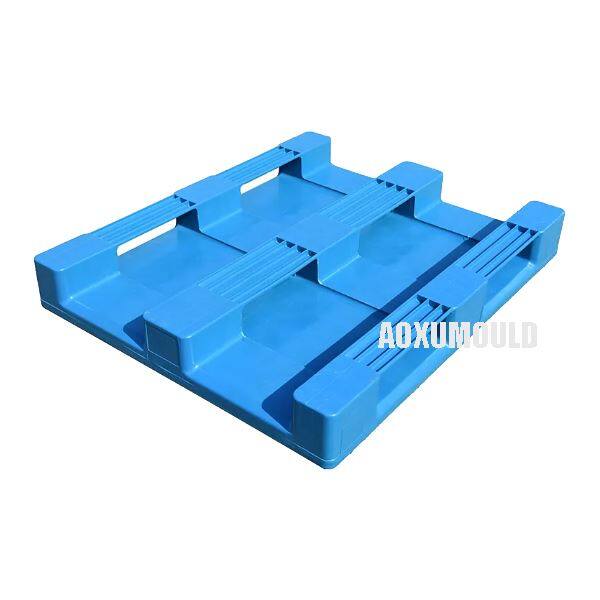
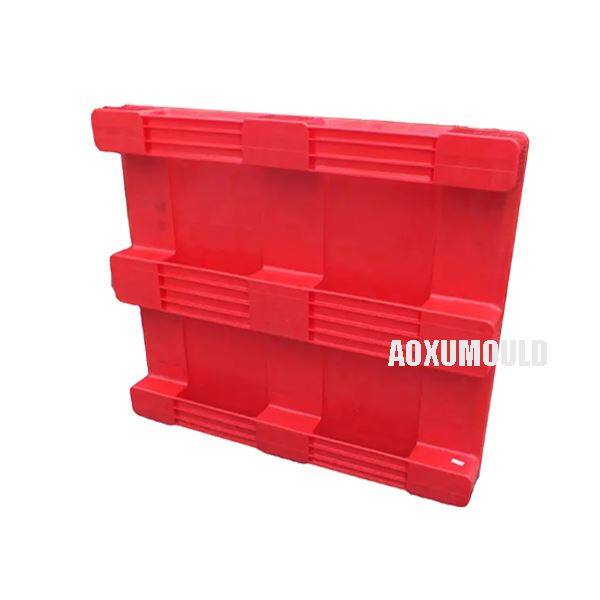
Mould Specifications
|
Mould name |
Light-duty Pallet Mould |
|
Product material |
HDPE, plastic |
|
Product Size |
1000X1200X150mm |
| Product weight |
15 kgs |
|
Mould material for cavity &. Core |
P20 |
|
Mould base |
C45 |
|
Injection system |
Hot runner |
|
Suitable injection machine |
2800T |
|
Mould size |
1900X2000X880mm |
|
Mould lifetime |
more than 300,000pcs |
Light-Duty Vs. Heavy-Duty Pallets Comparison
1.Production Method:
Light-duty pallets use injection molding (fast, economical for high volumes).
Heavy-duty pallets use rotomolding/structural foam (slower but stronger).
2.Load Needs:
Light-duty: Suits moderate loads (e.g., boxes, electronics, beverages).
Heavy-duty: For industrial machinery, bulk liquids, steel coils.
3.Cost Efficiency:
Light-duty: Cheaper upfront but may need frequent replacement.
Heavy-duty: Higher initial cost but longer lifespan.
4.Customization:
Light-duty: More design options (e.g., anti-slip textures, RFID tags).
Heavy-duty: Focus on structural integrity over aesthetics.
5.Industry Fit:
Light-duty: Ideal for automated systems (e.g., conveyor belts).
Heavy-duty: Used in harsh environments (e.g., construction sites, cold storage).
6.When to Choose Each Type?
>Pick Light-Duty Pallets If:
You need low-cost, lightweight solutions.
Loads are under 1,500 kg.
High hygiene standards are required (e.g., food industry).
>Pick Heavy-Duty Pallets If:
Loads exceed 2,000 kg or involve sharp/uneven items.
Long-term durability is critical (e.g., reusable logistics pools).
Exposure to extreme temperatures or chemicals.
Difference Of The Valve Needle Hot Runner &. Open Hot Runner System

1.Gate Control:
Valve Needle: Physically opens/closes the gate with a needle, enabling sequential or staggered injection (better for large pallets with multiple gates).
Open System: Gates remain open; flow depends on melt pressure and thermal expansion.
2.Aesthetic & Precision:
Valve systems excel in gate-sensitive applications (e.g., visible surfaces) due to no vestige.
Open systems may leave minor marks but are sufficient for industrial pallets.
3.Cost vs. Performance:
Valve systems are 20–40% more expensive but reduce waste and improve consistency.
Open systems are economical for high-volume, low-precision products like pallets.
4.Material Suitability:
Valve needles handle filled materials (e.g., glass fiber) better by reducing wear.
Open systems work well with standard plastics (HDPE, PP).
5.>Which to Choose for Light-Duty Pallets?
Open Hot Runner: Preferred for cost-sensitive, high-volume pallet production.
Valve Needle: Justified if you need multi-gate control or premium surface finish.
Design For Product &. Mould

Key Points For Light-duty Pallet Mould Try-out
1. Pre-Try-Out Preparation
>Mold Inspection
Check for damage, rust, or misalignment after shipment.
Verify cooling lines, ejector pins, and slides function smoothly.
>Machine Compatibility
Confirm the injection molding machine has adequate:
Clamping force (typically 500–2,000 tons for pallets).
Shot size (enough plastic to fill the mould).
>Material Drying
Preheat HDPE/PP to remove moisture (2–4 hours at 70–90°C).
2. Critical Try-Out Parameters
|
Parameter |
Recommended Setting |
Adjustment Tips |
|
Melt Temperature |
200–260°C (HDPE/PP) |
Increase if flow marks appear. |
|
Injection Speed |
Medium-fast (50–80%) |
Slow down if burns or flashes occur. |
|
Holding Pressure |
50–80% of max pressure |
Reduce if overpacking/sink marks. |
|
Cooling Time |
30–60 seconds |
Extend if warping occurs. |
|
Mold Temperature |
40–80°C |
Higher temps improve flow but increase cycle time. |
3. Common Defects & Solutions
|
Defect |
Possible Cause |
Solution |
|
Short Shots |
Low melt temp/pressure |
Increase temp, injection speed. |
|
Flash |
Excessive clamp pressure |
Reduce injection pressure, check mold alignment. |
|
Warping |
Uneven cooling |
Adjust cooling channels, extend cooling time. |
|
Sink Marks |
Insufficient holding time |
Increase holding pressure/time. |
|
Jetting |
Too-fast injection |
Slow down injection speed. |
Package &. Delivery

Mould Components
Mould Steel

Hot Runner System

Standard Parts

Light-duty Pallet Mould shipment Details
1. Packaging & Protection >Wooden Crates: Heavy-duty crates with internal foam/soft padding to prevent vibration damage. >Anti-Rust Coating: Moulds are coated with rust inhibitor and wrapped in VCI (Vapor Corrosion Inhibitor) film. >Disassembly (if needed): Large moulds may be split into smaller components for safer transport. >Lifting Points: Marked clearly for forklifts/cranes during loading/unloading. Shipping Methods
3. Required Documents >Commercial Invoice (with HS Code, value, weight) >Packing List (dimensions, parts breakdown) >Bill of Lading (B/L) or Air Waybill (AWB) >Certificate of Origin (if claiming trade benefits) >Fumigation Certificate (if wooden packaging is used) >Insurance Certificate (recommended for high-value moulds) 4. Customs & Import Considerations >HS Code: Typically 8480719090 (injection moulds for plastics). >Import Duties: Vary by country (e.g., USA: 0–5%, EU: 0–4.5%, India: 7.5–10%). >Taxes: VAT/GST applies in most destinations. >Regulations: Some countries require pre-shipment inspections. 5. Pro Tips for Smooth Shipment >Label crates with "Fragile" and "This Side Up" warnings. >Share tracking details with the buyer for transparency. >Pre-clear customs if possible to avoid port delays. |

FAQ
>1. What is a light-duty pallet injection mould?
A light-duty pallet injection mould is a type of mould used to manufacture light-duty pallets, which are commonly used in industries for storing and transporting goods.
>2. What materials are used in the production of light-duty pallet moulds?
Light-duty pallet moulds are typically made from high-quality steel (e.g., P20, 718H, S136, H13).
>3. Can you assist with material selection?
Yes. We recommend:
HDPE: Best for durability/chemical resistance.
PP: Lighter weight, lower cost.
>4. How long does it take to manufacture a light-duty pallet mould?
The time it takes to manufacture a pallet mould can vary depending on the complexity of the design and the size of the mould. On average, it can take 55-65days to complete the manufacturing process.
>5. Can custom designs be created for light-duty pallet injection moulds?
Yes, we offer custom design services to meet the specific needs and requirements of their clients. Custom designs can include unique shapes, sizes, and features to optimize the performance of the pallets.
>6. What quality control measures are in place for light-duty pallet injection moulds?
We typically have strict quality control measures in place to ensure that the moulds meet industry standards and specifications. This can include regular inspections, testing, and certification processes.
>7. What are the key advantages of using light-duty pallet injection moulds?
Some key advantages of using light-duty pallet moulds include their durability, versatility, and cost-effectiveness. These moulds are ideal for producing lightweight, yet sturdy pallets that can handle various types of loads and environments. Additionally, the injection moulding process allows for efficient and precise production of pallets in large quantities.
Customers' Feedback


