

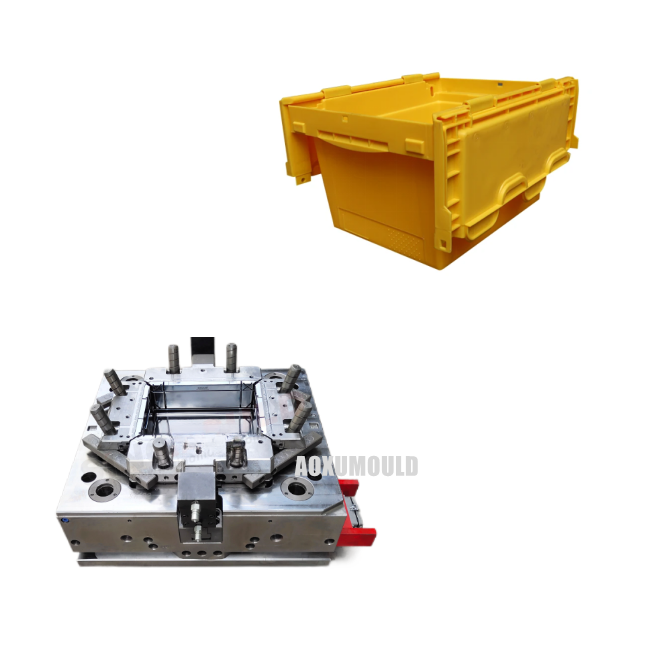
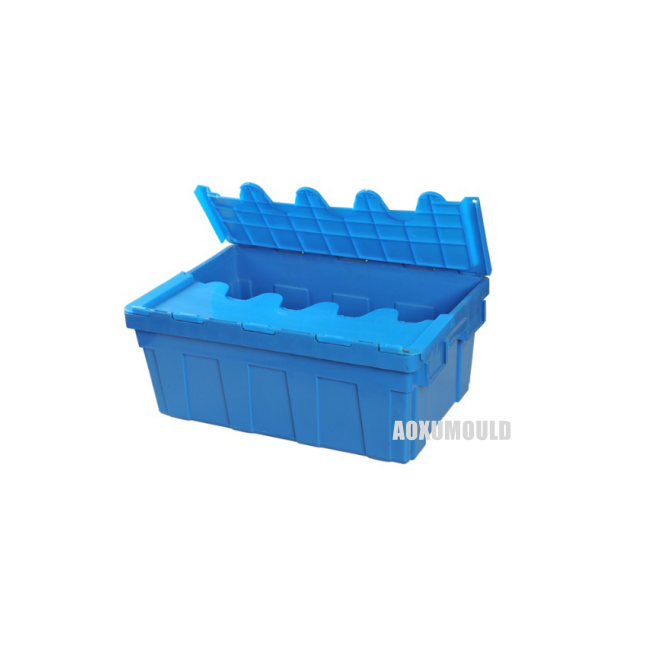
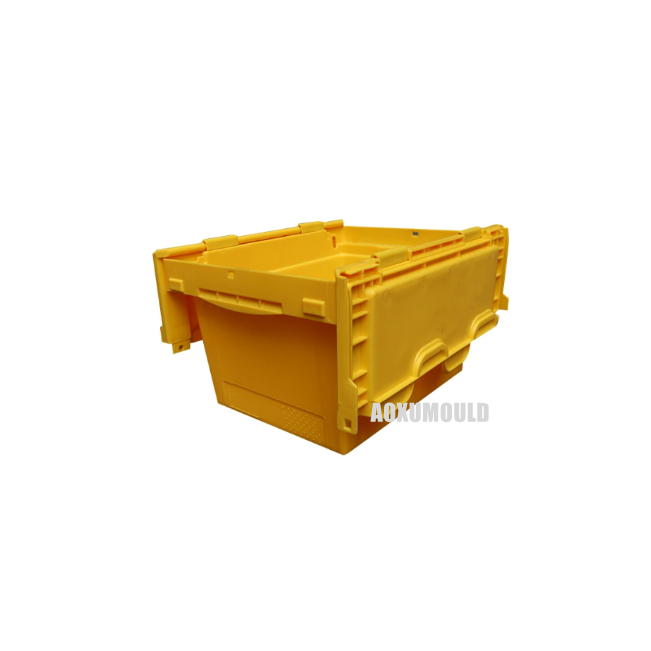
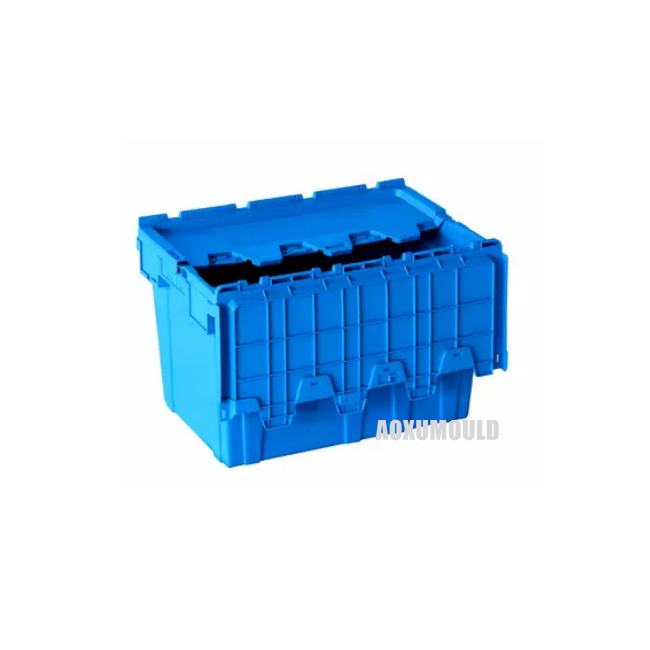
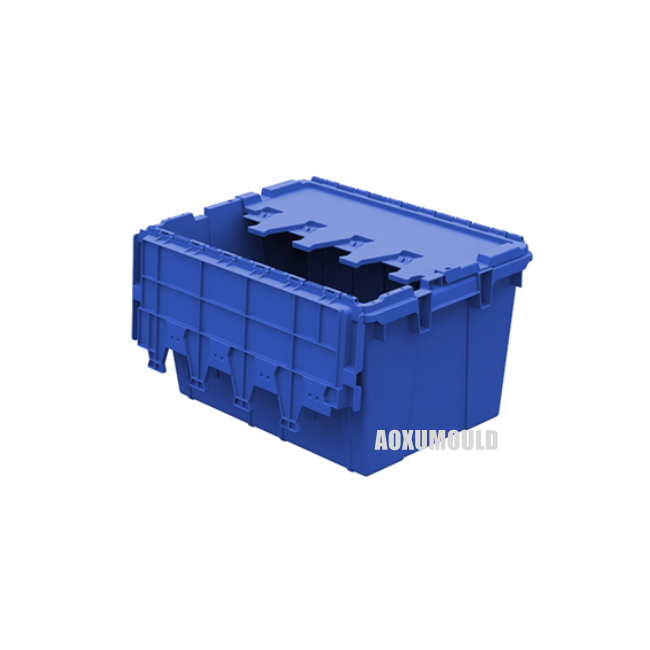
Mould Specifications
|
Mould name |
Plastic stackable logistic crate mould |
|
Product material |
HDPE/PP |
|
Product Size |
60cmx40cmx31.50cm |
|
Product weight |
2.8KG |
|
Mould material for cavity &. Core |
P20/718H/H13 |
|
NOs of cavity |
1 cavity |
|
Injection system |
Hot runner |
|
Suitable injection machine |
650T |
|
Mould size |
850X580X900mm |
|
Mould weight |
3500KG |
|
Mould lifetime |
more than 500,000pcs |
|
Delivery Time |
55 days |
Why Do We Need Mould For Our Plastic Logistic Crates?

A plastic logistic crate mould is a specialized tool used in the manufacturing process of plastic logistic crates. It determines the shape, size, and design details of the crates. Such moulds are typically made from high-quality steel and are precision-engineered to ensure accurate and consistent production of durable plastic crates that can meet the requirements of logistics and storage applications, like being stackable, having good load-bearing capacity, and being resistant to impacts and wear.
1. Consistent Shape and Size: Moulds ensure that each logistic crate has the exact same shape and dimensions. This is crucial in logistics and storage operations. Uniform crates can be stacked neatly and efficiently, maximizing the use of space in warehouses, trucks, and shipping containers. For example, if the crates vary in size, it would be difficult to create stable stacks and might lead to wasted space.
2. Mass Production: They enable the mass production of plastic logistic crates. Manufacturers can produce a large number of crates with the same quality and characteristics in a relatively short time. This is essential to meet the high - demand of the logistics industry, where thousands or even millions of crates may be needed.
3. Design Precision: The mould allows for the creation of crates with specific design features. This could include reinforced corners for added strength, grooves or ridges for better grip during handling, or compartments and dividers to hold specific items. These precise design elements enhance the functionality of the crates and can't be easily achieved without a proper mould.
4. Cost - Effectiveness: In the long run, using a mould is cost - effective. Once the mould is made, the cost per unit of production decreases as more crates are manufactured. It also reduces the waste of raw materials as the mould helps in efficient use of plastic during the injection - moulding or other manufacturing processes.
The Process of Custom - Making Plastic Logistic Crate Moulds

We can customize mould for our customer plastic logistic crates, different designs and dimensions.
1.Consultation and Requirement Gathering
• First, have in - depth discussions with the customer to understand their specific requirements. This includes the size of the logistic crate (length, width, and height), the intended load - bearing capacity, the shape (whether it's rectangular, square, or with special contours), and any unique design features such as handles, dividers, or 2.Stacking mechanisms.
• Also, learn about the production volume expectations of the customer. This information helps in determining the type and durability of the mould needed.
2.Design Phase
• Based on the customer's requirements, the design team creates a detailed 3D model of the logistic crate mould. The design takes into account factors like the injection point for the plastic material, the cooling system to ensure efficient production cycles, and the ejection mechanism to release the finished crate from the mould.
• The design is then reviewed and refined in consultation with the customer to ensure it meets all their expectations and functional requirements. Mock - ups or virtual simulations may be used to give the customer a better idea of the final product.
3.Material Selection
• Select the appropriate mould material. High - quality steel are commonly used due to their durability, resistance to wear and corrosion, and ability to withstand high - pressure injection moulding processes. The choice of material also depends on the expected number of production cycles and the complexity of the crate design.
4.Manufacturing the Mould
• Once the design and material are finalized, the actual manufacturing process begins. This involves precision machining techniques such as CNC (Computer Numerical Control) milling and turning to create the different components of the mould. These components are then carefully assembled and fitted together to ensure proper alignment and functionality.
• During the manufacturing process, quality control checks are carried out at various stages to ensure that the dimensions and surface finish of the mould meet the specified standards.
5.Testing the Mould
• Before delivering the mould to the customer, it undergoes a series of tests. Trial runs are made using the actual plastic material that will be used in production. This helps to check for any issues such as incomplete filling of the mould, air pockets, or problems with the ejection of the crate.
• Based on the test results, any necessary adjustments or refinements are made to the mould to optimize its performance and ensure the production of high - quality logistic crates.
6.Delivery and After-sales Service
• After successful testing, the custom - made logistic crate mould is delivered to the customer. Provide comprehensive after - sales service, including training the customer's staff on how to operate and maintain the mould, and offering technical support in case of any problems during the production process.
What Kind of Plastic Material For Molding Logistic Crates?

There are several types of plastic materials commonly used for logistic crates:
1. High - Density Polyethylene (HDPE)
• HDPE is a popular choice due to its excellent strength and durability. It has a high density, which gives the logistic crates good resistance to impacts and abrasion. This means the crates can withstand rough handling during transportation and storage without easily cracking or breaking.
• It is also resistant to many chemicals, which is beneficial if the crates are used to store substances that might interact with the plastic. For example, in the chemical industry, HDPE crates can hold containers of various chemicals without being damaged.
• HDPE has good weather resistance, so the crates can be used both indoors and outdoors without significant degradation from sunlight, rain, or temperature changes.
2. Polypropylene (PP)
• PP is known for its high melting point and good heat resistance. Logistic crates made from PP can be used in environments where they might be exposed to higher temperatures, such as near industrial ovens or in hot - climate storage areas.
• It has excellent flexural strength, allowing the crates to be bent or deformed slightly under load without breaking. This property is useful when crates need to be stacked and the lower crates bear the weight of those above.
• PP is also lightweight, which can be an advantage in terms of transportation costs and ease of handling. However, it may not be as impact - resistant as HDPE in some cases.
Design For Product &. Mould

Package &. Delivery

Mould Components
Mould Steel

Hot Runner System

Standard Parts

Customers' Feedback

Why Choose Us
1. Expertise and Experience
• We have a team of highly skilled and experienced engineers and technicians. They have extensive knowledge of mould design and manufacturing processes, and have worked on a wide variety of logistic crate moulds over the years. Their expertise allows us to handle complex designs and custom requirements with ease.
• Our long - standing experience in the industry means that we understand the specific needs of the logistics sector. We know the importance of creating durable, reliable, and efficient crate moulds that can withstand the rigors of transportation and storage.
2. Customization Capabilities
• We pride ourselves on our ability to customize moulds according to your exact specifications. Whether you need a particular size, shape, or special features such as reinforced corners, unique handles, or internal dividers for your logistic crates, we can design and manufacture a mould to meet those requirements.
• We work closely with you throughout the customization process, from the initial concept to the final product, ensuring that the mould reflects your vision and functional needs.
3. Quality Assurance
• Quality is our top priority. We use only high - grade materials for our moulds, such as premium - quality steel alloys that offer excellent durability, wear - resistance, and precision - machining capabilities.
• Our manufacturing facilities are equipped with advanced machinery and precision - controlled processes, including Computer Numerical Control (CNC) machining. This enables us to produce moulds with tight tolerances and a high - quality finish.
• Rigorous quality - control checks are carried out at every stage of the manufacturing process, from the raw material inspection to the final mould testing. This ensures that each mould meets the highest standards of performance and reliability.
4. Cost - Effectiveness
• We understand the importance of cost - effectiveness in business. By optimizing our manufacturing processes and leveraging our industry connections for raw materials, we are able to offer competitive pricing for our moulds.
• Our efficient production methods also lead to shorter lead times, reducing the overall cost associated with the project and allowing you to get your logistic crate production up and running quickly.
5. After - sales Service
• Our commitment to you doesn't end with the delivery of the mould. We provide comprehensive after - sales service, including installation support, training for your staff on how to operate and maintain the mould, and technical assistance in case of any issues or malfunctions.
• We also offer maintenance and repair services to ensure the long - term performance and durability of the mould, helping you to maximize your investment.


