

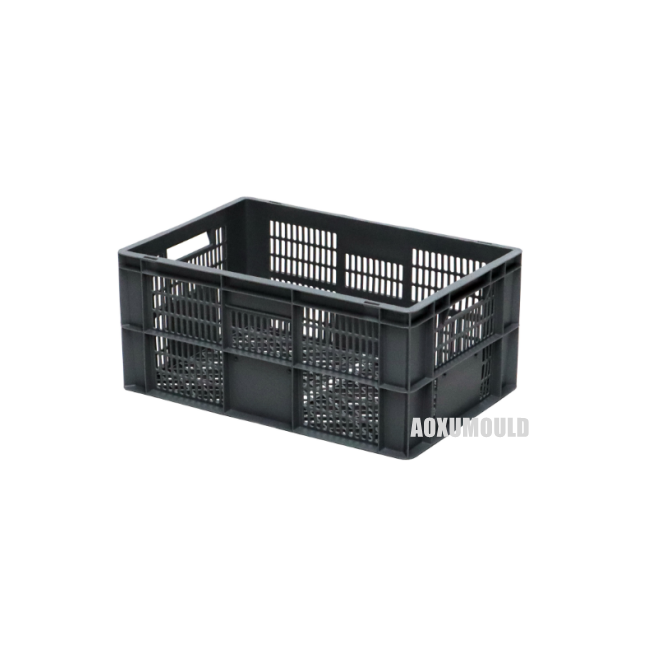
Mould Specifications
|
Mould name |
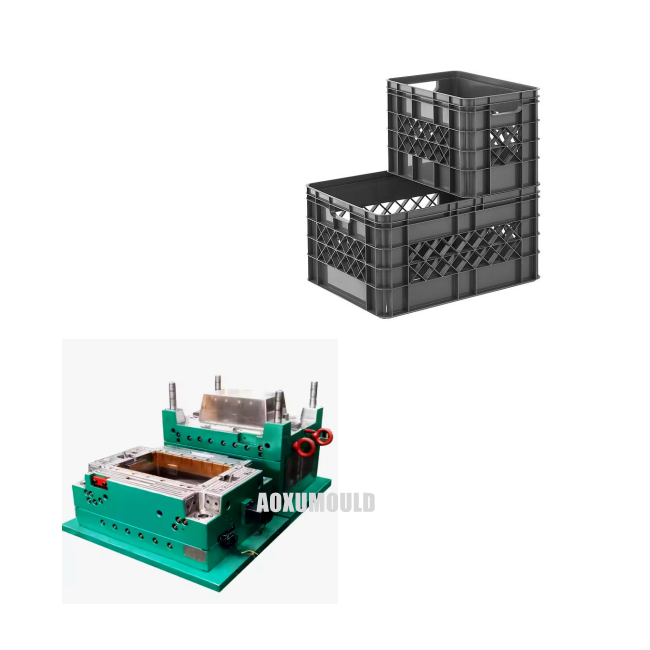
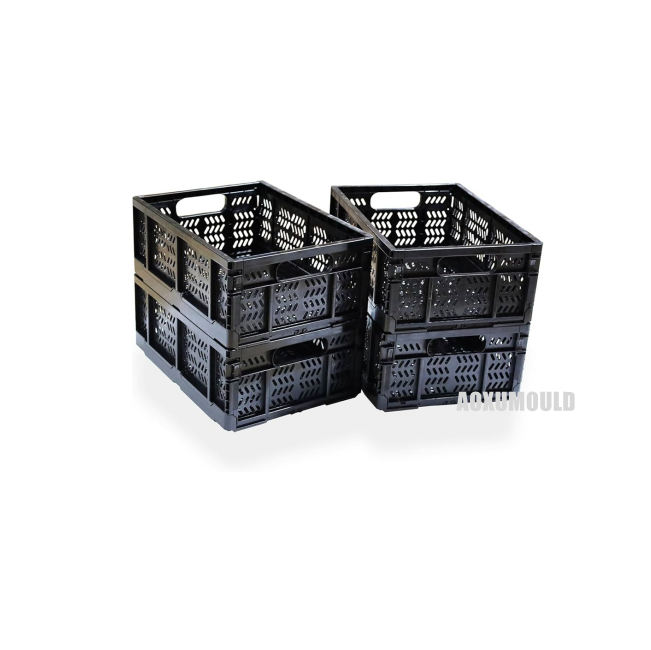
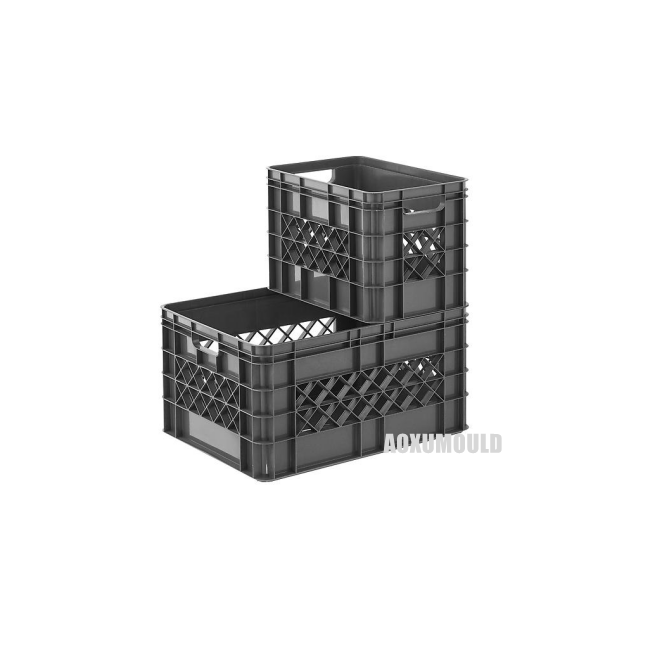
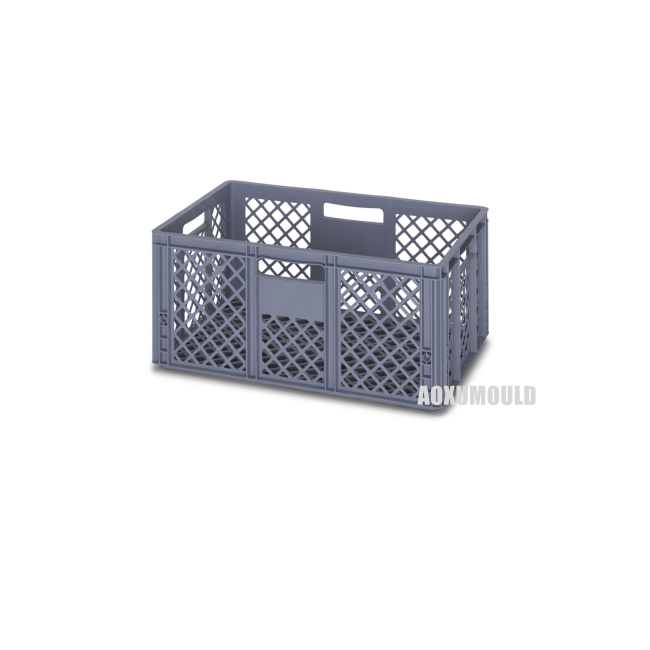
Plastic Stackable Storage crate mould |
|
Product material |
HDPE Polyethylene |
|
Product Size |
L 570 x W 370 x H 205mm |
|
Product weight |
1.57KG |
|
Mould material for cavity &. Core |
P20/718H/H13 |
|
NOs of cavity |
1 cavity |
|
Injection system |
Hot runner |
|
Suitable injection machine |
650T |
|
Mould size |
850X580X900mm |
|
Mould weight |
3200KG |
|
Mould lifetime |
more than 500,000pcs |
|
Delivery Time |
55 days |
Why Do We Need Mould For Plastic Storage Crates?

We need to make a mould for plastic crates for several reasons.
1.A mould gives the plastic crate its specific shape. It allows for the creation of a consistent and precise design. For example, if you want all the crates to have the same size compartments and outer dimensions to stack neatly, the mould ensures this uniformity.
2. It enables mass production. Once the mould is made, many identical plastic storage crates can be produced quickly and efficiently. This is much more practical than trying to shape each crate by hand, which would be very time - consuming and would lead to a lot of variation in the products.
3. The quality of the finished product can be better controlled with a mould. The mould can be designed to create a crate with the right thickness and strength in the necessary areas, making the crate more durable and fit for its intended purpose.
How To Molding Plastic Storage Crates?
How To Design A Plastic Storage Crate Mould?
1.Product analysis
• Thoroughly understand the shape, size, and structural requirements of the storage crate. Consider details such as the height, length, width, and any special features like handles, compartments, or stacking elements.
• Analyze the load - bearing capacity and intended use of the crate to determine the appropriate wall thickness and reinforcement areas. For example, if the crate is meant to hold heavy items, thicker walls might be needed.
2.Mould type selection
• Decide between a two - plate mold or a three - plate mould. A two - plate mold is simpler and more commonly used for less complex parts. A three - plate mould can be better for parts with features that require more complex gating, like multiple - cavity molds for high - volume production.

3.Cavity and core design
• Design the cavity to form the outer shape of the crate and the core to shape the inner part. Ensure that there is enough draft angle (usually 1 - 3 degrees) on the sidewalls to allow for easy ejection of the part from the mould.
• Consider the location of any inserts or features like screw bosses or hinges, and design the cavity and core to accommodate them precisely.
4.Gating system
• Choose an appropriate gating method. For plastic storage crates, edge gating or hot - runner gating can be considered. Edge gating is a simple option that allows the molten plastic to enter the mould cavity from the edge. Hot - runner systems can reduce material waste and provide better control over the injection process.
• Calculate the gate size based on the volume and flow characteristics of the plastic material to ensure even filling of the mould cavity.
5.Cooling system
• Design an efficient cooling system to reduce the cycle time. Cooling channels are usually drilled into the mould plates near the cavity and core. The layout of the channels should be such that it provides uniform cooling across the part to avoid warping.
• Consider using baffles or bubblers in the cooling channels for more effective cooling of areas with thicker sections.
6.Ejection system
• Select an appropriate ejection mechanism such as ejector pins, stripper plates, or air ejection. Ejector pins are commonly used and should be placed in areas that can provide sufficient force to push the part out of the mould without deforming it.
• Calculate the ejection force required based on the part's geometry and the friction between the plastic and the mould surface.
7.Mould material selection
• Choose a mould material that can withstand the high injection pressures and temperatures. Commonly used materials include tool steels like P20 or H13. The choice depends on factors such as the production volume, the type of plastic being used, and the required surface finish.
8.Tolerance and precision design
• Set appropriate tolerances for the dimensions of the mould cavity and core to ensure that the produced storage crate meets the required specifications. Consider factors such as shrinkage of the plastic material during cooling.
• Use precision machining techniques and quality control methods during the mold manufacturing process to achieve the desired level of accuracy.
The Steel Type For Plastic Storage Crate Mould

When it comes to steel types for plastic storage crate moulds, several options are commonly used:
1.P20 Steel
Characteristics: It is a pre - hardened steel with good machinability. It has a relatively good balance of hardness and toughness. The hardness typically ranges from 28 - 36 HRC.
Advantages: It can withstand the injection pressures during the molding process well. It is suitable for medium - to - high volume production of plastic parts like storage crates. The surface finish achieved with P20 steel can be quite good after proper polishing, which is beneficial for the appearance of the molded crates.
Limitations: For extremely high - volume production or when using very abrasive plastics, it may wear more quickly than some higher - performance steels.
2.H13 Steel
Characteristics: H13 is a hot - work tool steel. It has excellent heat resistance and can withstand the high temperatures associated with repeated plastic injection cycles. It has a hardness around 48 - 52 HRC after heat treatment.
Advantages: It is very durable and can handle high - pressure injection molding. This makes it a great choice for large - sized or complex - shaped storage crate moulds where the mold is under significant stress. It also has good resistance to thermal fatigue, which is important for molds that are used continuously.
Limitations: It is more expensive than P20 steel and requires more careful heat treatment during the manufacturing process to achieve its optimal properties.
3.718 Steel
Characteristics: 718 steel is a chromium - nickel - molybdenum alloy steel. It has high strength and good dimensional stability. The hardness can be adjusted according to specific requirements through proper heat treatment.
Advantages: It provides excellent polishability, so the molded parts have a smooth and shiny surface. It is suitable for molding plastic storage crates that require a high - quality appearance. It also has good resistance to wear and corrosion, which helps to extend the life of the mold.
Limitations: Similar to H13, it is relatively costly and the manufacturing process needs to be precisely controlled to make full use of its properties.
How Long Does The Mould last?
The lifespan of a plastic crate mould can vary significantly depending on several factors.
If the mould is made of high - quality steel like H13 and is well - maintained, and used for relatively less abrasive plastics, it can last for hundreds of thousands to over a million injection cycles. For example, in a well - run production facility where the mold is used to produce common storage crates made of polyethylene or polypropylene, and with proper care such as regular cleaning, lubrication, and temperature control, the mould might last for 500,000 cycles or more.
However, if the mould is made of a lower - grade material, or if it's used to mould plastics with abrasive fillers, or if it's subjected to improper handling (such as over - injection pressure, poor cooling that causes warping, or insufficient ejection leading to part damage during removal), its lifespan can be much shorter. In extreme cases, a mould might only last for a few thousand cycles before significant wear, cracking, or other damage renders it unusable.
Package &. Delivery

Mould Components
Mould Steel

Hot Runner System

Standard Parts

How To Storage Plastic Moulds?
1.Cleaning before storage
Thoroughly clean the mould to remove any residual plastic, dirt, or debris. Use appropriate cleaning agents that are suitable for the mould material. For example, for steel moulds, you can use a mild detergent and a soft - bristled brush to scrub away any adhered plastic particles.
Make sure to clean the cooling channels as well. Flushing them with a cleaning solution and then drying them completely to prevent the growth of rust or mould.
2.Apply a protective coating
Apply a rust - preventive coating to the mould surfaces, especially if it's made of metal. There are various commercial rust - preventive oils available. Coat the entire mould cavity, core, and other metal parts to form a protective barrier against moisture and oxidation.
3.For moulds with polished surfaces, use a non - abrasive coating to preserve the finish. This helps to maintain the surface quality of the mould, which is important for the quality of the subsequent plastic crate products.
Proper storage environment
Store the mould in a dry, cool, and well - ventilated area. Avoid storing it in a place with high humidity, as this can lead to rust formation. A relative humidity level below 60% is generally ideal.
Place the mould on a flat, stable surface or on suitable storage racks. Avoid stacking heavy objects on top of the mould to prevent deformation. If possible, use mould - specific storage racks that support the mould's shape and weight distribution.
4.Label and inventory
Clearly label the mould with information such as its part number, the type of plastic crate it's designed for, and the date of last use or maintenance. This helps in easy identification and retrieval.
Keep an inventory record of all stored moulds, including their storage location, condition, and any associated accessories or spare parts.

Customers' Feedback

FAQ
Q: What factors need to be considered in mould design?
A: The product requirements such as the size, shape, structural strength, and demolding method of the crate, as well as the molding process factors like material flow, cooling, and venting, should be taken into account. Also, considerations of cost and production efficiency are necessary for a comprehensive design.
Q: What materials are usually used to make plastic storage crate moulds?
A: Commonly used mould material is steel, such as P20, 718H, H13, SKD61, etc. These materials have good wear resistance, high hardness, and excellent thermal stability.
Q: How to ensure the quality of mould materials?
A: Select a regular material supplier and check the material quality certificates, such as material reports and heat treatment reports. Conduct inspections on the materials, including hardness tests and metallographic analysis, to ensure they meet the design requirements.
Q: How does the machining accuracy of the mould affect the quality of the plastic storage crate?
A: Machining accuracy directly affects the dimensional accuracy, appearance quality, and assembly performance of the crate. High-precision mould machining can ensure the accurate and consistent size of the crate, with a smooth surface and no defects such as burrs and flash, improving the quality and performance of the crate.
Q: How to guarantee the machining accuracy of the mould?
A: Employ advanced processing equipment and techniques, such as CNC machining centers and electrical discharge machining. During the machining process, strictly follow the design requirements and use precision measuring equipment to perform real-time detection and adjustment of the critical dimensions of the mould.
Q: What should be done if weld lines appear during the injection molding process?
A: Solutions can be sought from four aspects: mold, equipment, raw materials, and process. For the mould, adjust the mould temperature appropriately, modify the width of the runner, the cross-section and position of the gate, and expand the venting channel. For the equipment, extend the molding cycle or replace the machine with a larger plasticizing capacity. For the raw materials, ensure they are dry and avoid adding liquid additives, and appropriate lubricants or stabilizers can be added. For the process, increase the injection pressure and time, adjust the injection speed, and minimize the use of mold release agents.
Q: What problems will be caused by poor mould venting during injection molding?
A: It will lead to difficulties in melt filling, resulting in insufficient injection volume and the inability to fill the cavity. High pressure will also be formed in the cavity, allowing gas to enter the plastic, causing quality defects such as voids, pores, loose structures, and silver streaks, affecting the mechanical properties and appearance quality of the plastic part.


