

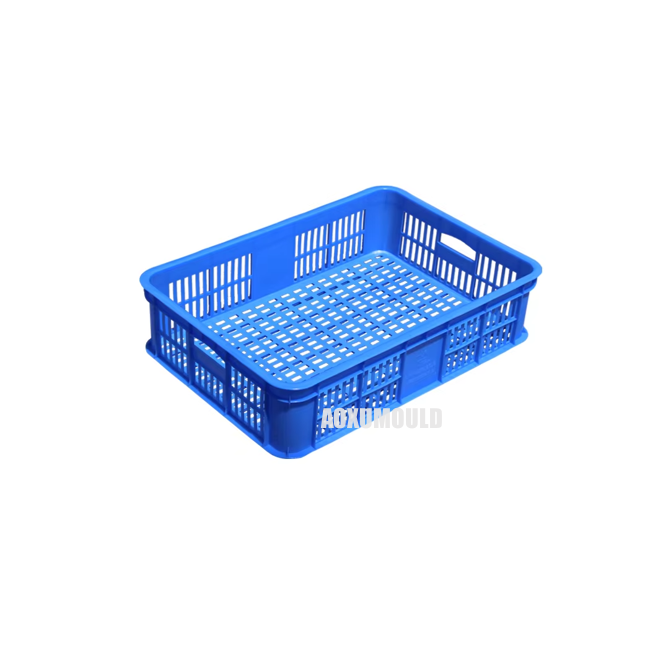
Mould Specifications
|
Mould name |
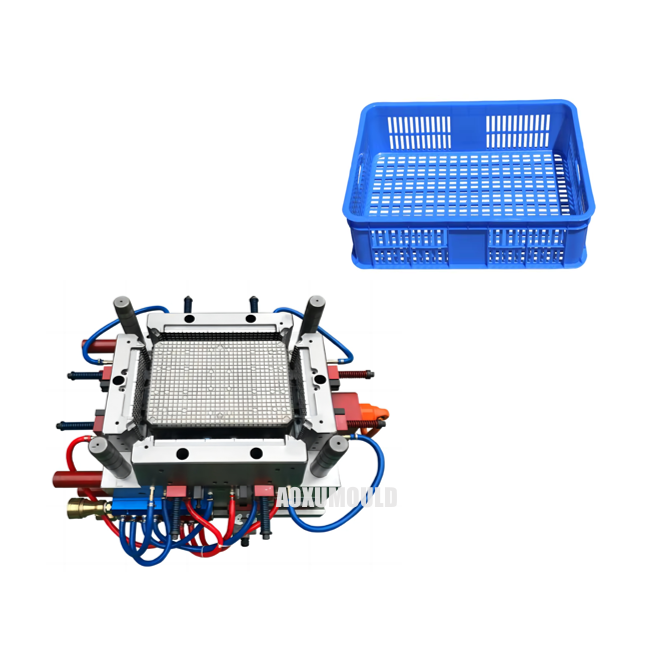
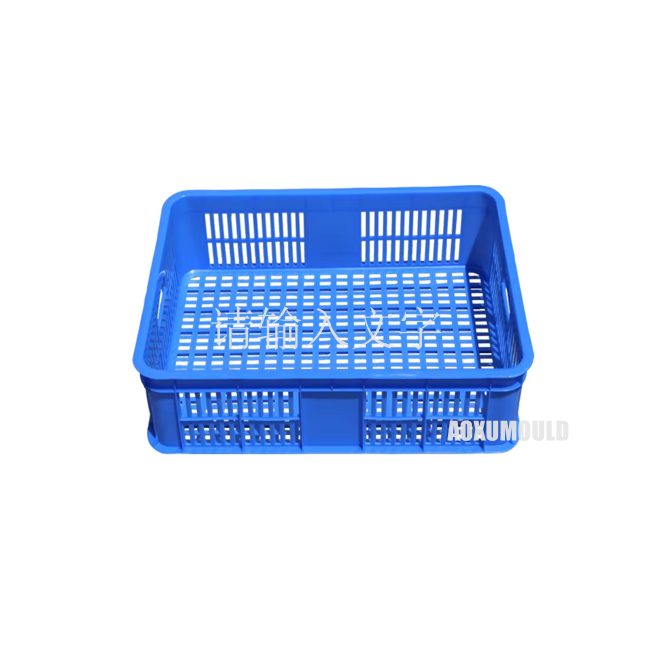
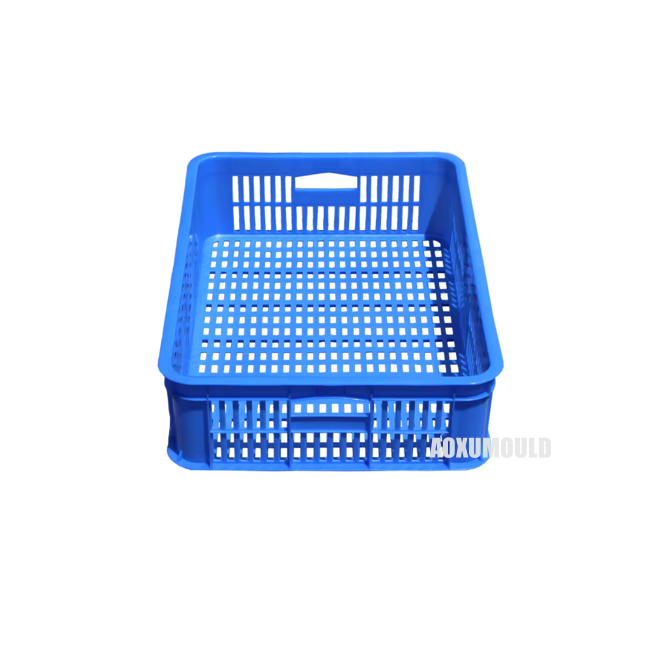
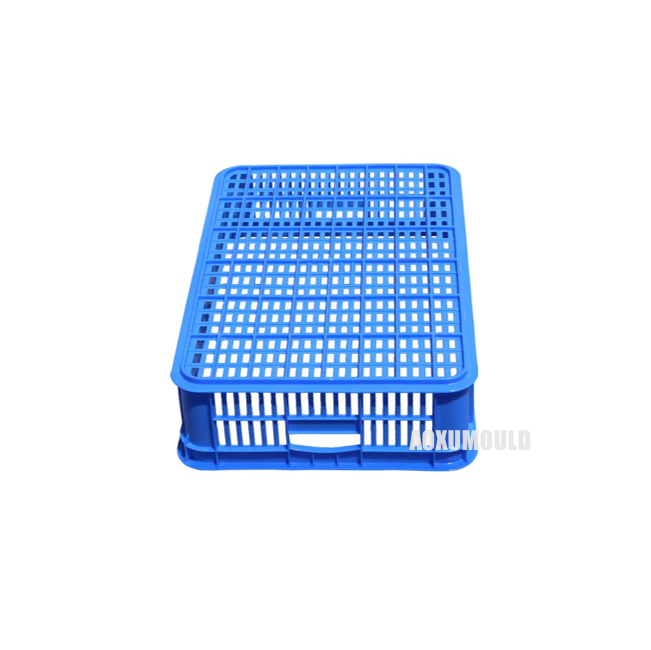
Regular style plastic crate mould |
|
Product material |
HDPE, plastic |
|
Product Size |
500X350X230mm |
|
Product weight |
850g |
|
Mould material for cavity &. Core |
C45, P20, 718, 2738 |
|
Mould base |
C45 |
|
Injection system |
Hot runner open gates or valve gates |
|
Suitable injection machine |
550T |
|
Mould size |
750x530x460mm |
|
Mould lifetime |
more than 300,000pcs |
What Are The Characteristics of High-quality Plastic Crate?

Introduction
Plastic Crate Mould is a special mold used to produce plastic turnover boxes. Plastic turnover boxes are widely used in logistics, warehousing, transportation and other industries for storing and carrying items.
Advantages
1. Mold design
When designing the mold, first determine the basic shape and structure of the mold based on the size (500x350x230 mm) and weight (850 g) of the plastic turnover box.
2. Mold material selection
High-strength steels such as C45, P20, 718 and 2738 are used to ensure the precision and long-term service life of the mold. The mold frame is made of C45 material, which has sufficient strength to support the structure of the entire mold.
3. Injection system selection
Choose a hot runner open gate or a valve gate according to production efficiency and finished product quality requirements. The hot runner system can reduce plastic waste and improve production efficiency.
4. Injection molding machine selection
The mold is suitable for a 550-ton injection molding machine.
5. Mold manufacturing and processing
The processing of the mold usually includes CNC machining, wire cutting, EDM and other technologies, and the mold surface needs to be hardened, such as electroplating or nitriding.
6. Injection molding process
During the injection molding process, high-density polyethylene (HDPE) plastic is heated to a molten state, injected into the mold cavity, and demolded after cooling and solidification. In order to ensure uniform mold temperature, a temperature control system is usually required.
7. Mold testing
After the mold is manufactured, a trial mold is produced to check whether the size, surface quality and overall structure of the finished product meet the design requirements.
How to maintain
1. Check the mold surface regularly
The mold surface needs to be checked regularly for problems such as wear, cracks or corrosion, especially the contact surface between the cavity and the core.
2. Clean the mold
After each production, the mold should be thoroughly cleaned, especially the gate, vent hole and cooling channel, to avoid plastic residues and impurities affecting the injection molding process and reduce the risk of mold damage.
3. Lubrication and maintenance
Regularly lubricate the sliding parts of the mold (such as guide pins, guide sleeves, etc.) to ensure smooth movement of the mold.
4. Storage environment
The mold should be stored in a dry, clean and temperature-appropriate environment to avoid moisture and corrosive gases from damaging the mold.
Design For Product &. Mould

The Process of Making Plastic Waste Containers moulds

Mould Try-out of Regular Style Plastic Crate Mould
Package &. Delivery

Mould Components
Mould Steel

Hot Runner System

Standard Parts

Customers' Feedback


