

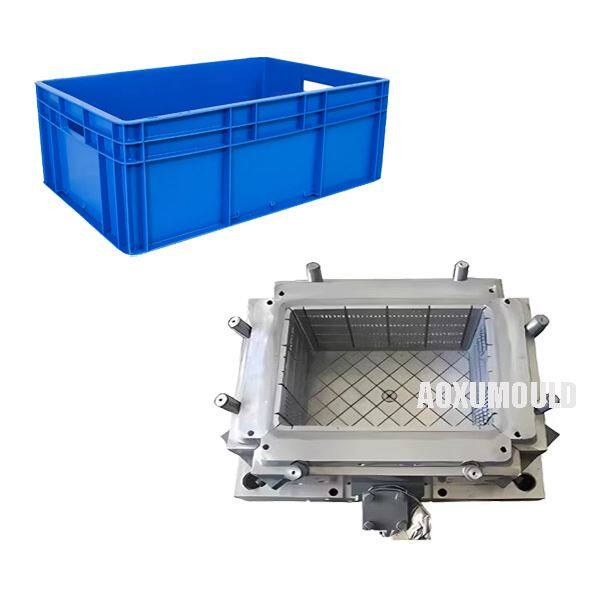
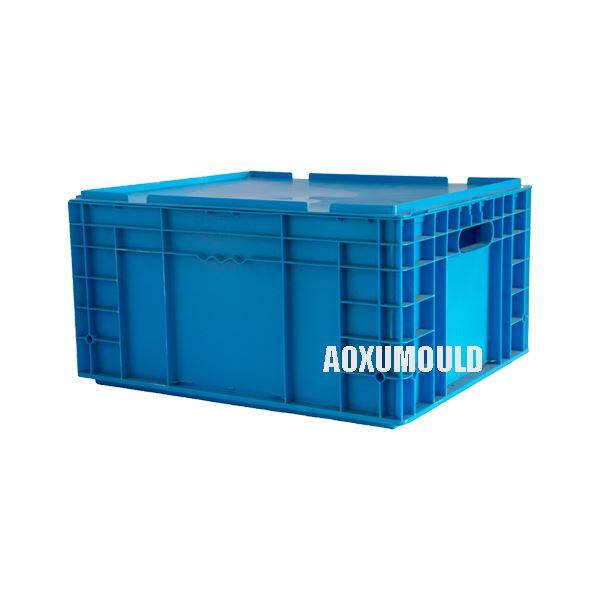
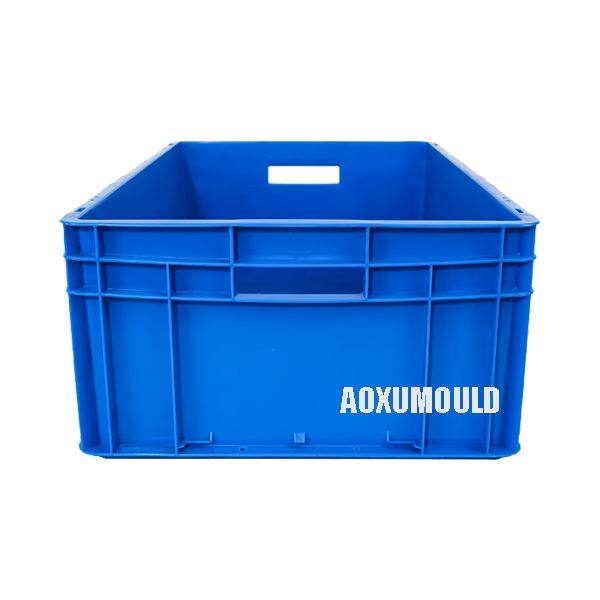
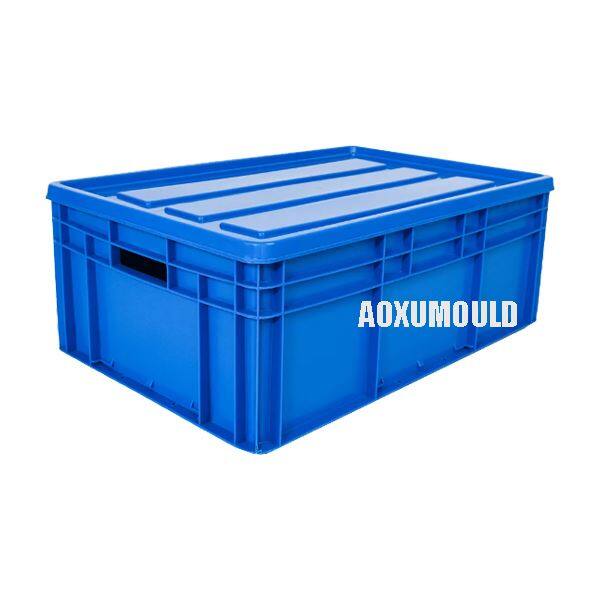
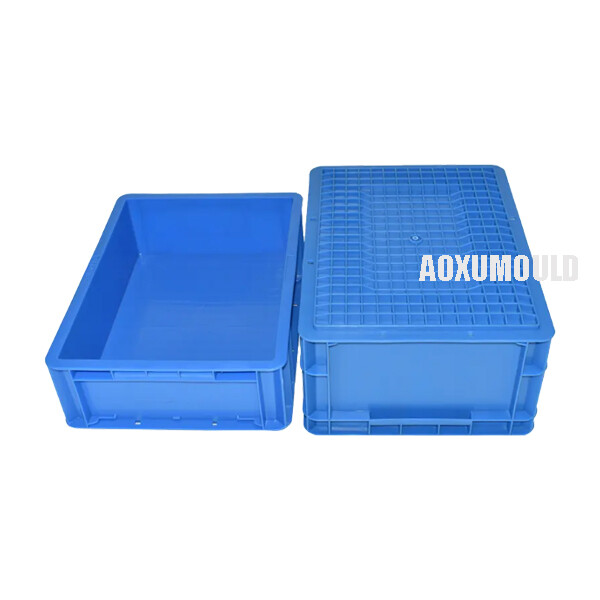
Mould Specifications
|
Mould name |
Industrial Crate Injection Mould |
|
Product material |
HDPE, plastic |
|
Product Size |
310X210X130mm |
| Product Weight | 1.2KG |
|
Mould material for cavity &. Core |
P20, 718, 2738 |
|
NOs of cavity |
1 cavity |
|
Injection system |
Yudo Hot runner |
|
Suitable injection machine |
580T |
|
Mould size |
680X600X550mm |
|
Mould lifetime |
more than 500,000pcs |
Multiple Sizes For Various Places

1. Small Crates (5–20 liters)
>Applications:
Retail & supermarkets (fruit/vegetable boxes)
Automotive parts organization
Small tool storage
>Features:
Lightweight, easy to carry
Often stackable/nestable
2. Medium Crates (20–60 liters)
>Applications:
Warehouse logistics (order picking)
Agriculture (harvest collection)
Beverage & dairy industries
>Features:
Reinforced handles for manual lifting
Ventilation holes (for perishables)
3. Large Crates (60–120 liters)
>Applications:
Bulk material handling (construction, manufacturing)
Fishing & aquaculture (fish transport)
Postal & courier services
>Features:
Heavy-duty walls for stacking
Forklift-compatible bases
4. Extra-Large Crates (120+ liters)
>Applications:
Automotive assembly lines (large parts)
Industrial bulk storage (textiles, chemicals)
Export packaging (durable shipping containers)
>Features:
Reinforced corners for palletized transport
Often foldable/collapsible for space savings
Different Design of Cooling System

1. Cavity Cooling (Female Side Cooling)
>Purpose: Cools the outer walls and surface of the crate.
>Design Features:
Straight or spiral cooling channels follow the contour of the cavity.
Used for large flat surfaces (crate walls, base).
Often made with baffles or bubblers to enhance heat transfer in deep sections.
>Advantages:
Reduces sink marks on visible surfaces.
Maintains uniform shrinkage.
>Challenges:
Complex for deep crates (requires baffles).
2. Core Cooling (Male Side Cooling)
>Purpose: Cools the inner walls, ribs, and stacking features.
>Design Features:
Conformal cooling channels (3D-printed or machined) follow the core shape.
Heat pipes may be used in thick core areas.
Spiral or zigzag channels around ejector pins.
>Advantages:
Prevents warping in thick sections (e.g., crate bases).
Faster cooling for ribs and stacking lips.
>Challenges:
Harder to machine in complex cores.
3. Sliders & Lifter Cooling
>Purpose: Cools undercuts, handles, or interlocking features.
>Design Features:
Mini cooling channels inside sliders/lifters.
Thermal conductive inserts (copper alloys) in high-heat zones.
Direct water lines for sliding cores.
>Advantages:
Prevents sticking in moving parts.
Balances cooling across complex geometries.
>Challenges:
Requires precise alignment to avoid leaks.
How To Manufacture A Industrial Crate Injection Mould?

1. Design the mould: The first step in manufacturing an industrial crate mould is designing the mould itself. This involves creating a detailed blueprint of the mould that outlines all the necessary dimensions, materials, and specifications. The design will serve as a guide for the rest of the manufacturing process.
2. Select materials:
-Mould Steel:
Cavity/Core: H13, P20, or S136 (hardened for durability).
Sliders & Wear Parts: Stainless steel or carbide.
High Cooling Areas: Beryllium copper inserts.
-Plastic Material for Crates:
PP (Polypropylene)–Most common (impact-resistant, recyclable).
HDPE (High-Density Polyethylene) – For heavy-duty crates.
3. Fabricate the mould: With the design and materials selected, the next step is to fabricate the mould. This involves cutting and shaping the chosen materials to create the various components of the mould, including the core, cavity, and any necessary inserts or mechanisms.
4. Assemble the mould: Once all the components of the mould are fabricated, they are assembled together to create the final mould. This may involve welding, bolting, or otherwise joining the components together to ensure they are secure and able to withstand the pressures of the injection moulding process.
5. Test the mould: Before the mould can be put into production, it must be thoroughly tested to ensure it meets the necessary specifications and will produce high-quality parts. This may involve running test shots with the mould to check for any defects or issues that need to be addressed.
6. Fine-tune the mould: After testing, any necessary adjustments or fine-tuning can be made to the mould to ensure it is producing parts of the desired quality. This may involve making changes to the design, materials, or assembly of the mould.
7. Put the mould into production: Once the mould is finalized and tested, it can be put into production to begin manufacturing industrial crates. The mould will be used in an injection moulding machine to produce the desired parts in large quantities.
Mould Components
Mould Steel

Hot Runner System

Standard Parts

Package &. Delivery

Detailed Components of An Injection Mould

1. Mould Base (Standard Components)
The foundation that holds all parts together, usually pre-manufactured (e.g., Futaba, HASCO, DME standards).
A. Fixed Half (Cavity Side – Mounted on Injection Machine Platen)
-Top Clamping Plate – Attaches the mould to the injection machine.
-Cavity Plate (A-Plate) – Houses the cavity inserts.
-Support Plate (B-Plate Backup) – Prevents deflection under injection pressure.
B. Moving Half (Core Side – Ejection Side)
-Core Plate (B-Plate) – Holds the core inserts.
-Ejector Plate – Contains ejector pins and return pins.
-Ejector Retainer Plate – Secures ejector components.
-Bottom Clamping Plate – Connects to the moving platen.
2. Mould Cavity & Core (Custom Machined Inserts)
Cavity Insert – Forms the external shape of the crate (female side).
Core Insert – Forms the internal shape (male side, includes ribs, stacking features).
Materials: Hardened steel (H13, P20, S136) or beryllium copper (for high cooling efficiency).
FAQ
>1. What kind of industrial crate injection moulds do you specialize in manufacturing?
Our company specializes in manufacturing a wide range of industrial crate moulds, including those for various sizes, shapes, and materials.
>2. Can you customize industrial crate moulds according to our specific requirements?
Yes, we can customize industrial crate moulds according to your specific requirements, including size, shape, material, and design.
>3. What materials are used for industrial crate moulds?
Mould Material: Hardened steel (e.g., P20, H13, S136) for durability.
Crate Material: Typically PP (Polypropylene) or HDPE (High-Density Polyethylene) for strength, impact resistance, and recyclability.
>4. What is the typical lead time for manufacturing industrial crate moulds?
The lead time for manufacturing industrial crate moulds may vary depending on the complexity of the design and the quantity ordered. Typically it takes about 45-55days.
>5. What maintenance does a crate mould require?
Regular cleaning, lubrication, and inspection of:
Cooling channels (to prevent clogging).
Ejector pins & moving parts.
>6. Do you provide after-sales support?
Yes! Services include:
Mould repair & refurbishment.
Technical support for production issues.
>7. Can we visit your manufacturing facility to see the production process of industrial crate moulds?
Yes, you are welcome to visit our manufacturing facility to see the production process of industrial crate moulds and learn more about our capabilities.
>8. How can we request a quote for industrial crate moulds?
You can request a quote by contacting us through our website, email, or phone. Please provide us with your specific requirements, and we will provide you with a customized quote.
Customers' Feedback


