

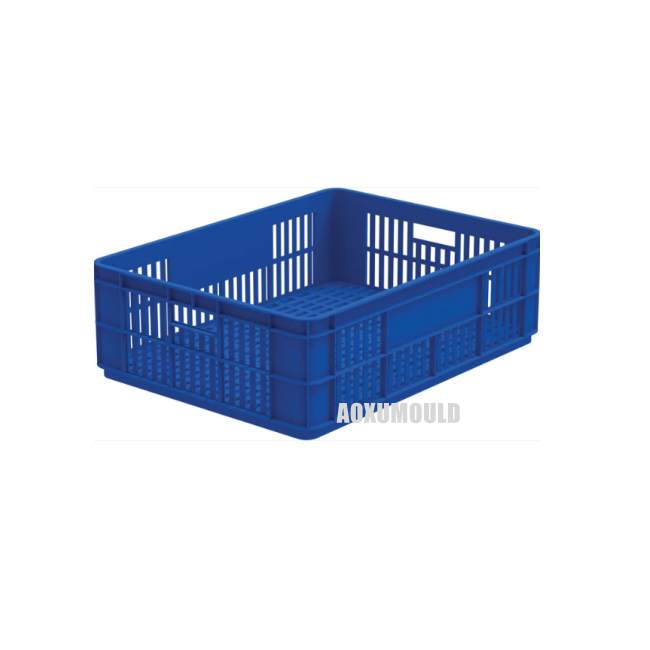
Mould Specifications
|
Mould name |
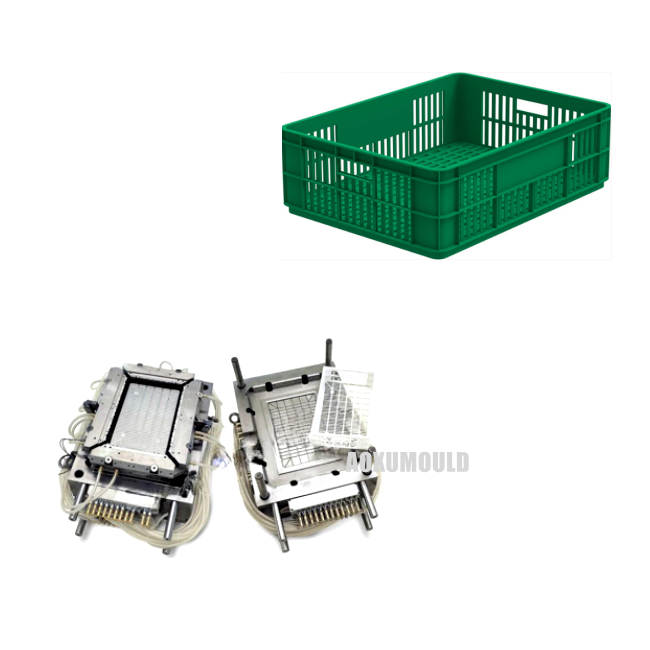
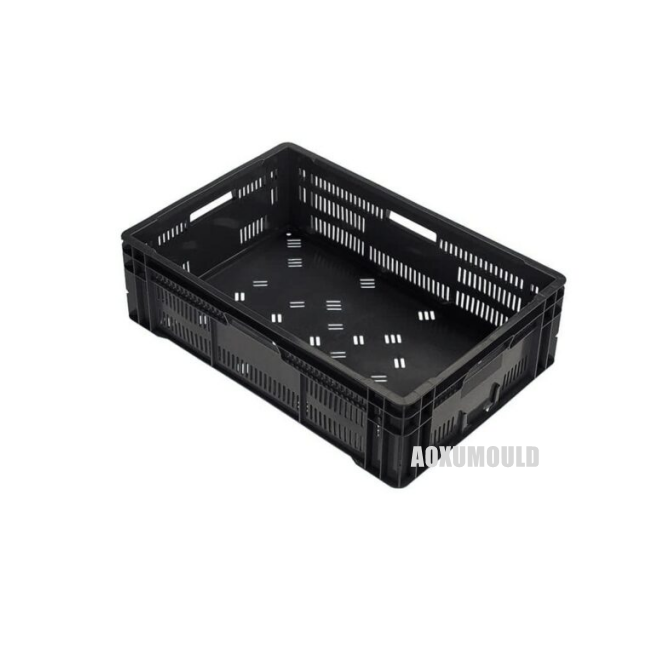
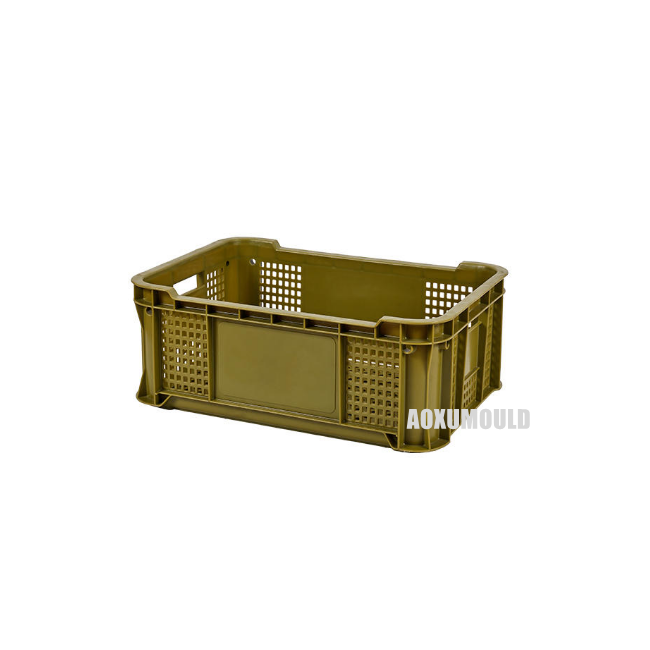
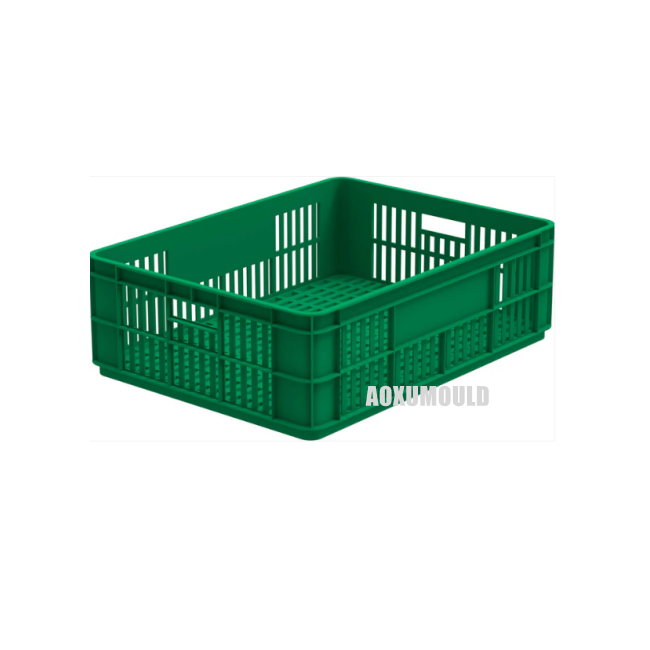
Plastic Transport Crate Mould |
|
Product material |
HDPE or PP |
|
Product Size |
600x400x170mm |
|
Mould material for cavity &. Core |
P20/718H/2738 |
|
NOs of cavity |
1 cavity |
|
Injection system |
Hot runner |
|
Suitable injection machine |
580T |
|
Mould size |
1050X880X650mm |
|
Mould weight |
4250KG |
|
Mould lifetime |
more than 500,000pcs |
|
Delivery Time |
45 days |
How To Molding A Plastic Transport Crate?
Molding a plastic transport crate involves a systematic process to ensure durability, functionality, and efficiency. Here's a structured approach:
1. Design Phase
Requirements: Define size, shape, load capacity, and features (handles, stacking ridges, ventilation holes).
Material Selection: Choose durable plastics like HDPE or polypropylene for impact resistance and longevity.
Structural Design: Incorporate ribs for strength, draft angles for easy ejection, and uniform wall thickness to prevent defects.
2.Mould Creation
Material: Use hardened steel for high-volume production (durability) or aluminum for prototypes (cost-effective).
Design Elements: Include sprue, runners, gates, vents, and cooling channels. Ensure proper alignment with ejector pins and sliders for complex features.
3. Material Preparation
Plastic Pellets: Select virgin or recycled material. Dry pellets if hygroscopic (e.g., nylon) to prevent moisture issues.
4.Injection Molding Process
Machine Setup: Use an injection molding machine with adequate clamping force and shot capacity.
Parameters: Set temperature (180–300°C based on polymer), injection pressure, and cooling time.
Steps:Melting: Pellets are heated into molten plastic.
Injection: Molten plastic is injected into the mould under high pressure.
Cooling: Mould cools to solidify the part; time varies with thickness.
Ejection: Mould opens, ejector pins release the crate.
5.Post-Processing
Trimming: Remove flash (excess plastic) and spruce/runners.
Assembly: Attach hinges, locks, or labels if needed.
Surface Treatment: Apply textures or coatings for aesthetics/functionality.
6.Quality Control
Testing: Check dimensions, load-bearing capacity, and impact resistance.
Defect Inspection: Look for sink marks, weld lines, or short shots.
Certification: Ensure compliance with industry standards (e.g., ISO, ASTM).
7.Safety & Environmental Considerations
Safety: Use PPE, machine guards, and proper ventilation.
Sustainability: Optimize material use, incorporate recycled content, and plan for end-of-life recycling.
This process balances precision, efficiency, and quality, ensuring a robust product tailored to transportation needs.
Design For Product &. Mould

What Kind of Plastic Material For Producing Transport Crates?
1. Primary Materials for Plastic Crates
a. High-Density Polyethylene (HDPE)
Key Properties:
High impact resistance and toughness.
Lightweight, chemical-resistant (acids, alkalis, solvents).
UV-stabilized grades available for outdoor use.
Recyclable and food-safe (FDA-approved grades).
Applications:
Heavy-duty transport crates (e.g., milk crates, automotive parts).
Agricultural crates (e.g., fruit/vegetable boxes).
Reusable logistics containers.
b. Polypropylene (PP)
Key Properties:
Excellent fatigue resistance (ideal for hinged or foldable crates).
Good chemical and moisture resistance.
Higher heat resistance than HDPE (up to ~120°C).
Lightweight and recyclable.

Applications:
Stackable crates for warehousing.
Foldable/collapsible crates (e.g., retail display boxes).
Food-grade containers (with FDA-compliant grades).
c. Low-Density Polyethylene (LDPE/LLDPE)
Key Properties:
Flexible and lightweight.
Good impact resistance at low temperatures.
Less rigid than HDPE/PP.
Applications:
Light-duty crates for lightweight goods.
Temporary storage bins (e.g., household storage).
2.Key Selection Factors
|
Factor |
Material Recommendations |
|
High Load Capacity |
HDPE, PP (with ribbed designs) |
|
Outdoor Use |
UV-stabilized HDPE/PP |
|
Chemical Resistance |
HDPE, PP |
|
Food Safety |
FDA-grade HDPE/PP |
|
Lightweight Design |
PP, LDPE |
|
Low-Temperature Use |
HDPE, LLDPE |
|
Cost-Effectiveness |
HDPE/PP (most economical for bulk production) |
Does Plastic Transport Crate Mould Require Hot Runner Molding?

Whether hot runner molding is required for the Transport Crate Mould depends on the specific production needs, cost budget and product design requirements.
1.Reduce material waste
The hot runner does not require the runner material (gate, runner residue) of the traditional cold runner. The molten plastic is directly injected into the mold cavity through the heated runner, and the material utilization rate is close to 100%.
Applicable scenarios: When mass production of turnover boxes can significantly reduce raw material costs.
2.Shorten the forming cycle
Save time to cool and cut off cold runners and improve production efficiency (especially for multi-cavity molds).
Applicable scenarios: high production demand (such as annual output of more than hundreds of thousands of pieces).
3.Improve product quality
Avoid degradation caused by repeated heating of cold runner materials, and reduce weld marks and stress concentration at the joint between the runner and the product.
Applicable scenarios: Turnover boxes with high surface finish and strength requirements (such as food-grade or high load-bearing purposes).
4.Support complex mould design
The hot runner can be flexibly arranged to double-point glue injection to balance the pressure in the mold cavity, and is suitable for large or complex Transport Crate Mould (such as with reinforcement ribs and porous positions).
It is recommended to clarify the production scale and quality goals before mold design, and communicate in-depth with mold suppliers, and conduct mold flow analysis (Moldflow) to verify the feasibility of the solution if necessary.
Mould Components
Mould Steel

Hot Runner System

Standard Parts

Package &. Delivery

Customers' Feedback

Why Choose Us
Choosing our services for your plastic Transport Crate Mould needs offers a multitude of advantages that ensure quality, efficiency, and value. Here's why we stand out:
1. Expertise & Experience:
● Decades of industry experience with a team of skilled engineers and designers.
● Proven track record in delivering high-performance moulds for diverse industries (e.g., logistics, agriculture, retail).
2. Customization:
● Tailored solutions to meet your exact specifications (size, design, material).
● Collaborative design process to align with your operational needs.
3. Precision & Quality:
● Advanced technologies (CNC machining, CAD/CAM software) ensure micron-level accuracy.
● Durable materials like hardened steel for extended mould lifespan and reduced downtime.
4. Fast Turnaround:
● Streamlined workflows and project management for on-time delivery.
● Rapid prototyping to accelerate your production timeline.
5. Cost-Effectiveness:
● Competitive pricing without compromising quality.
● Long-term savings through reduced maintenance and high yield rates.
6. End-to-End Service:
● Full-cycle support from design, prototyping, production, to post-sales maintenance.
● Troubleshooting and optimization for peak performance.
7. Compliance & Certifications:
● Adherence to international standards (ISO, CE) for quality and safety assurance.
8. Global Clientele:
● Trusted by clients worldwide, demonstrating adaptability to regional and industry-specific demands.
9. Sustainability Focus:
● Energy-efficient manufacturing and eco-friendly material options to support your green goals.
10. After-Sales Support:
● Warranty coverage, technical assistance, and prompt spare parts availability.
Result for You: Reduced production costs, consistent product quality, and a reliable partner invested in your success.
Ready to discuss your project? Let's create a transport crate mould that elevates your plastic crate manufacturing.


