

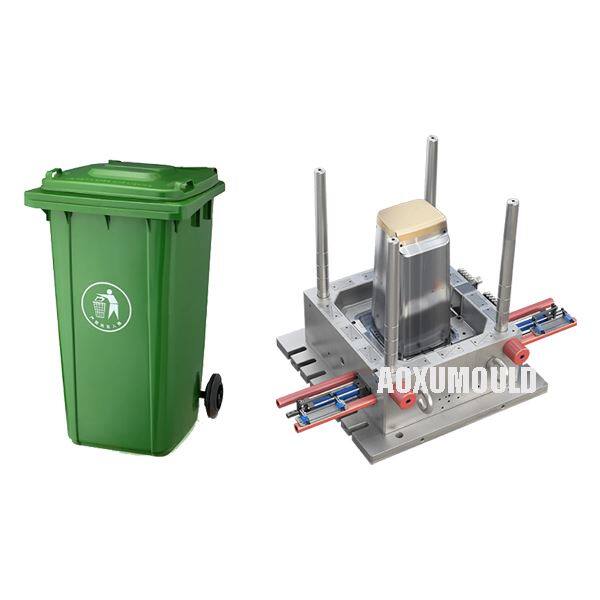
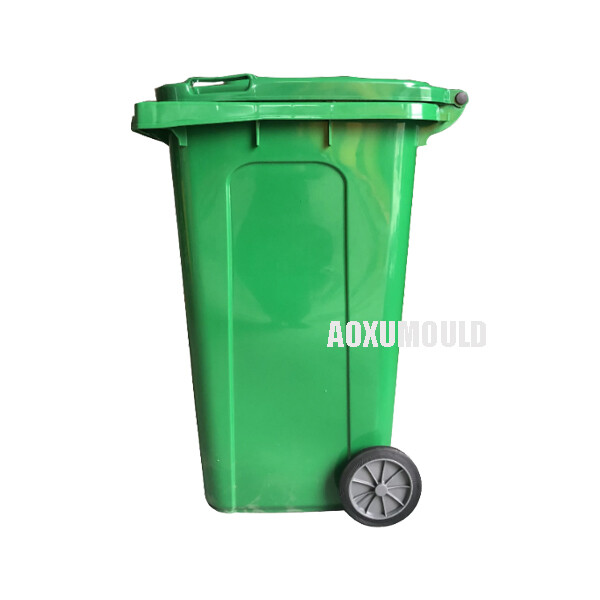
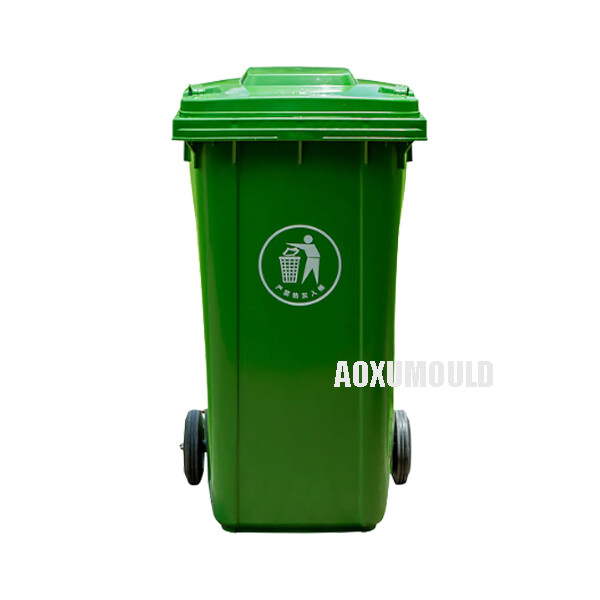
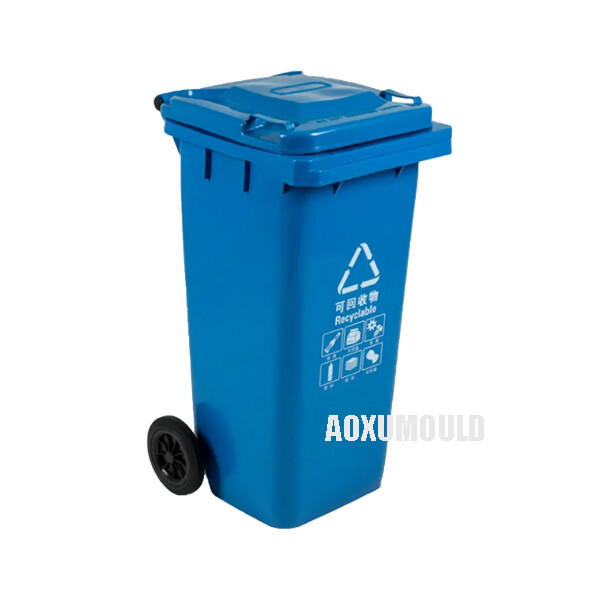
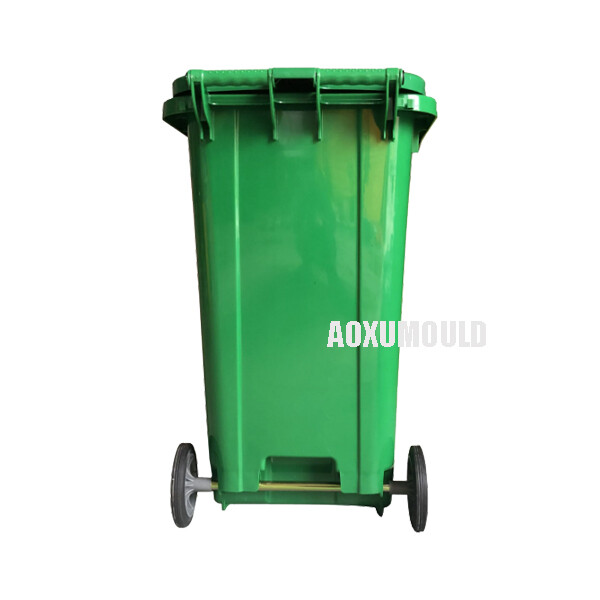
Mould Specifications
|
Mould name |
Plastic Trash Can Mold |
|
Product material |
HDPE/PP, plastic |
|
Can Size |
470X570X880mm |
| Can Weight | 7KG |
|
Mould material for cavity &. Core |
P20, 718, 2738 |
|
NOs of cavity |
1 cavity |
|
Injection system |
Cold runner |
|
Suitable injection machine |
1200T |
|
Mould size |
680X820X1500mm |
|
Mould lifetime |
more than 300,000pcs |
|
T1 Time |
After design is finalized, 55 days |
Dimension of 120L Plastic Trash Can

Why Choose HDPE to Produce Plastic Trash Can?
High-Density Polyethylene (HDPE) is the most popular material for manufacturing plastic trash cans due to its durability, cost-effectiveness, and versatility. Here's why HDPE is the best choice:
1. Exceptional Durability & Impact Resistance
Tough & Shatterproof–Unlike brittle plastics, HDPE withstands drops and rough handling without cracking.
Weather-Resistant–Performs well in extreme heat or cold (-50°C to 80°C).
Long Lifespan–Resists wear, making it ideal for heavy-duty and outdoor use.
2. Chemical & Moisture Resistance
Stain & Odor Resistant–Does not absorb liquids, preventing bacterial growth.
Resists Acids, Alkalis & Cleaning Agents–Suitable for industrial and household waste.
3. Lightweight Yet Strong
High Strength-to-Weight Ratio–Stronger than LDPE (Low-Density PE) but still easy to carry.
Rigid but Slightly Flexible–Less prone to cracking under stress.
4. Cost-Effective for Mass Production
Low Material Cost–Cheaper than ABS, PP, or fiberglass alternatives.
Easy to Mold–High flowability in injection molding reduces cycle times.
5. Eco-Friendly & Recyclable
100% Recyclable (Resin #2)–Widely accepted in recycling programs.
Reusable & Non-Toxic–Safe for food-contact applications (FDA-approved).
6. Smooth Surface & Customizability
Easy to Color–Accepts pigments well (common colors: black, blue, green).
Can Be Textured/Glossy–Mold surface finish options vary from matte to high-gloss.
Designs For Product &. Mould

How To Make A Quality Plastic Trash Can Mold?

>Step 1: Design & Engineering
-3D Modeling & Simulation
Use CAD (SolidWorks, UG/NX) to design the mold.
Conduct mold flow analysis (e.g., Moldflow) to optimize cooling, filling, and avoid air traps.
-Key Design Considerations
Wall Thickness (2–5mm for uniform cooling).
Draft Angles (1°–3° for easy ejection).
Undercuts (use sliders/lifters if needed for handles/lids).
Ejection System (pins, sleeves, or air ejection).
Venting (to prevent gas burn marks).
>Step 2: Material Selection
-Mold Steel (Choose based on production volume):
Low Volume (<100k shots): P20, 718H
High Volume (500k+ shots): H13, S136 (hardened steel)
Corrosion Resistance: Stainless steel (for food-grade bins)
-Plastic Resin (Common for trash cans):
HDPE (durable, chemical-resistant)
PP (lightweight, flexible)
ABS (impact-resistant, glossy finish)
>Step 3: Precision Machining
-CNMilling & EDM
High-precision CNC machining for core/cavity.
EDM (Electrical Discharge Machining) for fine details.
-Surface Finishing
Polishing (for smooth bin surfaces).
Texture/ETching (matte, grained, or logo engraving).
>Step 4: Cooling System Optimization
-Uniform Cooling Channels
Avoid warping by ensuring even cooling.
Use baffles/bubblers for deep sections.
>Step 5: Mold Testing & Adjustments
-Trial Shots (T1 Samples)
Check for defects (sink marks, flash, warping).
Adjust injection speed, pressure, and cooling time.
-Final Approval
Verify dimensions, weight, and functionality (e.g., lid fit).
>Step 6: Mass Production & Maintenance
-Injection Molding Process
Optimal parameters (temp: 180–280°C, pressure: 500–1500 bar).
Regular mold cleaning and lubrication.
-Mold Maintenance
Inspect for wear/damage after every 50k shots.
Re-polish cavities if surface quality degrades.
Manufacturing Video of Plastic Trash Can Mold?
Why DFM (Design for Manufacturing) is Critical for Injection Molds?

Design for Manufacturing (DFM) is a systematic approach to optimize part and mold designs for cost-effective, high-quality production. Here's why DFM is essential for plastic injection molds, especially for trash cans:
1. Reduces Production Costs
Minimizes Material Waste – Optimizes wall thickness and structure to avoid excess plastic.
Shortens Cycle Time – Ensures efficient cooling and ejection, speeding up production.
Avoids Expensive Mold Modifications – Identifies design flaws before machining begins.
2. Improves Mold Durability & Longevity
Prevents Premature Wear – Proper draft angles and parting lines reduce mold stress.
Balanced Filling & Cooling – Avoids uneven pressure that can damage molds over time.
3. Ensures High-Quality Parts
Reduces Defects – Addresses potential issues like sink marks, warping, or flash early.
Consistent Dimensional Accuracy – Ensures trash cans meet specifications (e.g., lid fit, stackability).
4. Simplifies Mold Manufacturing & Assembly
Easier Machining – Avoids overly complex geometries that slow down CNC/EDM processes.
Standardizes Components – Uses common ejector pins, sliders, and cooling channels.
5. Faster Time-to-Market
Fewer Trial-and-Error Adjustments – Reduces T1 sample rejections and rework.
Smoother Mass Production – Ensures molds are optimized for high-volume runs.
FAQ
>1. What types of plastic dustbin molds do you offer?
We provide custom molds for:
Household/Office Bins (5L–50L)
Industrial/Commercial Bins (50L–240L+)
Wheeled Bins (with integrated axle slots)
Pedal-Operated/Sensor Bins (complex mechanisms)
Stackable/Recycling Bins (multi-cavity molds)
>2. What materials are used for the molds?
Mold Base: Premium steel (P20, 718, H13) for durability.
Plastic Options: HDPE, PP, ABS (UV-resistant, food-grade, flame-retardant).
>3. Can you customize mold designs?
Yes! We tailor molds based on:
Size, shape, and capacity
Texture/logo engraving
Special features (lids, handles, wheels, etc.)
>4. How do you ensure quality control?
3D mold flow analysis before production.
T1 sample inspection for dimensional accuracy.
Pressure/cycle testing for durability.
>5. Can you ship molds internationally?
Yes, we export globally with secure packaging and logistics support.
>6. What if the mold has issues during production?
12-month warranty against manufacturing defects.
Technical support for troubleshooting.
>7. What's the lead time for mold production?
Typically it will take 55-65days.
>8. What's you payment terms?
We will confirm the payment with you when quoting, such as FOB, CIF, CNF ect. In batch production, we accept 40% deposit, balance before shipping moulds. T/T is the main payment, and L/C is acceptable as well.


