

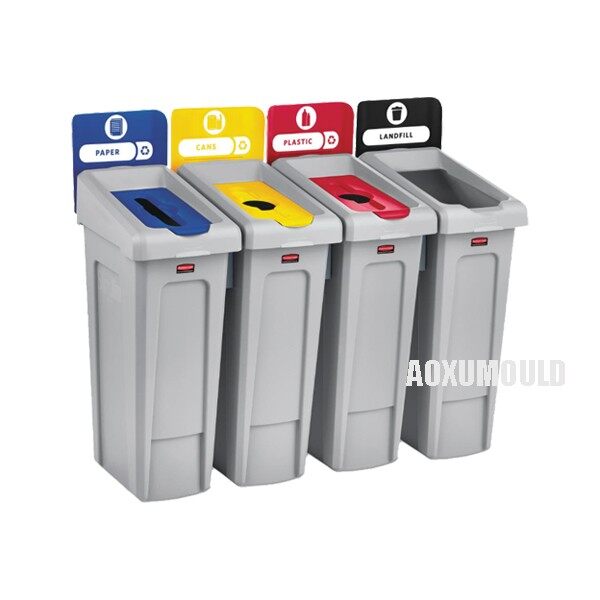
Mould Specifications
|
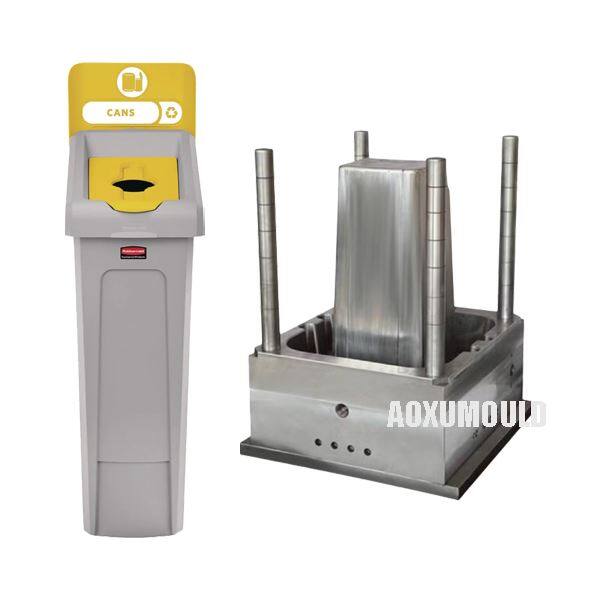
Mould name |
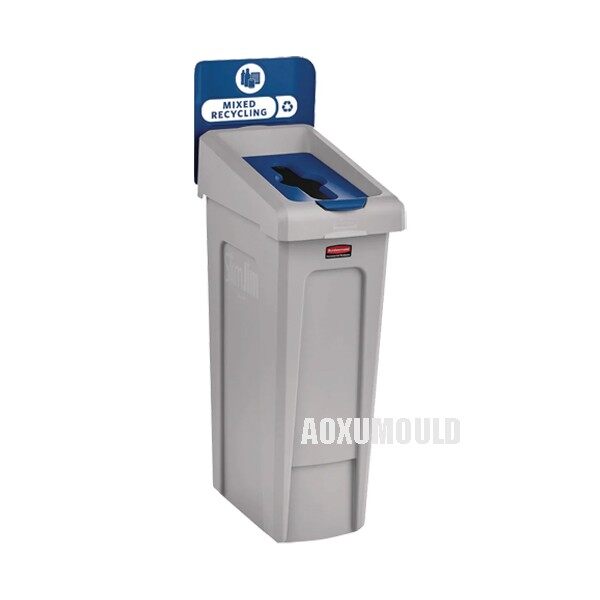
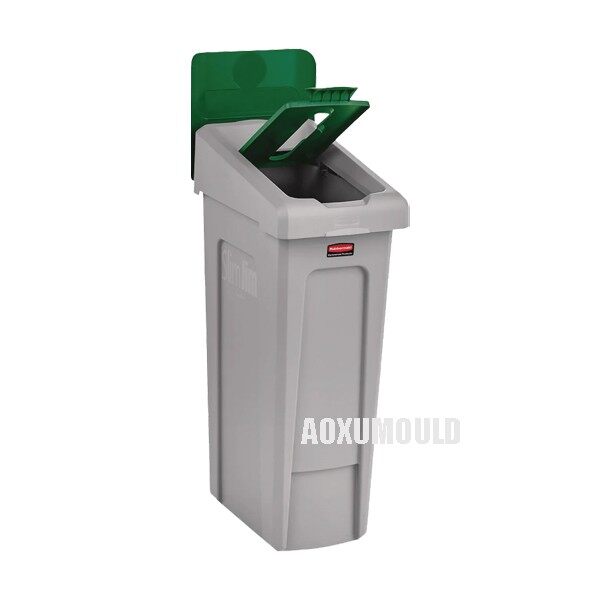
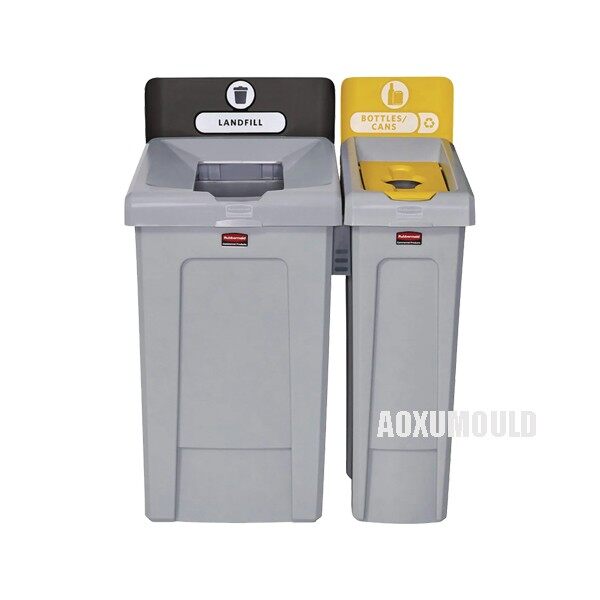
Plastic Recycling Bin Mould |
|
Bin material |
HDPE, plastic |
|
Bin Size |
600X280X760mm |
|
Bin weight |
21.5kg |
|
Mould material for cavity &. Core |
P20, 718, 2738 |
|
Mould base |
P20 |
|
Injection system |
Cold/Hot runner |
|
Suitable injection machine |
1350T |
|
Mould size |
1080X950X1350mm |
|
Mould lifetime |
more than 500,000pcs |
Types of Plastic Recycling Bin Moulds

Household Bin Moulds:
● Designed for small to medium-sized bins used in homes.
● Often include features like handles or lids.
Industrial Bin Moulds:
● Used for large, heavy-duty bins designed for industrial or commercial use.
● Built to withstand high-volume production and rough handling.
Public Bin Moulds:
● Designed for bins used in public spaces like parks, streets, or offices.
● Often include features like wheels, lids, or compartments for waste segregation.
Custom Bin Moulds:
● Tailored to specific customer requirements, including unique shapes, sizes, or branding.
Key Components of a Plastic Recycling Bin Mould
1.Cavity and Core:
The cavity is the hollow part of the mould that forms the outer shape of the bin.
The core is the part that shapes the interior of the bin.
2.Cooling System:
Integrated channels circulate cooling water or oil to solidify the molten plastic quickly and evenly.
3.Ejection System:
Ejector pins or plates push the finished bin out of the mould after it cools.
4.Venting System:
Small vents allow air and gases to escape during the injection process, preventing defects.
5.Runner System:
Channels that guide the molten plastic from the injection moulding machine into the mould cavity.
6.Gate:
The entry point where molten plastic enters the mould cavity.
Manufacturing Process Of The Plastic Recycling Bin Mould?
1. Design and Engineering
- Product Design: The process begins with designing the recycling bin using CAD (Computer-Aided Design) software. This includes determining the dimensions, shape, and features of the bin.
- Mould Design: Once the bin design is finalized, the mould design is created. This involves designing the core and cavity of the mould, as well as the cooling system, ejection system, and gating system.
- Simulation: Software like Moldflow may be used to simulate the injection molding process to identify potential issues (e.g., warping, air traps, or uneven cooling).
2. Material Selection
- The mould is typically made from high-quality steel, depending on the production volume and durability requirements.
- Common materials for the recycling bin itself include high-density polyethylene (HDPE) or polypropylene (PP), which are durable and recyclable.
3. Mould Manufacturing
- Machining: The mould is manufactured using CNC (Computer Numerical Control) machining for precision. This includes milling, drilling, and grinding to create the core and cavity.
- Heat Treatment: The mould may undergo heat treatment to enhance its hardness and durability.
- Surface Finishing: The mould surfaces are polished to ensure a smooth finish on the final product.
- Assembly: The mould components (core, cavity, cooling channels, ejector pins, etc.) are assembled into a complete mould.
4.Quality Control
- The finished recycling bins are inspected for defects such as warping, cracks, or incomplete filling.
- Dimensional accuracy and surface finish are checked against design specifications.
5. Packaging and Delivery
- The bins are packaged and prepared for shipment to customers or distribution centers.
Design For Product &. Mould

How Does a Plastic Recycling Bin Mould Work?
Melting Plastic:
Plastic pellets (e.g., HDPE, PP) are melted in an injection moulding machine.
Injection:
The molten plastic is injected into the mould under high pressure.
Cooling:
The plastic cools and solidifies inside the mould, taking the shape of the recycling bin.
Ejection:
The mould opens, and the finished bin is ejected using the ejection system.
Trimming and Finishing:
Excess material (e.g., flash) is removed, and the bin is inspected for quality.
Package &. Delivery

Mould Components
Mould Steel

Hot Runner System

Standard Parts

How To Maintenance Our Recycling Bin Mould?
1. Regular Cleaning
After Each Production Run: Remove any plastic residue or debris from the mould using non-abrasive tools (e.g., brass or copper brushes). Use specialized mould cleaning solvents to dissolve stubborn plastic buildup.
2. Lubrication
Moving Parts: Regularly lubricate ejector pins, slides, and other moving parts to prevent wear and ensure smooth operation. Use high-temperature mould release agents to reduce friction and sticking.
Frequency: Lubricate after every cleaning cycle or as recommended by the mould manufacturer.
3. Storage
Proper Storage: Store the mould in a dry, temperature-controlled environment to prevent rust and corrosion. Apply a rust inhibitor or protective coating before long-term storage.
Disassembly: If storing for an extended period, disassemble the mould and store components separately to prevent warping or damage.
Benefits of Proper Maintenance
Extended Mould Lifespan: Regular maintenance can significantly increase the mould's operational life.
Consistent Product Quality: Well-maintained moulds produce high-quality bins with fewer defects.
Reduced Downtime: Preventive maintenance minimizes unexpected breakdowns and production delays.
Cost Savings: Avoiding major repairs or premature replacement saves money in the long run.
FAQ
Q: What materials are used to make the moulds?
A: Our moulds are made from high-grade steel (e.g., P20, H13) for durability or aluminum for cost-effective, low-volume production.
Q: What plastic materials can be used with your moulds?
A: Our moulds are compatible with various plastics, including HDPE, PP, ABS, and recycled plastics.
Q: Do you offer injection moulding services as well?
A: Yes, we provide end-to-end services, including mould design, manufacturing, and injection moulding production.
Q: Do you provide maintenance services for moulds?
A: Yes, we offer maintenance and repair services to extend the lifespan of your moulds and ensure optimal performance.
Q: What is the cooling system in your moulds?
A: Our moulds feature integrated cooling channels to ensure even cooling and reduce cycle times.
Q: What makes your factory stand out?
A: We combine advanced technology, skilled craftsmanship, and a customer-centric approach to deliver high-quality moulds at competitive prices.
Q: Do you have experience working with international clients?
A: Yes, we have a proven track record of serving clients worldwide with reliable products and services.
Q: How can I prevent mould damage?
A: Regular maintenance, proper handling, and following our care guidelines can help extend the lifespan of your mould.
Customers' Feedback


