

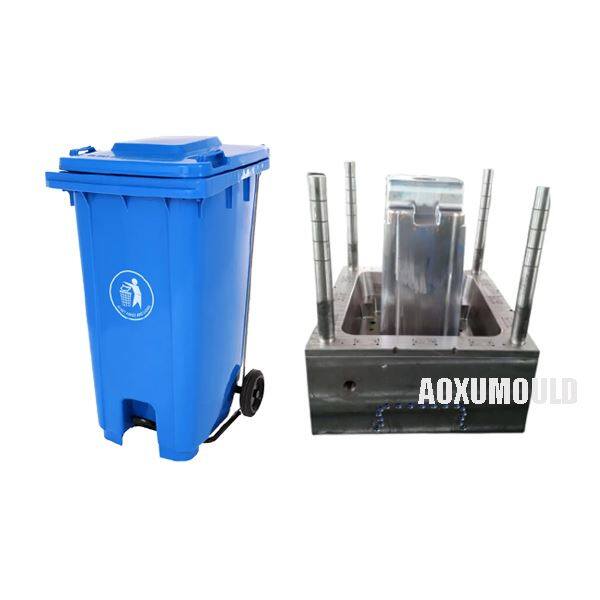
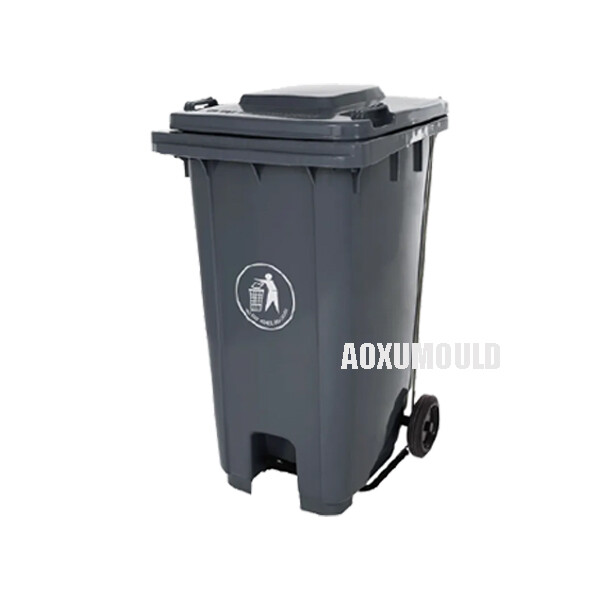
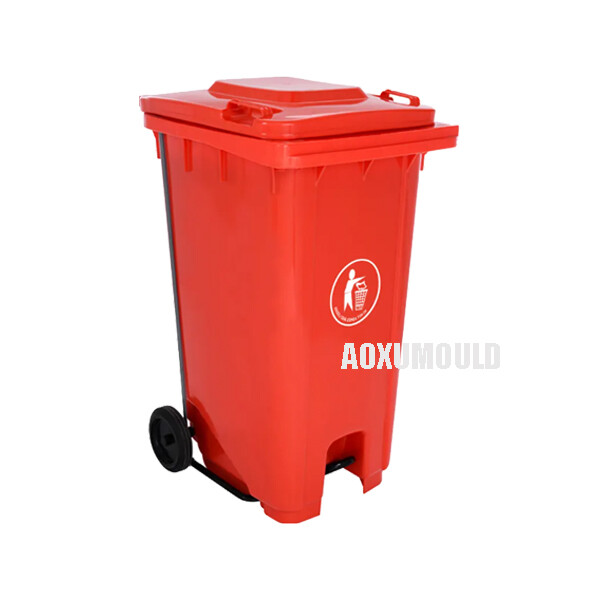
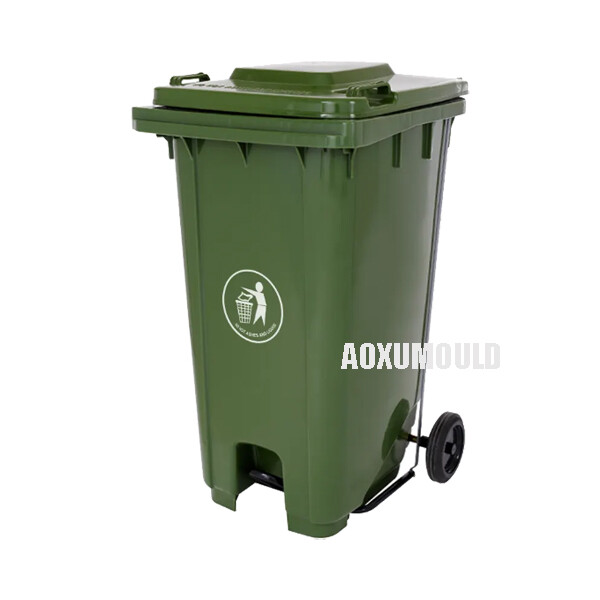
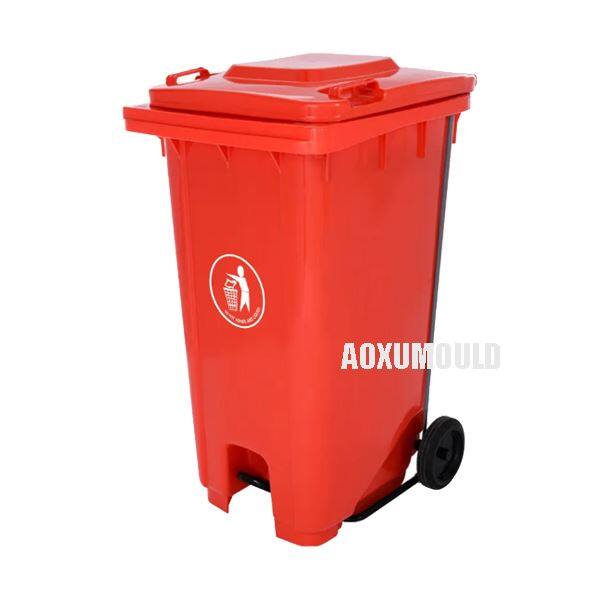
Mould Specifications
|
Mould name |
1100L Bin Mould |
|
Bin material |
HDPE, PP, plastic |
|
Bin Size |
755X580X1040mm |
| Bin weight | 15.7kg |
|
Mould material for cavity &. Core |
P20 |
|
Mould base |
C45 |
|
Injection system |
Cold runner |
|
Suitable injection machine |
1800T |
|
Mould size |
1050X920X1350mm |
|
Mould lifetime |
more than 500,000pcs |
Different Types Of Plastic Bins?

Plastic bins come in various types, each designed for specific uses, environments, and waste management needs. Here are the common types:
1. Based on Design & Usage:
- Pedal Bins – Operated with a foot pedal for hands-free use, ideal for kitchens and hospitals.
- Touch Bins – Feature a sensor or touchless mechanism (infrared) for hygienic disposal.
- Open-Top Bins – Simple, lidless bins for easy waste disposal (common in offices).
- Closed-Top Bins – Have a lid to contain odors and pests (suitable for homes and outdoor use).
- Wheelie Bins – Large bins with wheels for easy movement (used in residential/commercial areas).
2. Based on Capacity:
- Small Bins (5–20 liters) – For desks, bathrooms, or small spaces.
- Medium Bins (20–50 liters) – Common in kitchens and offices.
- Large Bins (50–1100+ liters) – Wheelie bins for outdoor or industrial use.
3. Based on Functionality:
- Recycling Bins – Color-coded (blue, green, yellow) for segregating waste (paper, plastic, metal).
- Compost Bins – Designed for organic waste decomposition.
- Medical Waste Bins – For safe disposal of biomedical waste (often with lids and hazard symbols).
4. Based on Material & Durability:
- HDPE (High-Density Polyethylene) – Lightweight, durable, and weather-resistant (common for outdoor bins).
- PP (Polypropylene) – Heat-resistant, sturdy, often used for pedal bins.
- Recycled Plastic Bins– Eco-friendly option made from recycled materials.
5. Specialized Bins:
- Automatic Sensor Bins-Motion-activated for hygiene (common in high-end homes/hospitals).
- Decorative Bins-Stylish designs for homes and offices.
- Industrial Heavy-Duty Bins–Reinforced plastic for construction sites and factories.
How To Make A Quality Plastic Bin Mould?
Step 1: Design & Engineering
1. 3D Modeling: Use CAD software (SolidWorks, AutoCAD, or CATIA) to design the bin and mould.
2. Wall Thickness: Maintain uniform thickness (2-4mm) to avoid sink marks and uneven cooling.
3. Parting Line & Ejection
- Define the parting line (where mould halves meet).
- Plan ejector pins for smooth demolding.
Step 2: Material Selection
- Mould Base: Use P20 steel (for moderate production) or H13 hardened steel (for high-volume runs).
- Cavity & Core: Hardened steel (e.g., S136 stainless steel) for corrosion resistance.
- Plastic Material: Common choices: HDPE (durable, impact-resistant) or PP (lightweight, chemical-resistant)
Step 3: Mould Manufacturing
1. CNC Machining
- Precisely machine the mould cavities and cores.
- Polish surfaces to a mirror finish for smooth bin texture.
2. Cooling System
- Add conformal cooling channels for even temperature control.
- Prevents warping and reduces cycle time.
3. Venting
- Small vents (0.02-0.04mm) prevent air traps and burn marks.
4. Ejection System
- Install ejector pins, sleeves, or air-assisted ejection for easy part removal.
Step 4: Injection Moulding Process
1. Mould Setup
- Mount the mould in an injection moulding machine (clamping force: 200-500 tons for large bins).
2. Injection Parameters
- Temperature: 200–280°C (depends on plastic).
- Pressure: 500–1500 bar for filling.
- Cooling Time: 20–40 sec (optimize for efficiency).
3. Quality Checks
- Inspect for sink marks, flash, or warping.
- Test durability (drop test, load test).
Step 5: Post-Processing & Finishing
- Deburring: Remove sharp edges.
- Surface Texturing: Add patterns (if needed) for grip or aesthetics.
- Logo/Text Engraving: Use laser or EDM for branding.
Design For Product &. Mould

Package &. Delivery

1.Before the bin mould is shipped, we will check whether the opening and closing of the mould is smooth, the water cooling system,the hydraulic oil system and the hot runner system.
2. The cavity and core are cleaned without iron filings and impurities.
3. Blow the waterway clean to prevent long-term sea transportation from rusting.
4. We spray anti-rust agent on the inside of the mold, spray paint on the outside of the mould, and apply anti -rust oil on the thimble.
5. We will put a nameplate on the mold, it shows the mould name, the year of production and mould information, mould weight and size.
6: Mould parts are provided free of charge (convenient for customers to replace).
Mould Components
Mould Steel

Hot Runner System

Standard Parts

Cold Runner System vs. Hot Runner System
|
Choosing between a cold runner and hot runner system for your plastic bin injection mould depends on production volume, material, cost, and part quality requirements. 1. Cold Runner System How it Works: - Uses a separate channel (sprue, runners, gates) to deliver molten plastic into the cavity. - The runner cools and solidifies with the part, requiring ejection and recycling. Pros: Lower mould cost (simpler design, no heaters or controllers). Better for small batches or multi-material molding (no contamination risk). Easier maintenance (no complex heating elements). Cons: Material waste (runners must be recycled or discarded). Longer cycle times (cold runners take time to solidify). Higher labor costs (manual removal of runners). 2. Hot Runner System How it Works: - Uses heated nozzles and manifolds to keep plastic molten in the runners. - Only the part cools and ejects-no wasted runners. Pros: Zero material waste (no runners to recycle). Faster cycles (no runner cooling time). Better for aesthetics (no gate marks in visible areas). Cons: Higher mould cost (complex design, heaters, controllers). Risk of leaks or degradation (if temperature control fails). Harder to switch materials/colors (residue buildup).
|

What Do We Need to Give A Quote For Plastic bins Mould?
|
1. Product Requirements: Dimensions (Height, Diameter, Wall Thickness) Design & Complexity (2D/3D drawings, CAD file – STEP/IGS preferred) Material (e.g., HDPE, PP, ABS – affects cooling and shrinkage) Expected Production Volume (e.g., 10,000 pieces/year – affects mould lifespan & steel type) 2. Mould Specifications: Cavity Number (Single or multi-cavity mould) Mould Steel Type (P20, 718H, S136 for corrosion resistance, etc.) Surface Finish (Texture, polishing, etching – e.g., glossy, matte) Ejection System (Ejector pins, stripper plate, air ejection) Runner System (Hot runner vs. cold runner – affects cost & efficiency) 3. Production & Machine Details: Injection Moulding Machine Tonnage (Based on dustbin size) Cycle Time Estimation (Affects production efficiency) 4. Additional Considerations: Lifespan Expectation (50,000 shots vs. 500,000 shots) Secondary Operations (Assembly, labeling, stacking features) Packaging Requirements (If included in the quote) 5. Logistics & Terms: Delivery Time (Standard lead time vs. expedited) Shipping & Payment Terms (FOB, CIF, etc.)
FAQ
>1. What types of plastic bins can your company produce? Our company specializes in manufacturing a wide range of plastic bins, including kitchen bins, office bins, industrial bins, and more. >2. What materials are used for the plastic bins? We use high-quality, durable materials such as polypropylene and polyethylene to ensure that our plastic bins are strong and long-lasting. >3. Can you customize the design and size of the plastic bins? Yes, we offer customization options for our plastic bins, including the ability to design bins in different sizes, shapes, and colors to meet our customers' specific needs. >4. What is the lead time for producing plastic bins? The lead time for producing plastic bins varies depending on the complexity of the design and the quantity ordered. Generally it will take about 50-60days. Our team will work closely with you to provide an accurate timeline for production. >5. How do you ensure the quality of your plastic bins? Our company has strict quality control measures in place to ensure that all of our plastic bins meet the highest standards for durability, strength, and performance. >6. Can you provide samples of your plastic bins? Yes, we can provide samples of our plastic bins for our customers to evaluate before placing a larger order. >7. Do you offer packaging and shipping services for the plastic bins? A: Yes, we offer packaging and shipping services to ensure that your plastic bins are delivered to you safely and efficiently. Q: How can I get a quote for plastic bin injection mold services? A: You can contact our team to discuss your specific needs and receive a personalized quote for plastic bin injection mold services. |
Customers' Feedback


