

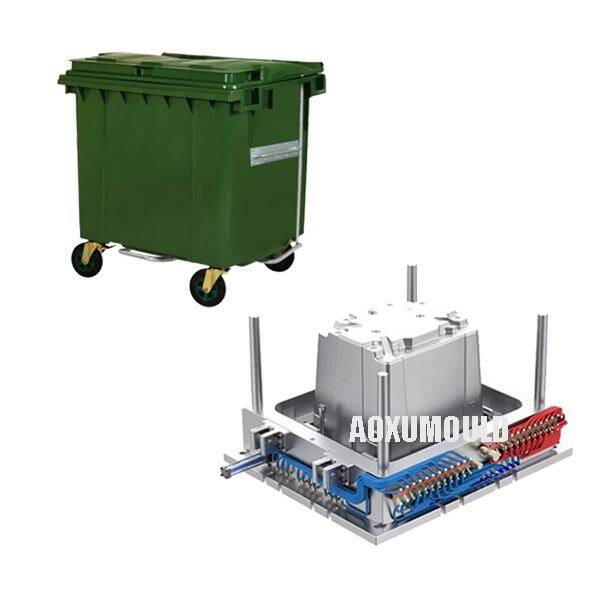
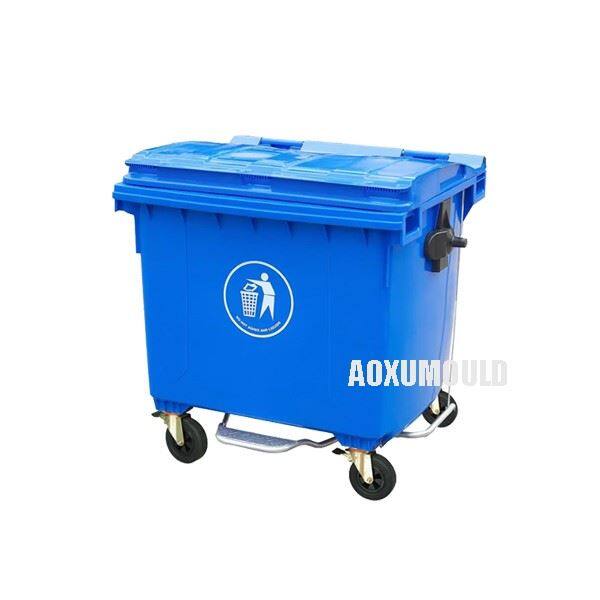
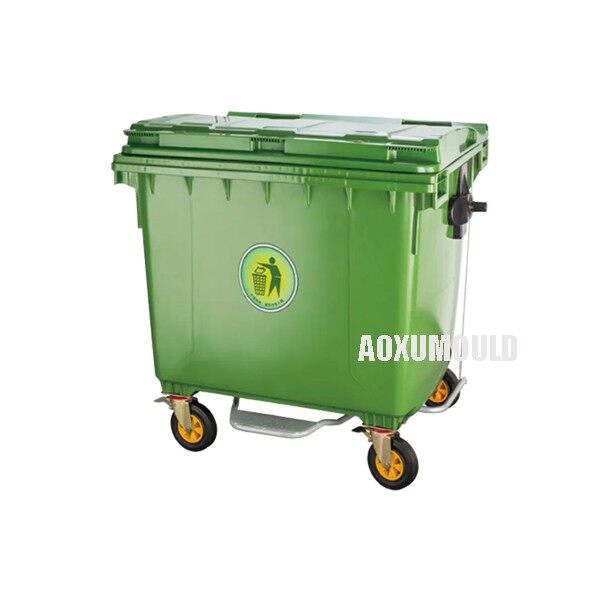
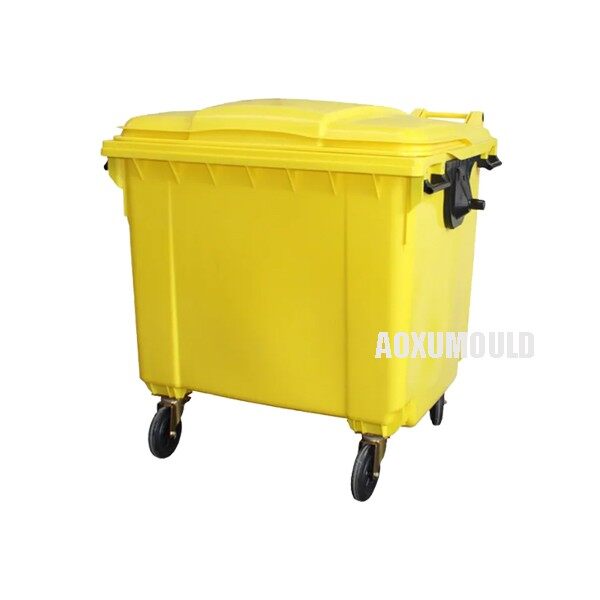
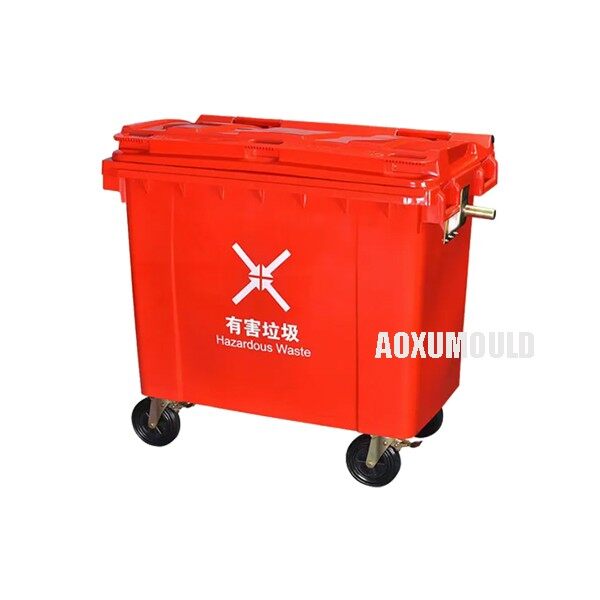
Mould Specifications
|
Mould name |
Plastic Garbage Bin Mould |
|
Product material |
PP, plastic |
|
Container Size |
1360X770X1120mm |
|
Container weight |
44.5kg |
|
Mould material for cavity &. Core |
C45, P20, 718, 2738 |
|
Mould base |
P20 |
| Injection system |
Hot runner |
| Suitable injection machine |
3800T |
| Mould lifetime |
more than 500,000pcs |
What Is Dimension of 660L garbage bins?

How To Make Quality Plastic Garbage Bin Injection Moulds?
Plastic garbage bins are an essential item in every household, office, school, and public place. As more and more people prefer plastic over other materials, it is necessary to produce high-quality garbage bins that are durable and long-lasting. Injection molding is a popular method used to manufacture plastic garbage bins, and in this article, we discuss how to make quality plastic garbage bin injection molds.
1. Designing the Mold
The first step in making quality plastic garbage bin injection molds is designing the mold. This involves creating a 3D model of the garbage bin and deciding on the number of cavities that the mold should have. The mold designer should also take into account the type of plastic material to be used, the cycle time, and the expected yield.
2. Selecting the Right Material
The material used to make the mold is also crucial in determining the quality of the finished product. The mold material should be able to withstand the high pressure and temperature during the molding process while maintaining accuracy. Typically, molds are made from steel, aluminum, or beryllium-copper alloys.
3. Using the Right Machinery
The next step is to use the right machinery to manufacture the mold. Injection molding machines come in different sizes and capabilities, and selecting the right machine is critical to producing high-quality garbage bin molds. The machine should be able to deliver the required injection pressure, clamping force, and shot size.
4. Ensuring Proper Cooling
Proper cooling is essential in producing quality garbage bin molds. The mold should have an efficient cooling system to prevent warping and improve the flow of the plastic material during injection molding. Cooling systems can be in the form of water channels or heat pipes.
5. Maintaining Quality Control
Finally, maintaining quality control is crucial in making quality plastic garbage bin injection molds. The mold should be tested for accuracy, quality, and durability before it is used to manufacture the garbage bins. Regular maintenance and cleaning of the mold should also be carried out to ensure it remains in good condition.
In conclusion, making quality plastic garbage bin injection molds requires careful consideration of the mold design, material selection, machinery, cooling, and quality control. By following these tips, manufacturers can produce high-quality garbage bins that are durable and long-lasting.
Design For Product &. Mould

Advantages Of Hot Runner System
Hot runner systems offer several advantages over traditional cold runner systems in the injection molding process.
1. Increased Efficiency: A major advantage of hot runner systems is increased efficiency in the injection molding process. With a hot runner system, the plastic material is kept at a consistent temperature, allowing it to flow more easily into the mold cavity. This results in faster cycle times and higher output rates.
2. Better Quality: Hot runner systems allow for better quality parts due to reduced sprue and runner waste. This translates into fewer defects and better consistency in the final product.
3. Cost Savings: Hot runner systems can also lead to significant cost savings. By eliminating the need for runners and reducing material waste, manufacturers can cut down on raw material costs. Furthermore, the increased efficiency of the injection molding process results in lower labor costs and increased productivity.
4. Versatility: Hot runner systems allow for greater design flexibility, as they can accommodate intricate and complex geometric shapes. This is because the system allows for more precise control over the flow of plastic material into the mold.
5. Reduced Maintenance: Hot runner systems require less maintenance than traditional cold runner systems. This is because the heating elements and nozzles are designed to last longer and require less frequent replacement.
In conclusion, hot runner systems offer numerous advantages over traditional cold runner systems, including increased efficiency, better quality, cost savings, greater design flexibility, and reduced maintenance. Consequently, hot runner systems are becoming increasingly popular in the injection molding industry and are considered a valuable tool for manufacturers looking to stay competitive in the market.
Package &. Delivery

Mould Components
Mould Steel

Hot Runner System

Standard Parts

How Do We Control Garbage Bin Injection Mould Quality?
Plastic garbage bin mould quality is crucial to ensure that the final products are durable and efficient. The following are some effective ways to control garbage bin injection mould quality:
1. Choose the right material: The material used to make the mould is a critical factor in ensuring a high-quality product. The material should be of good quality and have excellent durability. The common materials used for garbage bin injection moulds are steel, aluminium, and copper.
2. Optimize design: The mould design should be optimized for durability, efficiency, and functionality. The design should be carefully crafted to ensure the right fit, optimum capacity, and ease of use. The design should also consider the different environments and applications where the garbage bin will be used.
3. High precision machining: The moulds should be machined with high precision to ensure consistency and accuracy. Precision machining ensures that the mould is dimensionally accurate, and the final product will be of impeccable quality.
4. Regular maintenance and cleaning: Regular maintenance and cleaning of the moulds are essential to ensure that they remain in excellent condition. This prevents distortion and prolongs the useful life of the moulds.
5. Strict quality control: Quality control measures should be implemented at every stage of the manufacturing process. Quality checks should be thorough and regular to ensure that the moulds meet the required quality standards.
In conclusion, controlling garbage bin injection mould quality is crucial to ensure the final product's quality, efficiency, and durability. The right material, optimized design, high precision machining, regular maintenance and cleaning, and strict quality control are effective ways to achieve this objective.
FAQ
Q: What material is commonly used for plastic garbage bin injection moulding?
A: There are several materials used for plastic garbage bin injection moulding, including but not limited to polypropylene (PP), high-density polyethylene (HDPE), and thermoplastic rubber (TPR).
Q: What is the typical moulding process for producing plastic garbage bins?
A: The typical moulding process for producing plastic garbage bins involves injecting molten plastic material into a mould cavity. The mould is then cooled to solidify the plastic and the bin is ejected from the mould.
Q: What are the advantages of plastic garbage bins over other types of bins?
A: Plastic garbage bins are lightweight, durable, and resistant to corrosion and weathering. They are also easily recyclable and can be made from recycled materials, making them environmentally friendly.
Q: Can plastic garbage bins be customized to suit specific needs?
A: Yes, plastic garbage bins can be customized to suit specific needs in terms of size, shape, color, and features such as wheels and handles.
Q: How long does it take to produce a plastic garbage bin using injection moulding?
A: The time it takes to produce a plastic garbage bin using injection moulding varies depending on factors such as the size and complexity of the bin, as well as the machinery and process used. However, on average, it can take anywhere from a few minutes to several hours.
Q: Are there any special considerations when designing a plastic garbage bin mould?
A: Yes, there are several special considerations when designing a plastic garbage bin mould, such as the material to be used, the design of the bin itself, and any additional features that may be required.
Q: Can plastic garbage bin moulds be reused for multiple production runs?
A: Yes, plastic garbage bin moulds can be reused for multiple production runs, as long as they are properly maintained and cleaned between runs.
Customers' Feedback


