

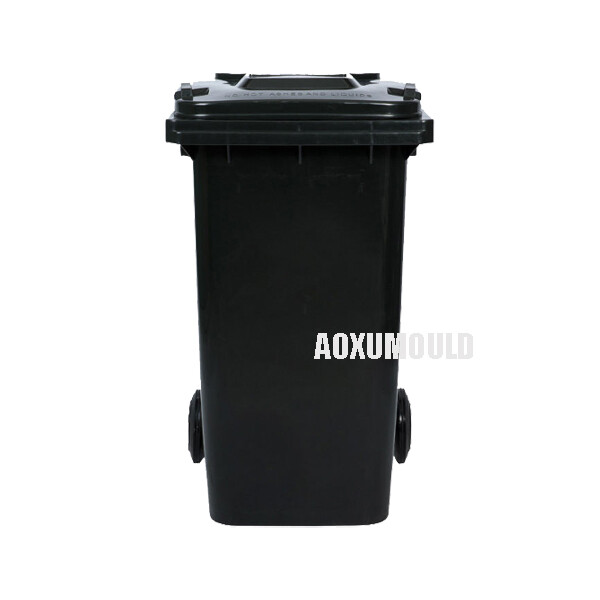
Mould Specifications
|
Mould name |
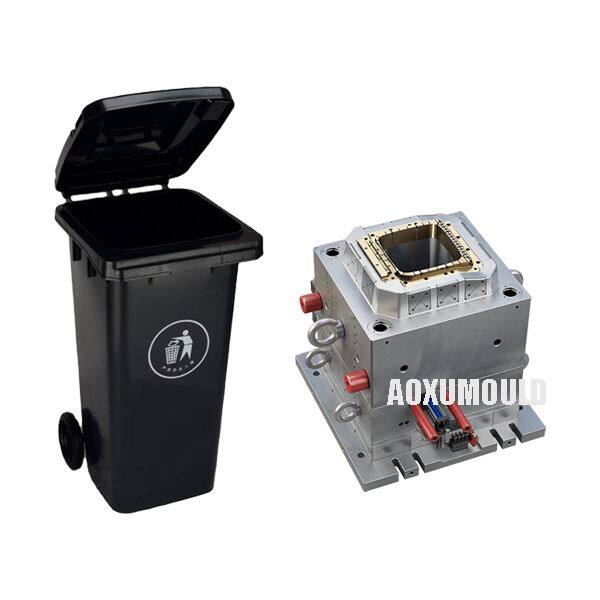
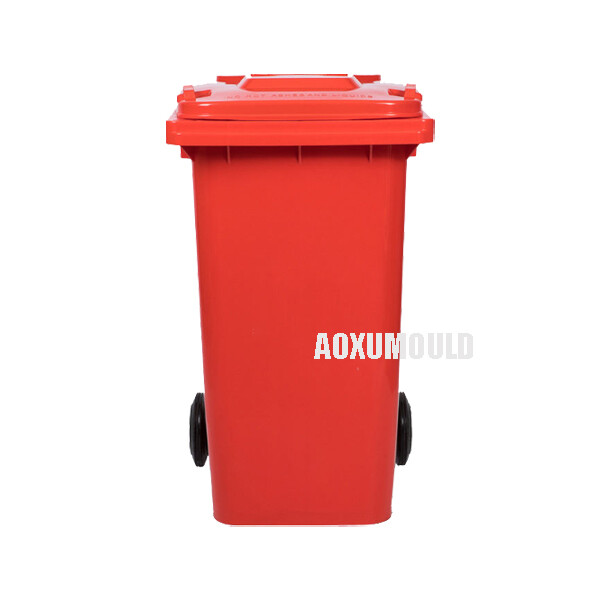
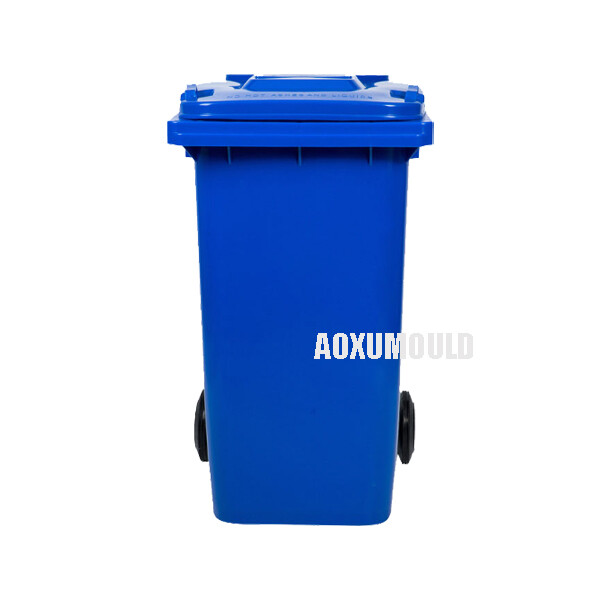
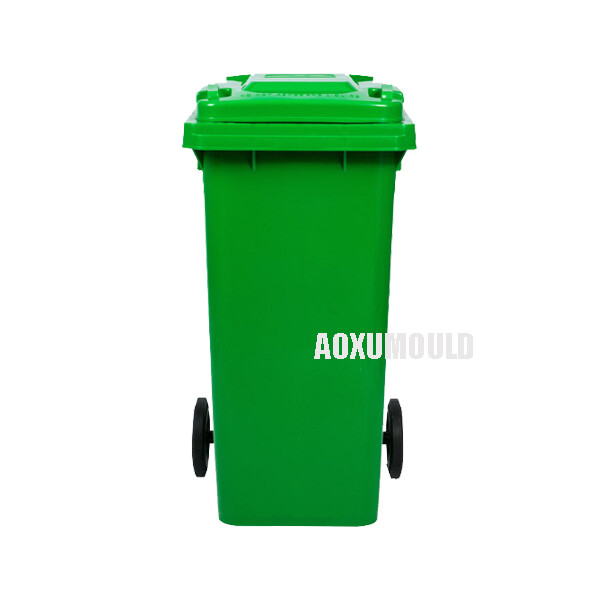
HDPE plastic Trash Can Mold |
|
Product material |
HDPE, plastic |
|
Product Size |
650X750X1070mm |
|
Mould material for cavity &. Core |
P20, 718, 2738 |
|
NOs of cavity |
1 cavity |
|
Injection system |
Cold runner/HOT RUNNER |
|
Suitable injection machine |
1800T |
|
Mould size |
885X960X1300mm |
|
Mould lifetime |
more than 300,000pcs |
|
T1 Time |
After design is finalized, 55 days |
Why Choose HDPE Material to Produce?

1. Durability & Strength
Impact-resistant – Can withstand drops and rough handling without cracking.
High tensile strength – HDPE is stronger than standard polyethylene, making trash cans more rigid and long-lasting.
Weather-resistant – Performs well in extreme temperatures (hot or cold).
2. Chemical & Moisture Resistance
Does not rust or corrode (unlike metal alternatives).
Resistant to acids, alkalis, and solvents – Ideal for holding various waste types, including cleaning chemicals.
Waterproof – Prevents leaks and rotting (unlike cardboard or wood).
3. Lightweight Yet Sturdy
Easier to move and transport compared to metal or ceramic bins.
Can be reinforced with ribs in the mold design for added strength.
4. Recyclability & Eco-Friendliness
100% recyclable (marked as #2 plastic).
Many trash cans are made from post-consumer recycled HDPE, reducing environmental impact.
Longer lifespan reduces frequent replacements.
5. Cost-Effective Production
Low material cost compared to alternatives like stainless steel or fiberglass.
Fast injection molding cycles allow high-volume production at low per-unit costs.
6. Design Flexibility
Can be molded into complex shapes (handles, lids, wheels).
Accepts pigments well, allowing vibrant colors without fading.
Surface textures (anti-slip, matte, glossy) can be easily added.
How to Make An Quality HDPE Plastic Trash Can Mold?
1. Smart Design
Use CAD/MoldFlow to optimize gate location (edge/fan gates), cooling, and wall thickness (3–5mm).
Add ribs for strength and 1–2° draft angles for easy ejection.
2. Durable Materials
Core/Cavity: P20 or H13 steel (500K+ shots).
Inserts: Stainless steel for high-wear areas.
3. Precision Manufacturing
CNC/EDM machining (±0.02mm tolerance).
Polished surfaces (glossy/matte finish).
4. Efficient Cooling
Conformal channels or baffles to prevent warping.
5. Testing & Tuning
Trial shots to adjust temp (190–240°C), pressure (30–80 MPa), and cooling time.
Check for defects (sink marks, short shots).
6. Maintenance
Clean every 10K–20K shots, lubricate moving parts.
Common Types of Gates for HDPE Plastic Trash Can Molds

1. Edge Gate (Standard Gate)
The most basic and widely used type, positioned at the edge of the part. For HDPE trash cans, this gate offers simple design and good control over material flow. However, it leaves a visible mark that may require post-molding trimming, especially important for larger bins where appearance matters.
2. Fan Gate
A wider, tapered gate that spreads material flow across a broader area. This type works particularly well for flat sections of trash cans like lids or bottom panels, as it helps prevent warping by distributing pressure evenly. The trade-off is that it creates a larger area that needs finishing work after molding.
3. Tunnel Gate (Submarine Gate)
A clever design that angles underneath the part, automatically separating during ejection. This self-removing feature makes it excellent for high-volume production of HDPE trash cans, eliminating manual gate trimming. The downside is increased mold complexity and cost, but often worthwhile for mass production.
4. Diaphragm Gate
Forms a complete ring around cylindrical parts, making it ideal for round trash can openings. It provides uniform filling but leaves a circular witness mark that needs removal. Best for containers where top-edge appearance isn't critical.
5. Hot Runner Gate
Uses a heated nozzle system to keep plastic molten. While more expensive, this system offers the cleanest results for premium trash cans, with minimal material waste and no gate remnants to trim. Perfect for high-output manufacturing of quality bins.
Each gate type impacts the final product differently in terms of:
-Surface finish requirements
-Production speed
-Post-processing needs
-Mold maintenance
Overall part cost
The choice depends on your specific trash can design, production volume, quality standards, and budget considerations. Edge and fan gates are most common for basic HDPE bins, while tunnel and hot runner gates suit higher-end or mass production needs.
Injection Molding Defects In HDPE Plastic Trash Can Production

1. Warping (Deformation After Cooling)
-Causes:
Uneven cooling due to poor mold design (e.g., inconsistent wall thickness).
Excessive mold temperature or insufficient cooling time.
High internal stress in HDPE (especially with fast cooling).
-Solutions:
Optimize cooling channels in the mold.
Increase cooling time or adjust mold temperature (typically 20–60°C for HDPE).
Use uniform wall thickness (add ribs for support if needed).
2. Sink Marks (Dents on Surface)
-Causes:
Thick sections cooling too slowly, shrinking inward.
Insufficient packing pressure or holding time.
-Solutions:
-Reduce wall thickness in critical areas.
-Increase packing pressure (HDPE typically requires 30–80 MPa).
-Extend holding time to compensate for shrinkage.
3. Short Shots (Incomplete Filling)
-Causes:
Low melt temperature (HDPE melts at 190–240°C).
Insufficient injection speed/pressure.
Air traps blocking material flow.
-Solutions:
Raise barrel temperature (especially for large trash cans).
Increase injection speed or pressure.
Add/relocate vents to release trapped air.
4. Flash (Excess Material at Edges)
-Causes:
Excessive injection pressure or clamp force too low.
Worn mold edges or misaligned mold halves.
-Solutions:
Check and repair mold parting lines.
Reduce injection pressure or increase clamp force.
Use a mold with tighter tolerances.
5. Weld Lines (Visible Seams)
-Causes:
Melt flow fronts meeting around holes or obstructions (e.g., handles).
Low melt temperature or slow injection speed.
-Solutions:
-Increase melt temperature and injection speed.
-Relocate gates to improve flow paths.
-Add flow leaders near weld line areas.
6. Brittleness or Cracking
-Causes:
Over-drying HDPE (causes degradation).
Excessive regrind material usage.
Stress concentrations from sharp corners.
-Solutions:
Dry HDPE at 60–80°C for 2–3 hours (avoid overheating).
Limit regrind to ≤20% of material mix.
Add fillets to sharp edges in mold design.
7. Jetting (Wavy Surface Patterns)
-Causes:
High-speed injection through narrow gates.
Cold mold surface solidifying material too quickly.
-Solutions:
Use a larger gate or switch to fan gates.
Increase mold temperature slightly.
Optimize injection speed (fast-slow-fast profile).
8. Discoloration (Black/White Specks)
-Causes:
Contaminated HDPE (dirt, degraded material).
Overheating in the barrel or dead spots.
-Solutions:
Purge the barrel thoroughly between runs.
Lower barrel temperature (avoid >260°C).
Use high-quality, UV-stabilized HDPE pellets.
Mould Components
Mould Steel

Hot Runner System

Standard Parts

Package &. Delivery

Customers' Feedback

FAQ
>1. What types of HDPE plastic trash can molds do you offer?
We provide custom injection molds for:
Household & commercial trash bins
Wheeled garbage cans
Recycling containers
Industrial & medical waste bins
Custom designs (branded logos, handles, lids, etc.)
>2. How long does it take to manufacture a HDPE plastic trash can mold?
The manufacturing time for our HDPE trash can molds can vary depending on the size and complexity of the mold. Generally, it can take anywhere from 55-65days to complete.
>3. Can you customize HDPE trash can molds to fit specific dimensions or designs?
Yes, we can customize HDPE plastic trash can molds to fit your specific requirements. Our team of skilled engineers and designers will work closely with you to create a mold that meets your exact specifications.
>4. Can you provide samples of your HDPE plastic trash can molds before placing an order?
Yes, we can provide samples of our HDPE trash can molds for evaluation before placing an order. Please contact us to discuss sample availability and pricing.
>5. How do you ensure mold quality?
CNC machining & EDM finishing for precision
Trial testing before mass production
MoldFlow analysis to optimize cooling & material flow
>6. Can you ship molds internationally?
Yes, we export worldwide with DHL, FedEx, or sea freight options.
>7. How do I request a quote?
Please provide:
-Trash can design (CAD/3D file or sketches)
-Required dimensions & capacity
-Estimated order quantity
-Material preference (color, recycled content, etc.)
We'll respond with mold cost, production lead time, and unit pricing within 24 hours.


