

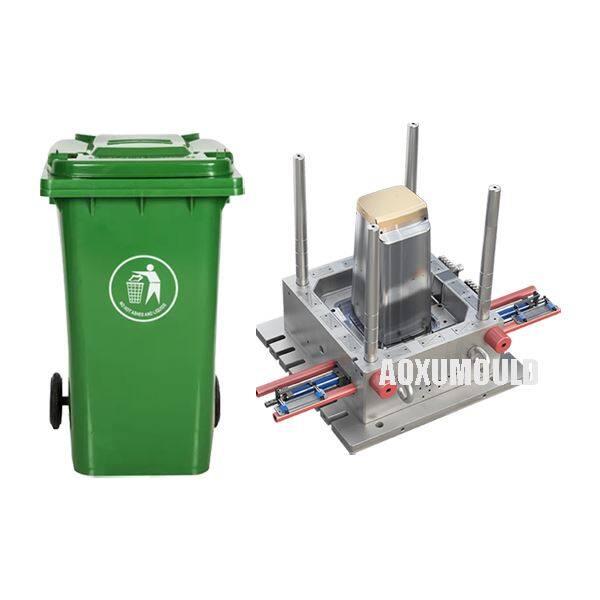
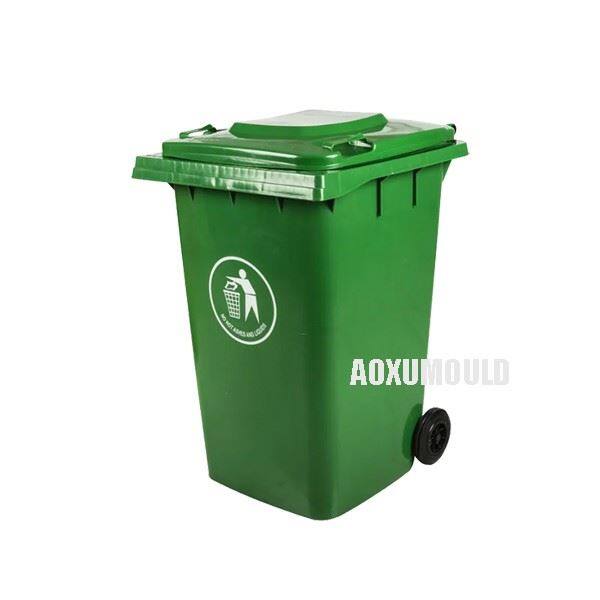
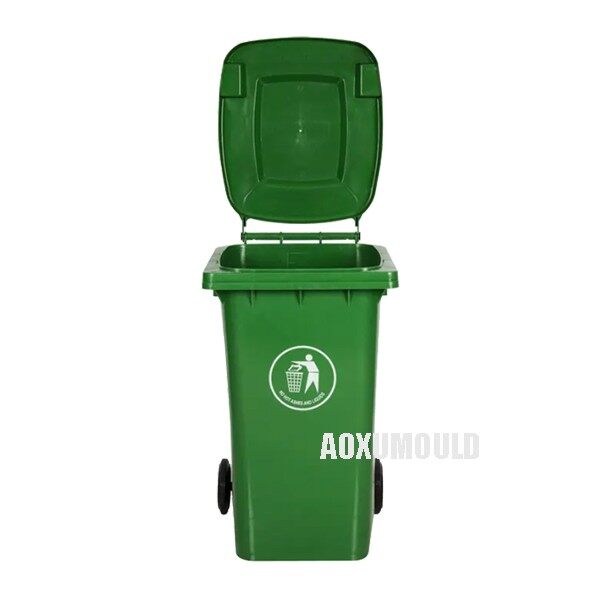
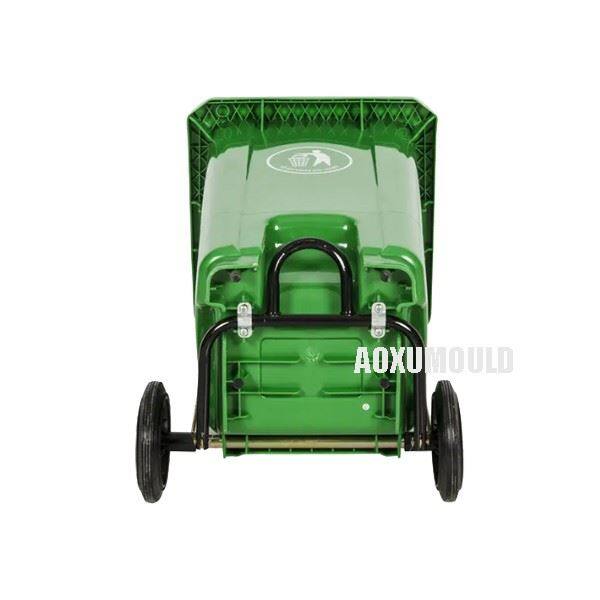
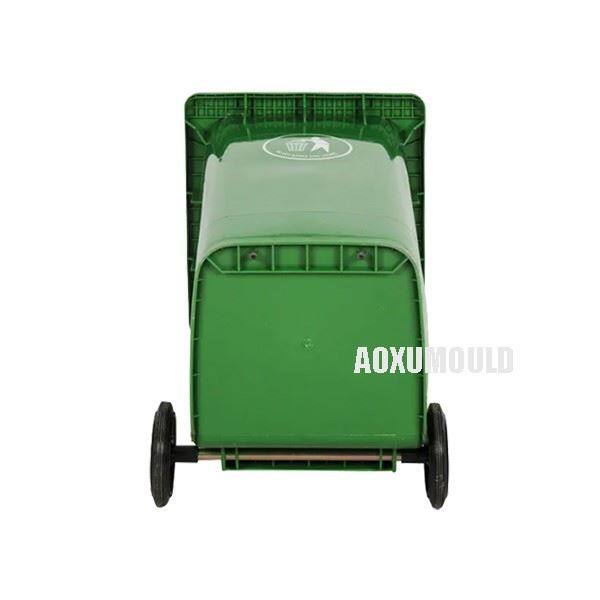
Mould Specifications
|
Mould name |
Plastic Industrial Dustbin Mould |
|
Dustbin material |
HDPE, plastic |
|
Dustbin Size |
735X580X1000mm |
|
Dustbin volume |
240L |
|
Mould material for cavity &. Core |
P20, 718, 2738 |
|
Mould base |
P20 |
|
Injection system |
Cold/Hot runner |
|
Suitable injection machine |
1350T |
|
Mould size |
1080X950X1350mm |
|
Mould lifetime |
more than 500,000pcs |
Why Choose HDPE Material To Produce Industrial Dustbin?

1. Durability and Strength
Impact Resistance: HDPE is highly resistant to impacts, making it ideal for industrial environments where dustbins may be subjected to rough handling or heavy loads.
Weather Resistance: It can withstand extreme weather conditions, including UV exposure, rain, and temperature fluctuations, without cracking or degrading.
2. Lightweight yet Strong
HDPE is lightweight, making the dustbins easy to move and handle, even when they are large in size.
Despite its light weight, HDPE is strong and rigid, ensuring the dustbin can hold heavy loads without deformation.
3. Chemical Resistance
HDPE is resistant to a wide range of chemicals, including acids, alkalis, and solvents. This makes it suitable for industrial settings where dustbins may come into contact with hazardous or corrosive waste materials.
4. Hygienic and Easy to Clean
Non-Porous Surface: HDPE has a smooth, non-porous surface that prevents the growth of bacteria, mold, and mildew, making it hygienic for waste storage.
Easy to Clean: The smooth surface allows for easy cleaning with water or disinfectants, reducing maintenance efforts.
5. Cost-Effective
HDPE is relatively inexpensive compared to other materials like metal or fiberglass, making it a cost-effective choice for manufacturing industrial dustbins.
Its durability and long lifespan reduce the need for frequent replacements, saving costs in the long run.
6. Recyclability and Environmental Benefits
Eco-Friendly: HDPE is 100% recyclable, making it an environmentally friendly choice. Used HDPE dustbins can be recycled into new products.
Reduced Carbon Footprint: The production of HDPE requires less energy compared to other materials, contributing to lower greenhouse gas emissions.
7. Versatility in Design
HDPE can be easily molded into various shapes, sizes, and designs, allowing for customization to meet specific industrial needs.
It can be produced in different colors, which is useful for color-coding waste segregation systems.
8. Resistance to Rust and Corrosion
Unlike metal dustbins, HDPE does not rust or corrode, even when exposed to moisture or chemicals. This ensures a longer lifespan and reduces maintenance costs.
9. Low Maintenance
HDPE dustbins require minimal maintenance due to their resistance to wear and tear, chemicals, and environmental factors.
They do not require painting or coating to protect against rust or corrosion.
Manufacturing Process Of A Plastic Industrial Dustbin Mould
The manufacturing process of a Plastic Industrial Dustbin Mould involves several precise and technical steps to ensure the mould is durable, accurate, and capable of producing high-quality dustbins. Below is a detailed breakdown of the process:
1. Design and Engineering
Conceptualization: The design of the dustbin is created based on customer requirements, including size, shape, capacity, and features (e.g., handles, lids, wheels).
CAD Design: Using Computer-Aided Design (CAD) software, a 3D model of the dustbin and mould is developed. This includes defining the mould cavity, core, and other components.
Simulation: Mould flow analysis is performed using simulation software to ensure proper plastic flow, cooling, and ejection during the moulding process.
2. Material Selection
The mould is typically made from high-quality materials like:
Steel: For high durability and long production runs (e.g., P20, H13, or stainless steel).
3. Mould Manufacturing
CNC Machining: The mould components are precision-machined using Computer Numerical Control (CNC) machines. This ensures high accuracy in creating the mould cavity, core, and other parts.
EDM (Electrical Discharge Machining): Used for intricate details or complex geometries that are difficult to achieve with CNC machining.
Grinding and Polishing: The mould surfaces are ground and polished to ensure smooth finishes and proper ejection of the plastic dustbin.
4. Assembly
The mould components (cavity, core, ejector pins, cooling channels, etc.) are assembled into a complete mould unit.
Cooling channels are integrated into the mould to regulate temperature during the injection moulding process.
5. Testing and Validation
The mould is tested in an injection moulding machine to produce sample dustbins.
The samples are inspected for defects, dimensional accuracy, and surface finish.
Adjustments are made to the mould if necessary to ensure optimal performance.
6. Production
Once the mould is validated, it is used in mass production.
Molten plastic is injected into the mould cavity under high pressure.
The plastic cools and solidifies, and the mould opens to eject the finished dustbin.
By following these steps, a high-quality plastic industrial dustbin mould is created, enabling efficient and cost-effective production of durable dustbins for industrial and commercial use.
Key Considerations in the Manufacturing Process
Precision: High accuracy is required to ensure consistent quality and functionality of the dustbins.
Durability: The mould must withstand high pressure, temperature, and repeated use.
Cooling System: Efficient cooling channels are critical to reduce cycle time and prevent defects.
Ejection Mechanism: Proper ejection design ensures the dustbin is released smoothly without damage.
Design For Product &. Mould

Package &. Delivery

Mould Components
Mould Steel

Hot Runner System

Standard Parts

How To Do Good Work For Plastic Industrial Dustbin Mould Maintenance?

1. Regular Cleaning
Remove Residues: After each production run, clean the mould to remove plastic residues, dust, or debris. Use non-abrasive cleaning tools and solvents.
Inspect for Contamination: Check for any foreign particles that could damage the mould surface or affect the quality of the dustbins.
2. Lubrication
Lubricate Moving Parts: Regularly lubricate ejector pins, sliders, and other moving components to prevent wear and ensure smooth operation.
Use Appropriate Lubricants: Choose high-temperature lubricants that are compatible with the mould material and the plastic being processed.
3. Inspection and Monitoring
Check for Wear and Tear: Inspect the mould for signs of wear, such as scratches, cracks, or corrosion, especially in high-stress areas.
Monitor Cooling Channels: Ensure cooling channels are free from blockages to maintain proper temperature control during production.
Inspect Venting Systems: Check vents for clogging to prevent air traps and ensure proper plastic flow.
4. Repair and Restoration
Address Damage Promptly: Repair any minor damage (e.g., scratches or dents) immediately to prevent further deterioration.
Polish Surfaces: Regularly polish the mould surfaces to maintain a smooth finish and prevent defects on the dustbins.
Replace Worn Components: Replace ejector pins, springs, or other parts that show significant wear.
5. Storage
Proper Storage: When not in use, store the mould in a dry, temperature-controlled environment to prevent rust or corrosion.
Use Protective Coatings: Apply anti-rust coatings or desiccants to protect the mould during storage.
FAQ
Q: What types of dustbins can your moulds produce?
A: Our moulds can produce a wide range of dustbins, including those with handles, lids, wheels, and varying capacities for industrial, commercial, or residential use.
Q: Can you customize moulds based on specific requirements?
A: Yes, we offer fully customizable moulds tailored to your design, size, shape, and functional requirements.
Q: Do you provide design and engineering support?
A: Yes, we have a team of engineers and designers who use CAD software and mould flow analysis to create optimized mould designs.
Q: What manufacturing techniques do you use?
A: We use advanced techniques like CNC machining, EDM (Electrical Discharge Machining), and precision grinding to ensure high-quality moulds.
Q: How long does it take to manufacture a mould?
A: The lead time depends on the complexity and size of the mould, but typically ranges from 50-55days.
Q: Do you test the moulds before delivery?
A: Yes, we conduct rigorous testing and validation to ensure the mould produces defect-free dustbins.
Q: What quality control measures do you have in place?
A: We follow strict quality control protocols, including dimensional inspections, surface finish checks, and performance testing.
Q: How can I request a quote?
A: You can contact us via email, phone, or our website to share your requirements, and we will provide a detailed quote.
Q: Can I visit your factory for a consultation?
A: Yes, we welcome visits and consultations to discuss your needs and showcase our capabilities.
Customers' Feedback


