

Mould Specifications
|
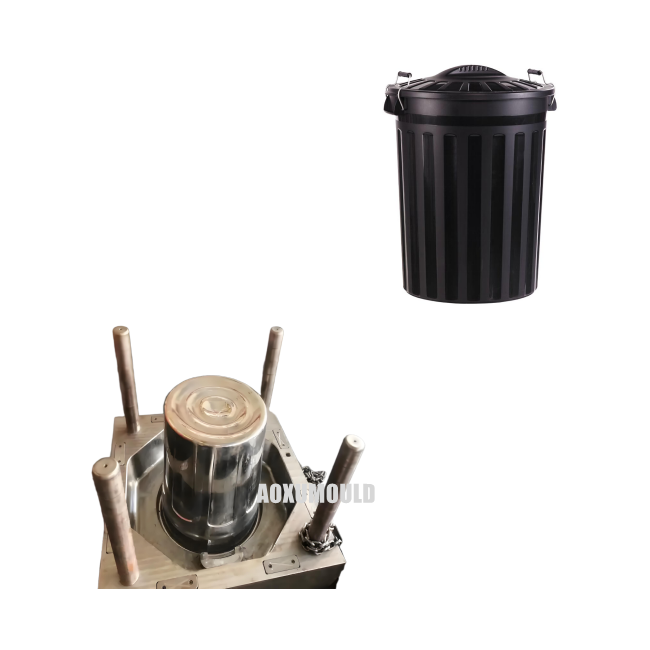
Mould name |
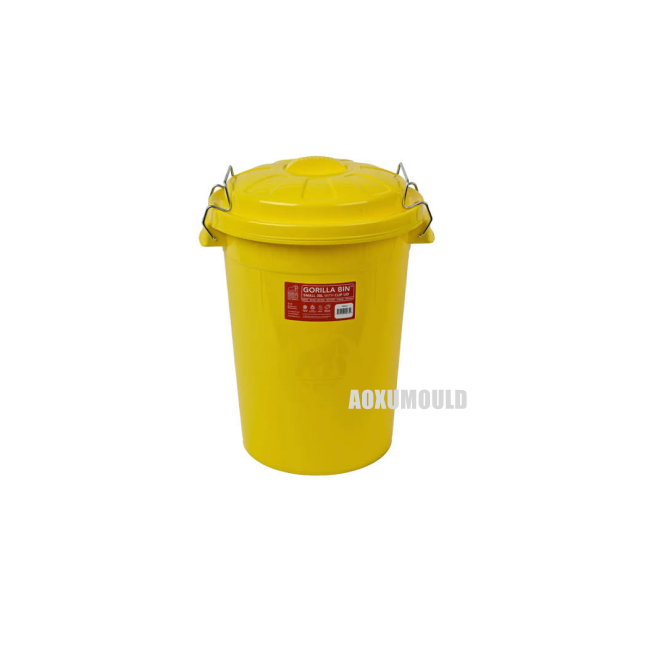
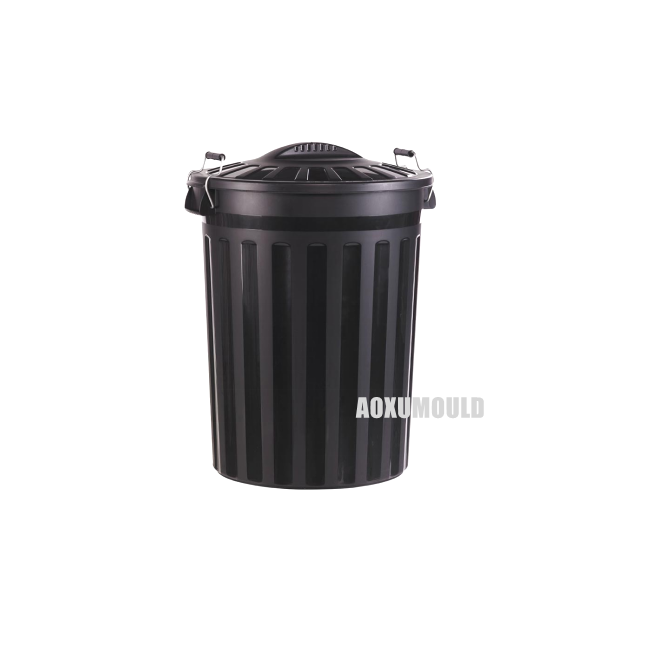
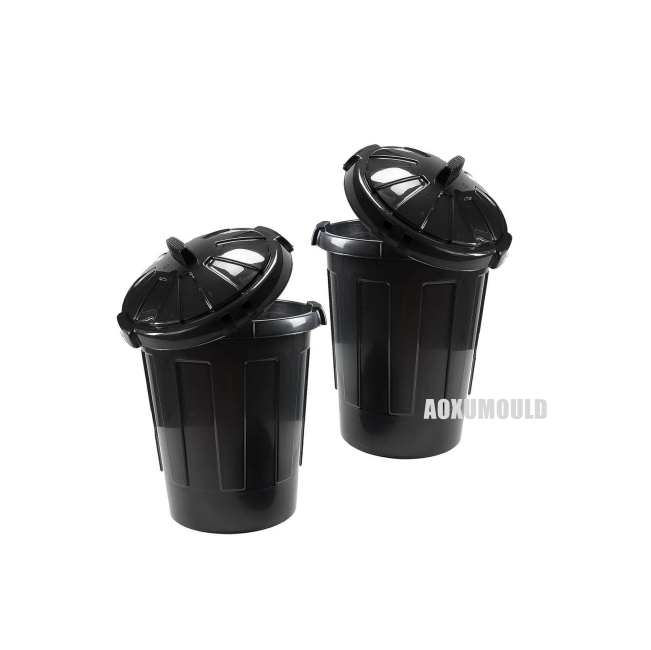
80L Feed storage bin mould |
|
Product material |
HDPE/PP, plastic |
|
Product Size |
54.00 x 54.00 x 70.00cm |
| Product Weight | 450KG |
|
Mould material for cavity &. Core |
P20, 718, 2738 |
|
NOs of cavity |
1 cavity |
|
Injection system |
Cold runner |
|
Suitable injection machine |
650T |
|
Mould size |
950X950X1250mm |
| Mould estimate weight |
8850T |
|
Mould lifetime |
more than 300,000pcs |
|
T1 Time |
After design is finalized, 65 days |
How To Design &. Manufacture A 80L Feed Storage Bin Mould?

Wall Thickness: ≥3 mm with ribbed reinforcement to support >50 kg feed loads.
Cooling System: Conformal channels within 15 mm of cavity surfaces to ensure uniform cooling (±2°C variance), reducing warpage from shrinkage .
Venting: Micro-vents (0.02–0.04 mm depth) at weld lines to prevent gas traps and burn marks.
Stackability & Ergonomics:
Interlocking rim design for vertical stacking stability.
Sensor Integration: Slots for ultrasonic level sensors (e.g., SR2-80LT) to enable fill monitoring .
Steel Selection For 80L Feed Storage Bin Mould

Part Requirements &. Mould Challenges:
Part Size: Large (~80L capacity).
Geometry: Relatively simple (round shape), but deep draw possible depending on design.
Material: Typically PP or HDPE (high flow, abrasive pigments/fillers possible).
Production Volume: Moderate to High (common for bins).
Key Demands: Good wear resistance (abrasion from material/fillers), high polishability (for smooth bin surface), good machinability, sufficient hardness & toughness to withstand injection pressures/clamping forces over long runs.
Corrosion resistance is beneficial (especially if using recycled materials/additives).
Recommended Steel Grades:
1. P20 / 1.2311 / 1.2312 (Pre-Hardened Tool Steel):
Primary Recommendation. Excellent balance of properties for large bin moulds.
Supplied pre-hardened (~28-32 HRC), saving time/cost vs. hardening post-machining.
Good machinability and polishability (reaches SPI-A2/B1 finishes).
Adequate toughness and wear resistance for high-volume PP/HDPE production.
Cost-effective for large mold bases and core/cavity blocks.Best Choice: For core/cavity blocks, mould base plates, sliders, lifters.
2. 718 / 1.2738 / 1.2738H (Modified P20 - Higher Hardness):
Enhanced Option. Where higher hardness and slightly better wear/polish is needed.
Pre-hardened to ~33-38 HRC.
Superior polishability (achieves SPI-A1/A2 finishes) and slightly better wear resistance than standard P20.
Maintains good machinability and toughness.
Best Choice: Core/cavity surfaces requiring superior finish, areas subject to higher wear.
3. H13 / 1.2344 (Hot-Work Tool Steel - Through Hardened):
For High-Wear Areas / Inserts. Where extreme wear resistance or higher temperatures are a concern.
Requires hardening & tempering (typically 46-50 HRC).
Excellent toughness, high-temperature strength, and superior wear resistance.
Good polishability (SPI-A1/A2 achievable).
More expensive and requires post-machining heat treatment.
Best Choice: High-wear inserts (e.g., gate areas, sharp corners), cores in deep draw sections.
What Is The Best Plastic For Injection Molding of Feed Storage Bins?
The optimal plastic choice for injection-molded feed storage bins balances durability, cost, weather resistance, and manufacturability. Based on industry practices and material properties, here are the top recommendations:
1. High-Density Polyethylene (HDPE)
- Impact Resistance: Withstands drops and rough handling, even in cold temperatures .
- Chemical Resistance: Tolerates common cleaners, acids, and alkalis without degradation.
- Moisture Resistance: Impervious to water, preventing warping or corrosion .
- Eco-Friendly: Highly recyclable; suitable for bins made with recycled content.
- Limitations: Lower stiffness than PP, potentially requiring thicker walls for structural rigidity.
- Best For: Heavy-duty outdoor bins, recycling containers, and high-impact applications.
2. Polypropylene (PP), Especially Impact-Modified PP
- Stiffness &. Heat Resistance: Maintains shape under load; withstands hot contents (e.g., up to 100°C) .
- Lightweight: Reduces material use and shipping costs.
- Enhanced Toughness: PP gains superior low-temperature impact resistance-critical for outdoor bins in cold climates .
- Recyclability: Compatible with recycled PP when using compatibilizers.
- Limitations: Pure PP can be brittle in cold weather; modifiers add ~5–10% cost.
employees.


