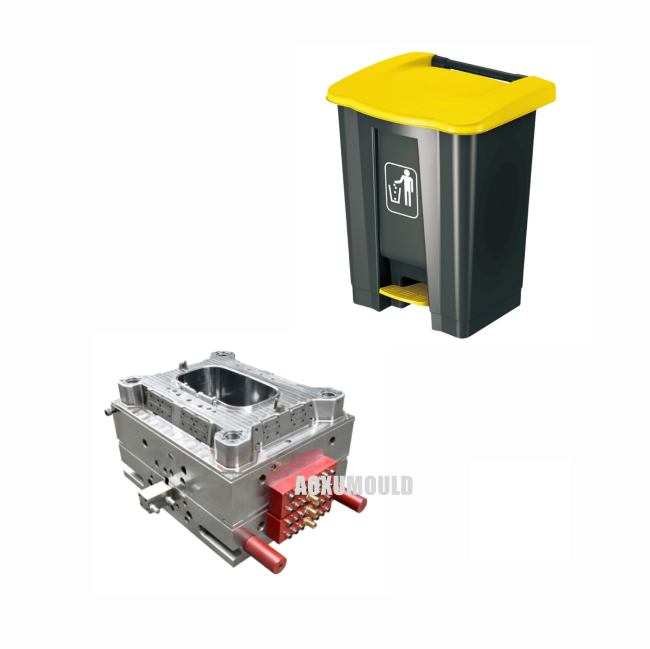
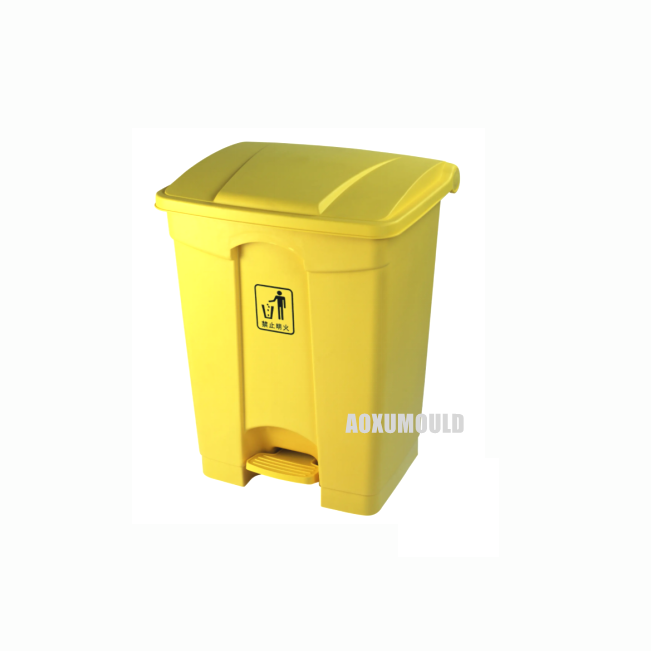
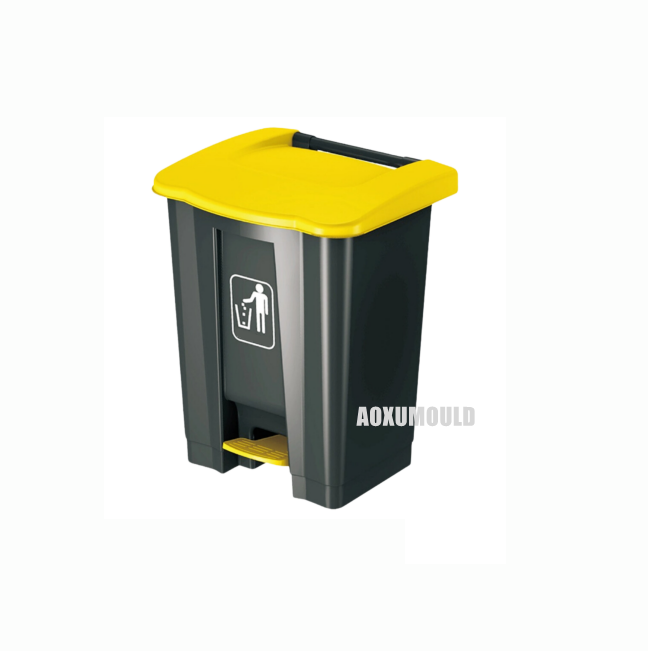
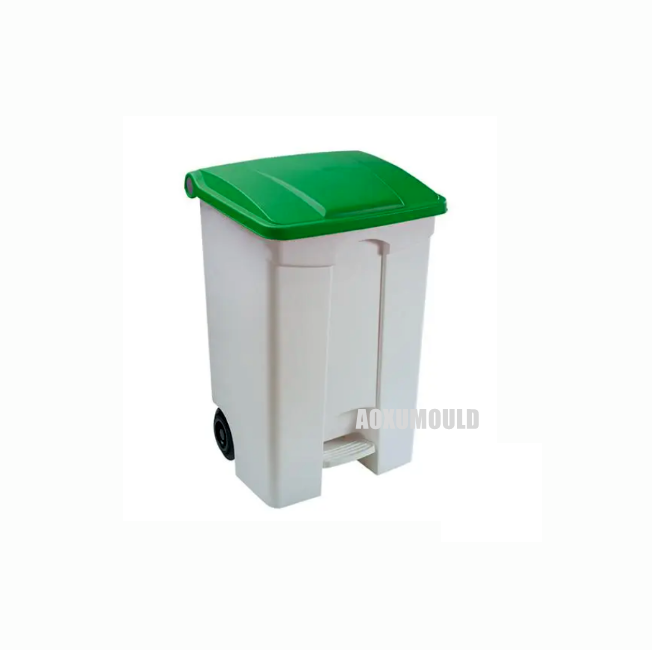
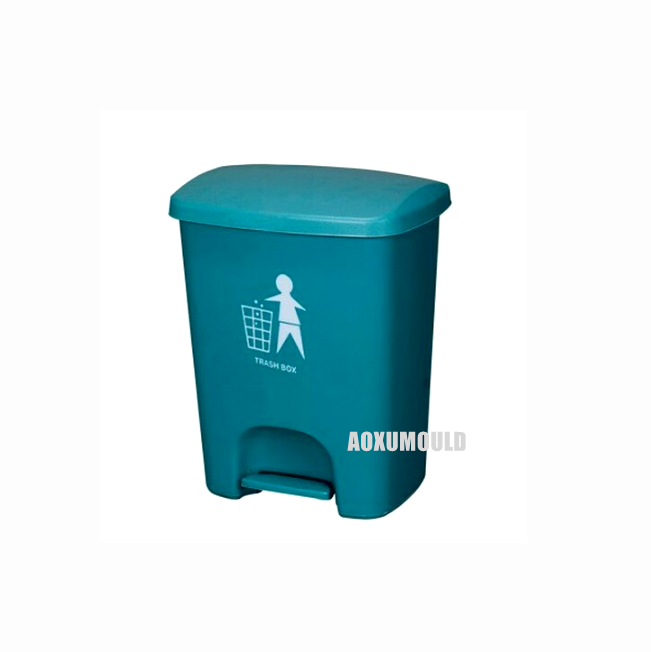
Mould Specifications
|
Mould name |
Plastic Pedal dustbin mould |
|
Product material |
Polypropylene |
|
Product Size |
46.5*43.5*62cm |
|
Product capacity |
50L |
|
Product weight |
2.7kg |
|
Mould material for cavity &. Core |
718 |
|
Mould base |
C45 |
|
Injection system |
Hot runner |
|
Mould size |
1050x1050x1200mm |
|
Suitable injection machine |
1000T |
|
Mould lifetime |
More than 500,000pcs |
The Benefits of Using Plastic Pedal Dustbins

Plastic foot pedal dustbins have become increasingly popular in recent years due to their many benefits. Firstly, they allow for hands-free disposal of garbage, which promotes cleanliness and hygiene. This is especially important in public spaces and workplaces, where germs can easily spread and cause illness. By using a foot pedal to open the lid of the trash can, users can avoid touching it with their hands and potentially contaminating themselves and others.
Secondly, plastic pedal bins are durable and long-lasting. Made from high-quality materials, they are resistant to wear and tear, which means they can withstand frequent use without breaking or becoming damaged. Additionally, they are easy to clean, making them a low-maintenance and hygienic option for waste disposal.
Furthermore, pedal dustbins are environmentally friendly. Many models are made from recycled materials, which helps to reduce waste and conserve natural resources. Additionally, they are often designed to be space-efficient, which reduces the amount of floor space they occupy and helps to optimize the use of available space.
In summary, it offers a range of benefits including hands-free use, durability, ease of maintenance, and environmental friendliness. They are a practical and positive addition to any space where waste disposal is required.
Why Do Plastic Dustbins Need Moulds?

Plastic dustbins have become an integral part of our lives as they help in keeping our homes and surroundings clean. To ensure that these dustbins are produced efficiently with a standardized design, a mould is essential.
Moulds are used to give plastic dustbins their shape and structure. Without a mould, it is impossible to achieve consistency in the shape and size of plastic dustbins. A mould also helps in reducing wastage during the production process as it ensures that the material is used optimally.
Moreover, a mould enables manufacturers to produce dustbins in a variety of sizes and shapes, providing customers with a wide range of options to choose from. This versatility in design is essential, especially for those customers who require dustbins for specific purposes.
Additionally, moulds help in reducing the production time required to make each dustbin. With a mould, manufacturers can produce dustbins in bulk, which is critical when dealing with large orders or when fulfilling customer demand during peak seasons.
In conclusion, a mould is essential for the production of plastic dustbins. It not only ensures consistency in shape and size but also provides versatility in design options, reduces material wastage, and helps manufacturers produce dustbins in bulk. Overall, the use of moulds has contributed significantly to the efficiency of the plastic dustbin manufacturing industry.
What Is Plastic Injection Mould?

Plastic injection mould is a tool used to produce high-quality plastic components in an efficient and cost-effective manner. It is a complex process that involves injecting molten plastic into a mould or cavity, which is then carefully cooled and solidified to create the desired shape and size.
Plastic injection molding has revolutionized the manufacturing industry, as it allows for the production of large quantities of identical parts with high accuracy and tight tolerances. It also enables the creation of parts with complex geometries that would be difficult or impossible to produce with other methods.
The plastic injection mould is made with a material such as steel or aluminum and is designed to withstand the high pressures and temperatures associated with the injection molding process. It is typically made up of two parts, the cavity and the core, that fit together to form the final shape of the part.
There are many advantages to using plastic injection mould over other manufacturing processes. For one, it is incredibly efficient, as it can produce large quantities of parts quickly and with minimal waste. Additionally, it allows for greater design flexibility, as parts can be easily modified and updated to meet changing needs or specifications.
Despite its many benefits, plastic injection molding does require a considerable investment in equipment and resources. However, the long-term benefits often outweigh the initial costs, making it a worthwhile investment for many businesses and manufacturers.
Overall, plastic injection mould has revolutionized the way products are made and has enabled businesses to produce high-quality, reliable parts with ease. With continued innovation in the field, it is likely that plastic injection molding will remain a valuable tool for many years to come.
Design For Product &. Mould

How To Make Quality Pedal Dustbin Mould?
Making a quality pedal dustbin mould requires attention to detail, precision and patience. Here are some steps to follow:
1. Design and plan: Start by creating a detailed design and plan for your pedal dustbin mould. Ensure you have all the necessary measurements and dimensions for your project.
2. Choose the right materials: Select high-quality materials that are suitable for your project. The materials used in making the mould should be durable and long-lasting.
3. Make the mould: Begin by creating the base mould and then work on the pedal mechanism. If you are unsure how to do this, seek guidance from an experienced professional.
4. Test the mould: Before moving on to the production phase, test your mould to ensure that it is working properly. You can make adjustments as needed to ensure that the mould will produce high-quality results.
5. Production: Once you are satisfied with your mould, you can begin production. Start by using the mould to create prototypes and test the quality of the final product.
6. Quality control: After production, inspect the final product to ensure that it meets your desired standards. Make adjustments as needed to ensure that the final product is of high quality.
In conclusion, making a high-quality pedal dustbin mould requires attention to detail, precision and patience. With the right materials, design and manufacturing process, you can ensure that your product meets the desired standards. Remember to be patient, and take the necessary time to test and adjust your mould to achieve the best results.
Package &. Delivery

Mould Components
Mould Steel
Hot Runner System

Standard Parts

FAQ
Q: How Long Can I Receive Your Reply After I Send My Inquiry?
Q: Are You A Manufacturer Or A Trade Company?
Q: What Products And Services Can You Provide?
Q: What Application Fields Are Your Products Mainly Involved In?
Q: How About Payment?
In batch production, we accept 40% deposit, balance before shipping moulds.
T/T is the main payment, and L/C is acceptable as well.
Q: Where Do You Mainly Exports Your Products To?
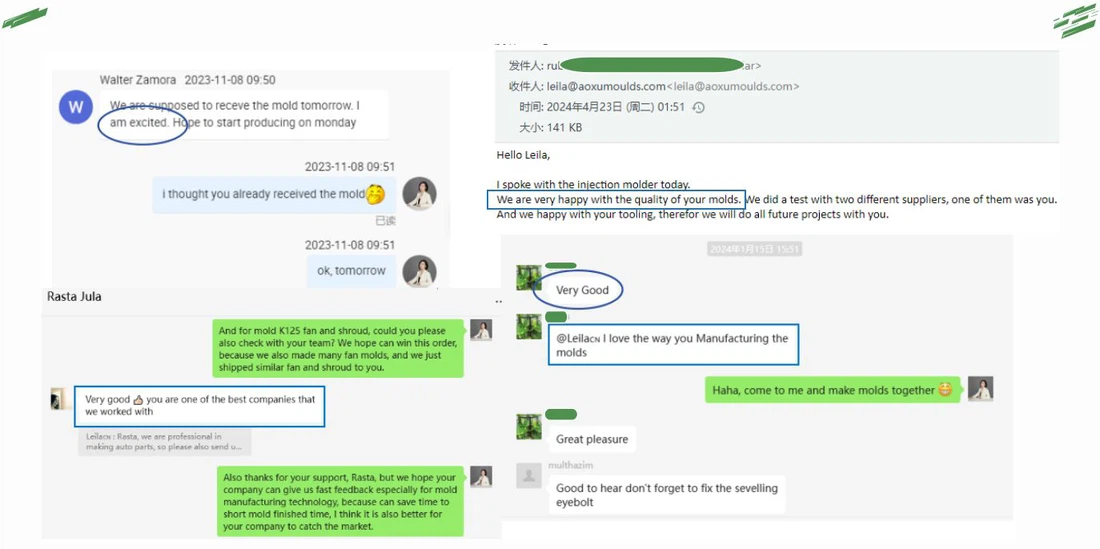
Customers' Feedback