

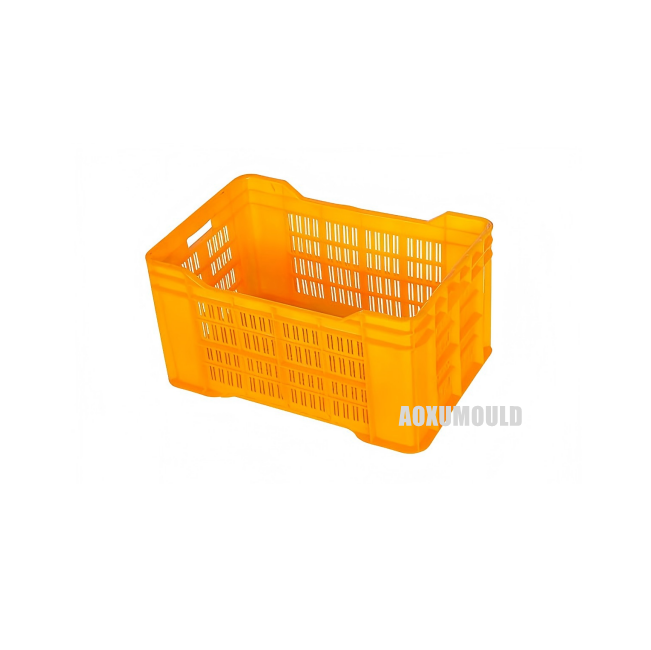
Mould Specifications
|
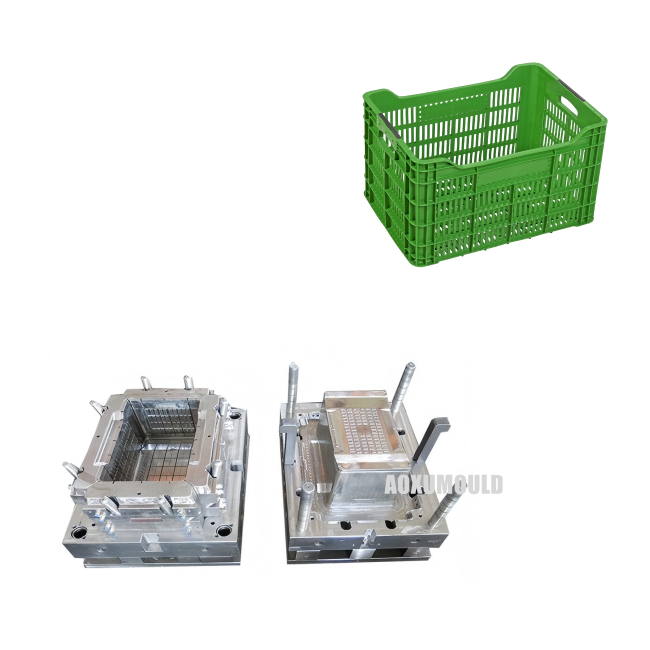
Mould name |
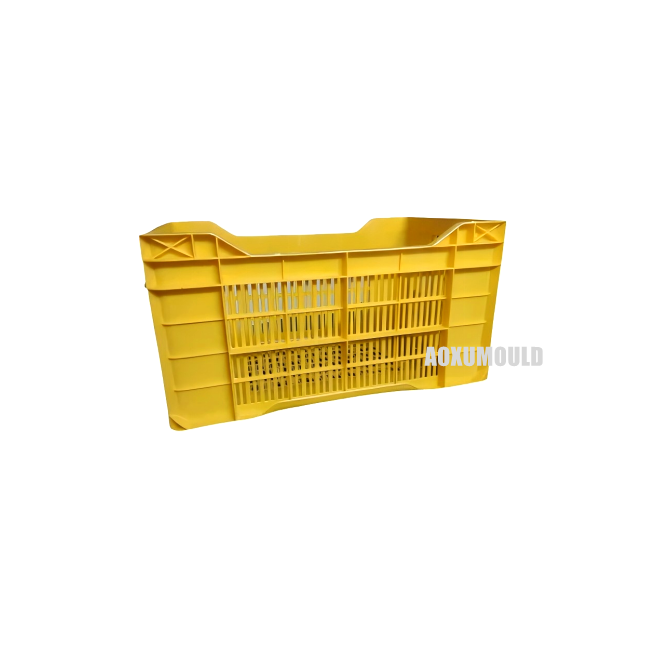
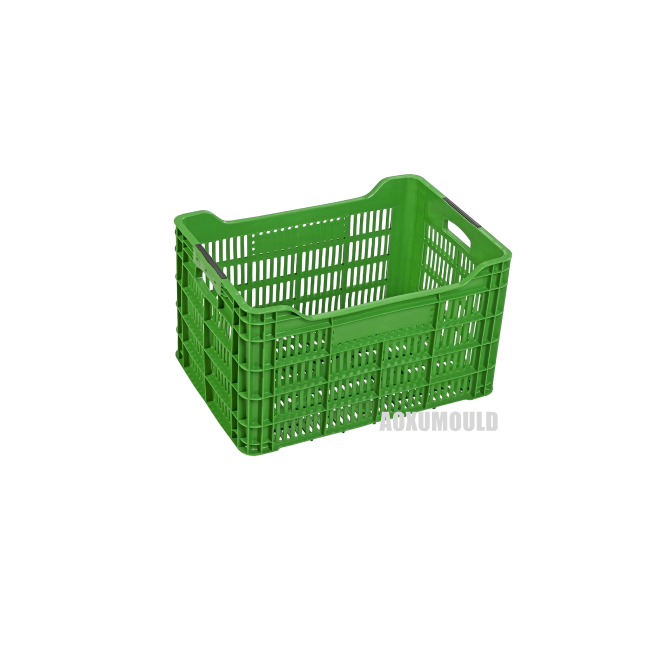
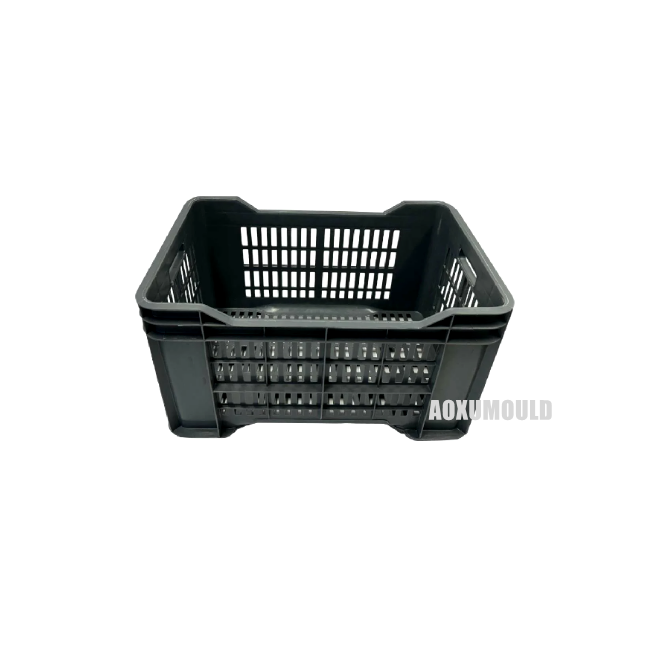
Plastic Vegetable Crate mould |
|
Product material |
HDPE/PP |
|
Product Size |
530X350X280mm |
|
Product weight |
1950gr |
|
Mould material for cavity &. Core |
P20/718/H13 |
|
NOs of cavity |
1 cavity |
|
Injection system |
Hot runner 1 tip gate |
|
Suitable injection machine |
450T |
|
Mould size |
995x815x600mm |
|
Mould weight |
2500KG |
|
Mould lifetime |
more than 500,000pcs |
|
Delivery Time |
55 days |
What Materials Are Suitable For Plastic Vegetable Crates Moulds?
The following materials are suitable for plastic vegetable crate moulds:
1.Tool Steel
• P20 steel is a common choice. It has good hardness and wear - resistance after proper heat treatment. It can withstand the high - pressure injection of plastic materials and repeated use without deforming easily, which is crucial for maintaining the accuracy of the crate shape over many production cycles.
2.Stainless Steel
• Some stainless - steel alloys like H13 are used. Stainless steel provides excellent corrosion resistance. Given that vegetable crates may come into contact with moisture, soil, and various substances from vegetables, corrosion resistance helps to ensure the longevity of the mould and the quality of the produced crates.
3.These materials can endure the high temperatures and pressures associated with the injection moulding process of plastics such as high - density polyethylene (HDPE) and polypropylene (PP), which are the typical plastics used to make vegetable crates.

PP is polypropylene. It's a thermoplastic polymer. It has good chemical resistance, is relatively lightweight, and has a high melting point. It's often used in packaging (like food containers), textiles (for making carpets and upholstery), and automotive parts.
HDPE stands for high - density polyethylene. It's a type of polyethylene with a more compact molecular structure. It's very durable, has excellent resistance to moisture and chemicals. It's widely used in making pipes for water and gas transportation, plastic bottles for milk and detergents, and toys.
How To Make A High -Quality Plastic Vegetable Crate Injection Mould?

1.Material Selection
• Choose the Right Steel: Select high - quality tool steel such as P20 or H13. These steels have good hardness, wear - resistance, and can withstand the high pressures and temperatures of the injection moulding process. Ensure the steel is free from defects.
2.Machining Process
• Precision Machining: Use advanced machining equipment like CNC (Computer Numerical Control) milling machines, lathes, and EDM (Electrical Discharge Machining) tools. CNC milling ensures accurate shaping of the cavity and core. EDM is useful for creating complex shapes and fine details.
• Tolerance Control: Maintain strict tolerances during machining. For example, the fit between the cavity and core should be precise to ensure the correct wall thickness of the plastic crate. A tolerance of around ±0.05mm - ±0.1mm is common for critical dimensions.
3.Heat Treatment
• Hardening and Tempering: After machining, subject the mould to appropriate heat treatment processes. Hardening increases the hardness of the steel, while tempering reduces brittleness and internal stresses. This helps to improve the durability and performance of the mould.
4.Surface Treatment
• Polishing: Polish the mould surfaces to a high - gloss finish. A smooth surface finish not only helps in the easy release of the plastic crate but also improves the surface quality of the crate. The surface roughness (Ra) value should be as low as possible, usually less than 0.8μm.
• Coating: Consider applying a coating such as a nitride coating. The coating can increase the wear - resistance and corrosion - resistance of the mould, protecting it from the abrasive nature of the plastic and potential chemical reactions.
5.Quality Testing
• Dimensional Inspection: Use coordinate - measuring machines (CMM) to verify the dimensions of the mould against the design specifications. Any deviations should be corrected promptly.
• Functionality Testing: Conduct trial injection moulding runs to check if the mould functions properly. Check for issues like proper filling of the cavity, easy ejection of the crate, and absence of defects like short shots or warping.
What Is Machining Process For A Plastic Vegetable Crate Mould?

The machining process for a vegetable crate mould typically involves the following steps:
1.Design
• The first step is designing the mould according to the specifications of the vegetable crate. This includes determining the size, shape, wall thickness, and any special features like handles or drainage holes of the crate. Computer - aided design (CAD) software is often used to create a 3D model of the mould.
2.Milling
• Milling is a crucial machining process. It uses a rotating cutter to remove material from a solid block (usually the mould steel). It can create the basic shape of the mould cavity and core. For example, to form the outer shape of the crate (cavity), the milling machine cuts the steel block to the desired contour with high precision.
3.Drilling
• Drilling is used to create holes in the mould. For a vegetable crate mould, this could be for ejector pin holes (to help eject the finished crate from the mould), or holes for any inserts or fasteners. The diameter and depth of the holes are carefully controlled according to the design requirements.
4.Turning
• If there are any cylindrical components in the mould, such as pins or shafts, turning is used. A lathe rotates the workpiece while a cutting tool shapes it into a cylindrical form.
EDM (Electrical Discharge Machining)
• EDM is useful for creating complex shapes or fine details that are difficult to achieve with traditional machining methods. It uses electrical discharges to erode material. For example, it can be used to create sharp corners or intricate patterns on the mould surface.
5.Grinding and Polishing
• After the basic shape is machined, grinding and polishing are carried out. Grinding ensures the flatness and smoothness of mating surfaces (like the surfaces of the cavity and core that come together). Polishing gives a high - quality finish to the mould surface, which helps in the easy release of the plastic crate after moulding and also improves the surface quality of the crate.
How To Design A Workable Plastic Crate Mould?
1.Analyze the Crate's Function and Requirements
> Understand the Purpose: Know what the plastic crate will be used for. If it's for transporting heavy fruits and vegetables, it needs to have high load - bearing capacity. If it's for display purposes, aesthetics might be more important.
>Study the Dimensions: Determine the length, width, and height of the crate precisely. Consider any size restrictions due to storage, transportation (such as fitting into standard pallets or trucks), or handling by users.
2.Design the Cavity and Core
>Cavity Design: The cavity gives the outer shape of the crate. Design it with appropriate draft angles. For example, a draft angle of around 1 - 3 degrees is usually needed to ensure the easy ejection of the crate from the mould after the plastic has solidified.
>Core Design: The core forms the inner part of the crate. Make sure the core is designed to provide the necessary internal features such as ribs for strength or compartments. The clearance between the cavity and core should be carefully calculated to achieve the desired wall thickness of the crate.

3.Consider the Gate and Runner System
> Gate Placement: Select an appropriate place to locate the gate, which is the entry point for the molten plastic. For a plastic crate, side - gate or edge - gate designs are often used. The gate should be placed in a position that allows the plastic to flow evenly throughout the mould cavity to fill it completely.
>Runner Design: Design the runner system to efficiently transport the molten plastic from the injection unit to the gate. A well - designed runner can reduce waste and ensure uniform filling. It can be either a hot - runner or cold - runner system. Hot - runner systems are more complex but can reduce material waste and cycle times.
4.Plan for Ejection Mechanism
>Ejector Pins or Sleeves: Incorporate ejector pins or sleeves in the design to push the solidified crate out of the mould. The number and location of ejector pins should be determined based on the shape and size of the crate. They should be placed in areas that can exert even force on the crate to avoid deformation during ejection.
5.Venting
>Venting Holes or Vents: Design proper venting to allow air to escape from the mould cavity as the plastic fills it. Trapped air can cause defects such as voids or short shots. Venting can be achieved through small vent holes or using venting channels.
Plastic Double Wall Crate Mould finishing Machining
Plastic double wall crate mould is an important manufacturing tool. In the production process, the finishing operation of the mold is very critical. Precision machining can improve the accuracy and stability of molds, thereby ensuring product quality and production efficiency. The following are the basic operating steps for finishing the plastic double wall crate mold:
1. Design the mold process route and processing plan.
Before finishing the plastic double wall crate mold, it is necessary to develop a complete process route and processing plan. This includes aspects such as process flow, processing parameters, equipment selection, etc., all factors that may affect mold processing should be considered in order to effectively control the quality and efficiency of the processing process.
2. Determine the processing sequence and method.
Determine the specific processing sequence and method for precision machining based on the structure and requirements of the mold. Pay attention to selecting appropriate processing techniques and cutting tools to ensure accuracy and quality during the machining process.
3. Perform mold shape processing.
Before conducting internal processing, the shape of the mold should be machined first. This includes a series of procedures such as rough car, medium car, fine car, and external grinding. This process requires great attention to the machining direction and angle to avoid producing excess and over cutting.
4. Perform precision machining inside the mold.
Internal precision machining of molds includes a series of processes such as drilling, milling, punching, and reaming. This process needs to be very careful because the internal space of the mold is small and requires high precision, so experienced technicians are needed to operate it.
5. Perform surface treatment on the mold.
The processing of mold surfaces usually includes grinding, polishing, and spraying. This process is aimed at improving the surface smoothness and corrosion resistance of the mold, while further enhancing its service life and performance.
Package &. Delivery

Mould Components
Mould Steel

Hot Runner System

Standard Parts

Customers' Feedback

FAQ
Q: What materials are suitable for plastic vegetable crate moulds?
A: • Commonly, high - density polyethylene (HDPE) and polypropylene (PP) are used. HDPE offers good strength and durability, and is resistant to impacts and chemicals. PP is also a popular choice as it has a high melting point and can withstand rough handling and various environmental conditions.
Q: How long does a plastic vegetable crate mould last?
A: • The lifespan of a mould depends on several factors such as the quality of the mould material, the frequency of use, and the complexity of the crate design. With proper maintenance and under normal usage conditions, a well - made mould can last for hundreds of thousands to over a million cycles.
Q: Can the mould produce different - sized crates?
A: • In some cases, with adjustable components or interchangeable inserts in the mould, it's possible to produce different - sized crates. However, for a significant change in size, a completely new mould might be needed as the overall cavity and core dimensions need to be adjusted.
Q: How do you maintain a plastic vegetable crate mould?
A: • Regular cleaning is essential to remove any plastic residue or debris. It's also important to lubricate the moving parts of the mould to ensure smooth operation. Periodic inspection for wear and tear, especially on the injection ports, ejector pins, and the surfaces of the cavity and core, helps to identify and address any potential problems early.
Q: What is the typical production cycle time for a plastic vegetable crate using the mould?
A: • The cycle time can vary depending on the size and complexity of the crate, as well as the injection moulding machine's settings. On average, it can range from 30 seconds to a few minutes. This includes the time for injecting the plastic, cooling it until it solidifies, and ejecting the finished crate.


