

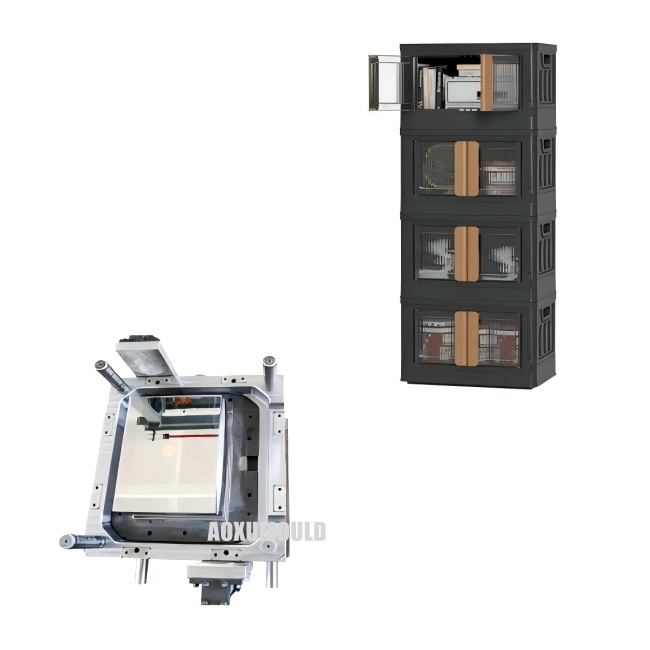
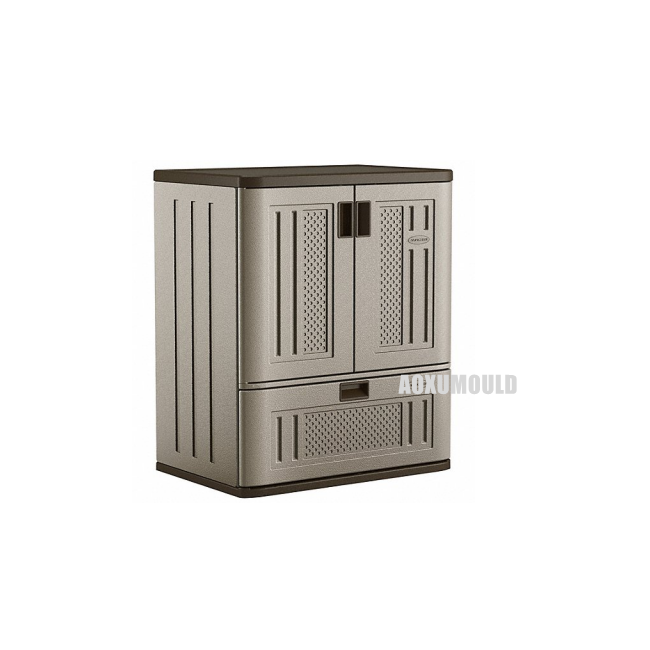
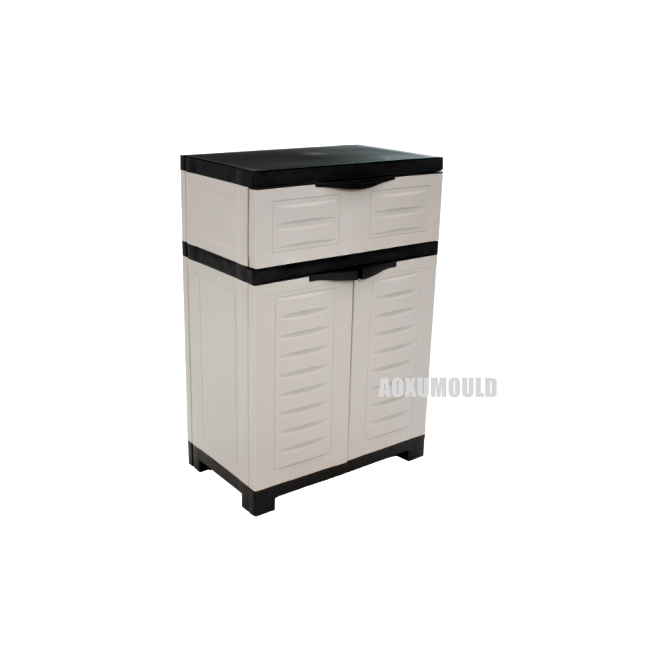
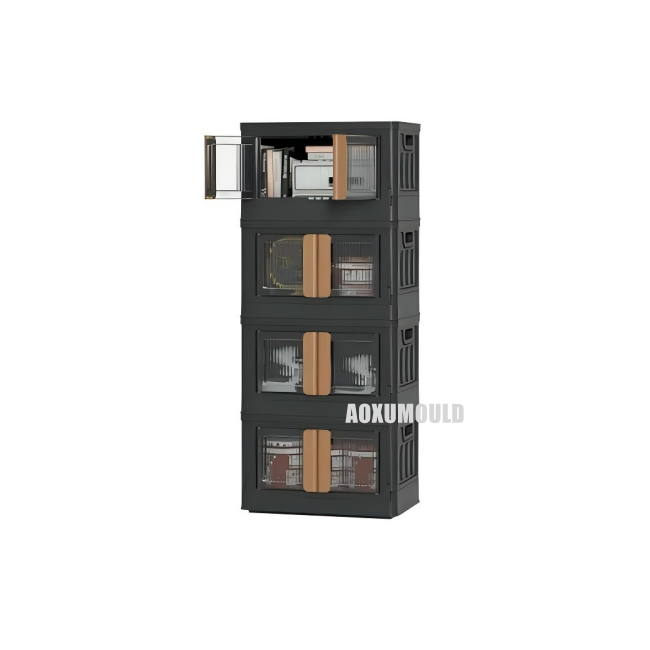
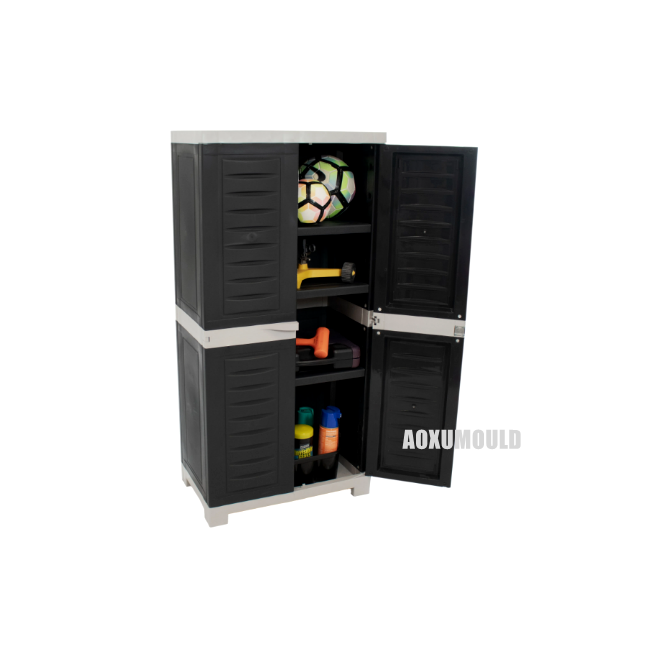
Mould Specifications
|
Mould name |
Plastic Storage Cabinet Mould |
|
Product material |
PP |
|
Product Size |
23.5" x 15" x 41'' |
|
Mould material for cavity &. Core |
P20/718/H13 |
|
NOs of cavity |
1 cavity |
|
Injection system |
Cold runner or hot runner |
|
Suitable injection machine |
650T |
|
Mould size |
1200X620X580mm |
|
Mould weight |
3000KG |
|
Mould lifetime |
more than 500,000pcs |
|
Delivery Time |
50 days |
|
HS CODE |
8480719090 |
Product Characteristic

1.Large Capacity Storage Bins: The capacity of stackable storage cabinet s is 50 gallons in total. And the overall size of the cabinet is 23.5" x 15" x 41", which is enough to meet your daily needs. The front doors come with handles and magnets for easy access.
2.Free Stacking &. Folding Design: The organizer consists of 3 practical PP bins, which can be freely stacked or dismantled with the side locking design. In addition, you can also detach and fold each box when not in use.
3.Single storage box is compact sized when folded (23.5" x 15" x 2.5"), so it can easily fit under the bed or sofa.
4.Reliable Material: Made of reliable PP material, our storage boxes are more reliable than fabric storage boxes and lighter than wooden or metal organizers
How To Make Plastic Cabinet Injection Moulds?

Making plastic cabinet injection mould is an exciting process that requires attention to detail and a passion for creativity. With the right tools and techniques, it is possible to create a premium quality cabinet mould that is perfect for your needs. In this article, we'll take a look at how to make a plastic cabinet injection mould in a positive and optimistic way.
Firstly, it is crucial to have a clear idea of the cabinet design that you want to create. The design should be simple, functional, and aesthetically pleasing. A well-thought-out design will translate well into a high-quality mould that produces a cabinet that looks and functions as intended.
Next, you need to select the right materials for the job. The most commonly used material for cabinet injection moulds is steel or aluminium, which are highly durable and resistant to wear and tear. These materials can withstand the high pressures and temperatures required for the injection process, resulting in a high-quality and long-lasting mould.
Once you have the design and materials in place, it's time to begin the moulding process. This involves creating the cavity or the space where the molten plastic will flow into, solidify and take the shape of a cabinet. The cavity must be precisely designed and manufactured to ensure the correct shape and size, and to ensure that the moulding process is efficient and consistent.
Next, the mould is ready for the injection process. This involves melting plastic pellets and then injecting the molten plastic into the cavity of the mould. The plastic then cools and solidifies, taking the precise shape and size of the mould. This process can be repeated over and over again to create multiple cabinets with consistency and precision.
Making a plastic cabinet injection mould is an exciting and rewarding experience. With the right materials, expertise, and attention to detail, it is possible to create a high-quality mould that produces beautiful and functional cabinets. By staying positive and optimistic throughout the process, you can enjoy every step of the journey towards creating something truly special.
Design For Product &. Mould

New Samples of Plastic Cabinets &. Drawers
Package &. Delivery

Mould Components
Mould Steel

Hot Runner System

Standard Parts

Customers' Feedback

FAQ


