

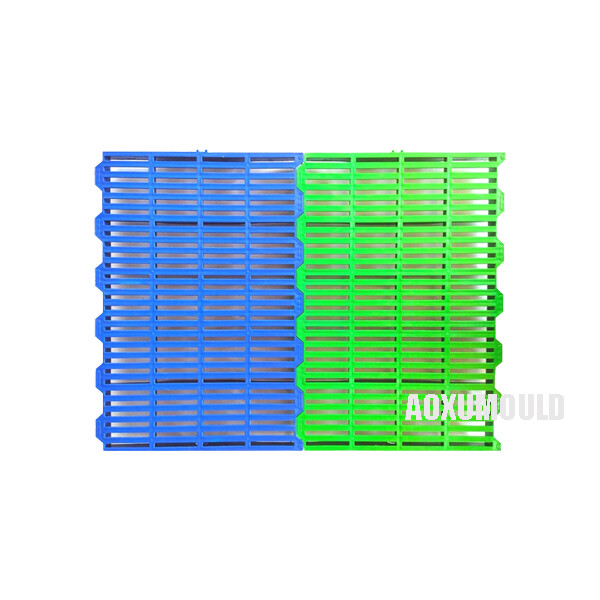
Mould Specifications
|
Mould name |
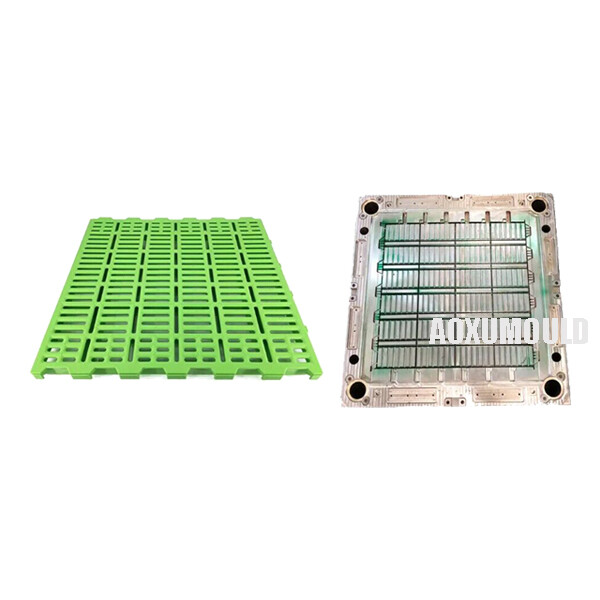
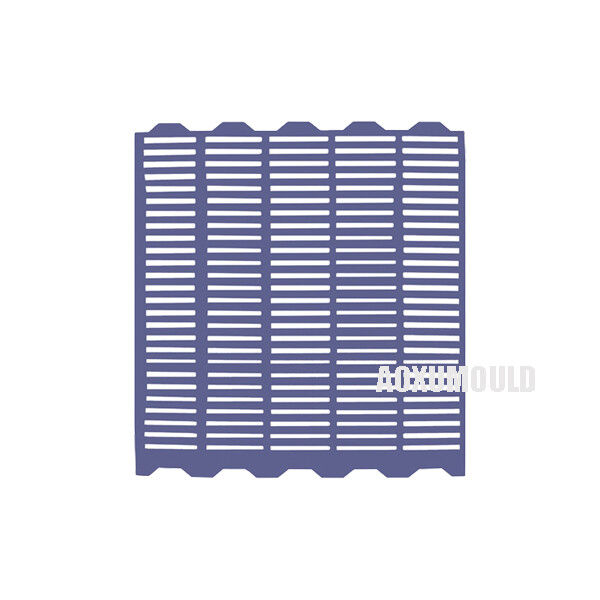
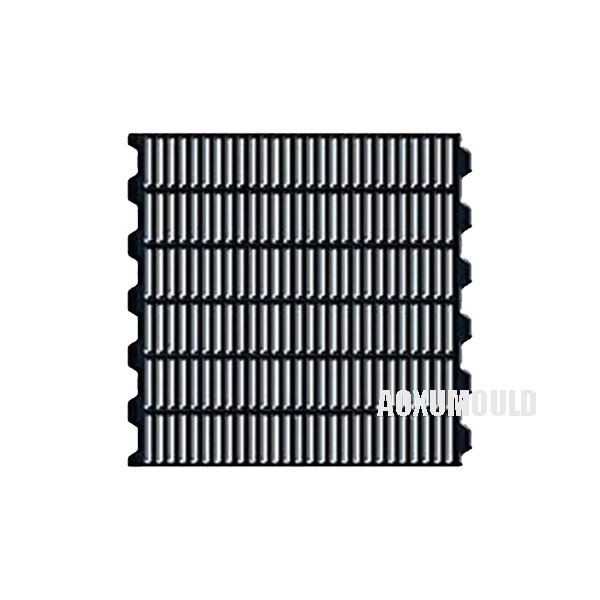
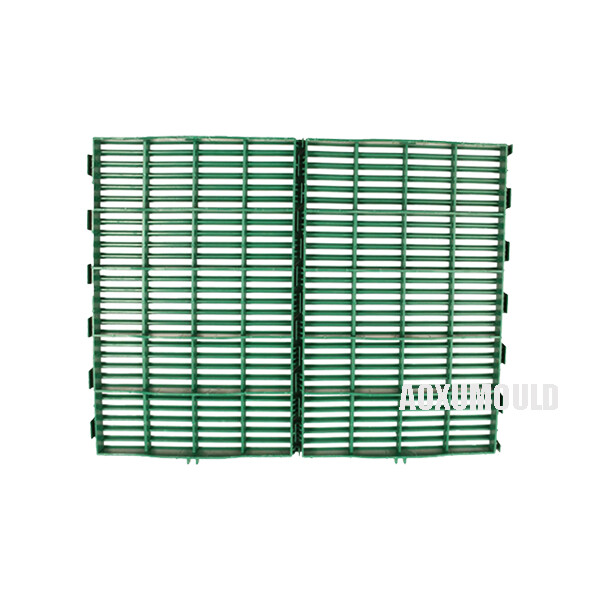
Slat Floor Mould |
|
Product material |
PP, plastic |
|
Product Size |
1200x500x40mm |
|
Product weight |
2.3kg |
|
Mould material for cavity &. Core |
C45, P20, 718, S136 |
|
Mould base |
P20 |
|
Injection system |
Hot runner |
|
Suitable injection machine |
880T |
|
Mould size |
1580X850X560mm |
|
Mould lifetime |
more than 500,000pcs |
Why choose PP material to produce slat floor?
PP material, also known as polypropylene, is a popular choice for the production of slat floors. This is because it is a durable and lightweight material that offers a range of benefits for livestock farming.
One of the main advantages of PP slat floors is their resistance to corrosion and chemicals. This makes them ideal for use in environments with harsh substances, such as farming settings where animal waste and cleaning chemicals may come into contact with the floor. PP flooring is also non-absorbent, which further helps maintain its durability and longevity.
PP slats are also easy to clean and maintain, as they do not require any special treatments or coatings to keep them in good condition. This saves time and effort for farmers, allowing them to focus on other important tasks.
Another advantage of PP slats is that they are designed with the comfort and safety of the animals in mind. The non-slip surface of the flooring helps to prevent injury and discomfort for livestock, while the slats allow for better air circulation and drainage.
Overall, choosing PP material to produce slat floors is a great choice for livestock farmers who want to ensure the comfort and safety of their animals, while also saving time and effort in maintaining their facilities.
Choose Right Steel For Slat Floor Mould
Slat floors are commonly used in the poultry industry because they provide good airflow and easy cleaning. Slat floor injection moulds are used to create these floors. It is important to choose the right type of steel for these moulds to ensure that they are durable and long-lasting.
When selecting steel for slat floor injection moulds, you should consider the following factors:
1. Hardness: The steel should have a high level of hardness to prevent wear and tear from frequent use.
2. Heat resistance: The mould should be able to withstand high temperatures without deforming or cracking.
3. Corrosion resistance: The steel should be resistant to corrosion from exposure to moisture and cleaning solutions.
4. Machinability: The steel should be easy to machine to create the complex shapes required for slat floors.
5. Cost: The steel should be cost-effective, so it doesn't add unnecessary expenses to the manufacturing process.

There are several types of steel that can be used for slat floor injection moulds, including P20 steel and S136 steel.
1. P20 is a high-quality steel type that is ideal for making slat floor moulds. Its toughness and durability make it a reliable and long-lasting material for mould production.One of the advantages of using P20 steel for slat floor moulds is its ability to withstand high stress and pressure without deformation or cracking. This steel type has excellent hardness and strength, which ensures that the mould can withstand repeated use and maintain its shape and structure.
In addition, P20 is an easy-to-machine material that allows for precision work and intricate designs. This makes it ideal for creating the complex shapes and patterns required for slat floor moulds. Another benefit of using P20 steel is its excellent resistance to wear and tear. This means that the mould will last longer and require less maintenance than other materials, ultimately resulting in cost savings.
2. S136 steel is known for its exceptional quality and durability. It is resistant to wear and tear, corrosion, and extreme temperatures, making it perfect for use in slat floor moulds that are exposed to harsh conditions.
It has great machinability, which means that it can be easily cut, drilled and shaped into the desired mould design. This makes the manufacturing process more efficient and cost-effective.
S136 steel is known for its superior hardness, which means that it can withstand high pressure and wear, making it an ideal material for heavy-duty slat floor moulds.
S136 steel has excellent polishing properties, which makes it perfect for moulding slat floors that have a smooth and polished surface. This improves the overall aesthetic of the product.
S136 steel has exceptional dimensional stability, which means that it maintains its shape and size even after many uses. This allows for high precision slat floor moulding that is consistent in shape and size.
Composition Of Hot Runner System

Hot runner systems are an essential component in modern manufacturing processes. They offer many advantages over traditional cold runner systems, including reduced waste, faster cycle times, and improved part quality. In this article, we will explore the composition of a hot runner system and its many benefits.
A hot runner system is made up of several components, each working together to deliver molten plastic to the mold. The main components are the manifold, nozzles, heaters, temperature controllers, and thermocouples.
The manifold is the central hub of the hot runner system. It is typically made of brass or aluminum and contains a series of channels that distribute molten plastic to the nozzles. The manifold also houses the heaters and thermocouples, which monitor and regulate the temperature of the plastic.
The nozzles are small, cylindrical components that sit on top of the mold. They act as gates, controlling the flow of plastic into the mold cavity. Nozzles can either be valve gating or thermal gating, depending on the application requirements.
The heaters and temperature controllers work together to regulate the temperature of the plastic as it flows through the hot runner system. The heaters are typically made of ceramic and are carefully calibrated to ensure precise temperature control. The temperature controllers use feedback from the thermocouples to adjust the heater output and maintain a consistent temperature throughout the system.
One of the primary benefits of a hot runner system is reduced waste. With a traditional cold runner system, excess plastic is left in the runner after each cycle. This waste can add up quickly, increasing material costs and reducing efficiency. Hot runner systems eliminate this waste by delivering molten plastic directly to the mold cavity, resulting in faster cycle times and improved part quality.
In conclusion, hot runner systems are an essential component in modern manufacturing processes. They offer many benefits over traditional cold runner systems, including reduced waste, faster cycle times, and improved part quality. Understanding the composition of a hot runner system is critical to maximizing its potential and achieving optimal production results.
Design For Product &. Mould

Package &. Delivery

Mould Components
Mould Steel

Hot Runner System

Standard Parts

How To Maintain Poultry Slat Floor Moulds?
Maintaining poultry slat floor moulds is essential to ensure the longevity and quality of the floors, which are important for the health and safety of birds. Here are some tips on how to effectively maintain slat floor moulds.

1. Regular Cleaning:
Regular cleaning is perhaps the most important aspect of poultry slat floor maintenance. Maintaining a clean environment prevents the buildup of bacteria and parasites that can be harmful to birds and degrade the slat mold by deteriorating it over time. Thoroughly cleaning the floor molds regularly can help prevent the growth of harmful pathogens and keep it looking new.
2. Avoid Using Harsh Chemicals:
It is important to avoid using harsh chemicals or corrosive substances when cleaning the molds, as this can cause damage to the mold and its surface. Instead, use mild soaps and water to clean off dirt and grime. This way, the molds can remain in good condition over time.
3. Inspect Regularly:
Regular inspections can identify any damages or cracks in the mold, which-if left unaddressed-could lead to bigger maintenance problems in the future. So, it's important to inspect the molds regularly and check for any signs of wear or tear.
4. Prompt Repairs:
If during inspection or cleaning, you notice any damages or cracks, make sure to repair them as quickly as possible. Delaying repairs may lead to bigger issues that may end up costing more money and take longer to fix.
5. Proper Storage:
When not in use, take care to store the mold in a dry and secure location. Exposure to the elements like moisture and direct sunlight can lead to mold deterioration, which will be difficult to repair. Proper storage can maintain the quality of the mold over an extended period.
In summary, regular cleaning, avoiding harsh chemicals, prompt repairs, regular inspection, and proper storage can help maintain the quality and longevity of poultry slat floor molds. By taking these simple measures, you can ensure that your poultry flock will enjoy a safe and healthy environment over time.
FAQ
Customers' Feedback


