

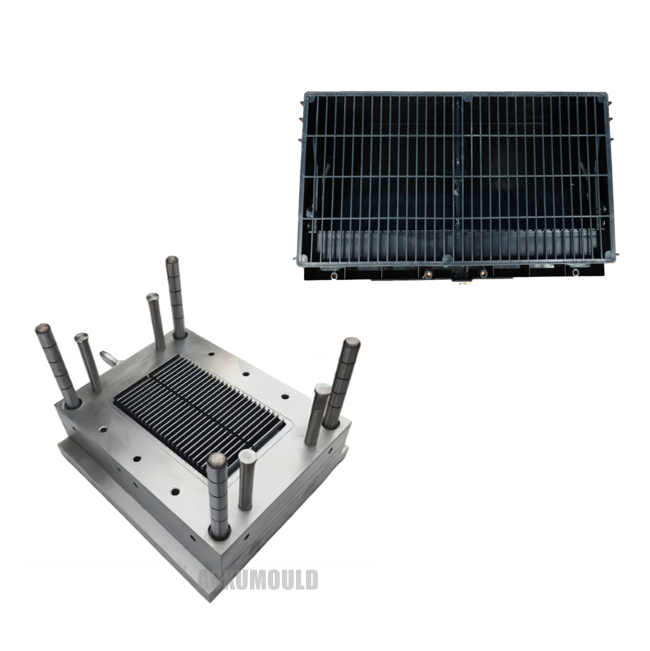
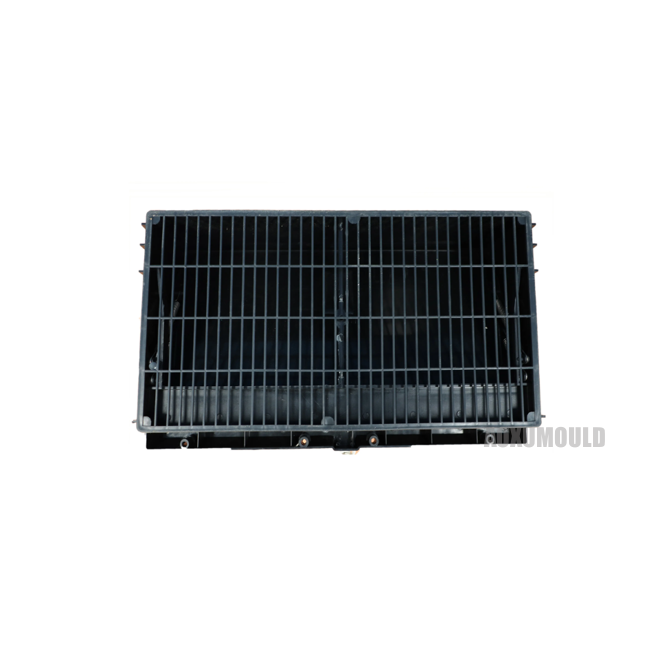
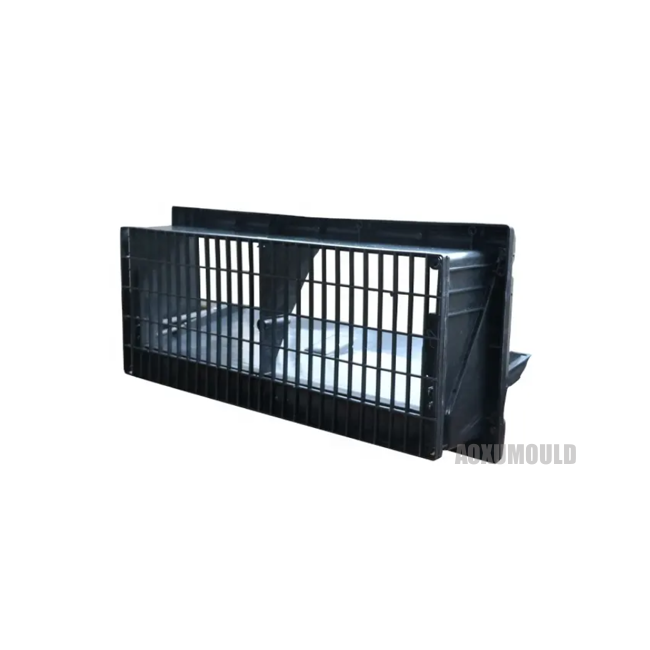
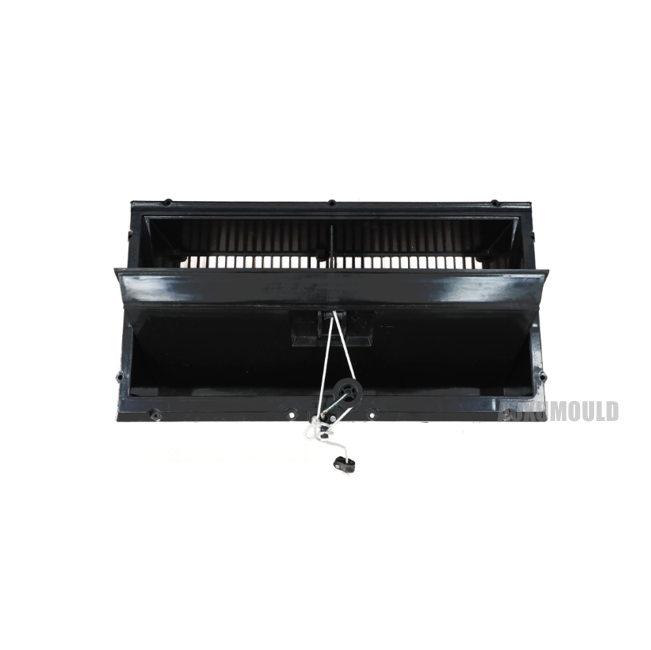
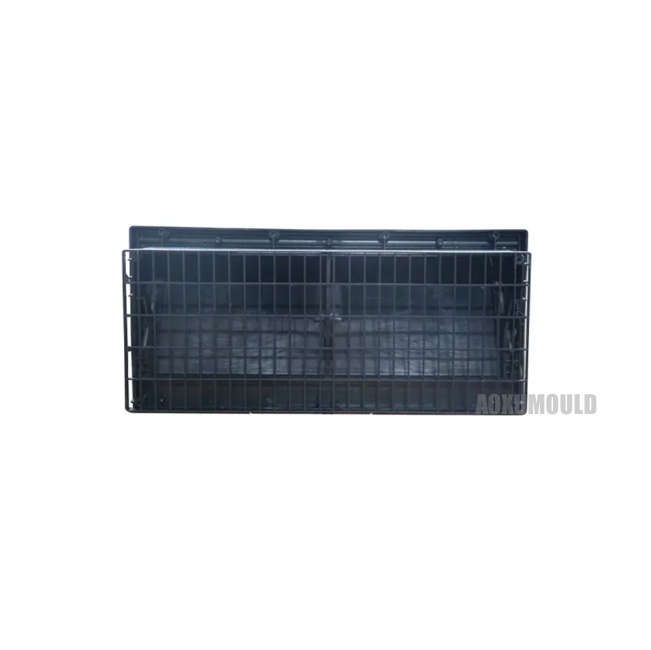
Mould Specifications
|
Mould name |
Plastic Air Inlet Mould |
|
Product material |
PVC+ABS |
|
Product Size |
600X300X160mm |
|
Product weight |
4.5KG |
|
Mould material for cavity &. Core |
P20, 718 |
|
Mould base |
P20, 718H |
|
Injection system |
Hot runner open gates |
|
Suitable injection machine |
550T |
|
Mould size |
850x480x320mm |
|
Mould lifetime |
More than 500,000pcs |
How To Design Better Plastic Air Inlet?

1. Materials: High quality PVC and ABS materials with strong anti-aging and UV resistance; built in ribs, sturdy and durable.
2. The air seals on the top and sides make the air intake more tightly closed to prevent air from entering.
3. The embedded curved door guides fresh air correctly to the ceiling to avoid cold air dripping onto livestock.
4. Unique design, easy to assemble, can be transported in bulk, optimizes transportation volume, and reduces shipping costs.
5. Clever design, smooth surface, easy to clean, suitable for fast high-pressure cleaning.
6. The air intake is equipped with a bird proof net, which has low wind resistance.
7. Width can be customized according to requirements.
How To Make High-Quality Plastic Air Inlet Mould ?
The production of plastic air inlet mould requires both technical expertise and patience. How to make high-quality molds? Here are some steps and techniques:
Firstly, determine the design and size of plastic air inlet . Design and determine the size of the mould based on the customer's needs and requirements. Before designing, the function and structure of the plastic air inlet should be considered to ensure that the design is reasonable and feasible.
Secondly, choose appropriate materials and processes. Plastic air inlet are usually made of materials such as ABS or ABS+PVC. Choose high-quality, wear-resistant and durable materials to ensure the service life and quality of the mould. In terms of technology, CNC machining, injection molding, or pressure forming can be used to ensure the accuracy and stability of mould production.
Then, make the components and assemble the mould. According to the design drawings and dimensions, process and manufacture the various components of the mould, and then assemble them. During the assembly process, attention should be paid to the connection and fit between components to ensure the stability and accuracy of the mould.
Next, conduct testing and adjustments. After production, it is necessary to test and adjust the mold to check its accuracy and effectiveness. If necessary, adjustments and optimizations can be made until satisfactory results are achieved.
Finally, do a good job in the maintenance and upkeep of the mould. In order to extend the service life of the mould and maintain its quality, it is necessary to regularly clean and maintain the mould. To avoid damage or wear to the mould and ensure its long-term stable use.
Design For Product &. Mould

The Process of EDM For Plastic Air Inlet Mould
Electric discharge machining is a process that uses electrical and thermal energy to remove materials, particularly suitable for processing high hardness, high melting point materials, and for processing mold cavities, cores, or small structures with complex shapes and high-precision requirements. For the electrical discharge machining of plastic air inlet mould, the process can be divided into the following steps:
1. Preparation work
Design electrodes: Design suitable electrodes based on the shape and size of the mould. Electrode materials are usually chosen from copper or graphite because these materials have good conductivity and processability.
Installation of electrodes and workpieces: Install the electrodes and workpieces separately on the electric discharge machining machine, and ensure that their relative positions are accurate.
2. Set processing parameters
Choose a pulse power supply: Select a suitable pulse power supply according to the processing requirements, and convert the AC current of the power frequency into a unidirectional pulse current of a certain frequency.
Adjust discharge gap: Set an appropriate discharge gap to ensure stable discharge of the electric spark. The size of the discharge gap directly affects the machining accuracy and surface quality.
Choose working fluid: Choose a working fluid with insulating properties, such as kerosene or specialized electrical discharge machining fluid. The function of working fluid is cooling, chip removal, and insulation.
3. Processing process
Pulse discharge: When the voltage rises to the breakdown voltage of the liquid medium in the gap, the liquid medium is broken down at the lowest insulation strength, generating spark discharge. The temperature in the discharge area can instantly reach 10000-12000 ° C, causing local melting and even vaporization of the metal on the surface of the workpiece and electrode.
Material removal: After a pulse discharge, the voltage between the two poles drops sharply to near zero, and the liquid medium in the gap immediately returns to an insulating state, waiting for the next discharge. By multiple pulse discharges, the workpiece material is gradually removed to form the desired shape and size.
4. Precision machining and surface treatment
Precision machining: rough machining, semi precision machining, and precision machining are carried out as needed to achieve the required dimensional accuracy and surface roughness. Electric discharge machining can switch between different machining stages by adjusting electrical parameters.
Surface treatment: Polish and strengthen the surface of the processed mold to improve its service life and surface quality.
5. Inspection and debugging
Dimensional inspection: Use a coordinate measuring machine or other measuring tools to inspect the dimensions of the mould to ensure compliance with design requirements.
Trial mould: Conduct a trial mould to check the molding effect of the mould and the quality of the plastic product, and make adjustments and corrections if necessary.
Package &. Delivery

Mould Components
Mould Steel

Hot Runner System

Standard Parts

FAQ
Customers' Feedback


