



Introduction
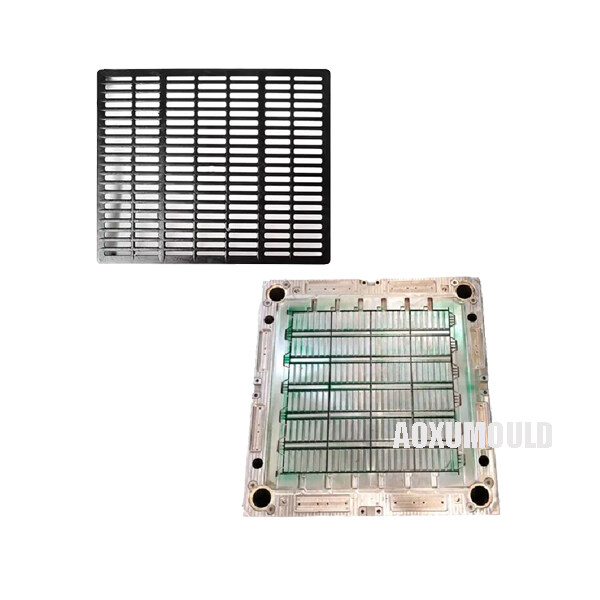
Cage Mat Mould is a mold used to produce cage mats (mainly used as bedding in the breeding industry). Cage mats are usually made of plastic or other durable materials and are mainly used in breeding environments for poultry or other animals.
Manufacturing process
1. Mold design and material selection
According to the size of the cage pad (340x250x10 mm) and the service life of the mold (more than 500,000 pieces), special attention should be paid to the accuracy and durability of the cavity and core during design, and high-strength materials such as C45, P20, 718 and 2738 are selected.
2. Mold processing
The mold material is processed into specific cavities and cores through precision machining by CNC machine tools (CNC). C45 and P20 materials are usually used for the main structural part of the mold, while 718 and 2738 are often used for wear-resistant and high-temperature resistant parts.
3. Injection system design
According to the requirements of the mold, a cold runner or hot runner system is designed to ensure the uniform distribution of the plastic material and ensure the matching of the injection system and the injection molding machine (380T).
4. Injection molding
Use a 380T injection molding machine to melt the PP/HDPE plastic and inject it into the mold. After cooling and solidification, the initial shape of the cage pad is formed.
5. Mold assembly and debugging
After installation, mold debugging is carried out to test the fit of each part and the injection molding effect of the mold to ensure that the mold can produce efficiently and reach its expected life.
How to maintain
1. Regular cleaning
Remove residual plastic, oil, dust and other impurities from the mold surface regularly, and clean nozzles, runners and other parts regularly to avoid poor material flow or uneven injection.
2. Lubrication and cooling
Guide components, sliders, etc. in the mold need to be lubricated regularly, and the cooling channels should be checked regularly to avoid poor coolant flow, which may cause the mold temperature to be too high and affect production efficiency and product quality.
3. Inspection
Regularly check the mold cavity and core parts, especially those that are often rubbed. If there are fatigue or damage to the mold parts (such as springs, bolts, guide pillars, etc.), they should be replaced immediately.
4. Storage and protection
When the mold is not in use, it should be stored in a dry, non-corrosive environment to avoid moisture and chemical erosion.
Mould Specifications
|
Mould name |
Cage Mat Mould |
|
Product material |
PP/HDPE, plastic |
|
Product Size |
340x250x10mm |
|
Product weight |
1.28kg |
|
Mould material for cavity &. Core |
C45, P20, 718, 2738 |
|
Mould base |
P20 |
|
Injection system |
Cold/Hot runner |
|
Suitable injection machine |
380T |
|
Mould size |
580X5200X430mm |
|
Mould lifetime |
more than 500,000pcs |

Design For Product &. Mould

Package &. Delivery

Mould Components
Mould Steel

Hot Runner System

Standard Parts

FAQ
Customers' Feedback


