

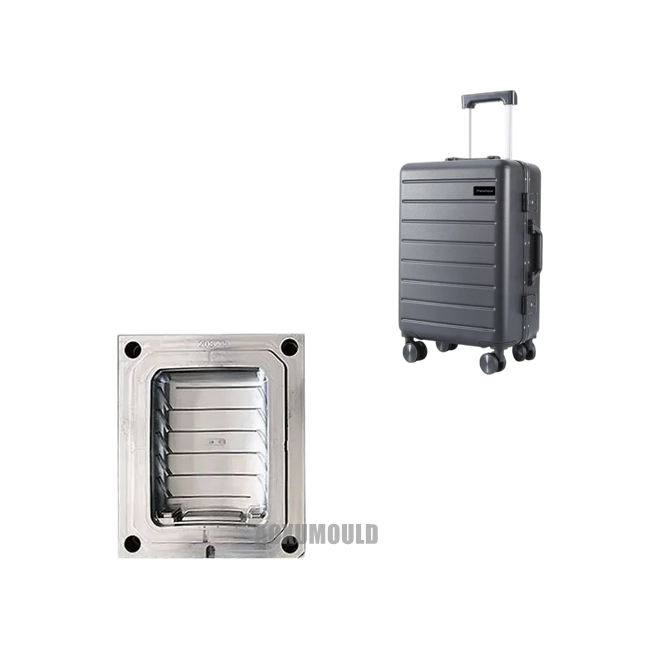
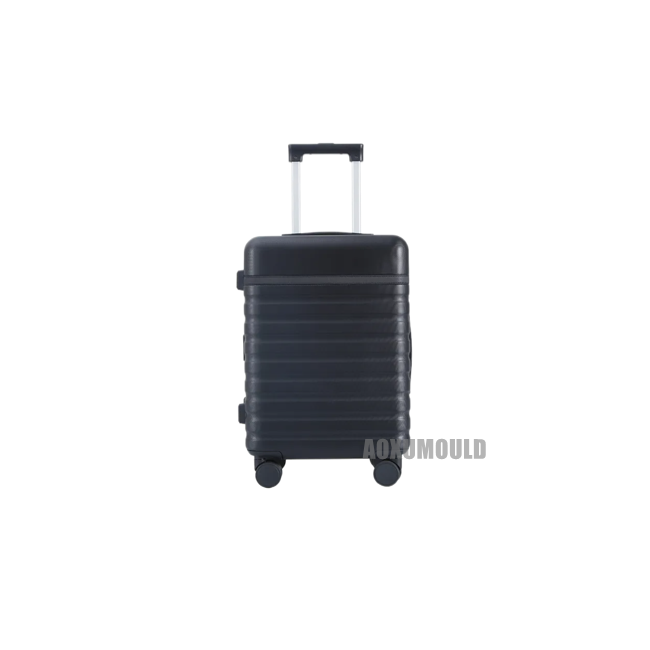
Mould Specifications
|
Mould name |
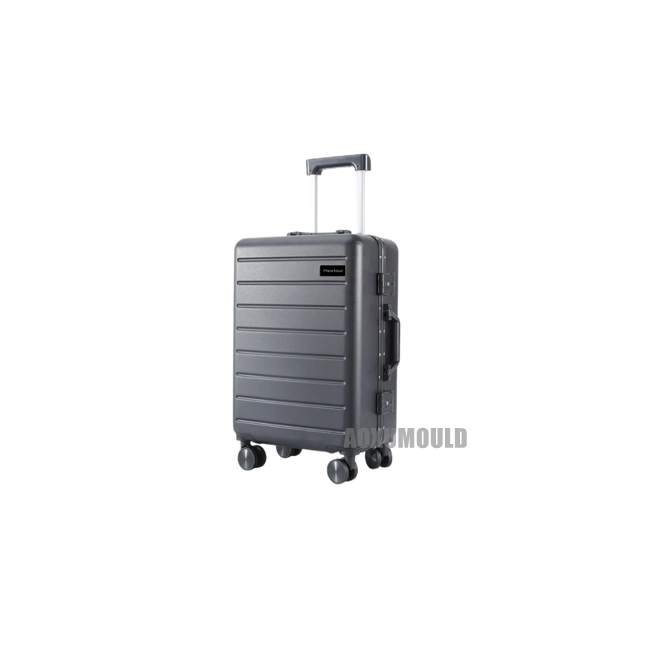
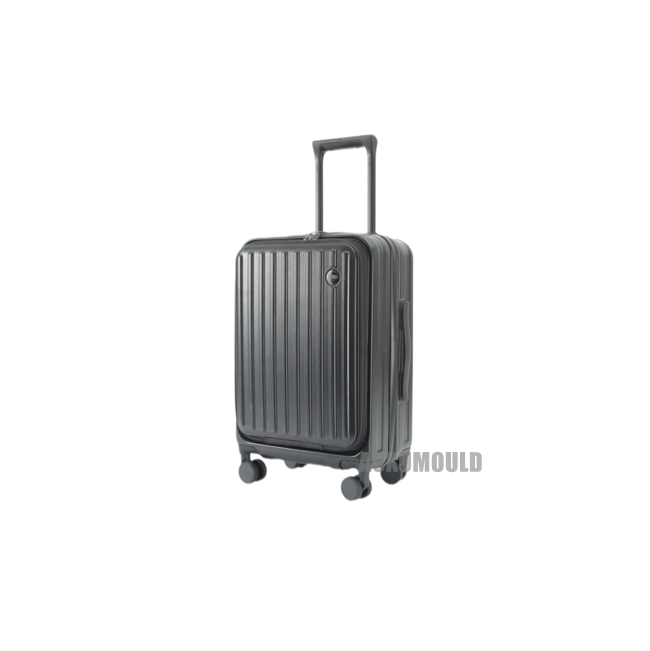
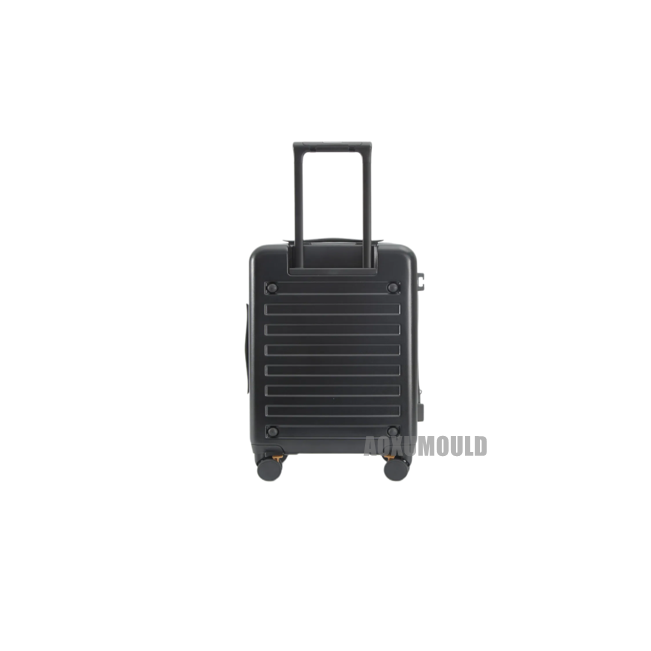
Plastic carry-on roller mould |
|
Crate material |
ABS |
|
Crate size |
348X260X315mm |
| Crate weight |
550g |
|
Mould material for cavity &. Core |
P20, 718, 2738 |
|
NOs of cavity |
1 cavity |
|
Injection system |
Hot runner open gates or valve gates |
|
Suitable injection machine |
450T |
|
Mould size |
580x520x560mm |
|
Mould lifetime |
more than 500,000pcs |
What Details Should Be Paid Attention To In 3D Modeling of Plastic Carry-on Roller Mould?

3D modeling of plastic carry-on roller mould is a complex process that requires consideration of multiple details to ensure the quality and production efficiency of the final product. Here are some key details based on search results:
Draft angle: When conducting 3D product draft, it is necessary to ensure sufficient draft angle to facilitate the opening and closing of the mould and the demolding of the product.
Dimensional tolerance: Adjust the 3D dimensional tolerance based on the tolerance dimensions in the 2D drawing. Make iron retention treatment in the design to prevent convenient mould repair in the future.
Shrinkage reduction: 3D shrinkage reduction is performed to compensate for the shrinkage of plastic during the cooling process.
Creating parting surfaces: Creating parting surfaces is a crucial step in mould design and requires comparison with DFM reports.
Suture of front and rear mould core product surfaces: Provide front and rear mould core product surfaces and sew them separately with the parting surface. It should be noted that after creating the parting surface, it is necessary to copy it into the layer, as both the front and rear mold product surfaces need to be stitched together with the parting surface.
Sliding block structure design: After the mould is confirmed, the sliding block structure can be created. The size of the slider design will determine the size of the mould frame.
Flow channel design: Flow channel design needs to be compared with DFM report position and style for .
Insert design: Insert design is also an important part of mould design.
Waterway design: Waterway design is crucial for the cooling and heating of moulds.
Top pin design: The top pin design needs to be compared with the DFM report position. The types of top pins should be as uniform as possible, and the quantity should be taken as an integer of.
Spring design, support column design, and garbage nail design: These are all important components of the mould structure and need to be designed according to the actual situation.
Mould frame improvement: including slope positioning block, zero degree positioning block, mould core bundle block, mould pry angle, top needle plate EGP guide column, lock module, guide column exhaust groove, counter, etc.
Detail optimization: including the design of exhaust for the front mould core, avoiding gaps in the unsealed areas of the front and rear mold cores, and adding exhaust slots to the inserts.
Full 3D self inspection form: Check every detail to ensure the accuracy of mold design.
When conducting 3D modeling of plastic carry-on roller moulds, there are many details that need to be paid attention to, from draft angles and dimensional tolerances to the design of flow channels, inserts, and waterways, as well as the configuration of structures such as ejector pins and springs. Each link is crucial.
Designs For Product &. Mould

Why Do We Recommend Exchanging Inserts For Plastic Carry-On Roller Mould?
In the design of plastic carry-on roller mould, it is recommended to adopt the design of interchangeable inserts, mainly for the following reasons:
1. Convenient for mould modification
The parts of the mould that often need to be modified can be removed and made into inserts. In this way, when it is necessary to modify the mould, only the corresponding inserts need to be replaced, without the need to re mould, greatly saving time and cost. For example, if the design of the carry-on roller needs to change the logo or certain details, simply replace the corresponding inserts.
2. Save materials and reduce costs
When a certain part of the mould has a complex shape or is much higher than other surfaces, splitting it into inserts can save materials and reduce processing costs. Otherwise, larger sizes will be required for material preparation, and processing time will also increase, resulting in a 13% increase in costs.
3. Shorten the mould manufacturing cycle
For some deep bone or complex shaped machining, designing these parts as inserts can simplify the machining process and shorten the mould manufacturing time. This not only improves production efficiency, but also enables faster response to market changes.
4. Beneficial for exhaust of moulds
During the injection molding process, the exhaust of the mould is very important. If the exhaust is poor, it may cause adverse phenomena such as bubbles, shrinkage, and missing glue in the product. By designing inserts where exhaust is required, the fitting gaps of the inserts can be utilized for exhaust, thereby improving product quality
5. Increase the service life of the mould
Some easily damaged areas, such as the position of pointed steel and thin steel, can be designed as inserts to increase the service life of the mold. Once the inserts in these areas are damaged, they can be replaced separately without the need to replace the entire mould.
6. Convenient for mold processing
For some deep bone areas or difficult to process parts, designing them as inserts can reduce the difficulty of processing. For example, when using electrical discharge machining (EDM), the machining efficiency is relatively low, but by designing it as an insert, the machining process can be simplified.
The design of using interchangeable inserts can improve the flexibility of moulds, reduce costs, shorten manufacturing cycles, improve product quality, and extend the service life of moulds.
What Are The Common Problems With Plastic Carry-On Roller Mould Testing?
Product sticking to the upper mould: The product structure is unreasonable, and the product does not have a certain tensile force on the lower mould, which can easily cause the product to stick to the upper mould.
Difficulty in material detachment from the sprue: The sprue is stuck inside the sprue sleeve and is not easy to detach, resulting in cracks and damage to the product during mould opening.
Damage to guide column: The guide column mainly plays a guiding role in the mould to ensure that the forming surfaces of the core and cavity do not touch each other under any circumstances. The guide column cannot be used as a load-bearing or positioning component.
Insufficient plastic parts: Mainly due to insufficient material level in the injection molding machine, poor flow of molten material filling, or incorrect parameters of the injection molding machine, excessive inflation and poor exhaust, the plastic does not fill the cavity, resulting in incomplete shape of the plastic part or several cavities being filled less than 2 when there are multiple cavities.
Dimensional instability: Mainly due to poor mould accuracy, unstable operation of injection machines, and unstable forming conditions, the dimensional changes of plastic parts are unstable.
Bubble: Due to excessive inflation or poor exhaust in the molten material, residual gas is left inside the plastic part, forming small or clustered cavities, resulting in an unsightly surface of the product.
Miniature: Due to poor pressure compensation, uneven cooling of plastic parts, uneven wall thickness, and plastic shrinkage, it is necessary to adjust the product structure.
Excessive flying edge: Due to poor mold fit, large gaps, or poor plastic flowability, excessive material level causes excess thin sheets to be extruded along the edges of the plastic part.
Obvious or excessive weld marks: Due to various reasons such as the low temperature of the plastic at the front end when the plastic is melted, the resin is difficult to dissolve, and so on, the fusion of the melted material is poor, resulting in obvious fine seam lines along the surface or interior of the plastic part. The darker the color, the more obvious it is.
Bending, fracture, or leakage of the top rod: several common problems that may occur during mold testing
What Are The Benefits of Electroplating Plastic Carry-On Roller Mould Before Shipment?
Improving wear resistance: Mould electroplating can increase the hardness and wear resistance of the mould surface, thereby extending the service life of the mould.
Corrosion prevention: Mould electroplating can prevent the surface of the mould from being corroded, thereby maintaining the accuracy and appearance quality of the mould.
Improving conductivity: Mould electroplating can increase the conductivity of the mould, which is very advantageous for electroplating processes that require high current.
Increasing Aesthetics: Electroplating on moulds can make the surface of the mould smoother and smoother, thereby improving the aesthetics of the product.
Cost reduction: Although electroplating molds requires a certain cost, it can extend the service life of the moulds, reduce the frequency of maintenance and replacement, and thus lower the overall production cost.
Improving the performance of plastic parts: Electroplating can not only save a lot of metal materials, reduce complex processing procedures, and reduce equipment weight, but also effectively improve the appearance, electrical and thermal properties of plastic parts, and enhance their surface mechanical strength
.
Try-out of Carry-On Roller Mould
Customers' Feedback


