
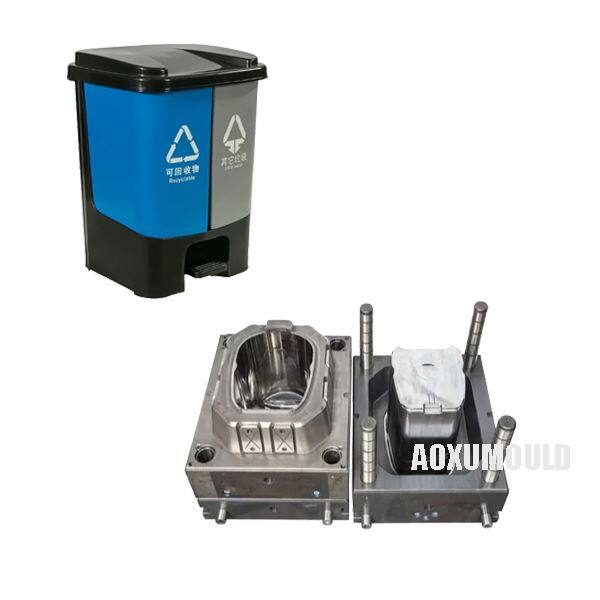
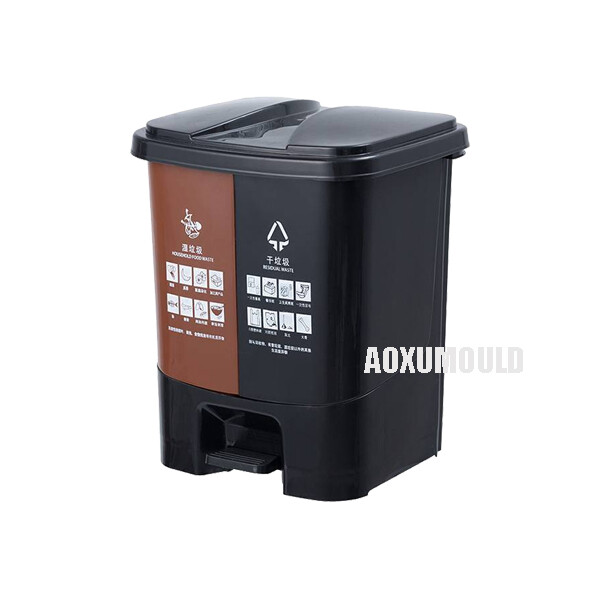
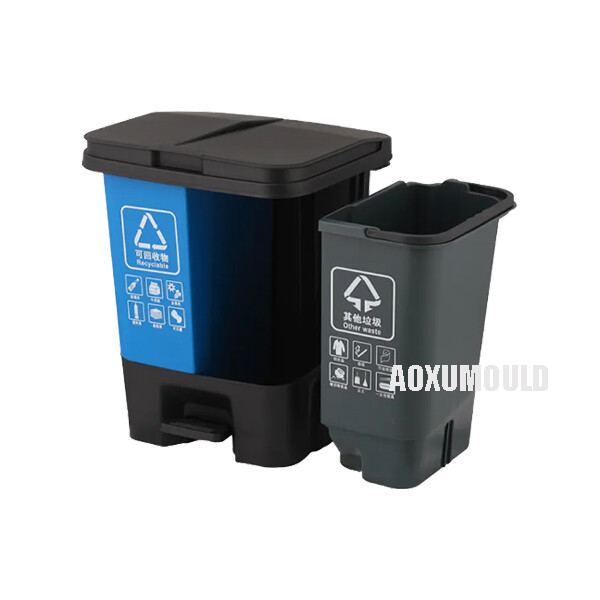
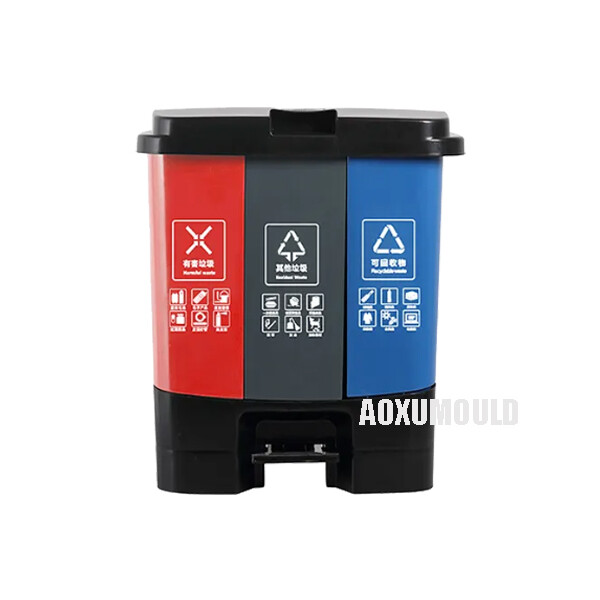
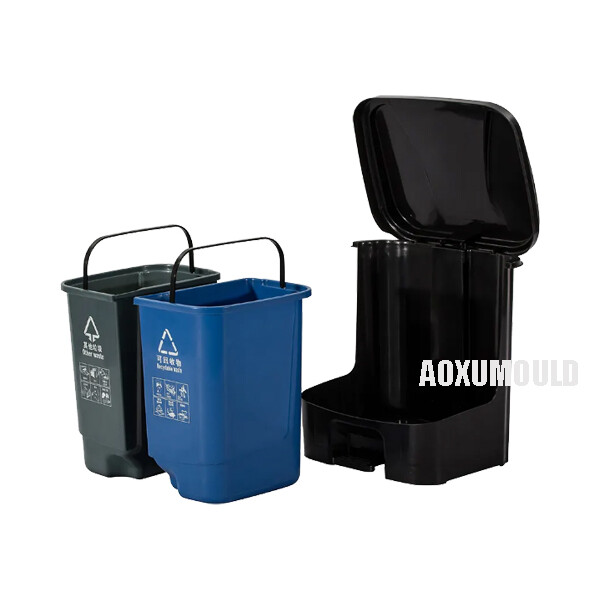
Mould Specifications
|
Mould name |
Plastic Recycling Container Mould |
|
Container material |
HDPE, plastic |
|
Container Size |
450X330X455mm |
|
Container volume |
40L |
|
Mould material for cavity &. Core |
P20, 718, 2738 |
|
Mould base |
P20 |
|
Injection system |
Cold/Hot runner |
|
Suitable injection machine |
600T |
|
Mould size |
700X580X690mm |
|
Mould lifetime |
more than 500,000pcs |
Why choose PP or HDPE material to produce recycling container?

>Key Advantages of PP (Polypropylene)
1. Chemical Resistance
Resists acids, alkalis, and most solvents, making it ideal for harsh waste (cleaning chemicals, industrial scraps).
Heat Resistance
Withstands temperatures up to 100–120°C (better than HDPE), suitable for hot climates or sterilizable bins.
Lightweight & Flexible
Less brittle than HDPE, reducing cracks from impacts (good for stackable containers).
Food-Safe & FDA-Compliant
Often used for kitchen compost bins or medical waste containers.
>Cons of PP
Lower UV resistance (requires additives for outdoor use).
Less rigid than HDPE (may deform under heavy loads).
>Key Advantages of HDPE (High-Density Polyethylene)
Superior Strength & Rigidity
Higher density makes it ideal for heavy-duty bins (construction waste, wheeled trash cans).
UV &. Weather Resistance
Naturally resists sunlight and rain (common for outdoor recycling bins without additives).
Impact-Resistant
Stays durable in cold temperatures (won't crack like PP in freezing conditions).
100% Recyclable
The #1 recycled plastic (e.g., milk jugs, detergent bottles), aligning with circular economy goals.
>Cons of HDPE
Less heat-resistant (softens above 80°C).
Harder to color uniformly (often seen in natural/opaque tones).
Manufacturing Process Of The Plastic Recycling Container Mould
1. Design & Engineering
3D Modeling: CAD software (e.g., SolidWorks, UG/NX) creates the mould design based on container specifications.
DFM Analysis: Design for Manufacturability checks for draft angles, wall thickness, and ejection feasibility.
Moldflow Simulation: Software predicts plastic flow, cooling, and potential defects (sink marks, warpage).
Output: Finalized 3D drawings and technical specifications.
2. Material Selection
Choose mould steel based on:
Production Volume:
Low volume (<100K shots): P20/718 steel (cost-effective).
High volume (1M+ shots): H13/S136 (hardened for wear resistance).
Plastic Type: Abrasive materials (e.g., recycled PP/HDPE) require hardened steel.
3. CNC Machining
Mold Base Preparation: Standardized plates (A/B plates, ejector system) are machined.
Core & Cavity Cutting: CNC mills/lathes carve the mould's negative shape from steel blocks.
EDM (Electrical Discharge Machining): For intricate details (textures, logos).
Grinding/Polishing: Ensures smooth surfaces (SPI A1-A3 finishes).
4. Mould Trial (T0/T1 Samples)
First Shot (T0): Tests basic functionality.
T1 Samples: Adjustments made (e.g., gate size, cooling) for optimal quality.
Inspection: Measures dimensions, checks for flash, sink marks, or warping.
Design For Product &. Mould

Try-out Video Of Plastic Waste Container Mould
Package &. Delivery

Mould Components
Mould Steel

Hot Runner System

Standard Parts

What Do We Need to Give A Quote For Plastic Recycling Container Mould?
|
|
To get an accurate quote for a plastic recycling container mould, please provide the mould supplier with detailed specifications. Below is a checklist of essential information required for a precise quotation:
1. Product Design & Technical Details
3D CAD File (STEP, IGES, or PRT format preferred)
2D Drawings (PDF/DWG with dimensions, tolerances, and critical features)
Wall Thickness (affects cooling time and moulding cycle)
Part Weight (helps determine shot size and machine requirements)
Material Type (e.g., HDPE, PP, ABS, recycled plastic – some materials are more abrasive and require harder steel)
2. Mould Specifications
A. Mould Structure
Number of Cavities (single cavity, multi-cavity, or family mould)
Mould Base Material (standard: P20, 718; high-end: H13, S136)
Core & Cavity Steel (hardened steel for long runs, pre-hardened for cost savings)
Lifespan Expectation (e.g., 100K, 500K, or 1M+ shots)
B. Moulding System
Runner Type (cold runner vs. hot runner – hot runner is more expensive but reduces waste)
Ejection Mechanism (ejector pins, air ejection, stripper plate)
Cooling System (standard drilled channels vs. conformal cooling for faster cycles)
C. Surface Finish & Texture
Polish Level (SPI A1 mirror finish, textured finish, grit-blasted, etc.)
Custom Engravings/Logos (if needed).
FAQ
>1. What types of recycling container injection moulds does your factory produce?
Our factory produces a wide range of recycling container injection moulds, including bins, containers, and other receptacles in various sizes and designs.
>2. Can your factory customize recycling container injection moulds according to specific requirements?
Yes, we have the capability to customize moulds based on specific design requirements and dimensions. Our team of skilled engineers and designers can work with customers to create custom moulds tailored to their needs.
>3. What materials are used in the production of plastic recycling container moulds?
We use high-quality materials such as steel in the production of our recycling container injection moulds to ensure durability, longevity, and consistent performance.
>4. What are the payment terms?
TT, 40% deposit, 30% to be paid before sending sample, 30% balance before mould delivery.
>5. What' the delivery time?
The manufacturing and delivery time for recycling container injection moulds may vary depending on the complexity and quantity of the order. After mold design receiving approval from customer, 55 days for mold T1.
>6. How does your factory ensure the quality of the recycling container injection moulds?
We have a rigorous quality control process in place that includes strict inspection and testing procedures at every stage of production to ensure that the moulds meet the highest standards.
>7. Does your factory offer after-sales support for recycling container injection moulds?
Yes, we provide after-sales support for our customers, including technical assistance, maintenance guidance, and troubleshooting services to ensure the continued performance of the recycling container injection moulds.
Customers' Feedback


