

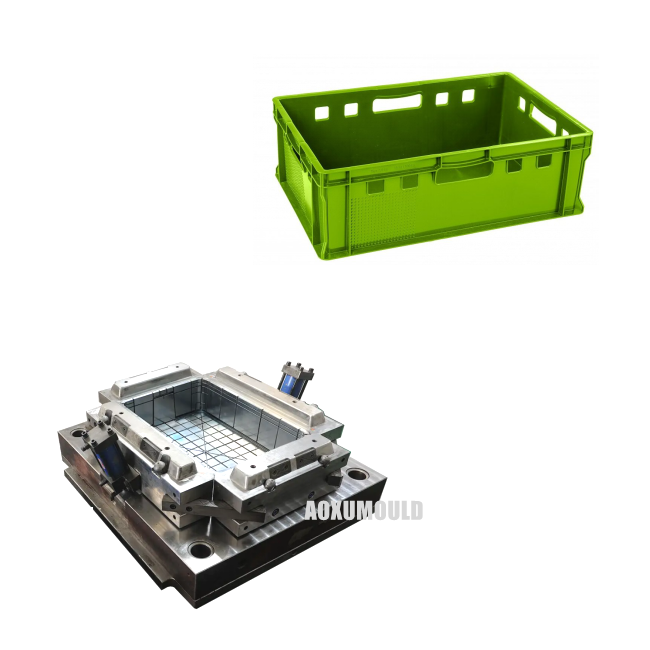
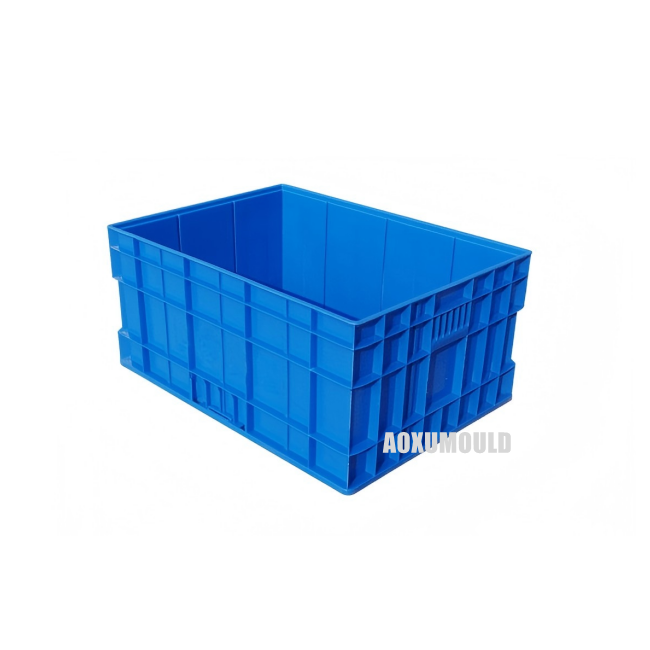
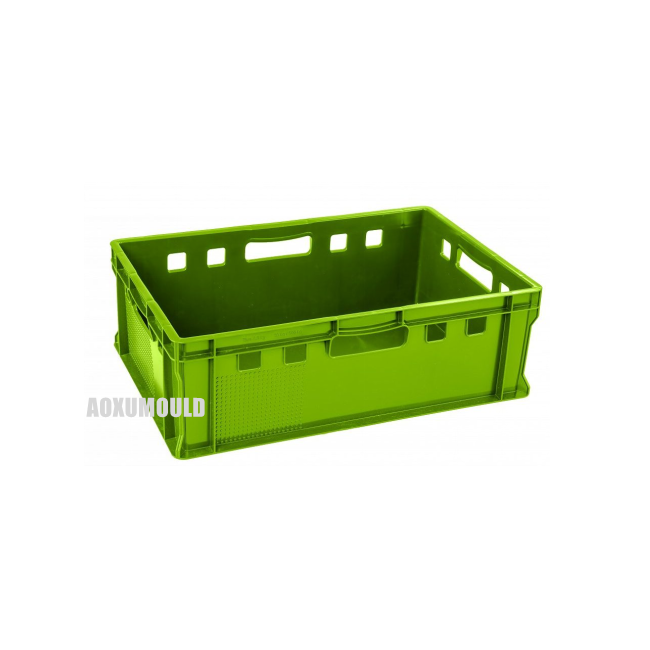
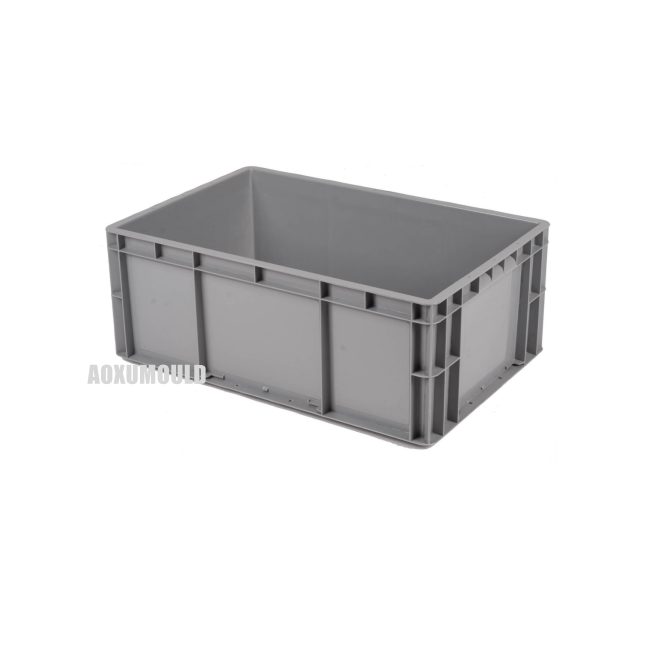
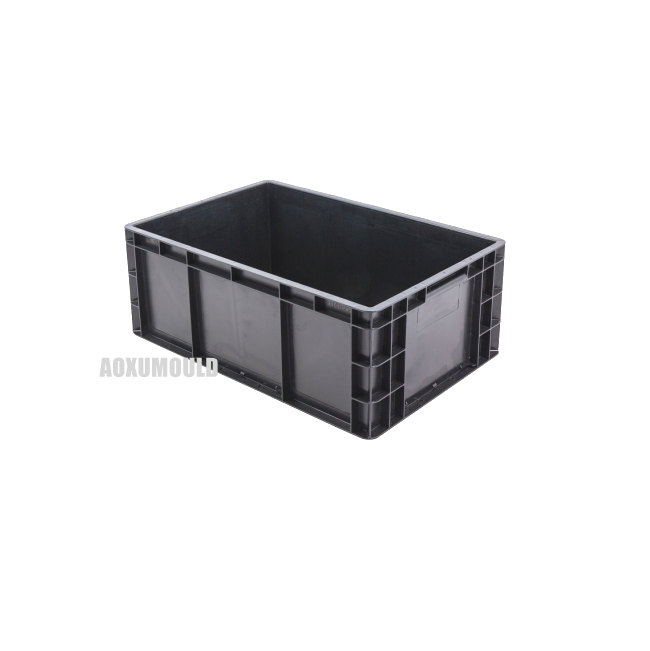
Mould Specifications
|
Mould name |
Plastic Heavy duty crate mould |
|
Product material |
HDPE/PP |
|
Product Size |
600 x 400 x 140mm |
|
Mould material for cavity &. Core |
P20/718H/H13/2738 |
|
NOs of cavity |
1 cavity |
|
Injection system |
Hot runner |
|
Suitable injection machine |
450T |
|
Mould size |
1050X680X550mm |
|
Mould weight |
3500KG |
|
Mould lifetime |
more than 500,000pcs |
|
Delivery Time |
50 days |
Thickness of Plastic Heavy-Duty Crate

The thickness of a Plastic Heavy-Duty Crate typically ranges from 3 mm to 8 mm, depending on design, material, and intended use. Here's a detailed breakdown:
1. Material:
- Common plastics include HDPE (High-Density Polyethylene) or PP (Polypropylene). HDPE is often preferred for heavy-duty applications due to its rigidity and impact resistance.
2. Design Factors:
- Uniform Thickness: Walls and base are usually 4–6 mm for standard heavy-duty crates.
- Reinforcements: Ribs, double-walled construction, or corner reinforcements may allow for slightly thinner walls (e.g., 3–5 mm) while maintaining strength.
- Critical Areas: Bases and load-bearing edges might be thicker (up to 8 mm) for added durability.
3. Manufacturing Process:
- Injection Molding: Typically produces walls 2–6 mm thick due to material flow and cooling constraints.
- Rotational Molding: Allows for thicker walls (up to 12+ mm) but is less common for crates.
4. Load Capacity:
- Crates designed for extreme loads (e.g., automotive or industrial parts) may exceed 6 mm in critical sections.
- Smaller crates might use 3–4 mm walls, while larger ones require 5–8 mm for structural integrity.
5. Industry Examples:
- Standard Heavy-Duty: 4–6 mm walls.
- Specialized/Industrial: Up to 8 mm or more for high-stress areas.
Why Choose HDPE &. PP Materials For Heavy-Duty Plastic Crates?

When selecting between HDPE (High-Density Polyethylene) and PP (Polypropylene) for heavy-duty plastic crates, the choice depends on the application requirements, environmental conditions, and load demands. Here's a detailed comparison:
2. Why Choose HDPE for Heavy-Duty Crates?
- Impact Resistance: Ideal for rough handling, stacking, and dropping (e.g., logistics, agriculture).
- Cold Environments: Retains strength in sub-zero temperatures (e.g., cold storage, refrigerated transport).
- Stiffness: Maintains shape under heavy loads (e.g., automotive parts, machinery).
- Recyclability: Widely recycled, making it eco-friendly for sustainable supply chains.
3. Why Choose PP for Heavy-Duty Crates?
- Chemical Exposure: Best for crates storing oils, fuels, or corrosive substances (e.g., chemical industries).
- High-Temperature Use: Suitable for sterilization (e.g., food processing, medical equipment).
- Flexibility: Better for repetitive stress (e.g., hinged lids, foldable designs).
- Cost-Effectiveness: Often cheaper for high-volume production.
How To Make Mould For A Heavy-Duty Plastic Crate?

Creating a heavy-duty plastic crate mould involves precision engineering, material selection, and manufacturing expertise. Below is a step-by-step guide to designing and producing a durable, high-quality mould:
1. Design Phase
a. Define Requirements
- Crate Specifications: Size, load capacity, wall thickness (typically 4–8 mm), and geometry (ribs, handles, stacking features).
- Material: Choose the plastic (e.g., HDPE, PP) and account for shrinkage rates during cooling.
-Moulding Process: Decide on injection moulding
b. CAD Design
- Use 3D CAD software (e.g., SolidWorks, AutoCAD) to model the crate and mould.
- Include draft angles (1–3°) for easy ejection.
- Design ribs and corner reinforcements to enhance strength without increasing wall thickness.
- Add ejector pin locations, cooling channels, and venting to prevent defects.
2. Mould Material Selection
Choose high-grade steel based on durability and production volume:
- Steel Moulds:
- P20 or H13 steel for high wear resistance (ideal for 100,000+ cycles).
- Hardened for longevity.
3. Mould Manufacturing Steps
a. Core and Cavity Machining
- Use CNC machining to create the core (male) and cavity (female) parts of the mould.
- Ensure smooth surfaces (polish to SPI-A1/A2 finish) to avoid defects like flow lines.
b. Cooling System Integration
- Embed cooling channels to regulate temperature and reduce cycle time.
- Optimize channel layout for uniform cooling (prevents warping).
c. Ejection System
- Install ejector pins and plates to push the crate out of the mould after cooling.
- Ensure pins are positioned to avoid visible marks on critical surfaces.
d. Venting
- Add micro-gaps (0.02–0.04 mm) to allow trapped air/gas to escape, preventing burns or voids.
e. Surface Treatments
- Apply coatings (e.g., nitriding, chrome plating) to reduce wear and improve release.
4. Prototyping and Testing
- Injection Trials:
- Check for defects (sink marks, warping, flash).
- Adjust temperature, pressure, and cooling time.
- Load Testing: Verify the crate meets strength requirements.
5. Production Mould Assembly
- Assemble core, cavity, ejector system, and cooling components.
- Mount the mould on an injection moulding machine (e.g., 500–2000-ton clamping force for large crates).
6. Key Considerations
a. Wall Thickness Consistency
- Avoid abrupt thickness changes to prevent sink marks.
- Use ribs (50–60% of base thickness) for reinforcement.
b. Gate Design
- Position gates (entry points for molten plastic) to ensure even flow.
- Use hot runner systems for large crates to reduce waste.
c. Stacking Features
- Design interlocking lids or stacking rims directly into the mould.
7. Post-Processing
- CNC Machining: Refine critical areas (e.g., handles, corners).
- EDM (Electrical Discharge Machining): For intricate details or texturing.
How To Molding Plastic Crates?
Mould Components
Mould Steel

Hot Runner System

Standard Parts

Package &. Delivery

Customers' Feedback

Why Choose Us?
We specialize in crafting precision-engineered moulds for industrial-grade plastic crates, ensuring durability, efficiency, and value. Here's what sets us apart:
1. Expertise in Heavy-Duty Design
- Industry-Specific Knowledge: Over 15 years of experience designing moulds for automotive, logistics, and agricultural sectors, optimized for load capacities up to 1,000+ lbs.
- Material Mastery: Advanced understanding of HDPE, PP, and reinforced plastics, ensuring moulds produce crates with precise thickness (3–8 mm) and impact resistance.
2. Cutting-Edge Technology
- Simulation Software: Tools like Moldflow predict flow, cooling, and stress points to eliminate defects and enhance mould longevity.
- High-Precision Machining: CNC, EDM, and 5-axis milling for flawless cavity finishes and tight tolerances (±0.01 mm).
3. Customization & Flexibility
- Tailored Solutions: Adapt designs for double-walled crates, collapsible features, or reinforced ribs to meet your exact needs.
- Rapid Prototyping: Accelerate time-to-market with 3D-printed mould samples for testing and validation.
4. Robust Quality Assurance
- Rigorous Testing: Moulds undergo cycle testing and real-world load simulations to ensure crash resistance and longevity.
5. Cost & Time Efficiency
- Optimized Production: Mould designs minimize material waste and cycle times, reducing your per-unit costs.
- Faster Turnaround: Streamlined workflows deliver high-quality moulds in 30–45 days, even for complex geometries.
6. End-to-End Support
- Lifetime Maintenance: Post-sale services include troubleshooting, repairs, and surface polishing to extend mould life.
- Sustainability Focus: Designs prioritize recyclable materials and energy-efficient production processes.
7. Proven Track Record - Case Studies: Success stories include automotive parts crates with 8 mm reinforced bases and collapsible designs reducing shipping costs by 40%.
This approach highlights technical strengths, client-focused solutions, and real-world results while addressing pain points like cost, quality, and reliability.


